Is Flat Roof Insulation Worth It? UK Costs & Savings
Find out if flat roof insulation is worth it for UK homes. We compare warm vs cold roof costs, Part L rules and savings. Get a free survey today.

Table of Contents
- Verdict: Is Flat Roof Insulation Worth the Cost?
- What Flat Roof Insulation Actually Does for Your Home
- Warm Roof vs Cold Roof Insulation Costs Compared
- Flat Roof Building Regulations UK Part L: What You Must Know
- How to Prevent Condensation in Flat Roofs
- Insulation Material Options: PIR Boards vs Stone Wool
- The Bottom Line: When Insulation Pays for Itself
- Frequently Asked Questions
Last Updated: September 6, 2026
Verdict: Is Flat Roof Insulation Worth the Cost?
For most UK homes with a flat roof, the answer is a clear yes: flat roof insulation is worth it because it delivers measurable comfort gains and energy savings that typically offset the installation cost over the roof’s lifespan. The question of whether flat roof insulation is worth it for UK homes usually comes down to the condition of your existing roof and how long you plan to stay in the property. If the roof deck is sound and you expect to remain for five years or more, the payback period is generally favourable.
At Evershield Roofing, we have installed insulation systems across Buckinghamshire for over 25 years, and the homes that benefit most are those with poorly heated rooms directly beneath the roof. A single flat roof can account for a substantial share of a property’s heat loss, which means addressing it has an outsized effect on your energy bills. Beyond the financial case, insulation stops the uncomfortable temperature swings that make rooms under a flat roof either freezing in winter or stifling in summer.
Below, we break down exactly what insulation does, compare warm roof and cold roof systems, and walk through the building regulations that govern any installation in the UK. We also cover the material choices and the condensation risks that determine whether your investment performs as intended.
What Flat Roof Insulation Actually Does for Your Home
Flat roof insulation is a barrier layer installed above or below the roof deck that slows heat transfer between your living space and the outside air. In winter, it keeps warm air inside; in summer, it prevents the sun’s heat from turning upper rooms into greenhouses. This dual action is why homeowners often notice comfort improvements within days of installation, not just lower bills.
The physics is straightforward: heat always moves from warmer to cooler areas. An uninsulated flat roof allows that heat to escape directly upwards, and because a flat roof has a large surface area relative to the building footprint, the losses are significant. Insulation resists that flow, and the effectiveness of a material is measured by its thermal conductivity, known as its lambda value. Lower lambda values mean better insulation per millimetre of thickness.
A common mistake is assuming insulation only matters in winter. In practice, homes with insulated flat roofs stay noticeably cooler during summer heatwaves, reducing reliance on fans and air conditioning. That year-round benefit is part of why many Buckinghamshire homeowners find the upgrade worthwhile even when their energy bills are already manageable.
Key Takeaway
Insulation is not just a winter measure. It moderates temperature year-round, which is why rooms under flat roofs feel more comfortable in both July and January.
Insulation is not just a winter measure. It moderates temperature year-round, which is why rooms under flat roofs feel more comfortable in both July and January.
Warm Roof vs Cold Roof Insulation Costs Compared
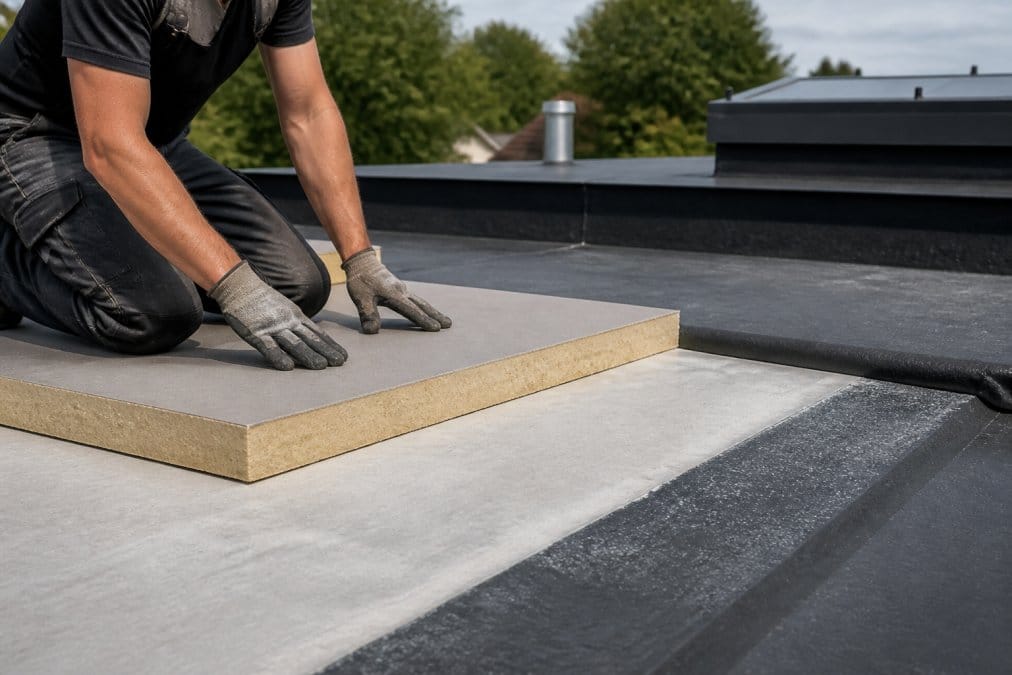
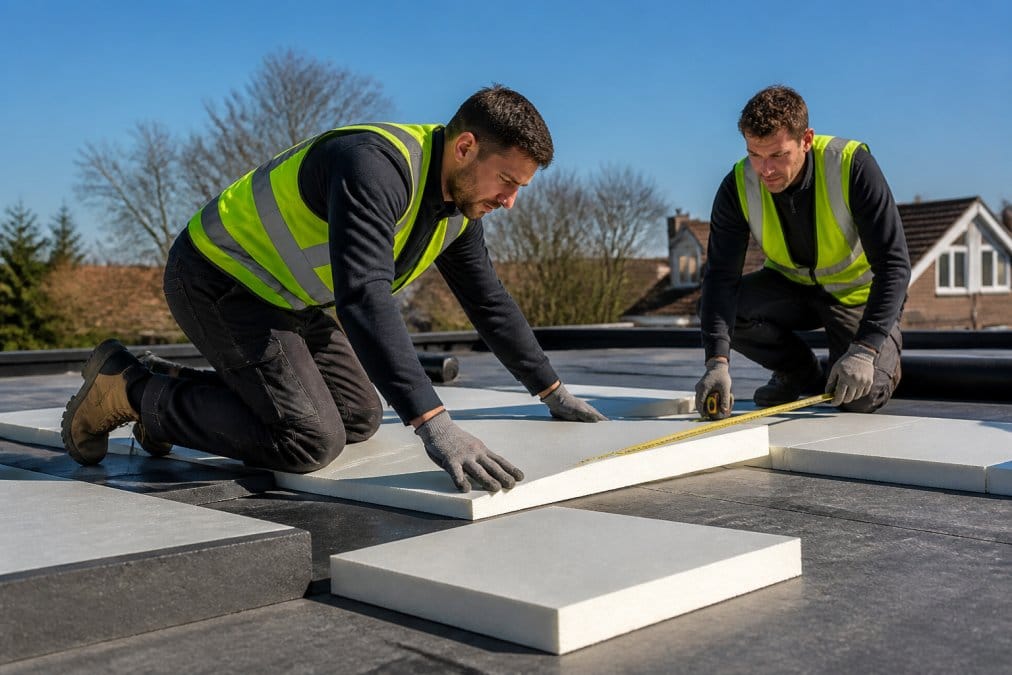
The two main approaches to flat roof insulation are warm roofs and cold roofs, and the difference between them shapes both the cost and the long-term performance. A warm roof places insulation above the roof deck, keeping the deck itself warm. A cold roof places insulation between or below the joists, leaving the deck exposed to outside temperatures.
Warm roof systems cost more upfront because they require new decking and waterproofing on top of the insulation. However, they are the recommended solution for most homes because they virtually eliminate the risk of condensation within the structure. Cold roof systems are cheaper to install because they can often be fitted from inside, but they demand careful cross-ventilation to stop moisture building up in the void.
| System Type | Insulation Position | Relative Cost | Condensation Risk | Best For |
|---|---|---|---|---|
| Warm Roof | Above the deck | Higher upfront | Low | Full refurbishments and new roofs |
| Cold Roof | Between or below joists | Lower upfront | Higher if unventilated | Retrofits where access is limited |
The cost gap between the two systems narrows when you factor in maintenance. A warm roof protects the deck from thermal stress and condensation, which extends the life of the waterproofing. A cold roof that suffers from poor ventilation can trap moisture, leading to rot in the timber deck and premature failure of the roof covering. When comparing warm roof vs cold roof insulation costs, budget for the full system rather than just the insulation boards.
Watch Out
Choosing a cold roof to save money without installing adequate ventilation is a false economy. Trapped moisture can rot the roof deck from within, turning a modest insulation job into a full [roof replacement](/roof-replacement-cost-buckinghamshire/).
Choosing a cold roof to save money without installing adequate ventilation is a false economy. Trapped moisture can rot the roof deck from within, turning a modest insulation job into a full [roof replacement](/roof-replacement-cost-buckinghamshire/).
Flat Roof Building Regulations UK Part L: What You Must Know
Any new flat roof insulation installation in the UK must comply with Part L of the Building Regulations, which sets minimum standards for the conservation of fuel and power. These regulations specify the maximum U-value your roof may achieve, which in practice dictates the thickness and type of insulation you need. The current requirement for a flat roof is a U-value of 0.18 W/m²K or lower for most projects. Guidance on the exact figures is published by the UK Government’s Building Regulations Approved Document L.
The regulations apply whether you are building a new roof, replacing the covering on an existing one, or adding insulation as part of a renovation. A roofing contractor should calculate the required insulation thickness based on the U-value target and the lambda value of the chosen material. This is not a DIY judgement call; getting it wrong means your installation may not be compliant, which can cause problems when you sell the property.
Building control approval is typically required for the work, and your installer should handle this as part of the project. In practice, this means the paperwork is as important as the insulation itself. A reputable contractor will confirm the target U-value, calculate the build-up, and arrange the necessary inspections before any boards are cut.
How to Prevent Condensation in Flat Roofs
Condensation is the most common cause of premature failure in insulated flat roofs, and preventing it is a matter of understanding where moisture comes from. Everyday activities like cooking, showering, and even breathing release water vapour into the air. When that warm, moist air meets a cold surface within the roof structure, it condenses into liquid water.
In a warm roof, the insulation sits above the deck, so the deck stays warm and moisture in the air below does not condense on it. A vapour control layer is still fitted beneath the insulation to stop moist air from penetrating the structure. In a cold roof, the deck stays cold, which means any air leaking into the void will condense. The only defence is ventilation that carries the moist air away before it settles.
A common mistake is assuming that a vapour barrier alone solves the problem. It only works if it is continuous, with every joint taped and every penetration sealed. Tears or gaps render it useless. Proper detailing around roof lights, vents, and parapets is where experienced installers earn their keep.
Insulation Material Options: PIR Boards vs Stone Wool
Two material families dominate flat roof insulation in the UK: rigid PIR boards and stone wool. PIR boards, such as the Kingspan Thermaroof TR27 or Celotex GA4000, offer the highest thermal performance per millimetre, which means you achieve the target U-value with a thinner profile. Stone wool boards like the Rockwool Hardrock Multi-Fix provide slightly less insulation per millimetre but bring fire resistance and acoustic benefits that PIR cannot match.
PIR boards are the default choice for most projects because they allow a lower roof profile, which matters when you are trying to match existing parapet heights or door thresholds. They are lightweight, easy to cut, and widely available through builders’ merchants. The main drawback is that they are not suitable for direct exposure to moisture, so they depend entirely on the quality of the waterproofing above them.
Stone wool earns its place where fire safety is a priority. It is non-combustible, rated Euroclass A1, and it absorbs sound far better than PIR, which is a genuine benefit if your flat roof is beneath a bedroom and you are tired of hearing every downpour. The trade-off is that you need a thicker layer to hit the same U-value, which raises the finished roof height.
PIR boards are the practical choice for most homes because they deliver the required performance with the least disruption to the building’s appearance. Stone wool is the better pick when fire rating or noise reduction matters more than keeping a slim profile.
The Bottom Line: When Insulation Pays for Itself
Flat roof insulation pays for itself when the energy savings over time exceed the installation cost, and for most UK homes that point arrives within a reasonable ownership period. The exact payback depends on the size of your roof, the system you choose, and your current heating costs, but the pattern is consistent: the worse your existing insulation, the faster the payback.
For a home in Buckinghamshire with an uninsulated flat roof, the savings on annual heating bills can be substantial. Beyond the direct energy savings, insulation protects the roof structure from condensation damage, which is the kind of repair that runs into thousands of pounds. That protective value is often ignored in simple cost calculations, but it is the reason insulation is a maintenance investment rather than a pure expense.
The decision framework is simple. If your roof deck is sound and you plan to stay in the property for several years, insulation is worth it. If the roof itself is nearing the end of its life, combine the insulation with a new waterproofing layer so you only pay for the disruption once. If you are unsure about the condition of your deck, a free survey will tell you what you are working with.
Our team at Evershield Roofing has spent over 25 years installing flat roof systems across Buckinghamshire, and we have seen the difference proper insulation makes in both comfort and bills. We are fully insured, offer free surveys and quotes, and can arrange finance from 0% APR to spread the cost of larger projects. Whether you need a complete warm roof installation or advice on upgrading an existing cold roof, our specialists handle the building regulations and condensation detailing so the job is done right the first time.
Frequently Asked Questions
What is the difference between a warm roof and a cold roof in the UK?
A warm roof places insulation above the roof deck, keeping the structure at room temperature and reducing condensation risk. A cold roof insulates between or below the joists, leaving the deck cold and requiring cross-ventilation to manage moisture. Warm roofs suit new builds and full refurbishments, while cold roofs are cheaper for retrofits. Your choice affects flat roof insulation worth it calculations, as warm roofs typically cost more but perform better long-term.
Does flat roof insulation help with condensation issues?
Yes, when fitted correctly. The key is positioning the insulation and vapour control layer properly. A warm roof keeps the structural deck above the dew point, which stops interstitial condensation forming. Cold roofs need adequate cross-ventilation to avoid trapped moisture. Insulation alone will not solve condensation if ventilation or vapour barriers are wrong. A professional survey identifies the right system for your existing roof construction before work begins.
Is it mandatory to insulate a flat roof when replacing it under UK Building Regulations?
Under Part L of UK Building Regulations, when you replace a flat roof covering, you must improve the thermal performance of the roof to meet current U-value standards where practical. This means insulation is effectively mandatory in most replacement projects. The work requires Building Control approval or a registered competent person scheme. A roofing contractor should confirm compliance and provide the necessary documentation for your records.
How much can I save on energy bills with flat roof insulation?
Savings vary with the roof area, current insulation levels, and heating system, but a properly insulated flat roof reduces heat loss through the ceiling, cutting the energy needed to keep rooms warm. The Building Research Establishment estimates that insulating an uninsulated roof could save a typical household around £200 per year on heating costs, though exact figures depend on your property. A free survey provides a personalised estimate for your home.
Can you insulate an existing flat roof from the inside?
Yes, you can insulate from the underside of the roof deck, which suits cold roof conversions where re-covering the exterior is not planned. This approach lowers the ceiling height and requires careful attention to the vapour control layer to prevent condensation. Rigid PIR boards are common for this application. However, insulating from above as part of a warm roof system is generally more effective and reduces thermal bridging.
The challenge with flat roof insulation is that it sits hidden from view, so it is tempting to defer. But the cost of waiting is measured in wasted heat and eventual structural damage. Evershield Roofing provides expert guidance through the entire process, from the initial survey to the final waterproofing, with emergency repair availability if problems arise. Get your free roofing quote today and find out exactly what insulation could save you.