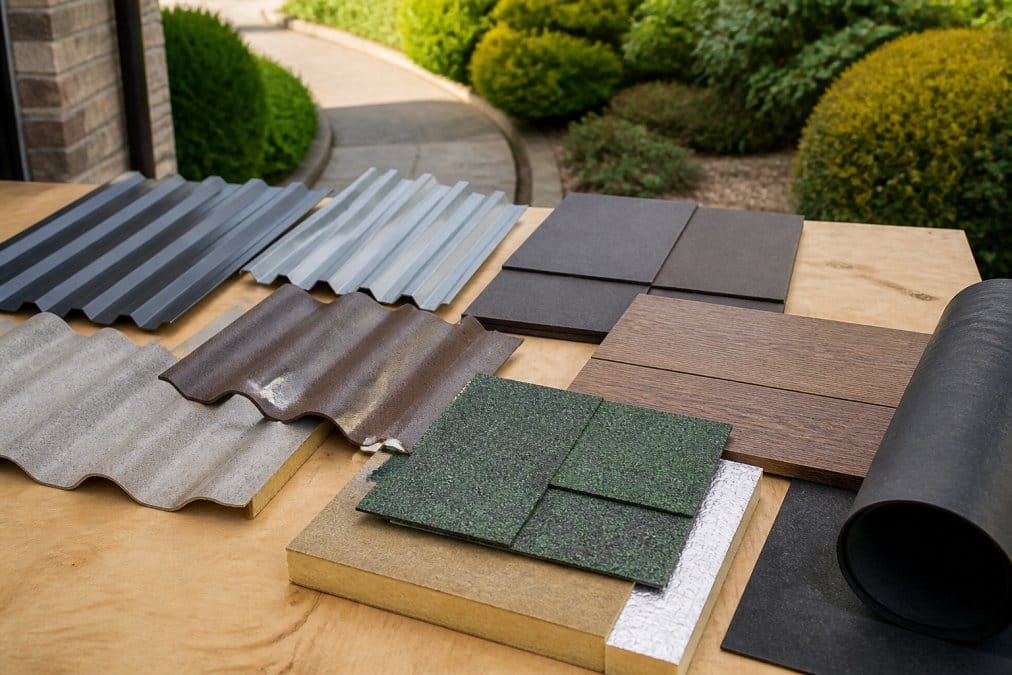
Best Alternatives to Fibreglass Roofing
Explore top alternatives to fibreglass roofing including EPDM, PVC and liquid membranes. Compare durability, cost and lifespan to find the right fit.

Table of Contents
- Why Property Owners Move Away from Fibreglass Roofing
- EPDM Rubber Roofing: Durability and Long-Term Value
- PVC Single-Ply Membranes: Strength and Chemical Resistance
- Liquid Polyurethane Membranes: Seamless Protection for Complex Roofs
- EPDM vs GRP Roofing Cost: What the Numbers Show
- Flat Roof Drainage Importance When Choosing Your Material
- Comparison Table: Fibreglass Alternatives at a Glance
- Which Alternative Suits Your Property?
- Frequently Asked Questions
Last Updated: September 19, 2026
Why Property Owners Move Away from Fibreglass Roofing
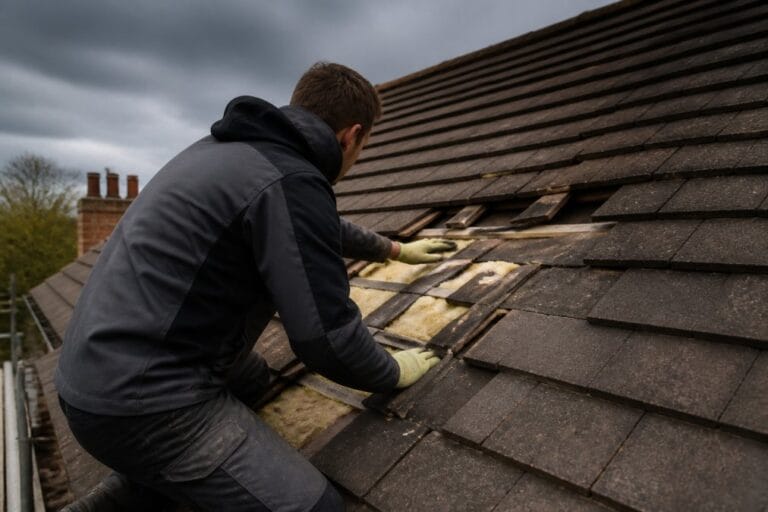
Fibreglass roofing has been a standard choice for flat roofs across the UK for decades, but property owners increasingly discover its limitations and seek alternatives to fibreglass roofing after installation. The material tends to crack under temperature fluctuations, which are common in British weather. Once damage starts, repairs become costly and temporary, patching one section often leads to problems elsewhere within months.
The real issue isn’t that fibreglass fails immediately. It’s that it fails predictably, and when it does, you’re locked into ongoing maintenance cycles. At Evershield Roofing, we’ve worked with many properties in Buckinghamshire that switched to alternatives after experiencing repeated leaks and deterioration. Most property owners don’t realise better options exist until they’ve already invested in fibreglass and watched it degrade.
Common complaints centre on brittleness, poor flexibility in cold weather, and the difficulty of creating watertight repairs. The material also shows visible wear, fading, chalking, and surface degradation, within 10-15 years, even when maintained properly. This cosmetic deterioration often precedes functional failure, creating a false sense of security that masks underlying problems.
Pro Tip
If your fibreglass roof is over 12 years old and showing chalk residue or fine cracks, don’t wait for leaks. Inspect the substrate carefully, water damage underneath often develops silently before it becomes visible inside.
If your fibreglass roof is over 12 years old and showing chalk residue or fine cracks, don’t wait for leaks. Inspect the substrate carefully, water damage underneath often develops silently before it becomes visible inside.
EPDM Rubber Roofing: Durability and Long-Term Value
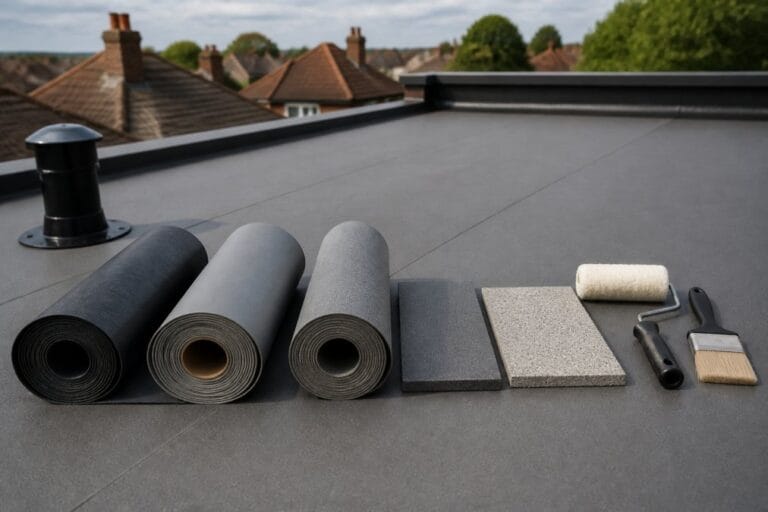
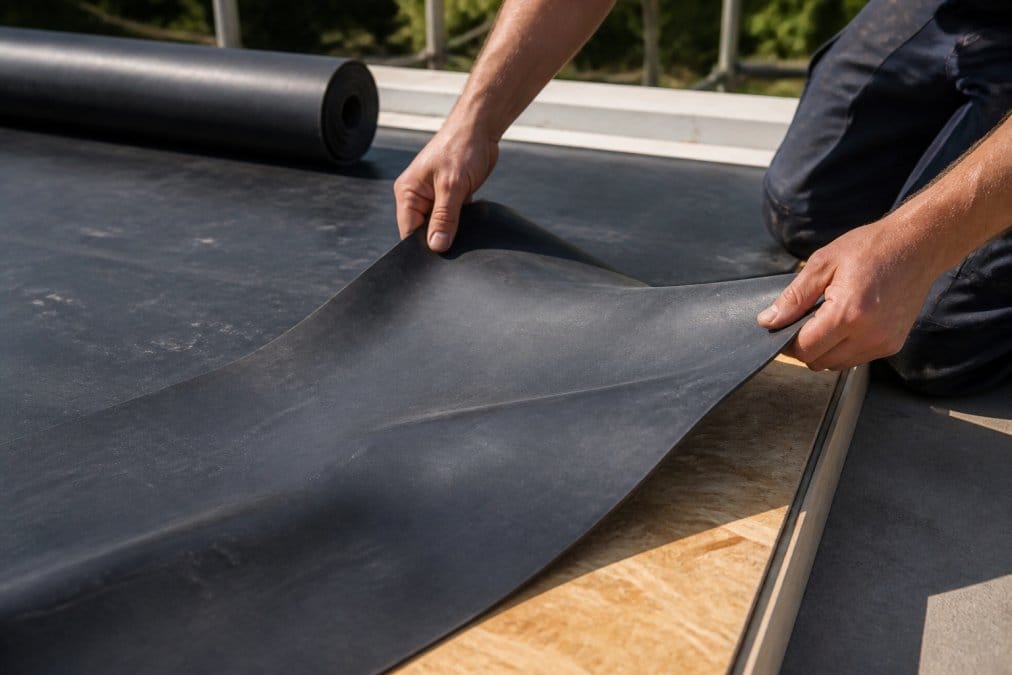
EPDM rubber membranes represent the most popular alternative to fibreglass in the UK market. Unlike fibreglass, EPDM remains flexible across a wide temperature range, accommodating the structural movement that causes fibreglass to crack. The material stretches without tearing, which is why it performs consistently through London winters and summer heat spells.
Both materials come in large, single-piece sheets that eliminate internal joints, a critical advantage over fibreglass, which requires multiple seams that often become failure points. Fewer seams means fewer places for water to find its way through.
Installation complexity varies depending on your roof size and shape. For straightforward rectangular extensions or garage roofs, professional installation ensures correct detailing around penetrations and edges.
The material’s flexibility makes it particularly suited to roofs that experience movement from structural settling or thermal expansion. Where fibreglass becomes brittle and cracks, EPDM absorbs movement without damage. Most EPDM installations in the UK are expected to exceed 50 years with minimal maintenance, a significant advantage over fibreglass’s 15-20 year lifespan.
Key Takeaway
EPDM’s single greatest strength is its ability to flex without cracking. This flexibility alone accounts for its superior performance in the UK’s variable climate.
EPDM’s single greatest strength is its ability to flex without cracking. This flexibility alone accounts for its superior performance in the UK’s variable climate.
PVC Single-Ply Membranes: Strength and Chemical Resistance
PVC membranes occupy the premium end of flat roofing alternatives. These materials are engineered for maximum durability and come with extensive warranties backed by major manufacturers. The hot-air welded seams create a bond stronger than the material itself, meaning seam failure is virtually impossible if installation is done correctly.
Chemical resistance is where PVC excels compared to both fibreglass and EPDM. If your roof is exposed to industrial fallout, atmospheric pollution, or cleaning chemicals, PVC performs significantly better. The material resists degradation from UV exposure, ozone, and environmental contaminants that break down other membranes over time. This makes PVC the preferred choice for commercial properties near motorways or industrial areas around London and Buckinghamshire.
Installation demands specialist training and equipment. Hot-air welding requires certified technicians and cannot be rushed, poor seam work is the primary failure mode for PVC systems. However, when installed correctly, PVC roofs routinely achieve 30+ year service life with minimal intervention.
The trade-off is cost. PVC systems command a premium compared to EPDM, reflecting both material price and installation complexity. For properties where durability is non-negotiable and budget allows, PVC delivers measurable value. For smaller residential projects, EPDM typically offers better value for money.
Liquid Polyurethane Membranes: Seamless Protection for Complex Roofs
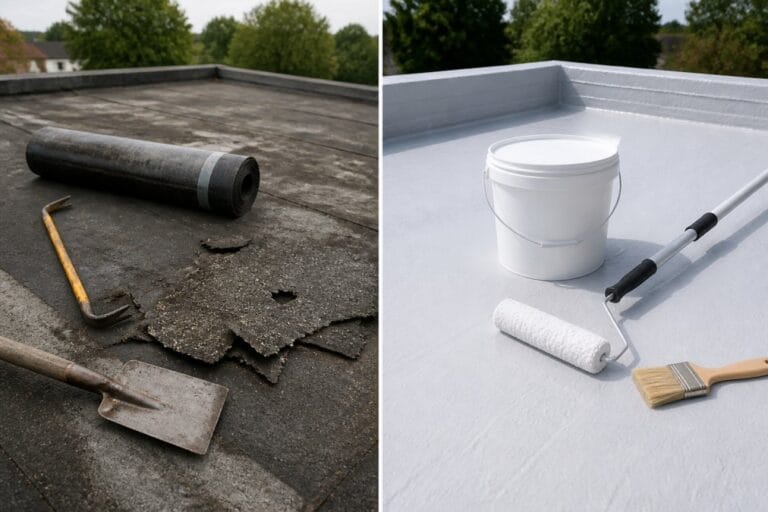
Liquid polyurethane systems solve a specific problem that sheet materials struggle with: complex roof geometries with multiple protrusions, vents, and irregular shapes. These cold-applied liquid coatings cure in place, creating a seamless, fully bonded waterproof barrier with no seams to fail.
The application process is weather-dependent. Curing requires specific temperature and humidity conditions, which means installation windows can be limited during British winter months. However, the seamless result is worth the scheduling constraint for roofs where sheet materials would require dozens of seams and complex detailing.
Polyurethane membranes excel on roofs with chimneys, multiple soil stacks, or irregular parapet details. The liquid conforms perfectly to these features, eliminating the detailing challenges that plague sheet material installations. For refurbishment work where the existing roof substrate is uneven or damaged, liquid systems often provide the most practical solution.
Flexibility and elongation properties are excellent, meaning the membrane moves with the building without cracking. Most polyurethane systems come with 25-year guarantees, though actual service life often exceeds this if maintenance is kept current. The main limitation is application skill, poor installation compromises performance significantly.
EPDM vs GRP Roofing Cost: What the Numbers Show
Cost comparison between EPDM and fibreglass (GRP) roofing depends on several variables: roof size, complexity, substrate condition, and whether you’re replacing an existing roof or installing new. For most residential properties, material costs for EPDM are comparable to or slightly lower than fibreglass. Labour costs often favour EPDM because installation is generally faster and requires less specialised equipment.
Get Your Free Roofing Quote Today! →
The real cost difference emerges over time. Fibreglass roofs typically require significant repairs or complete replacement within 15-20 years. EPDM systems routinely function for 50+ years with minimal maintenance. When you factor in repair cycles, emergency leak fixes, and eventual replacement, EPDM’s long-term cost is substantially lower.
For a typical three-bedroom semi in Buckinghamshire, expect initial material and labour costs to be similar between EPDM and fibreglass. However, an EPDM roof installed today will likely outlast two fibreglass replacements. The financial case for EPDM strengthens significantly once you account for this lifespan difference.
PVC systems cost more upfront but deliver premium durability and warranty coverage. For properties where the roof is visible and aesthetics matter, or where chemical exposure is a concern, the additional cost is justified. For straightforward residential flat roofs, EPDM typically offers the best balance of cost and performance.
Evershield Roofing can provide detailed cost comparisons based on your specific roof. Request a free survey and quote to understand the true financial picture for your property.
Watch Out
Comparing only material costs without considering lifespan is a common mistake. A cheaper fibreglass roof that fails in 15 years costs far more than a more expensive EPDM system that lasts 50 years.
Comparing only material costs without considering lifespan is a common mistake. A cheaper fibreglass roof that fails in 15 years costs far more than a more expensive EPDM system that lasts 50 years.
Flat Roof Drainage Importance When Choosing Your Material
The importance of flat roof drainage cannot be overstated, it’s often the deciding factor in whether a roofing material performs well or fails prematurely. Poor drainage forces water to sit on the roof surface, where it finds every microscopic gap and weak point. Fibreglass roofs with inadequate drainage fail faster than well-drained ones, regardless of material quality.
EPDM and PVC systems perform better with standing water than fibreglass, but neither material is designed to tolerate prolonged water pooling. The ideal flat roof slopes gently toward gutters or drainage points, shedding water quickly. If your existing roof has flat sections where water collects, addressing drainage should be your first priority before selecting a new material.
Proper drainage design includes adequate gutter capacity, clear downpipes, and proper slope (typically 1:40 or better). Standing water also accelerates algae and moss growth, which adds weight and can damage any roofing material over time. In the UK climate where moisture is abundant, drainage is not optional, it’s fundamental to roof longevity.
When choosing between alternatives to fibreglass roofing, ask your installer about drainage design. A well-drained EPDM roof will outlast a poorly drained PVC system. The material itself matters, but drainage design matters more.
| Alternative | Best For | Typical Lifespan | Key Advantage |
|---|---|---|---|
| EPDM Rubber | Residential flat roofs, extensions, garages | 50+ years | Flexibility, ease of repair, value |
| PVC Membrane | Commercial properties, chemical exposure risk | 30+ years | Chemical resistance, premium durability |
| Polyurethane Liquid | Complex roof shapes, multiple penetrations | 25+ years | Seamless application, no seams to fail |
| Fibreglass (GRP) | Legacy roofs only | 15-20 years | Established track record (now outdated) |
Comparison Table: Fibreglass Alternatives at a Glance
The table above summarises the key characteristics of each alternative. EPDM dominates the residential market because it delivers durability and value without premium pricing. PVC suits commercial applications and high-specification projects where chemical resistance and maximum warranty coverage justify the cost. Polyurethane liquid systems solve specific geometric challenges that sheet materials cannot address efficiently.
For most property owners in London and Buckinghamshire, EPDM represents the practical choice.
Which Alternative Suits Your Property?
Choosing the right alternative to fibreglass roofing requires understanding your roof’s specific demands. Start by assessing three factors: roof geometry, environmental exposure, and budget.
Frequently Asked Questions
What is the most durable alternative to fibreglass roofing?
EPDM rubber roofing and PVC single-ply membranes both outperform fibreglass in durability. EPDM typically lasts 50+ years with minimal maintenance, whilst PVC membranes offer similar longevity with superior chemical and fire resistance. The lifespan of EPDM rubber roofing makes it particularly attractive for residential properties seeking a long-term solution that requires less frequent replacement than fibreglass.
Is EPDM rubber better than GRP for flat roofs?
EPDM and GRP each have distinct advantages. EPDM vs GRP roofing cost shows EPDM is often more economical upfront and easier to install, whilst GRP offers better fire ratings and chemical resistance. EPDM wins on flexibility and accommodates structural movement better, making it ideal for residential properties. GRP suits commercial installations where fire performance is critical. Your choice depends on budget, roof structure, and performance priorities.
Why is flat roof drainage important when selecting a roofing material?
Flat roof drainage importance cannot be overstated, poor drainage causes standing water, accelerating material degradation and creating leak risks. EPDM and liquid membranes handle water pooling better than fibreglass, which can blister under trapped moisture. PVC membranes require precise installation to manage drainage. Choosing a material with proven drainage performance protects your investment and prevents costly water damage repairs.
How long does a liquid rubber roof last compared to fibreglass?
Liquid polyurethane membranes typically last 25-30 years with proper maintenance, comparable to quality fibreglass installations. However, they excel where fibreglass struggles: seamless application eliminates joint vulnerabilities, and superior flexibility reduces cracking from structural movement. On complex roof shapes or refurbished surfaces, liquid membranes often outperform fibreglass in real-world conditions, despite similar headline lifespan figures.