Benefits of Slate Roofing: Why It Lasts 100+ Years
Discover the key benefits of slate roofing: durability, weather resistance, and timeless aesthetics. Learn why slate is a premium roofing choice.

Table of Contents
- Why Slate Roofing Stands Out: The Core Benefits
- Unmatched Durability: How Long Does a Slate Roof Last
- Weather Resistance and Performance in UK Climates
- Advantages and Disadvantages of Slate Roofing
- Natural Slate vs Composite Slate Roofing: Which Suits Your Home
- Slate Roof Maintenance: Keeping Your Investment Protected
- The Long-Term Value of Choosing Slate
- Conclusion
- Frequently Asked Questions
Last Updated: October 6, 2026
Why Slate Roofing Stands Out: The Core Benefits
Slate roofing has been protecting homes and buildings for centuries, and for good reason. At Evershield Roofing, we’ve spent over 25 years working with slate and other premium roofing materials, and we can tell you directly: the benefits of slate roofing extend far beyond its striking appearance. This natural material delivers durability, weather resistance, and long-term value that few alternatives can match.
The core benefits of slate roofing centre on three fundamental strengths. First, slate is a natural stone that resists weathering, meaning it doesn’t degrade the way composite materials do over decades. Second, it’s fire-resistant by nature, slate won’t ignite or contribute to fire spread. Third, slate adds genuine value to your property. Homeowners and property managers in Buckinghamshire often find that slate roofing becomes an investment rather than an expense, particularly when they plan to stay in their homes long-term.
Pro Tip
Slate isn’t just durable, it’s also one of the few roofing materials that improves with age. As it weathers, the surface becomes even more water-resistant due to natural oxidation.
Slate isn’t just durable, it’s also one of the few roofing materials that improves with age. As it weathers, the surface becomes even more water-resistant due to natural oxidation.
What most guides miss about slate is that the benefits compound over time. While initial installation costs are higher than asphalt shingles, the absence of regular replacement cycles means you’re not paying for a new roof every 15-20 years. That’s the real financial advantage.
Unmatched Durability: How Long Does a Slate Roof Last
A slate roof typically lasts 100 to 200 years, depending on the quality of installation, the type of slate used, and local climate conditions. This lifespan is genuinely exceptional, it’s longer than many of the buildings the roof sits on.
The durability of slate roofing stems from the material’s crystalline structure. Slate is formed under intense geological pressure, which makes it incredibly dense and resistant to breakdown. Unlike asphalt shingles that degrade from UV exposure and temperature cycling, or composite materials that can become brittle, slate remains stable across centuries. The individual tiles can last longer than the fasteners holding them, which is why periodic maintenance sometimes involves replacing nails or clips rather than the slate itself.
In practical terms, this means a slate roof installed today in Buckinghamshire could still be protecting your home in the 22nd century. That’s not hyperbole, it’s documented history. Medieval churches and manor houses across the UK still have their original slate roofs.
Key Takeaway
The longevity of slate roofing is so exceptional that it often outlasts the building structure itself, making it a one-time investment rather than a recurring expense.
The longevity of slate roofing is so exceptional that it often outlasts the building structure itself, making it a one-time investment rather than a recurring expense.
The durability advantage becomes clearer when you compare replacement cycles. An asphalt roof needs replacement every 15-20 years. A composite roof lasts 20-30 years. Slate, with a lifespan of 100+ years, means you install it once and forget about it for generations. That’s the kind of durability that justifies the upfront cost.
Weather Resistance and Performance in UK Climates
Slate roofing excels in the wet, variable climate that characterises the UK. The dense, impermeable nature of slate means water cannot penetrate the material itself, it simply runs off. This makes slate particularly valuable in regions that experience heavy rainfall, freeze-thaw cycles, and exposure to coastal salt spray.
The weather resistance of slate roofing is absolute. Unlike materials that can absorb moisture and degrade, slate remains inert. In Buckinghamshire, where autumn and winter bring sustained rainfall, this matters. Water doesn’t seep into the tiles, doesn’t cause internal rot, and doesn’t create conditions for moss or algae growth on the slate itself (though moss can grow on the roof surface, which is easily cleaned).
Freeze-thaw cycles, where water freezes and expands in micro-cracks, damage many roofing materials over time. Slate’s crystalline structure and impermeability mean it resists this damage. Coastal properties benefit too. Salt spray corrodes metal fasteners and degrades composite materials, but slate remains unaffected by salt exposure.
Watch Out
While slate itself resists weather damage, the mortar, flashing, and fasteners holding it in place do require periodic inspection. This is where professional maintenance becomes essential, not because the slate fails, but because the supporting systems need attention.
While slate itself resists weather damage, the mortar, flashing, and fasteners holding it in place do require periodic inspection. This is where professional maintenance becomes essential, not because the slate fails, but because the supporting systems need attention.
One thing to understand: slate roofing doesn’t just resist weather, it actively sheds it. The smooth, dense surface and the slight slope of properly installed tiles create ideal conditions for water to drain away rapidly. In heavy rain, water moves off a slate roof faster than it can accumulate, reducing the risk of pooling or leaks.
Advantages and Disadvantages of Slate Roofing
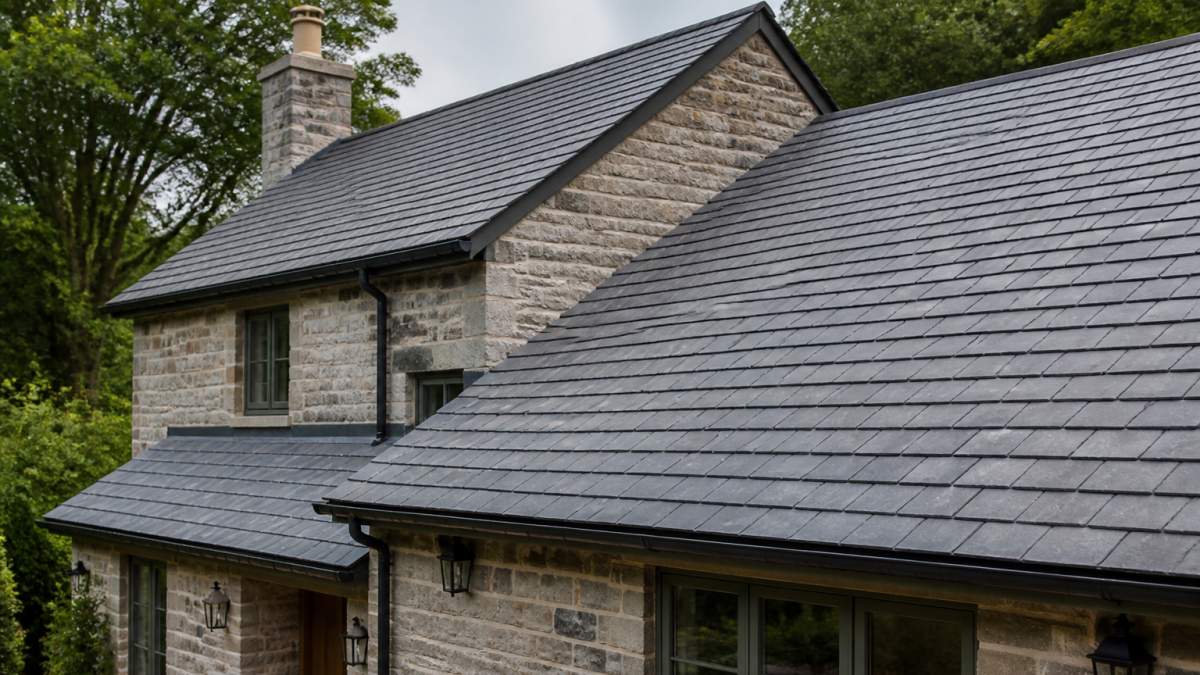
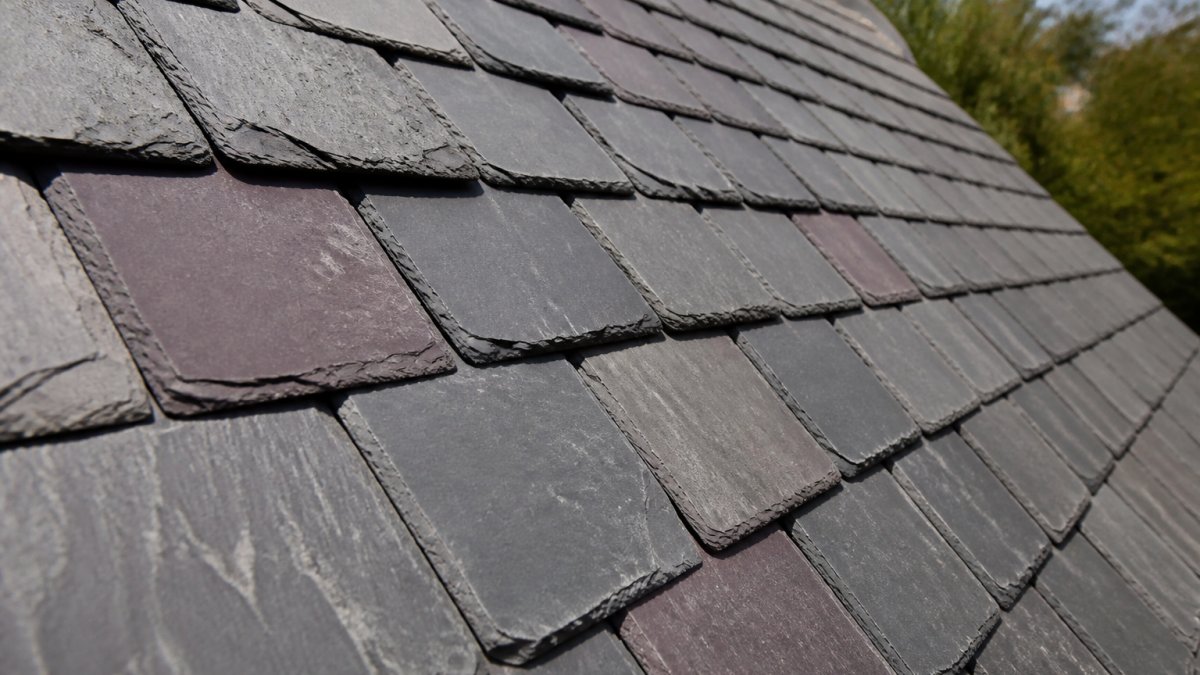
The advantages of slate roofing are substantial and well-documented. Beyond durability and weather resistance, slate offers aesthetic appeal that increases property value. The natural colour variations, greys, purples, greens, and blacks, create visual depth that manufactured materials struggle to replicate.
Slate is also environmentally responsible. It’s a natural material that requires no chemical processing, and its century-plus lifespan means far fewer replacements and less waste compared to shorter-lived alternatives. At Evershield Roofing, we value materials that deliver both performance and environmental sense.
The disadvantages of slate roofing are real, though they shouldn’t overshadow the benefits. The primary disadvantage is upfront cost. Slate is significantly more expensive than asphalt shingles or composite materials. Installation requires specialist knowledge, not every roofer can properly install slate.
Weight is another consideration. Slate is heavy, and some older buildings may require structural assessment before installation to ensure the roof structure can support the load. Modern homes typically handle slate without issue, but it’s worth verifying.
Maintenance, while minimal compared to other materials, still exists. Slate roofs occasionally need moss removal, flashing replacement, or individual tile repairs. Finding matching slate tiles for repairs can be challenging if your roof is older, though this is rarely urgent given the material’s longevity.
| Advantage | Disadvantage | Impact |
|---|---|---|
| 100+ year lifespan | High upfront cost | Long-term value offsets initial expense |
| Fire-resistant | Requires specialist installation | Limits contractor options |
| Weather-resistant | Heavy material | Structural assessment may be needed |
| Adds property value | Occasional maintenance required | Minimal compared to alternatives |
| Environmentally sound | Matching tiles can be difficult | Rarely urgent due to durability |
Natural Slate vs Composite Slate Roofing: Which Suits Your Home
Natural slate roofing and composite slate roofing are fundamentally different materials, and the choice between them depends on your priorities, budget, and building structure.
Natural slate is genuine stone quarried and cut into roofing tiles. It offers the full spectrum of benefits discussed above: true durability, fire resistance, weather impermeability, and aesthetic authenticity. The disadvantages, cost, weight, specialist installation, are inherent to the material. Natural slate is the genuine article, and it performs accordingly.
Composite slate roofing uses manufactured materials engineered to mimic the appearance of natural slate. These composites are typically made from asphalt, polymers, or recycled materials. The advantage is cost, composite slate is considerably cheaper than natural slate. Installation is also simpler, as composite tiles are lighter and easier to handle.
Get Your Free Roofing Quote Today! →
The disadvantages of composite slate are significant. It doesn’t offer the true longevity of natural slate. Composite materials degrade faster, particularly in harsh UV exposure. They lack the fire-resistance properties of genuine stone. They don’t add the same property value that natural slate does.
The honest assessment: natural slate is the superior material if you can afford it and your building structure supports it. Composite slate is a reasonable compromise if budget is tight, but it’s fundamentally a different product with different performance characteristics.
Slate Roof Maintenance: Keeping Your Investment Protected
Slate roofing requires minimal maintenance compared to other materials, but the maintenance it does need is important. Regular inspection, ideally annually or after severe weather, should focus on three areas: the slate tiles themselves, the flashing and mortar joints, and the guttering system.
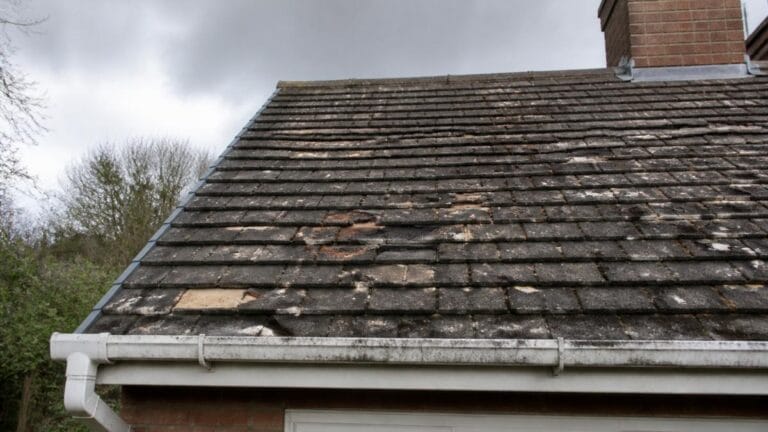
Slate tiles themselves rarely need attention. Occasionally, a tile cracks from impact (fallen branch, severe hail) and requires replacement. Finding matching slate for repairs is the main challenge, though it’s usually manageable. Flashing, the metal strips that seal joints and penetrations, requires periodic inspection. Flashing can corrode or loosen, potentially allowing water to infiltrate.
Moss and algae can grow on slate roof surfaces, particularly in damp, shaded areas. While this doesn’t damage the slate itself, it can trap moisture and look unsightly. Gentle cleaning, not high-pressure washing, which can damage mortar, keeps the roof looking good. Many homeowners in Buckinghamshire find that professional roof cleaning every few years maintains both appearance and performance.
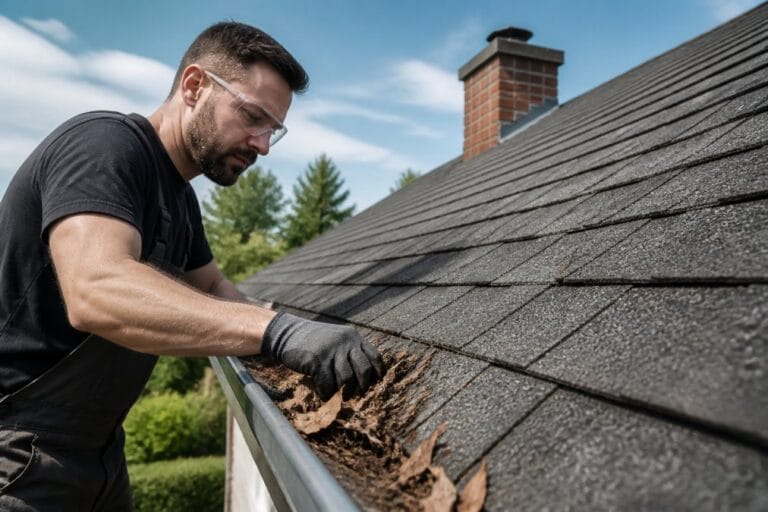
Guttering requires attention because slate roofs shed water efficiently, and gutters must be clear to handle the volume. Blocked gutters can cause water to back up under the tiles, defeating the water-shedding advantage of slate. Regular gutter cleaning is essential maintenance.
Pro Tip
Schedule professional inspection every 3-5 years, particularly after winter or severe storms. Small issues caught early, a loose flashing, a cracked tile, are far cheaper to address than water damage that develops over time.
Schedule professional inspection every 3-5 years, particularly after winter or severe storms. Small issues caught early, a loose flashing, a cracked tile, are far cheaper to address than water damage that develops over time.
The cost of slate roof maintenance is low relative to the material’s lifespan. You’re not replacing the roof. You’re not dealing with extensive repairs. You’re maintaining the supporting systems and addressing the occasional tile. This is manageable maintenance for a 100+ year investment.
The Long-Term Value of Choosing Slate
The real argument for slate roofing is economic. Yes, the upfront cost is higher than alternatives. But when you calculate the total cost of ownership over 50 or 100 years, slate becomes the most economical choice available.
Consider the maths simply. A slate roof costs more initially but lasts 100+ years. An asphalt roof costs less initially but requires replacement every 15-20 years. Over a century, you’re replacing that asphalt roof 5-7 times.
Property value is another consideration. Slate roofing is a premium feature that increases buyer perception and actual property value. In the Buckinghamshire property market, where buyers value quality and permanence, a slate roof is a genuine asset. It’s not an expense, it’s an improvement.
From a practical standpoint, slate roofing eliminates the anxiety of roof replacement cycles. You install it, maintain it minimally, and stop worrying. That peace of mind has real value. You’re not budgeting for a roof replacement in 2040 or 2055.
For property owners thinking beyond the immediate term, those planning to stay in their homes, those building legacy properties, those managing commercial buildings across decades, slate roofing makes sense. It’s the choice that rewards long-term thinking.
Conclusion
The benefits of slate roofing are clear: exceptional durability, proven weather resistance, fire safety, and long-term value that few alternatives match. Slate is a material that works harder the longer you own it, delivering protection and peace of mind across generations.
If you’re considering a new roof installation or replacement in Buckinghamshire, slate deserves serious consideration. At Evershield Roofing, we specialise in slate installation and have guided homeowners through this decision. We provide free surveys and quotes to help you understand whether slate suits your building and your plans. With over 25 years of experience and fully insured work, we’re here to ensure your roof investment is installed properly and protected long-term.
Get your free roofing quote today and discover how slate roofing can transform your property’s durability and value.
Frequently Asked Questions
What are the main benefits of a slate roof?
Slate roofing offers exceptional durability lasting over 100 years, outstanding weather resistance, fire protection, and timeless aesthetic appeal. It requires minimal maintenance compared to other materials, resists moss and algae growth, and adds significant value to your property. The natural beauty of slate also enhances curb appeal and comes in varied colours and textures that complement traditional and modern homes alike.
How long does a slate roof last in the UK?
A well-installed slate roof typically lasts 100 to 150 years or more, making it one of the longest-lasting roofing materials available. UK weather conditions, including heavy rain, wind, and temperature fluctuations, are well-suited to slate’s durability. With proper maintenance and occasional repairs to individual tiles, many slate roofs installed a century ago remain in service today.
What are the disadvantages of slate roofing?
The primary disadvantage is higher upfront cost compared to asphalt or composite materials. Slate is also heavy, requiring structural assessment before installation. Finding skilled installers and matching replacement tiles for repairs can be challenging. Some homeowners find the initial investment difficult despite long-term savings. Additionally, walking on slate tiles risks damage, so professional maintenance is essential.
What is the difference between natural slate and composite slate roofing?
Natural slate is quarried stone offering unmatched durability, authentic appearance, and longevity exceeding 100 years. Composite slate uses synthetic materials to mimic slate’s look at lower cost and weight, making installation easier on older structures. However, composite slate typically lasts 30-50 years, significantly less than natural slate. Natural slate provides superior weather resistance and fire protection, while composite offers budget-friendly aesthetics and lighter load on your roof structure.