Flat Roof Maintenance Checklist for Homeowners
Essential flat roof maintenance checklist for homeowners.

Table of Contents
- Why Flat Roof Maintenance Matters
- Flat Roof Inspection Checklist: What to Look For
- How Often to Inspect a Flat Roof
- Flat Roof Drainage and Ponding Water
- Recognising Flat Roof Leak Signs Early
- Seasonal Maintenance Tasks for Flat Roofs
- When to Call a Professional Roofer
- Conclusion
- Frequently Asked Questions
Last Updated: October 18, 2026
Why Flat Roof Maintenance Matters
A flat roof maintenance checklist isn’t just a nice-to-have document, it’s the difference between a roof that lasts 20 years and one that fails at 10.
At Evershield Roofing, we’ve seen countless homeowners discover leaks only after water damage has already spread into walls and ceilings. By then, the repair bill has doubled or tripled. A proper flat roof maintenance checklist catches these issues early, when they’re still manageable.
Regular maintenance also extends the life of your roof significantly. Debris buildup, organic growth like moss and algae, and membrane degradation happen gradually, but they’re preventable with consistent attention. This guide walks you through exactly what to inspect, when to inspect it, and how to recognise when professional help is needed.
Pro Tip
The best time to start a maintenance routine is before problems appear. If your roof is already showing signs of damage, document it with photos before calling a professional, this helps roofers diagnose issues faster and gives you a record for insurance claims.
The best time to start a maintenance routine is before problems appear. If your roof is already showing signs of damage, document it with photos before calling a professional, this helps roofers diagnose issues faster and gives you a record for insurance claims.
Flat Roof Inspection Checklist: What to Look For
A thorough flat roof maintenance checklist covers four main areas: the membrane surface, seams and flashings, debris and organic growth, and drainage systems. Each requires different attention, and each tells you something critical about your roof’s condition.
Surface condition and membrane damage
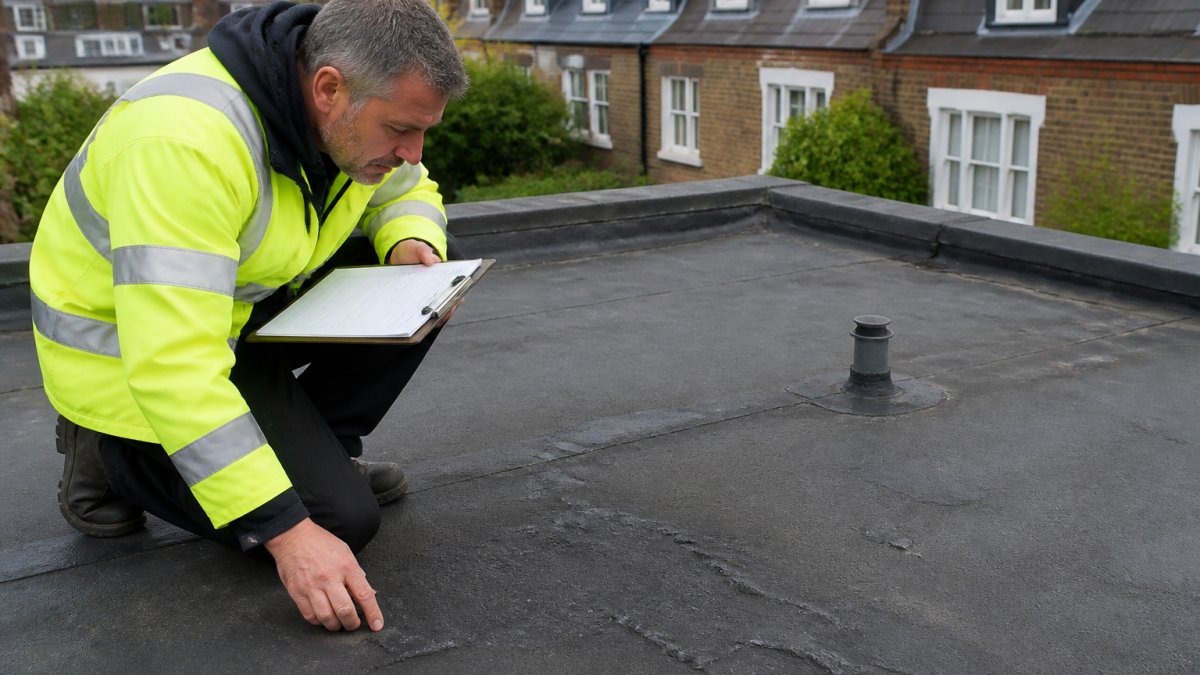
The membrane is your roof’s primary defence against water infiltration. During inspection, look for blistering, cracking, punctures, or areas where the material appears thin or worn.
Check for visible cracks or splits, especially around areas that experience temperature stress: corners, edges, and anywhere the roof meets a vertical wall. These stress points expand and contract with temperature changes, creating weak spots.
Look for any areas where the membrane has lifted or separated from the substrate. This creates pockets where water can collect and eventually penetrate.
Watch Out
Do NOT walk on your roof unless you’re trained and equipped for it. Flat roofs can be deceptively fragile, and foot traffic can cause damage that accelerates deterioration. Use binoculars or a drone inspection if you need a closer look, many professional roofers now offer drone surveys as part of their service.
Do NOT walk on your roof unless you’re trained and equipped for it. Flat roofs can be deceptively fragile, and foot traffic can cause damage that accelerates deterioration. Use binoculars or a drone inspection if you need a closer look, many professional roofers now offer drone surveys as part of their service.
Seams, flashings and penetrations
Seams are where two pieces of membrane meet, and they’re inherently vulnerable to water ingress. Inspect every seam carefully for separation, cracking, or gaps. Flashings, the metal or rubber transitions around chimneys, vents, and edges, are equally critical.
Walk the perimeter of your roof and check where it meets the walls. Flashings should be sealed tightly and sit flush against the membrane. Look for any gaps, rust (on metal flashings), or deterioration of the sealant. Roof penetrations, pipes, vents, air conditioning units, satellite dishes, need careful inspection.
Check the condition of any sealant around penetrations. Sealant degrades over time, especially in London’s variable climate. If sealant is cracking, peeling, or missing, it needs replacing. This is one area where professional roofers can make a significant difference: resealing penetrations is straightforward but requires proper materials and technique.
Debris and organic growth
Debris accumulation is one of the most common causes of flat roof problems. Leaves, twigs, dirt, and other organic material trap moisture against the membrane. Over time, this creates conditions for moss and algae to flourish.
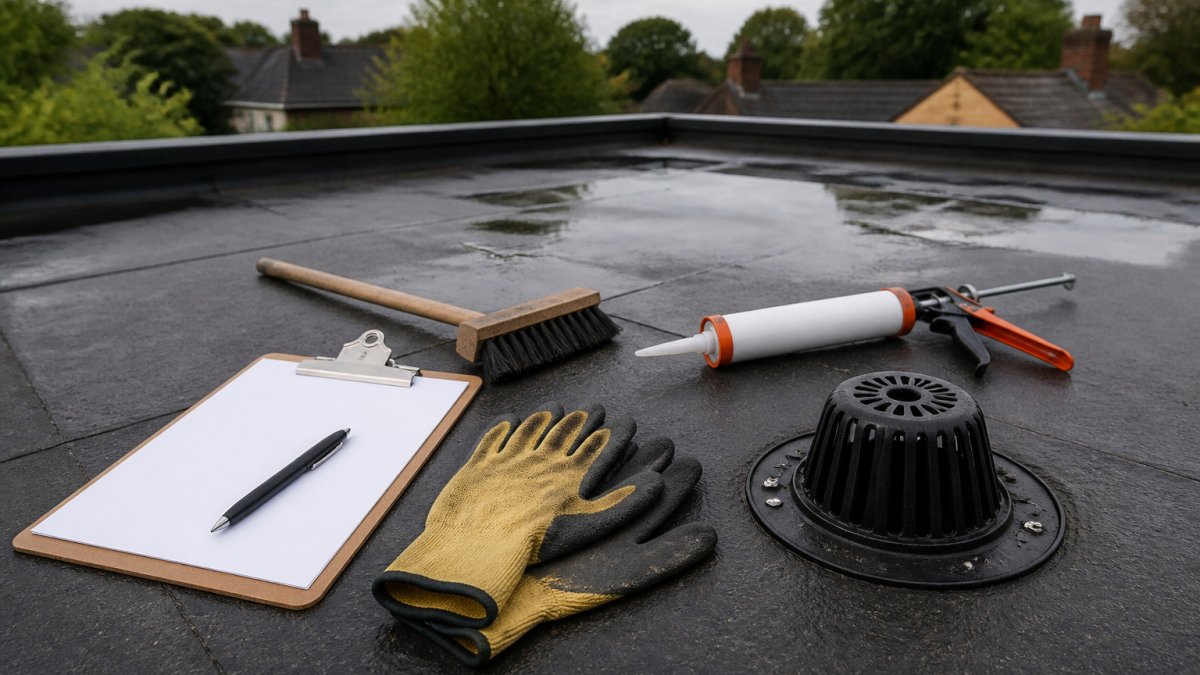
During your inspection, note the extent of debris. Light debris can often be cleared by hand or with a soft brush. Heavy accumulation suggests your roof needs professional cleaning. Look for moss, algae, or lichen growth, green or black patches indicate moisture retention and warrant attention.
Pay special attention to corners and low-lying areas where debris naturally collects. These are the first places to show signs of water damage. If you see organic growth, it’s a warning sign that drainage isn’t working properly or that the roof surface is staying wet longer than it should.
How Often to Inspect a Flat Roof
Most homeowners should conduct a visual inspection of their flat roof at least twice yearly, once in spring and once in autumn. This schedule catches problems before they worsen and aligns with seasonal maintenance needs. If your roof is older than 15 years, consider quarterly inspections instead.
After severe weather, heavy rain, high winds, or hail, inspect your roof within a few days. Storm damage can be subtle and easy to miss if you wait. Similarly, if you’ve noticed leaks or water stains on your ceilings, inspect immediately to pinpoint the source.
Between visual inspections, keep an eye on your ceilings and walls for water stains or dampness. These are often the first signs of roof problems. Document any stains with photos and note the date, this information is invaluable when you contact a professional roofer.
Key Takeaway
A flat roof inspection checklist is most effective when done consistently. Set reminders on your phone for spring and autumn inspections, and photograph the same areas each time. Over months and years, you’ll develop a clear picture of how your roof is ageing.
A flat roof inspection checklist is most effective when done consistently. Set reminders on your phone for spring and autumn inspections, and photograph the same areas each time. Over months and years, you’ll develop a clear picture of how your roof is ageing.
Flat Roof Drainage and Ponding Water
Flat roofs are supposed to shed water, but they rarely shed it as quickly as pitched roofs. Some standing water after rain is normal, but ponding, water that sits for more than 48 hours after rain, is a serious problem.
During your inspection, look for areas where water collects. Mark them on a mental map of your roof. After the next rain, check whether water drains from these areas within 24-48 hours.
Check all drainage points: gutters, downpipes, scuppers (if your roof has them), and internal drains. Clear any debris from gutters and downpipes, leaves and dirt are the most common cause of drainage failure.
Look at the roof surface itself for signs of water pooling. If the membrane is sagging or dipping in places, water will collect there.
Recognising Flat Roof Leak Signs Early
Leaks rarely announce themselves with water pouring through your ceiling. More often, they start subtly: a damp patch, a slight discolouration, or a musty smell in your loft or upper rooms.
Water stains on ceilings are the most obvious sign. They often appear as brown or yellow patches and may be accompanied by peeling paint or wallpaper.
Soft patches in ceilings, especially in corners or near walls, indicate water saturation in the plasterboard. This is more advanced damage and means the leak has been present for some time.
Get Your Free Roofing Quote Today! →
Listen for water sounds in walls or ceilings during or after rain. A dripping or trickling sound indicates active water ingress.
If you suspect a leak, don’t delay. Water damage spreads quickly and becomes exponentially more expensive to repair. Contact a professional roofer to locate the source.
Seasonal Maintenance Tasks for Flat Roofs
Your flat roof maintenance checklist should change with the seasons. London’s climate creates different challenges in each season, and proactive maintenance prevents season-specific problems.
Spring and summer preparation
Spring is the time to clear winter debris and assess any damage from storms or frost. Check for cracks that may have formed during freeze-thaw cycles. Remove leaves, twigs, and dirt accumulated over winter. If moss or algae has begun to grow, early spring cleaning prevents it from spreading.
Inspect sealant around penetrations and seams, winter weather often damages sealant, and early replacement prevents summer leaks. Check that gutters and downpipes are clear and draining properly. Summer rain in London can be heavy and sudden; you need your drainage system working at full capacity.
In summer, monitor for ponding after rain. Heat can accelerate membrane degradation, especially if the roof surface is dark-coloured and absorbs significant solar radiation. Look for any blistering or cracking that may have developed.
Autumn and winter care
Autumn is when debris accumulation becomes critical. Falling leaves will clog gutters and collect on the roof surface. Regular clearing throughout autumn prevents the heavy buildup that causes winter problems. Check that your roof can handle the weight of wet leaves and standing water.
Before winter, ensure all drainage is clear and functioning. Winter rain in London is often prolonged, and your roof needs to shed water efficiently. Inspect sealant one final time, winter frost will exploit any gaps or cracks. Check flashings and penetrations, paying special attention to areas where ice might form.
In winter, monitor your roof after snow or frost. If you notice ice dams (ice buildup at roof edges), this indicates drainage problems. Inspect ceilings regularly for new water stains, winter is when leaks often become visible due to sustained wet weather.
When to Call a Professional Roofer
Your flat roof maintenance checklist should tell you when professional help is needed. Some issues you can monitor and manage; others require expert intervention.
Call a professional roofer if you notice blistering, cracking, or lifting in the membrane. These indicate structural compromise and need expert assessment.
If you suspect a leak, water stains, damp patches, or musty smells, don’t investigate further yourself. If you find organic growth (moss, algae, or lichen), professional cleaning is safer and more effective than DIY attempts.
After severe weather, consider a professional inspection even if you don’t see obvious damage. Storm damage can be subtle, and an expert eye catches problems you might miss.
Evershield Roofing offers free surveys and quotes for flat roof inspection and maintenance. Our team can walk you through your flat roof maintenance checklist, identify any issues, and recommend the best course of action.
Best For
Homeowners in Buckinghamshire seeking expert flat roof assessment without upfront cost. A free survey gives you a clear picture of your roof’s condition and helps you plan maintenance or repairs with confidence.
Homeowners in Buckinghamshire seeking expert flat roof assessment without upfront cost. A free survey gives you a clear picture of your roof’s condition and helps you plan maintenance or repairs with confidence.
Conclusion
A flat roof maintenance checklist is your best defence against costly repairs and water damage. Regular inspection catches problems early, seasonal maintenance prevents season-specific issues, and professional assessment ensures you’re not missing hidden damage.
Start with the checklist in this guide: inspect your surface, seams, and drainage twice yearly. Document what you find with photos and notes. When you spot issues beyond your expertise, blistering, failed sealant, ponding, or suspected leaks, contact a professional roofer promptly.
Evershield Roofing specialises in flat roof maintenance and repair for homeowners across London and Buckinghamshire. We offer free surveys, expert guidance, and emergency repair availability when problems arise. Our team has over 25 years of experience and keeps up-to-date with the latest industry developments. Get your free roofing quote today and take the first step toward a roof that lasts.
Frequently Asked Questions
How often should I inspect my flat roof?
Inspect your flat roof at least twice yearly: once in spring before summer weather and once in autumn before winter. After storms or severe weather, inspect immediately for damage. If you notice signs of leaks or ponding water, check more frequently. Regular inspections catch small problems before they become costly repairs.
What are the main signs of a flat roof leak?
Common flat roof leak signs include water stains on interior ceilings or walls, damp patches that appear after rainfall, visible cracks or blistering on the roof membrane, and mould growth inside your property. Soft or spongy areas on the roof surface also indicate water damage. If you spot any of these, contact a roofer promptly to prevent further deterioration.
Why is ponding water a problem on flat roofs?
Ponding water sits on flat roof surfaces because they lack steep slopes for drainage. Standing water adds weight, accelerates membrane deterioration, and creates ideal conditions for algae and moss growth. Over time, it seeps through small cracks and causes leaks inside your property. Clear ponding water within 48 hours of rainfall to prevent damage and extend your roof’s lifespan.
Can I perform flat roof maintenance myself, or do I need a professional?
You can handle basic maintenance like clearing debris and gutters from ground level. However, inspecting the roof surface itself, testing membranes, checking seams, and diagnosing drainage issues require professional expertise and safe access equipment. A qualified roofer has the training to spot damage early and recommend repairs before they become expensive. Get a professional inspection annually.
What’s included in a flat roof maintenance checklist?
A comprehensive flat roof maintenance checklist covers membrane condition, seams and flashings, roof penetrations, drainage systems and gutters, debris removal, and signs of leaks or ponding water. Check for blistering, cracks, lifted edges, and organic growth like moss. Inspect where pipes and vents meet the roof surface. Clear all drains and ensure water flows freely away from the building.
A strong, long-lasting roof protects everything beneath it. With a systematic maintenance routine and professional support when needed, your flat roof will serve you reliably for years to come. Evershield Roofing is here to help, responsive, knowledgeable, and committed to your roof’s health.