How Regular Gutter Cleaning Protects Your Roof
Gutter cleaning keeps water off your roof, fascias and walls. Learn the roof benefits, warning signs and how often to clean in the UK.

Quick Summary
Regular gutter cleaning keeps rainwater flowing away from the house instead of spilling over and soaking the roof edge, fascias and walls. Clearing blockages before winter and spring helps prevent rot, damp and faster wear on the roof covering.
- Blocked gutters hold water that soaks the roof edge, fascias and walls below.
- Standing water lets moisture seep into timber, which softens boards and invites rot.
- Moss growing where water lingers lifts tiles and shortens the roofing material’s lifespan.
- A sensible UK schedule is late autumn, January or February, April or May, and an optional August check.
- A gutter that looks clear can still be blocked at the downpipe outlet, so test the flow.
Table of Contents
- What Blocked Gutters Do to Your Roof
- How Often to Clean Gutters in the UK
- Warning Signs Your Gutters Need Cleaning
- Protecting Fascias, Soffits and Foundations from Runoff
- DIY Cleaning Versus Professional Gutter Cleaning
- Gutter Maintenance Tips for Homeowners
- Booking Your Gutter Clean With Evershield Roofing
- Frequently Asked Questions
What Blocked Gutters Do to Your Roof
Blocked gutters rarely cause trouble on their own. They cause it by holding water where it should run away from the house. When leaves, moss and silt pack a gutter, rainwater backs up, spills over the edge and soaks the roof edge, the fascias and the walls below. Over a wet British winter, that steady soaking is what turns a minor blockage into a costly repair.
The damage usually follows a clear pattern. Water collects and sits in the channel, then seeps under the lower roof tiles or into the felt and flashing. Once moisture gets into the timber, it softens the boards and invites rot. Damp then spreads to the wall plate and the plaster inside the loft or top floor. Many homeowners only notice the problem when a ceiling stain appears, by which point the water has been getting in for months.
Standing water also speeds up wear on the roof covering itself. Moss takes hold where water lingers, lifting tiles and holding moisture against the surface, which shortens the lifespan of the roofing material. A roof that is kept dry and free of debris will generally age more slowly than one that is left to stay wet.
Regular cleaning is the simplest way to break this cycle. Clearing the gutters keeps water moving, which protects the roof, the timber and the walls around it.
How Often to Clean Gutters in the UK
Generic “twice a year” advice is a starting point, not a plan. The right frequency for a British home depends on what is growing nearby, how much rain the area receives, and the age and pitch of the roof. In London and across Buckinghamshire, the practical picture varies street by street.
In Buckinghamshire, the mix shifts. Beech, oak and ash are common, and beech in particular holds its leaves through winter, dropping them late and in quantity. Properties bordering woodland or the Chilterns often see moss and leaf litter combined, which compacts faster than leaves alone. Homes on the edge of towns with mature gardens frequently need a late-autumn clean, a mid-winter check after storms, and a spring clear after catkins and blossom.
Rainfall patterns matter too. The west of the UK generally receives more rain than the east, but intense summer downpours are now common everywhere and test gutters that have been dry for weeks. A gutter half-full of dry, light debris can still overflow in a sudden heavy shower because the water cannot penetrate the compacted layer quickly enough.
Roof pitch and covering also affect frequency. Shallow-pitch roofs shed debris more slowly, and concrete tiles and felt roofs tend to grow more moss than slate or clay, which adds to the load in the channel. Older properties with cast-iron or asbestos-cement gutters may have narrower profiles or deteriorated joints that trap material.
A sensible schedule for most UK homes is:
- Late October to late November: clear the main autumn leaf fall before winter storms.
- January or February: check after the worst weather and clear any storm-driven debris.
- April or May: remove blossom, seed and moss before the growing season.
- August: optional check after a dry spell, especially under trees that shed bark or seeds.
Watch out: a gutter that looks clear from ground level can still be blocked at the downpipe outlet or behind a bend, so a visual check is not the same as a flow test.
If you are unsure, start with a clean in late autumn and inspect again in spring. Adjust the frequency based on what you find, if the channel is half-full after six months, you need more frequent visits, not fewer.
The article suggests a rough yearly schedule for clearing gutters across the UK:
| Timing | Task | Reason |
|---|---|---|
| Late October to late November | Clear main autumn leaf fall | Clear before winter storms |
| January or February | Check and clear storm debris | Check after the worst weather |
| April or May | Remove blossom, seed and moss | Clear before the growing season |
| August | Optional check after a dry spell | Especially under trees that shed bark or seeds |
Warning Signs Your Gutters Need Cleaning
Your gutters usually give you clues before a serious problem develops. Watch for these signs:
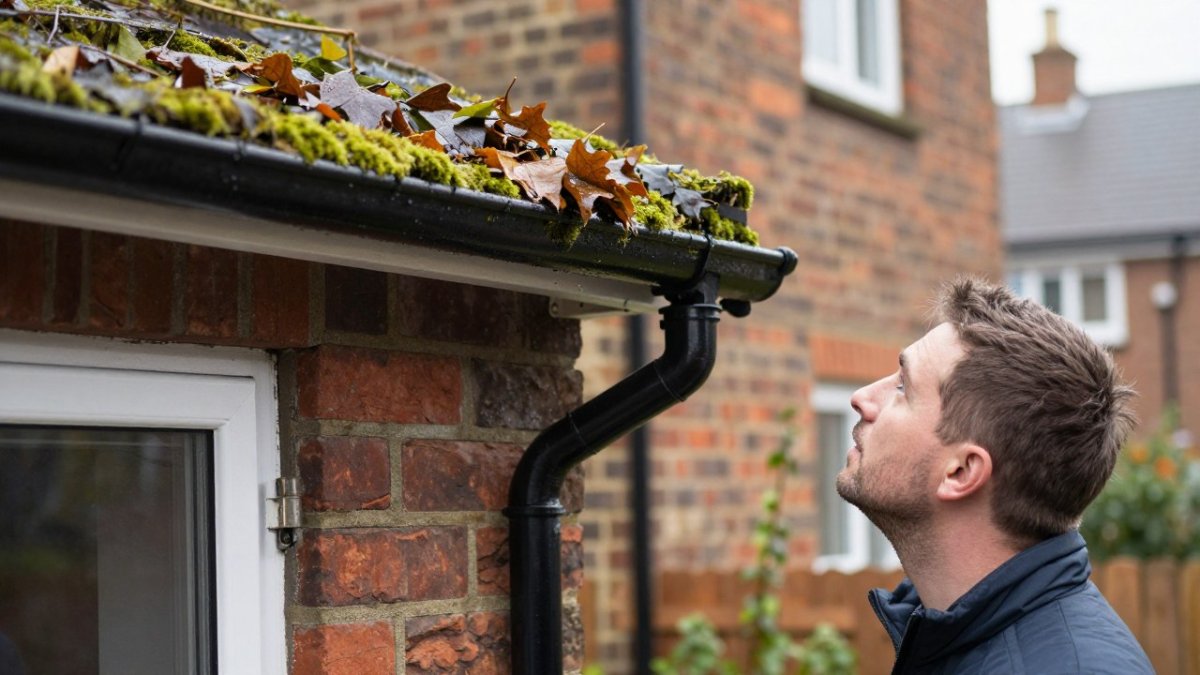
- Water spilling over the gutter edge during rain
- Visible moss, weeds or seedlings growing in the channel
- Sagging sections or gutters pulling away from the wall
- Damp patches or peeling paint on the fascia boards
- Stains running down the outside of the walls
- Overflowing downpipes or water pooling at ground level
Any of these is worth acting on quickly. If the fascia boards already look soft or rotten, it is worth checking how far the damage has spread before the next wet season.
Protecting Fascias, Soffits and Foundations from Runoff
The fascias and soffits sit at the edge of the roof and take the first hit from overflowing water. Fascias are the vertical boards that the gutters attach to, while soffits are the horizontal panels underneath the eaves. When gutters fail, both can absorb water for long periods, leading to swelling, paint failure and rot.
Get Your Free Roofing Quote Today! →
Foundations are at risk too. Water that spills from a blocked gutter can pool against the base of the wall and soak into the ground beside the house. Over time this can weaken the soil and encourage damp at the lower walls. Keeping gutters clear and downpipes directing water well away from the building is one of the cheapest ways to protect the structure.
DIY Cleaning Versus Professional Gutter Cleaning
Cleaning gutters yourself is reasonable for some homes and genuinely risky for others. The decision should turn on access, height, roof pitch and the condition of the gutter system, not on cost alone.
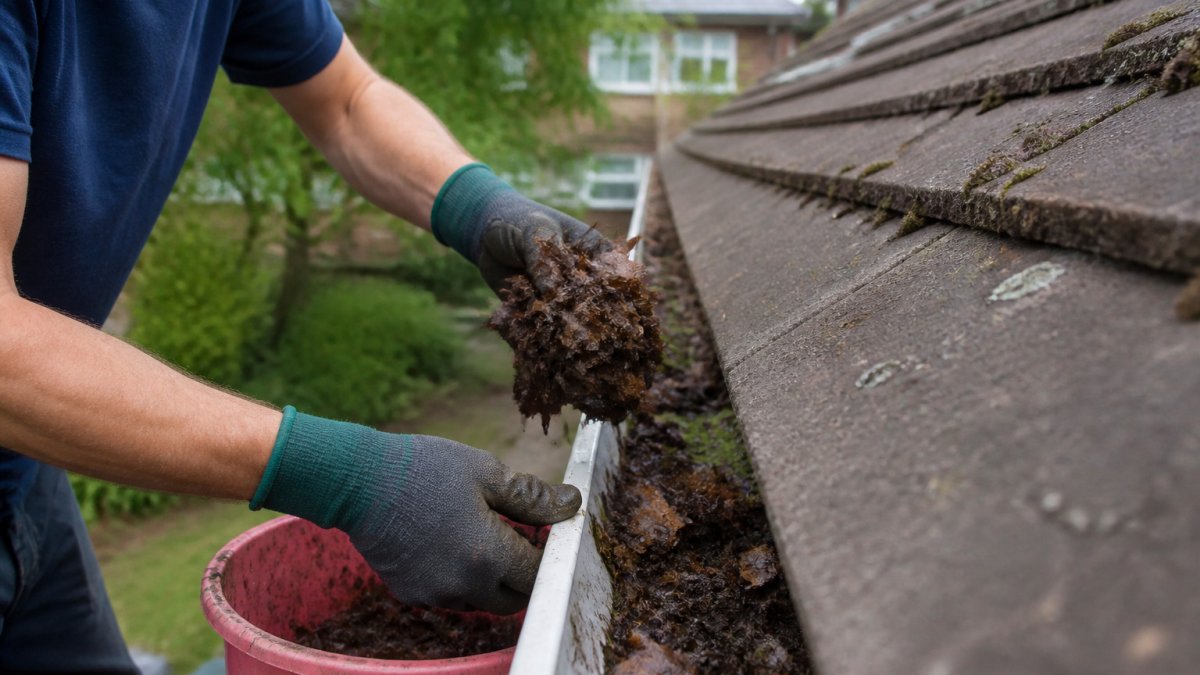
On a single-storey extension or a bungalow with stable ground and a short ladder reach, DIY is practical. You need a ladder that extends above the gutter line, a stand-off bracket to keep the ladder away from the gutter, gloves, a trowel or scoop, a bucket and a hose for a flow test. Working from a ladder is still the main risk: falls from height remain one of the most common causes of serious domestic injury in the UK, and gutter cleaning combines height with wet, slippery surfaces and the temptation to overreach.
On two-storey homes, steep roofs, gutters above conservatories, glass extensions or sloping ground, DIY becomes hazardous. The same applies where gutters are concealed behind fascia trims, where downpipes run internally, or where the gutter is already sagging or pulling away from the wall. In those cases, a professional with ground-level vacuum equipment or a stable tower can clean safely without anyone standing on a ladder at the gutter line.
Signs that professional cleaning is the right call:
- The gutter is more than one storey above safe ladder footing.
- The roof is steep, fragile or has skylights and valleys close to the gutter.
- The gutter is sagging, leaking or has loose brackets.
- There is visible moss on the roof that is feeding the gutter.
- You are unsure whether the downpipes are running clear.
- You have any doubt about your own balance or confidence at height.
A professional clean also includes a check that most homeowners cannot do safely: inspecting the gutter run for cracks, failed seals, loose brackets and signs of water tracking behind the fascia. Those findings are often more valuable than the clean itself, because they catch problems before they reach the roof timbers.
Watch out: pressure washers and stiff brushes can damage older cast-iron, asbestos-cement or plastic gutters, and pushing debris down a downpipe without checking the outlet can simply move the blockage out of sight.
A practical rule is to DIY only where the ladder footing is firm, the height is manageable and the gutter is in good condition. Otherwise, pay for a professional clean and ask them to report on the condition of the gutters, fascias and downpipes while they are there.
Gutter Maintenance Tips for Homeowners
Routine upkeep keeps gutters working between cleans:
- Check the gutters from the ground with binoculars after heavy storms
- Clear leaves from the downpipe outlets, which often block first
- Trim overhanging branches so they do not drop debris straight into the channel, and compare emergency roof repair with scheduled maintenance to plan your upkeep.
- Test the flow by pouring a bucket of water into the top of the gutter
- Refix loose brackets and reseal any leaking joints
Booking Your Gutter Clean With Evershield Roofing
If you are unsure whether your gutters are doing their job, a professional check is a sensible next step. Evershield Roofing provides gutter cleaning and guttering services, and can inspect the roof, fascias and gutters together so you can see the full picture. If the clean uncovers damage, you can look at gutter repair and replacement options.
Evershield Roofing has over 25 years of experience, is fully insured, and offers free surveys and quotes. Finance is available from 0% APR, which can help spread the cost of larger repairs. Get your free roofing quote today from Evershield Roofing, and find out whether a clean is all your roof needs or whether a repair should come first.
Frequently Asked Questions
How does regular gutter cleaning protect a roof?
Clear gutters let rainwater drain into the downpipes instead of pooling along the roof edge. Standing water and overflow can soak into roof edges, fascias and soffits, where it causes rot and damp over time. Keeping gutters clear also stops moss and leaf debris building up against the roof, which reduces the risk of water getting under tiles and around the eaves. A routine clean is usually far cheaper than repairing the timber and tiles that blocked gutters can damage.
How often should gutters be cleaned in the UK?
Most UK homes benefit from gutters being cleaned at least twice a year, typically in late spring after the blossom has fallen and again in late autumn once the leaves have dropped. Properties surrounded by mature trees, or those with moss-prone roofs, may need cleaning three or four times a year. Check gutters after storms too, as heavy winds can move debris into the channels quickly. Evershield Roofing can advise on the right schedule for your property.
What happens if you do not clean your gutters?
Over time, leaves, moss and silt compact into a dense block that stops water flowing. Water then overflows at the joints and down the fascia, soaking into timber and masonry. Blockages can also cause gutter brackets to sag or pull away under the weight of trapped water. In winter, standing water can freeze and expand, cracking joints and downpipes. The repair bill for rot and water damage is usually much higher than the cost of regular cleaning.
Is it safer to hire a professional to clean gutters?
Yes, for most homeowners. Working at height on a ladder is the main risk, and falls from ladders are a common cause of serious injury. A professional team will have the right access equipment, insurance and experience of working near roof edges. Ground-level vacuum systems also remove the need for a ladder altogether. If you do clean gutters yourself, use a secure ladder on firm, level ground and never work alone.