5 Signs Your Roof Needs Repair or Replacement
Roof repair vs replacement in London: compare costs, roof age and damage signs, and find out which option makes sense for your home. Get a free quote.

Last Updated: November 22, 2026
Quick Summary
A roof repair vs replacement decision depends mainly on how much of the roof is damaged and how old it is. Repair suits isolated faults on a sound roof, while replacement suits widespread failure or repeated leaks.
- If damage is confined to one slope or area, repair is usually the sensible starting point.
- Problems appearing in new places signal that replacement tends to be better long-term value.
- Postponing a repair on a leaking roof can cause costly water damage to ceilings, insulation and timbers.
- London repair quotes can be driven up by access and scaffolding, so ask for that element itemised.
- Compare replacement quotes on scope, since a much cheaper quote often omits scaffolding or timber repairs.
Repair or replace your roof?Evershield Roofing offers free surveys, quotes and finance from 0% APR.
Table of Contents
- Roof Repair vs Replacement: Which Does Your London Home Need?
- Signs You Need a New Roof
- Roof Lifespan in the UK: What to Expect from Each Material
- Roof Repair Cost London: What Repairs Typically Involve
- Roof Replacement Cost London: Benchmarks, Scope and Financing
- Repair vs Replacement Side by Side: A Decision Checklist
- Booking Your Free Roof Survey with Evershield Roofing
- Frequently Asked Questions
Roof Repair vs Replacement: Which Does Your London Home Need?
Deciding between a roof repair and a full replacement is one of the biggest calls a homeowner makes, and it is easy to get wrong. Our advice is to start with the extent of the damage, the age of the roof and the cost of each route. A roof repair vs replacement guide London homeowners can rely on should answer that question clearly before any money changes hands.
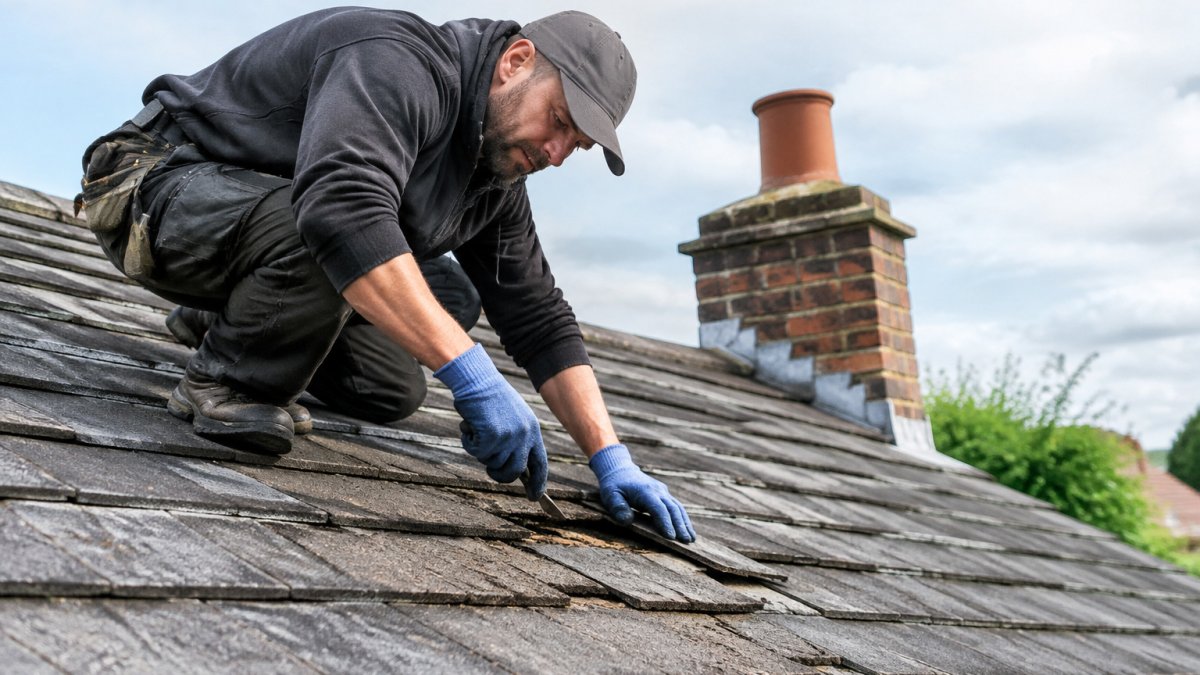
A repair fixes a specific fault, such as slipped tiles, a flashing failure or a localised leak. A replacement strips the roof back and installs a new covering. As a rule of thumb, a repair suits a roof that is structurally sound but has isolated problems. A replacement suits a roof that is failing across its whole surface.
The practical test is simple. Count how much of the roof is affected. If the damage is confined to one slope or one area, repair is usually the sensible starting point. If problems keep appearing in new places, replacement tends to be the better long-term value.
Watch out: postponing a repair on a leaking roof often turns a small job into water damage to ceilings, insulation and timbers, which costs far more to put right.
Signs You Need a New Roof
Several warning signs suggest a roof has reached the end of its useful life. Missing or cracked tiles spread across several slopes are one of the clearest indicators. So is a sagging ridge or a roof line that no longer looks straight from the pavement.
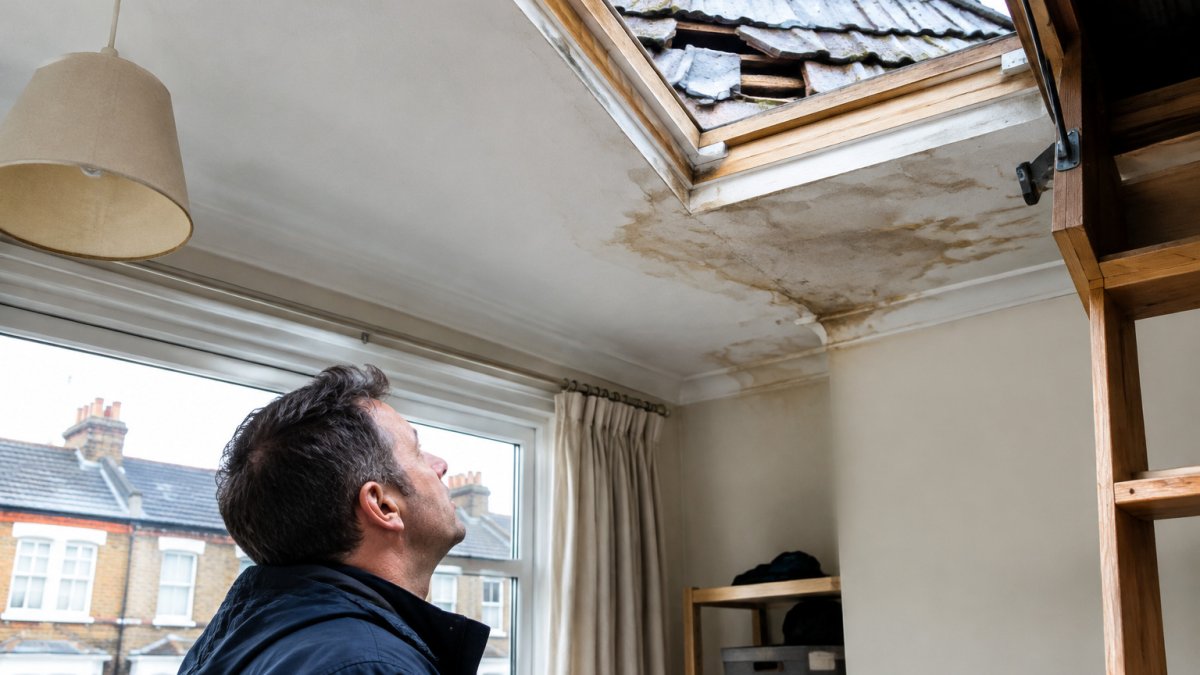
Inside the home, look for damp patches on upper ceilings, staining on walls and a musty smell in the loft. Daylight visible through the roof space is a serious sign. Moss and lichen growth can also hold moisture against the covering and speed up deterioration.
Wherever possible, have a roofer inspect the roof rather than relying on a single symptom. A proper inspection will show whether the issues are isolated or systemic.
Roof Lifespan in the UK: What to Expect from Each Material
Lifespan depends heavily on the material and on how well the roof has been maintained. Concrete tiles, clay tiles, slate and flat roof coverings all wear differently, so the age of your roof means little without knowing what it is made of.
Slate and clay tiles generally outlast concrete tiles when properly maintained, while flat roof coverings have a shorter service life and need regular checks. Ask your roofer to confirm the material and the age of the covering. This is the most useful input when weighing repair against replacement, because an old roof with a sound covering may still justify repair.
Roof Repair Cost London: What Repairs Typically Involve
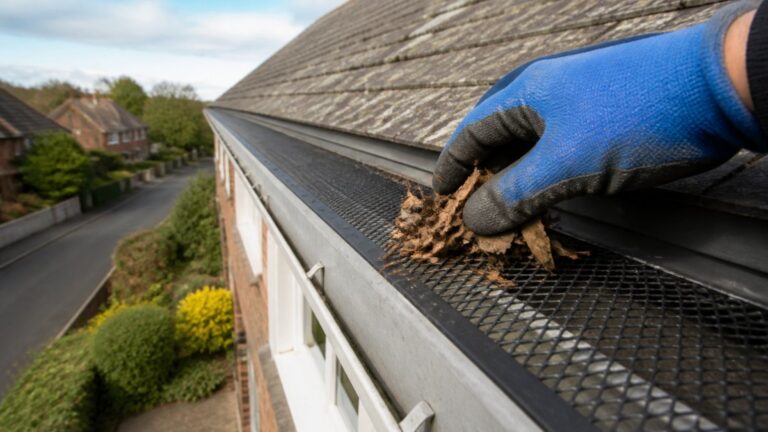
Repair work usually covers the specific fault: replacing slipped or broken tiles, resealing flashing around chimneys, clearing and fixing gutters, or patching a flat roof. What separates a London repair quote from a repair quote elsewhere is that access and scaffolding often make up a meaningful share of the bill, so a repair on a high or difficult roof can cost more than the work itself suggests.
As a working structure, a repair quote should break down into four parts:
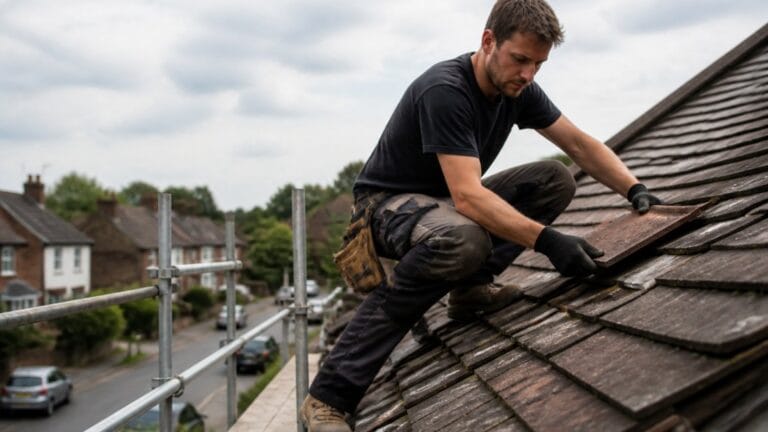
- Access and scaffolding. Access requirements depend on the property and the position of the repair. In London, narrow streets, restricted parking and terraced frontages can add to the access cost and the time needed to arrange a licence or a parking suspension.
- Labour. Typically charged per day or per operative, and higher where the roof is steep, fragile or hard to reach.
- Materials. Usually a small share of a repair bill, but slate and clay replacements cost more than concrete tiles, and matching reclaimed or heritage slates can take time to source.
- Making good. Replacing a few tiles is rarely the end of the job; the roofer also has to check the underlay, the battens and the flashing around the repair, and that inspection is part of the cost.
A common pattern in London is that the smallest jobs carry a disproportionate access cost. A repair that takes an hour on the roof can still require half a day of setup and takedown, and that is why a single slipped tile on a high or awkward roof is rarely a cheap job. Ask for the access element to be itemised separately so you can see what you are paying for.
Pricing also depends on the size of the area, the materials needed and how quickly the work is required. For current figures, request a free survey and quote from Evershield Roofing rather than relying on general estimates, and ask whether the quote includes scaffolding, waste removal and a workmanship guarantee. When storm damage is limited to part of the roof, weighing repair against replacement can help keep the work proportionate, while a Conservatory Transformation may also depend on how the adjoining roof is handled.
How to Judge Whether a Repair Is Cost-Effective
A useful approach is to ask whether the repair solves the underlying cause or only the symptom. If the same fault keeps returning, repeated repairs can add up to more than a replacement would have cost. Compare the repair quote against the roof’s age and the number of previous repairs. If you are repairing the same area every year, the economics are shifting towards replacement.
A simple worked comparison makes the decision clearer. Take a two-storey London terraced house with a pitched concrete-tile roof. The cumulative spend on repeated repairs can add up over time, before allowing for the water damage that a failed repair can cause to ceilings, insulation and timbers. That is the point at which replacement usually becomes the better long-term value.
Watch out: a quote that is much lower than the others often excludes scaffolding, waste removal or the inspection of underlay and battens, so compare quotes on scope, not on headline price.
Roof Replacement Cost London: Benchmarks, Scope and Financing
A full replacement covers stripping the existing covering, checking and repairing the timbers, laying new underlay and fitting a new roof covering.
A replacement quote should specify each of the following so that competing quotes can be compared like for like:
- Strip and disposal. Removing the old covering and disposing of it lawfully, including any asbestos-containing materials in older London properties, which require a licensed contractor.
- Timber inspection and repair. Replacing rotten battens, rafters or fascia where found, priced as a provisional sum because the extent is only visible once the covering is off.
- Underlay and ventilation. New breather membrane and adequate ventilation, which is often where a re-roof can improve on the original build.
- Covering. The chosen material, its expected service life and the manufacturer’s warranty terms.
- Access and scaffolding. Full scaffold to all elevations, plus any parking suspension or licence needed on a London street.
- Making good. Flashing, valleys, ridge and hip details, gutters and downpipes.
Material choice drives both cost and lifespan. Concrete tiles are the most economical covering and are common on twentieth-century London housing. Clay tiles cost more but last longer and suit period properties.
London-specific cost drivers are worth understanding before you compare quotes. Scaffolding on a terraced street may require a parking suspension from the local authority, and the cost and lead time for that vary by borough.
Replacement is a significant investment, so it is worth getting several detailed quotes that specify the same scope. Finance is available, which can make a larger project easier to manage. Check the finance terms carefully before committing, and ask what workmanship guarantee is offered and how long it runs.
Insurance and warranty are part of the comparison. Storm damage may be covered by a buildings insurance policy, but wear and tear and gradual deterioration are not, so it is worth checking the policy wording before assuming a claim will pay.
Watch out: a replacement quote that is significantly cheaper than the others often omits scaffolding, waste disposal or timber repairs, so compare the scope line by line rather than the total.
Repair vs Replacement Side by Side: A Decision Checklist
Use this checklist to weigh the two options:
- Is the damage confined to one area or spread across the roof?
- How old is the covering, and what material is it?
- How many repairs have you already carried out in the last few years?
- Is there interior water damage, or only exterior wear?
- Does the repair quote come close to the cost of replacement?
- Are you planning to stay in the property long term?
If most answers point to isolated, recent problems on a roof with plenty of life left, repair is usually the right call. If most point to widespread failure and repeated costs, replacement is likely the better value.
The article’s checklist can be summarised as a simple decision guide showing which answers point towards repair and which towards replacement.
| Situation | Points towards | Why |
|---|---|---|
| Damage confined to one area | Repair | Isolated faults are usually the sensible starting point |
| Failure spread across the roof | Replacement | Widespread failure signals long-term value in replacing |
| Problems keep appearing in new places | Replacement | Repeated repairs add up over time |
| Interior water damage present | Act promptly | Postponing leaks causes costly damage to ceilings and timbers |
| Repair quote near replacement cost | Replacement | Replacement may offer better long-term value |
Booking Your Free Roof Survey with Evershield Roofing
The most reliable way to decide is a proper inspection. Evershield Roofing offers free surveys and quotes, so you can see the condition of your roof and compare options without commitment. Our team is available by phone to answer questions and talk through the process, and we also cover emergency roof repairs when you need urgent help.
Get your free roofing quote today and find out whether your roof needs a repair or a full replacement.
Frequently Asked Questions
How do I know whether my roof needs repairing or replacing?
Start with the age and the extent of the damage. If the roof is nearing the end of its expected life and problems are spread across several areas, replacement is usually the better value. If the damage is localised, such as a few slipped tiles, a cracked flashing or a single leak, repair is normally the sensible choice. Ask a roofer for a written survey that separates the two scenarios, so you can compare what a patch will cost against the full replacement figure. Evershield Roofing offers free surveys and quotes across London and Buckinghamshire.
Is it cheaper to repair a roof or replace it in London?
A targeted repair is almost always cheaper in the short term, but the figure only tells part of the story. If a repair is likely to be followed by another within a year or two, the combined cost can overtake a replacement. A repair is cost-effective when it resolves the cause of the problem and the roof has enough remaining life to justify it.
How long does a roof repair last?
A well-executed repair to a sound roof can last many years, but its life depends on the cause of the problem. Replacing a few slipped tiles or resealing a flashing usually buys time comparable to the remaining life of the surrounding roof. A repair that treats only the symptom, such as sealing a leak without fixing the underlying flashing or underlay, often fails again quickly. Ask your roofer to explain what the repair addresses and what it does not.
How long does a roof replacement take?
On a typical domestic house, a full re-roof takes several days to a couple of weeks, depending on size, complexity, weather and access. Scaffolding is usually erected before work starts and removed once the roof is complete. Timescales for flat roofs and larger commercial properties can differ. Your roofer should give you a programme during the survey stage so you know what to expect, and Evershield Roofing keeps you informed through each stage of the process.