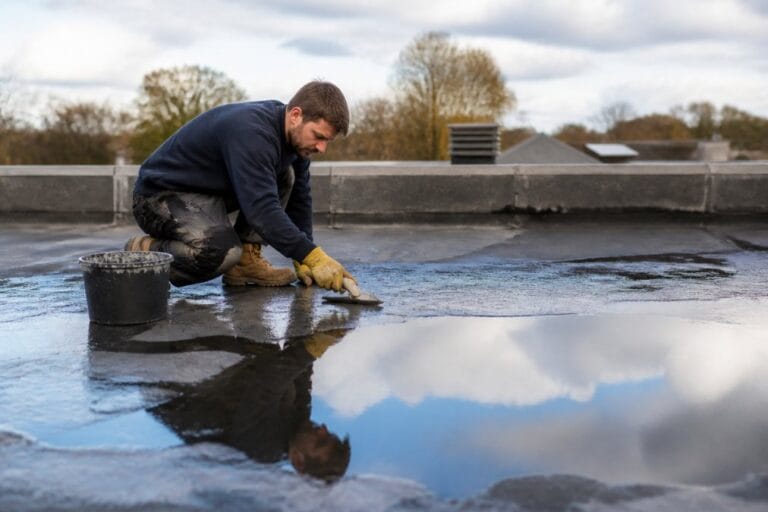
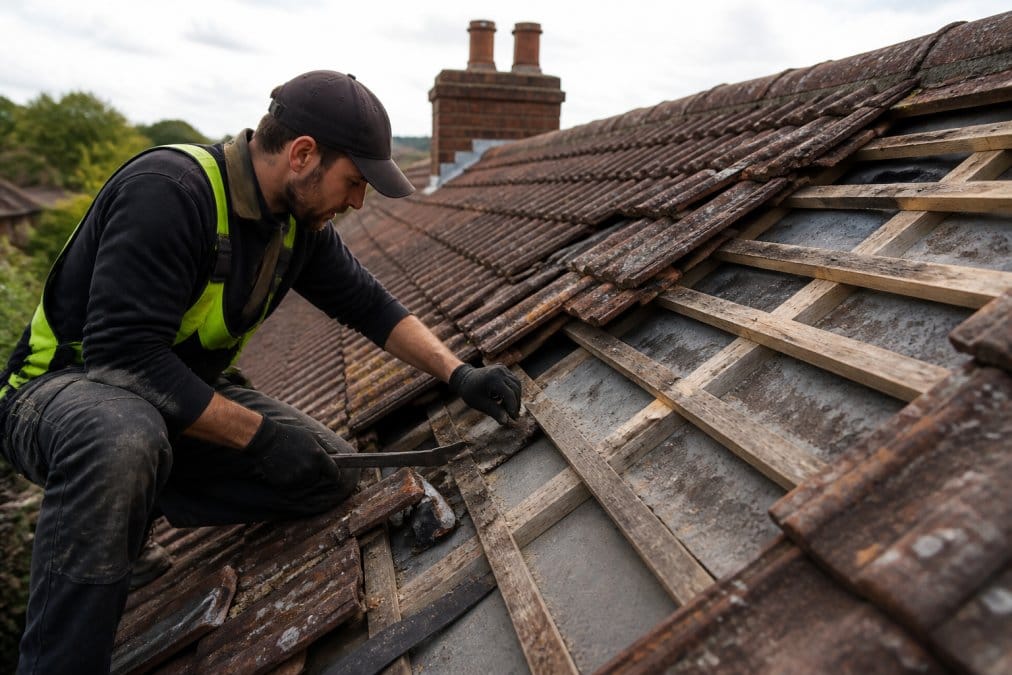
How to Fix a Roof Leak in Buckinghamshire: 2026 Guide
Roof leak repair in Buckinghamshire explained step by step. Spot the signs, act fast, and get a free quote from Evershield Roofing today.

Table of Contents
- Step 1: Identify the Source of Your Roof Leak
- Common Causes of Roof Leaks UK Homeowners Face
- DIY Roof Leak Repair UK: Temporary Fixes to Limit Water Damage
- Pitched vs Flat Roof Leak Repair: What You Need to Know
- Roof Leak Repair Cost Buckinghamshire: What Affects the Price
- Emergency Roof Repair Buckinghamshire: When to Call Immediately
- How to Fix Roof Leak Issues in Buckinghamshire with Evershield Roofing
- Conclusion
Last Updated: July 30, 2026
Water coming through your ceiling is one of the most stressful moments a homeowner faces. Evershield Roofing has helped hundreds of homeowners across Buckinghamshire trace, repair, and prevent roof leaks before they cause serious structural damage. Acting quickly and correctly makes the difference between a minor repair and a costly rebuild. Below, we’ll show you exactly how to identify the source, apply a temporary fix, and get a permanent solution in place fast.
The most common reason roof repairs fail is misdiagnosis. A wet patch on your ceiling is rarely directly below the entry point, rain travels along rafters, insulation, and sarking felt before it drips. Fix the wrong spot and you’ll be back on the phone to a roofer within weeks.
Step 1: Identify the Source of Your Roof Leak
Roof leak identification is the most critical step, and it’s where most DIY attempts go wrong. Water ingress rarely announces itself at the exact point it enters. Start inside, then work outward.
Inside the loft: On a dry day, go into the loft space with a torch and look for water staining, damp insulation, or daylight visible through the roof deck. Staining trails on rafters point upslope toward the actual entry point. Mark anything suspicious with chalk before you go back up.
Outside the roof: Once you’ve identified a suspect zone from inside, inspect the exterior from the ground first using binoculars. Look for obvious damage: missing or slipped tiles, cracked ridge tiles, damaged lead flashing around chimney stacks, or bubbling felt on a flat roof section.
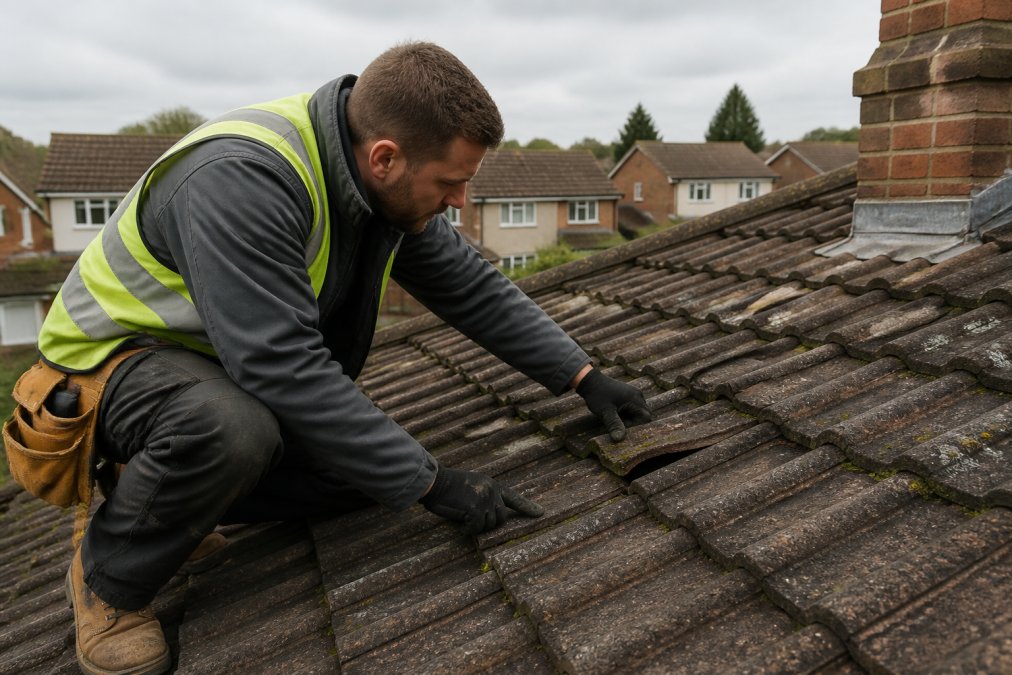
Visual Identification Guide: What to Look For Inside and Outside
A systematic visual check takes less than 20 minutes and saves hours of guesswork:
- Ceiling stains: Yellow-brown rings indicate slow, repeated wetting. Dark wet patches mean active or very recent ingress.
- Loft timbers: White salt deposits on rafters suggest long-term moisture. Black mould indicates sustained damp.
- Roof tiles: From ground level, look for tiles sitting at an angle or gaps in the tile course.
- Flashings: Lead or mortar flashings around chimneys, skylights, and roof junctions are the single most common failure point on UK pitched roofs.
- Flat roof surfaces: Ponding water, cracked felt, or split seams on EPDM or GRP surfaces are visible signs of failure.
Common Problem Zones: Flashing, Valleys, and Slipped Tiles
Flashing repairs account for a significant proportion of roof leak repair call-outs in Buckinghamshire. Lead flashing seals the joint between a roof surface and a vertical structure, such as a chimney or parapet wall. Over time, the mortar pointing that holds flashing in place cracks and lifts, allowing water to track behind the lead and into the roof structure.
Roof valleys, where two pitched planes meet, channel large volumes of water and accumulate debris that backs water up under the tile course. Slipped tiles, common on older properties with nail fatigue, leave felt exposed and vulnerable to UV degradation and puncture.
Watch Out
Never walk across a pitched roof without proper fall-arrest equipment. A slip from a residential roof height can be fatal. If you cannot safely access the area from a ladder, call a professional roofer immediately.
Never walk across a pitched roof without proper fall-arrest equipment. A slip from a residential roof height can be fatal. If you cannot safely access the area from a ladder, call a professional roofer immediately.
Common Causes of Roof Leaks UK Homeowners Face
The causes of roof leaks in UK homes follow predictable patterns, shaped by our climate and the age of the housing stock. Buckinghamshire has a large proportion of pre-1970s properties, many of which are approaching the end of their original roofing lifespan.
The most frequent causes roofing contractors encounter include:
- Nail fatigue on pitched roofs: Galvanised nails holding tiles corrode over decades. Tiles then slip or lift in wind.
- Failed flashing: Particularly around chimney stacks and party wall abutments on semi-detached properties.
- Cracked or porous ridge tiles: Ridge mortar dries and cracks, allowing wind-driven rain to enter at the apex.
- Flat roof membrane failure: EPDM, felt, and GRP flat roofs are vulnerable to UV degradation, thermal movement, and impact damage.
- Blocked or failed guttering: Overflowing gutters saturate fascia boards and allow water to track into the roof structure.
- Condensation: Sometimes mistaken for a leak, condensation in poorly ventilated loft spaces creates the same damp patches and staining.
According to guidance from the National Federation of Roofing Contractors, regular roof inspections are the single most effective way to catch these issues before they develop into structural problems. The distinction between condensation and genuine water ingress matters enormously for repair strategy. Condensation requires ventilation improvements; a genuine leak requires weatherproofing repairs.
DIY Roof Leak Repair UK: Temporary Fixes to Limit Water Damage
DIY roof leak repair in the UK should be treated as damage limitation, not a permanent solution. The goal of any temporary fix is to stop water reaching your interior while you arrange professional repair. Attempting a permanent DIY fix on a pitched roof without roofing experience typically makes the problem worse and can invalidate your home insurance.
Temporary Leak Mitigation Checklist
- Place buckets or containers under active drip points to protect floors and ceilings
- Lay polythene sheeting over loft insulation to divert water away from the ceiling below
- If water is pooling on a flat roof and you can access it safely from ground level, use a soft brush to clear debris from outlets and drainage points
- Apply roofing repair tape or self-adhesive flashing tape over small cracks or lifted felt on a flat roof surface (accessible sections only, from a stable ladder)
- Use a tube of roofing sealant or silicone around a cracked flashing joint as a short-term measure
- Contact your home insurer to notify them of the damage before any work begins
Pro Tip
Roofing repair tape works best when the surface is dry. Apply it on the first dry day after a storm, not during rain. Do not use standard silicone sealant, which is not UV-stable and degrades within months on an exposed roof surface. Use products specifically rated for external roofing applications.
Roofing repair tape works best when the surface is dry. Apply it on the first dry day after a storm, not during rain. Do not use standard silicone sealant, which is not UV-stable and degrades within months on an exposed roof surface. Use products specifically rated for external roofing applications.
The most common mistake is applying sealant or tape over a large area without identifying the actual entry point. This traps moisture, accelerates rot in timber, and makes professional diagnosis harder.
Pitched vs Flat Roof Leak Repair: What You Need to Know
Pitched roof and flat roof repairs are fundamentally different disciplines. A roofer who specialises in slate and tile work may have limited experience with EPDM flat roofing systems, and vice versa.
Pitched roof repairs typically involve replacing or re-fixing slipped or broken tiles, re-bedding and pointing ridge tiles, replacing or re-dressing lead flashings, and repairing or replacing damaged sarking felt. Most pitched roof repairs on a standard three-bedroom semi-detached property are localised jobs that a competent roofing contractor can complete in a day.
Flat roof repairs depend entirely on the membrane type: felt, EPDM rubber, GRP fibreglass, or built-up bitumen. A specialist in flat roofing in Buckinghamshire will assess whether a patch repair is viable or whether a full membrane replacement is the more cost-effective long-term option. The critical question for flat roofs with standing water is whether the structural deck beneath the membrane has been compromised. Saturated decking boards lose structural integrity and must be replaced before any new membrane is applied.
| Roof Type | Common Failure Points | Typical Repair Approach | When to Replace |
|---|---|---|---|
| Pitched – concrete/clay tile | Slipped tiles, failed ridge mortar, cracked flashing | Re-fix tiles, re-point ridge, re-dress flashing | Widespread nail fatigue across whole roof |
| Pitched – slate | Nail fatigue, cracked slates, failed hip/valley | Replace individual slates, re-lead valleys | More than 20% of slates affected |
| Flat – felt | Cracking, blistering, split seams | Torch-on patch or overlay | Over 15 years old or widespread failure |
| Flat – EPDM | Seam separation, punctures | Seam adhesive, patch kit | Rarely – EPDM lifespan is 40+ years |
| Flat – GRP fibreglass | Cracking at upstand joints | Laminate patch and re-coat | Structural deck failure only |
Roof Leak Repair Cost Buckinghamshire: What Affects the Price
Roof leak repair cost in Buckinghamshire varies considerably depending on the type of repair, access requirements, and the materials involved. The main cost variables are:
- Type of repair: A single slipped tile costs far less than a full chimney stack re-flashing or a flat roof membrane replacement.
- Access: Roofs requiring scaffolding rather than a ladder-and-standoff setup add cost.
- Materials: Lead flashing costs more than mortar-based alternatives but lasts significantly longer. EPDM membrane costs more upfront than felt but offers a far superior lifespan.
- Urgency: Emergency call-outs outside normal working hours carry a premium.
- Extent of damage: A leak left unaddressed for months may have caused secondary damage to timber, insulation, or ceilings that adds to the overall scope.
For accurate pricing, the only reliable approach is a professional survey. Evershield Roofing offers free surveys and quotes across Buckinghamshire, with no obligation. Flexible finance options are also available, including 0% APR finance, for homeowners facing larger repair or replacement costs.
Key Takeaway
Never accept a roofing quote that hasn’t been preceded by a physical inspection. A price given over the phone without seeing the roof is either an underestimate that will grow, or an overestimate that costs you money unnecessarily.
Never accept a roofing quote that hasn’t been preceded by a physical inspection. A price given over the phone without seeing the roof is either an underestimate that will grow, or an overestimate that costs you money unnecessarily.
Emergency Roof Repair Buckinghamshire: When to Call Immediately
Emergency roof repair in Buckinghamshire is necessary when water ingress poses an immediate risk to the structure, electrics, or habitability of your property.
Call for emergency roofing services immediately if:
- A large section of tiles has been displaced by storm damage
- You can see daylight through the roof deck from inside the loft
- Water is dripping near electrical fittings, consumer units, or junction boxes
- A flat roof has collapsed or is visibly sagging under water load
- A chimney stack has shifted or partially collapsed following high winds
According to Met Office storm frequency data for South East England, the South East experiences regular periods of high wind and heavy rainfall that cause acute roof damage, particularly between October and March. Water near electrical fittings is a life safety issue. Turn off the electricity at the consumer unit if water is tracking toward any electrical installation, and call both an emergency roofer and a qualified electrician.
How to Fix Roof Leak Issues in Buckinghamshire with Evershield Roofing
Knowing how to fix roof leak Buckinghamshire problems correctly means knowing when professional intervention is the right call. Evershield Roofing has over 25 years of experience delivering roof repairs, emergency call-outs, and full roof replacements across the county. The team is fully insured, carries out free surveys before any quote, and is available for emergency work when the situation demands it.
The process is straightforward: contact Evershield Roofing, describe the symptoms, and a roofing specialist will carry out a thorough inspection. The survey identifies not just the active leak but any secondary vulnerabilities that could cause problems within the next 12 to 24 months. You receive a clear, itemised quote before any work begins.
As documented in the Chartered Institute of Building’s guidance on roofing contractor selection, homeowners should always verify that a roofing contractor carries adequate public liability insurance and can provide evidence of recent local work before committing to any repair contract.
Areas We Cover: Milton Keynes, Aylesbury, High Wycombe and Beyond
Evershield Roofing covers the full breadth of Buckinghamshire, including Milton Keynes, Aylesbury, High Wycombe, Amersham, Beaconsfield, Chesham, Marlow, and the surrounding villages. Local knowledge is underrated in roofing. A contractor familiar with the specific housing stock in Milton Keynes understands that many 1970s properties in the area have concrete interlocking tiles approaching end of life. A roofer working regularly in High Wycombe knows the particular challenges of older Victorian terraces with complex valley and hip details.
Roof Maintenance Checklist to Prevent Future Leaks
Prevention is considerably cheaper than cure. A simple annual check catches the majority of issues before they become leaks.
Annual maintenance checklist:
- Inspect roof from ground level after every significant storm: look for displaced, cracked, or missing tiles
- Clear gutters and downpipes of leaf debris every autumn and spring to prevent overflow and water ingress behind fascia boards
- Check loft space for signs of damp, staining, or mould at least once a year, particularly after heavy rain
- Inspect visible flashings around chimney stacks and skylights for cracked mortar or lifted lead
- Check flat roof surfaces for ponding water, cracked seams, or debris blocking outlets after periods of heavy rainfall
- Look for moss or lichen growth on tiles: heavy biological growth retains moisture and accelerates tile degradation
- Ensure loft ventilation is unobstructed: blocked eaves vents cause condensation that mimics leak symptoms
Professional roof inspections every three to five years are recommended for properties over 20 years old. Many roofing specialists, including Evershield Roofing, offer free inspection surveys that identify vulnerabilities before they become active leaks.
A roof leak left unaddressed rarely stays small. The structural and financial consequences of delayed action are consistently worse than the cost of early intervention. Evershield Roofing provides free surveys, fully insured roof repairs, and emergency roofing services across Buckinghamshire, Milton Keynes, and the surrounding areas, backed by over 25 years of experience and flexible finance options including 0% APR. Get your free roofing quote today and stop a small problem before it becomes a large one.
Frequently Asked Questions
What are the most common causes of roof leaks in Buckinghamshire?
The most common causes of roof leaks in Buckinghamshire include slipped or cracked tiles, deteriorated or poorly sealed flashing around chimneys and skylights, blocked gutters causing water ingress, flat roof punctures, and general weathering of roofing materials over time. Buckinghamshire's variable weather, including heavy rain and frost, accelerates wear, making regular roof inspections especially important for local homeowners.
Is a leaking roof classed as an emergency in the UK?
Yes, a leaking roof can be classed as an emergency, particularly when water ingress is rapid, structural timbers are at risk of saturation, or electrics may be affected. In such cases, you should call an emergency roofing contractor immediately. Even a slow drip warrants urgent professional attention to prevent mould growth, ceiling collapse, and escalating repair costs. Evershield Roofing offers emergency roof repair services across Buckinghamshire.
Can I temporarily fix a roof leak myself before a roofer arrives?
Yes, DIY roof leak repair in the UK can buy you time before a professional arrives. Indoors, place buckets under drips, protect belongings, and use towels to absorb water. If safe to do so from ground level, you can apply a waterproof tarpaulin over the affected roof area and secure it firmly. Never climb onto your roof without proper safety equipment and training, falls from height are a leading cause of serious injury in the UK.
How much does roof leak repair cost in Buckinghamshire?
Roof leak repair cost in Buckinghamshire varies considerably depending on the roof type, the extent of the damage, materials required, and accessibility. A minor repair such as replacing a few slipped tiles will cost far less than addressing widespread water ingress on a flat roof. For an accurate figure, it is always best to request a free, no-obligation survey and quote. Evershield Roofing provides free quotes across Buckinghamshire with transparent, competitive pricing.
When should I call a professional roofer rather than attempting a repair myself?
You should call a professional roofer if the leak source is unclear, if the damage involves flashing, structural timbers, or large sections of roofing material, or if your roof is a flat roof requiring specialist repair. Any work at height carries significant risk and should be left to trained, fully insured roofing contractors. For homeowners in Buckinghamshire, Evershield Roofing's vetted professionals can diagnose and resolve leaks safely and efficiently.
How do I find the source of a roof leak?
Start inside your loft or attic during or after rainfall, looking for water stains, damp patches, or daylight visible through the roof structure. Trace the wet trail upward and toward the ridge, water often travels along rafters before dripping. Outside, look for slipped or missing tiles, cracked flashing, damaged lead work around chimneys, or pooling water on flat roofs. If you cannot pinpoint the source safely, a professional roof inspection is the safest and most reliable option.