
Roof Repair vs Roof Replacement Cost: A UK Comparison
Compare roof repair vs roof replacement costs in the UK. Learn the key factors, building regulations and timelines to make the right choice for your home.

Table of Contents
- Roof Repair vs Roof Replacement Cost: The Key Differences
- Signs Your Roof Needs Replacing (Not Just Repairing)
- Factors That Influence Roof Replacement Cost
- Roof Replacement Building Regulations UK: What You Must Know
- How Long Does a Roof Replacement Take?
- When Repair Is the Smarter Financial Choice
- Conclusion: Making the Right Call for Your Roof
- Frequently Asked Questions
Last Updated: September 25, 2026
Roof Repair vs Roof Replacement Cost: The Key Differences
Roof repair vs roof replacement cost is the decision that keeps most homeowners awake at night, and for good reason. One keeps your home watertight for another few years; the other resets the clock on your entire roof. At Evershield Roofing, we have spent over 25 years helping homeowners in London and Buckinghamshire weigh up that exact choice, and the answer is rarely as simple as the price tag suggests.
Here is the short version: a repair fixes a specific fault, while a replacement renews the whole covering. The cost gap between them is wide, but so is the lifespan gap.
What Determines Whether You Repair or Replace?
Three factors decide it: the extent of the damage, the age of the roof, and whether the underlying structure is sound. A single slipped tile on a 10-year-old roof is a repair. Widespread failure across a roof that has already given decades of service is a replacement waiting to happen.
A common mistake is treating every leak as a repair job. If water is getting in at multiple points, or the problem keeps returning, you are often paying twice for the same underlying fault.
Pro Tip
Ask your roofer one question before agreeing to anything: “Is this fault isolated, or is it a symptom?” If the answer is “symptom”, a repair is money spent delaying the inevitable.
Ask your roofer one question before agreeing to anything: “Is this fault isolated, or is it a symptom?” If the answer is “symptom”, a repair is money spent delaying the inevitable.
Signs Your Roof Needs Replacing (Not Just Repairing)
The clearest signs your roof needs replacing are widespread tile failure, sagging, daylight showing through the loft, and granule loss so severe the covering looks bare. Any one of these usually points to a roof at the end of its working life rather than a localised fault.
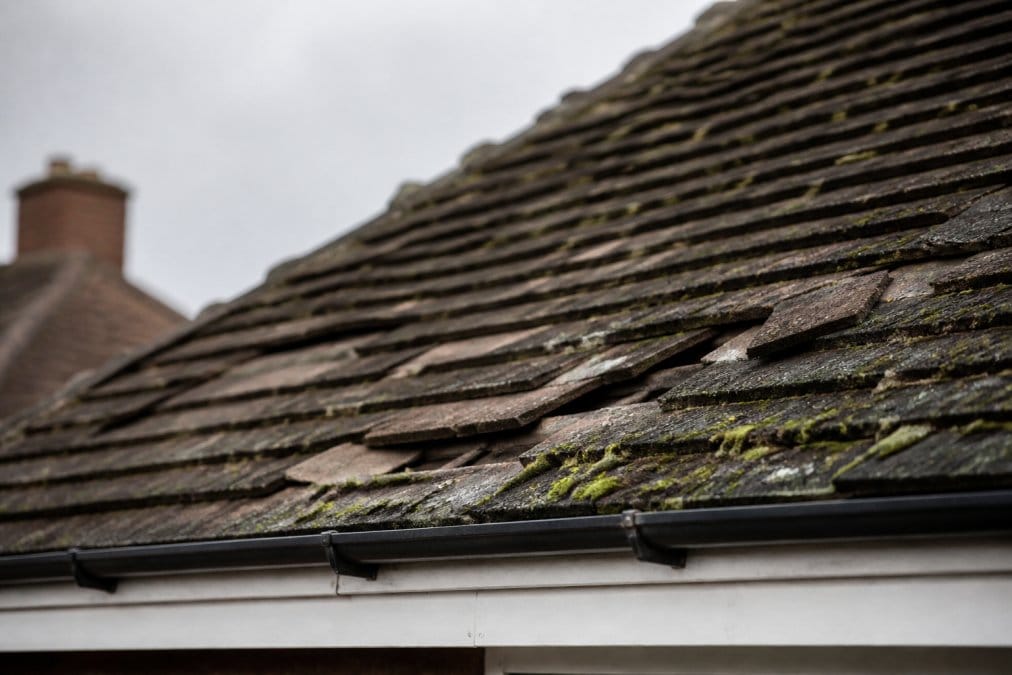
Watch for these specific signals:
- Multiple leaks appearing in different areas within a short period
- Tiles that crumble or feel soft when touched
- Moss and organic residue that keeps returning despite cleaning
- Daylight visible through the roof boards from inside the loft
- Gutters constantly clogged with granule sediment
One or two of these can often be managed with a targeted repair. Four or five together mean you are patching a roof that has already failed.
Factors That Influence Roof Replacement Cost
Roof replacement cost is driven by four things: size, pitch, material, and access. Two houses on the same street can receive very different quotes because of how easy or difficult the roof is to reach and work on.
Roof Size, Pitch and Material
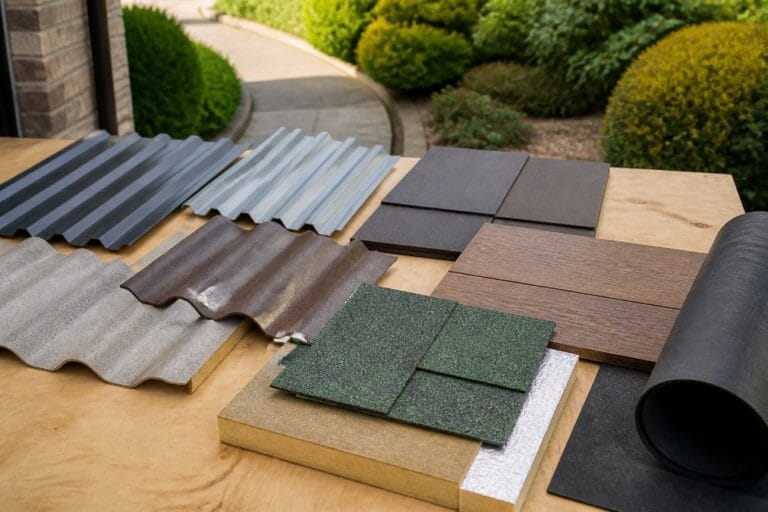
A larger roof needs more materials and more labour hours, so size is the single biggest driver. Pitch matters too: steep roofs slow the work and demand more safety equipment. Material choice then sets the floor and ceiling of the price, with standard tiles at the lower end and slate at the upper end.
Access, Scaffolding and Disruption
Access is the factor most homeowners underestimate. A roof hemmed in by extensions, conservatories or narrow side returns needs more scaffolding, which adds cost before a single tile is laid. Disruption matters as well: a straightforward residential job is quicker and cheaper than a commercial property that must stay operational.
Because every roof is different, Evershield Roofing provides free surveys and quotes so you get a figure based on your actual property rather than a generic estimate.
Roof Replacement Building Regulations UK: What You Must Know
Roof replacement building regulations UK homeowners should know about cover structural integrity, fire safety and energy performance. In England, replacing or recovering more than a set proportion of a roof triggers requirements under the Building Regulations, and the work must meet current standards for the elements being renewed.
The practical points to check:
- Structural work must be signed off by a competent person
- Thermal elements must meet current energy efficiency standards when replaced
- Fire resistance requirements apply to certain roof types and boundaries
- Electrical work connected to the roof must comply with Part P
For the exact requirements that apply to your property, check the official guidance on Building Regulations approval before work begins. A reputable contractor will handle compliance as part of the job, but you should always ask who is signing it off.
Get Your Free Roofing Quote Today! →
How Long Does a Roof Replacement Take?
A typical residential roof replacement takes one to two weeks, depending on size, weather and material. A small, straightforward roof can be finished in a few days; a large or steep roof with complex access can run to three weeks or more.
Timeline in practice:
| Roof Type | Typical Duration | Main Delay Factors |
|---|---|---|
| Small residential | 3-5 days | Weather, access |
| Standard three-bed semi | 1-2 weeks | Scaffolding, material delivery |
| Large or steep roof | 2-3 weeks | Pitch, complexity, weather |
| Commercial flat roof | 1-3 weeks | Operational hours, phasing |
The thing nobody tells you about timelines is that weather is the real variable. Rain stops work outright on pitched roofs, so a job quoted at one week can slip to two if the forecast turns.
When Repair Is the Smarter Financial Choice
Repair is the smarter financial choice when the roof is structurally sound, the damage is isolated, and the covering still has years of life left. In those cases, a targeted fix costs a fraction of a replacement and buys you meaningful time.
That said, be honest about the maths. If you are repairing the same roof every couple of years, the cumulative spend can approach replacement cost without ever solving the problem. A roof that needs constant attention is telling you something.
Watch Out
Repeated repairs on a failing roof are a false economy. If you have paid for three or more repairs in five years, put that money towards a replacement instead of a fourth patch.
Repeated repairs on a failing roof are a false economy. If you have paid for three or more repairs in five years, put that money towards a replacement instead of a fourth patch.
For homeowners in London and Buckinghamshire dealing with storm damage or an active leak, emergency roof repair is often the right first step, with a full assessment to follow once the immediate problem is contained.
Conclusion: Making the Right Call for Your Roof
The repair-versus-replacement decision comes down to whether you are fixing a fault or fighting a failing roof. Get that judgement right and the cost question answers itself.
Evershield Roofing has spent 25 years helping homeowners and businesses across Buckinghamshire make that call with confidence. We offer free surveys and quotes, finance from 0% APR to spread the cost of larger work, and a fully insured team that handles everything from roof repairs and new roof installations to flat roofs and guttering. If you want an honest assessment rather than a hard sell, get your free roofing quote today and we will tell you plainly which option your roof actually needs.
Frequently Asked Questions
How do I know if my roof needs repair or replacement?
A single missing tile, a small leak or isolated storm damage usually calls for a repair. Replacement makes more sense when damage covers a large area, the roof is past its expected lifespan, or multiple problems keep returning. Signs your roof needs replacing include widespread cracked or curling tiles, sagging, daylight showing through the loft, and recurring leaks after previous repairs. A professional survey will confirm which option gives you better long-term value.
Does home insurance cover roof repairs or replacement?
Most UK home insurance policies cover sudden damage from storms, falling branches or accidental impact, but not gradual wear and tear. If your roof has been leaking for months or the damage results from neglected maintenance, a claim is likely to be refused. Check your policy wording and report storm damage promptly, as many insurers require notification within a set period. Routine repairs and replacements due to age are almost always excluded.
What building regulations apply to roof replacements in the UK?
Roof replacement building regulations UK homeowners should know about focus on structural stability, fire safety and energy efficiency. If you are replacing more than 25% of the roof covering, current thermal insulation standards usually apply, meaning you may need to upgrade insulation to meet Part L of the Building Regulations. Structural changes or work on listed buildings may also require approval. Your roofing contractor should handle compliance and notify building control where needed.
How long does a roof replacement take on a typical UK home?
How long does a roof replacement take depends on the size and complexity of the property. A straightforward three-bed semi with good access often takes one to two weeks. Larger homes, steep pitches, complex valleys or poor weather can extend this to three or four weeks. Scaffolding is usually erected a day or two before work starts and removed shortly after completion. Ask your contractor for a written schedule before work begins.
Can I get finance for a roof replacement?
Many UK roofing companies offer finance options to spread the cost of a full replacement. Evershield Roofing, for example, provides finance from 0% APR along with free surveys and quotes, so you can understand the full scope of work before committing. Ask for a written quote that breaks down materials, labour and any building control fees, and confirm the repayment terms in writing before signing anything.