Top 10 Flat Roof Problems Explained for Homeowners
Discover the top 10 flat roof problems explained for homeowners. Learn the signs, causes, and repair options to protect your home. Get your free quote.

Table of Contents
- 1. Ponding Water and Poor Drainage
- Why Flat Roof Drainage Is Important
- 2. Blistering and Bubbling
- 3. Cracking and Splitting
- Signs of Flat Roof Failure
- 4. Leaks and Water Ingress
- 5. Membrane Shrinkage and Pulling
- 6. Flashing and Seam Damage
- Frequently Asked Questions
Last Updated: September 16, 2026
1. Ponding Water and Poor Drainage
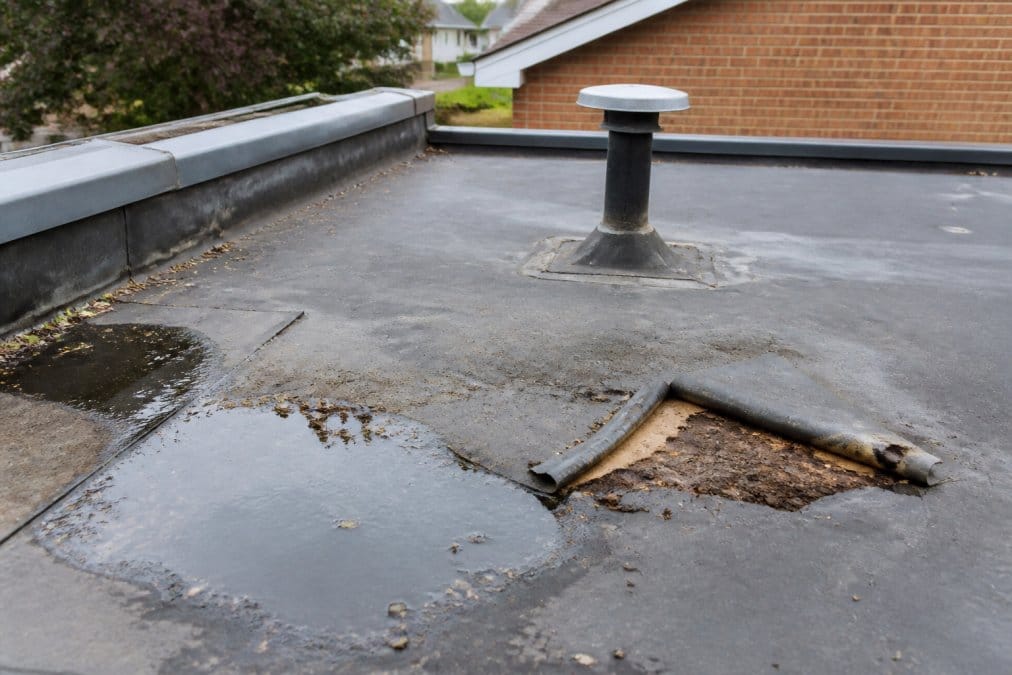
Standing water that lingers more than 48 hours after rain is one of the most common flat roof problems, and it quietly destroys the membrane beneath it. Water pooling near outlets and low spots adds weight, accelerates UV breakdown, and eventually finds its way inside.
Most flat roofs are built with a slight fall toward drains, but that fall can be lost when insulation settles or outlets clog with moss and grit. In Buckinghamshire, where mature trees are common, blocked outlets are a frequent culprit.
The fix depends on severity. Clearing outlets and gullies solves minor ponding. Persistent pools usually mean the falls have failed, which calls for a tapered insulation scheme or a new drainage layout. For homeowners, a free survey will confirm whether the structure is still sound.
Why Flat Roof Drainage Is Important
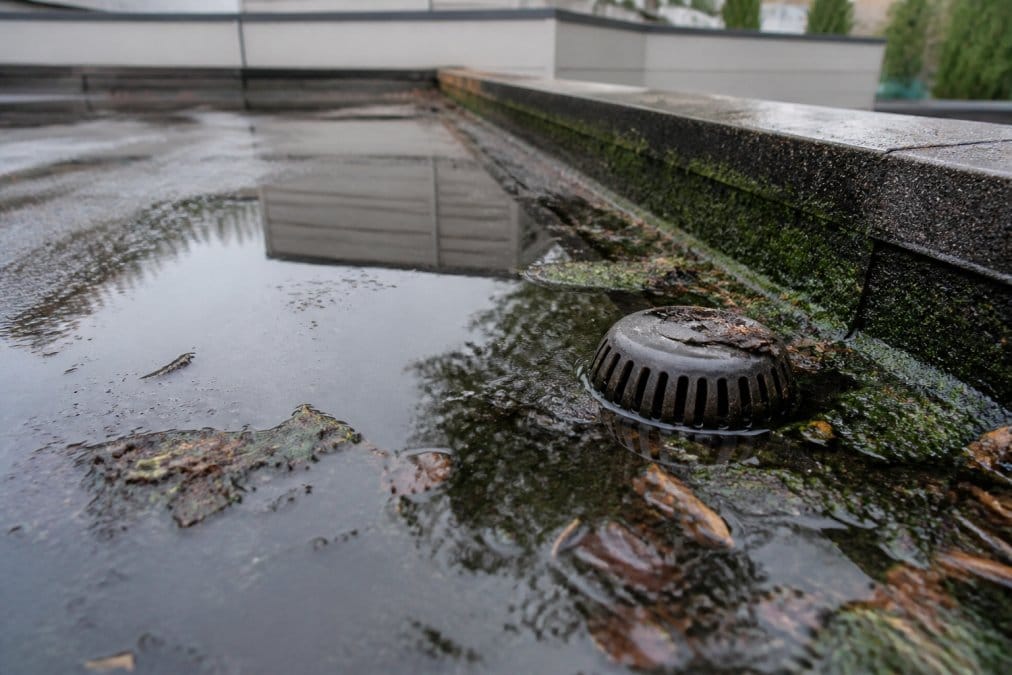
Drainage is the single biggest factor in how long a flat roof lasts. Water that clears within a few hours does little harm. Water that sits for days attacks seams, rots timber decking, and adds load the roof was never designed to carry.
A blocked outlet can hold hundreds of litres after heavy rain. That weight stresses fixings, and in winter, trapped water freezes and expands, splitting the membrane from underneath.
The practical takeaway: check outlets and gullies twice a year, ideally before autumn and after spring. If water is still standing 48 hours after rain, book a professional inspection rather than waiting for a ceiling stain to appear.
Watch Out
Leaving standing water through a winter freeze-thaw cycle is one of the fastest ways to split a membrane. What looks like a harmless puddle in October can become an active leak by January.
Leaving standing water through a winter freeze-thaw cycle is one of the fastest ways to split a membrane. What looks like a harmless puddle in October can become an active leak by January.
2. Blistering and Bubbling
Bubbles that rise from the surface are trapped moisture or air, and they signal that the bond between membrane and deck has failed. Left alone, blisters grow, crack, and let water in.
The cause is usually installation-related: adhesive applied unevenly, or a roof laid over a damp substrate. On older felt roofs, blisters are common where layers have separated over time.
Small blisters can be repaired by cutting, drying, and re-bonding the membrane. Widespread blistering across a roof usually means the covering is at the end of its life and replacement is more economical than repeated patching. Never walk on blisters; they puncture easily and turn a cosmetic issue into a leak.
3. Cracking and Splitting
Cracks appear where the membrane has lost flexibility, typically after years of UV exposure and thermal cycling. They start as hairline splits and widen with every season.
Older felt roofs are most vulnerable. Modern single-ply systems such as Firestone RubberGard EPDM resist UV and low-temperature cracking far better, with a service life that can exceed 50 years when installed correctly.
If you can see cracks from ground level, the roof is already advanced in its decline. Small splits can be patched with compatible membrane and sealant, but cracking that runs across seams or covers large areas points to full replacement. This is the point where many homeowners ask whether repair or replacement is better value, and an honest survey should give you a straight answer either way.
Signs of Flat Roof Failure
Knowing the warning signs early saves money. A flat roof rarely fails without giving notice first, and homeowners who act on these signals usually avoid emergency callouts.
Watch for:
- Water still standing 48 hours after rain
- Bubbles, ripples, or soft spots underfoot
- Cracks, splits, or visible seams lifting
- Damp patches on ceilings or top-floor walls
- Moss, algae, or debris collecting around outlets
- Interior paint peeling near the roofline
If two or more of these appear together, arrange an inspection. A roof that is patched repeatedly over several seasons is usually costing more in callouts than a replacement would.
Get Your Free Roofing Quote Today! →
4. Leaks and Water Ingress
A leak is rarely where the water appears inside. Water travels along joists and decking before finding a gap, so the ceiling stain is often metres from the actual defect.
Common entry points include failed seams, perished flashing around vents and chimneys, and cracked membrane around outlets. On flat roofs, water can also be driven sideways by wind into joints that look perfectly sealed from above.
Tracing a leak takes patience. A professional will often use moisture meters and, in stubborn cases, controlled water testing to pinpoint the source. DIY sealant applied to the visible stain rarely solves anything, because the stain is the symptom, not the cause.
Pro Tip
Photograph any interior damp patch and note when it first appeared. A leak that only shows after wind-driven rain points to flashing, while one that appears after any rainfall usually means a failed seam or membrane.
Photograph any interior damp patch and note when it first appeared. A leak that only shows after wind-driven rain points to flashing, while one that appears after any rainfall usually means a failed seam or membrane.
5. Membrane Shrinkage and Pulling
Membranes shrink as they age, pulling away from upstands, edges, and outlets. When a covering pulls back, it exposes the substrate and creates an immediate path for water.
Shrinkage is most common with older felt and some liquid-applied systems that were not specified for the building’s movement. You will often see it as a gap along the roof edge or a lifted lip around a vent.
Re-securing the membrane with new edge trims and termination bars can buy time, but shrinkage across the whole roof means the material has reached the end of its service life. This is where material choice matters: heat-welded systems like Sika Sarnafil PVC membrane hold their dimensions far better than traditional felt, which is why they are increasingly specified for replacement work.
6. Flashing and Seam Damage
Flashing is the material that seals the roof to walls, chimneys, and parapets, and it is where most flat roof leaks begin. Seams are the second weak point, particularly on older felt where lap joints rely on adhesive alone.
Flashing fails through movement, poor detailing, or simple age. A chimney that shifts slightly with thermal change will eventually tear a rigid flashing, and the resulting gap is often invisible from ground level.
Modern heat-welded membranes eliminate most seam risk because the joins are fused rather than glued. Where flashing is the problem, the fix is usually to strip and re-detail the affected area rather than patch over it, since patched flashing tends to fail again within a season or two.
| Problem | Likely Cause | Typical Fix | Urgency |
|---|---|---|---|
| Ponding water | Blocked outlets or lost falls | Clear outlets or re-lay falls | Medium |
| Blistering | Trapped moisture or poor bond | Cut, dry and re-bond | Medium |
| Cracking | UV ageing and thermal cycling | Patch or replace membrane | High |
| Leaks | Failed seams, flashing or membrane | Trace source and repair | Urgent |
| Shrinkage | Ageing material | Re-secure edges or replace | Medium |
| Flashing damage | Movement or poor detailing | Strip and re-detail | High |
Flat roof problems rarely fix themselves, and the ones that look minor in autumn are often the ones that cause damage over winter. If you have spotted standing water, a ceiling stain, or a membrane that is cracking or pulling away, it is worth having it looked at properly before the next storm. Evershield Roofing has spent 25 years repairing and replacing roofs across Buckinghamshire, and we offer free surveys and quotes, fully insured work, and finance from 0% APR to spread the cost of larger jobs. Get your free roofing quote today and protect your home before the weather does the deciding for you.
Frequently Asked Questions
What is the most common problem with flat roofs in the UK?
Ponding water is the most frequent issue. UK weather brings frequent rain, and if drainage outlets are blocked or the roof lacks sufficient fall, water sits on the surface. Over time this breaks down the waterproof layer and leads to leaks. Regular gutter cleaning and drainage checks are the simplest prevention.
How long should a flat roof last before needing replacement?
It depends on the material. Traditional felt might last 10 to 15 years, while modern EPDM rubber or PVC membranes can exceed 25 years with proper maintenance. Poor installation or neglected drainage shortens any lifespan. If your roof is over 20 years old and showing multiple problems, replacement is often more cost-effective than repeated repairs.
How do I know if my flat roof is failing?
Look for standing water that remains 48 hours after rain, blisters or bubbles in the surface, cracks, splits, or visible seams pulling apart. Inside, check for damp patches on ceilings or walls. Musty smells in upstairs rooms also indicate moisture ingress. Any of these signs warrant a professional survey.
Is it better to repair or replace a leaking flat roof?
If the leak is isolated and the roof is under 15 years old, a targeted repair may solve it. But if you have multiple leaks, widespread blistering, or the roof is near the end of its life, replacement is more economical long-term. A professional can assess the extent and advise. Evershield Roofing offers free surveys to help you decide.
Do flat roofs require regular maintenance in Buckinghamshire?
Yes. Buckinghamshire’s tree cover and rainfall mean debris accumulates quickly. Schedule a professional inspection every 12 to 18 months. This includes clearing gutters and drainage outlets, checking for cracks or blisters, and ensuring flashings are secure. Regular maintenance prevents small issues from becoming expensive repairs.