Flat Roof Standing Water Repair: Step-by-Step Guide
Standing water repair: Learn how to repair flat roof standing water with our step-by-step guide. Identify causes, fix drainage, and prevent future.

Table of Contents
- What Is Ponding Water on Flat Roofs?
- Common Causes of Standing Water and Moisture Accumulation
- The 48-Hour Rule: Is Standing Water Normal?
- Identifying Low Spots and Depressions on Your Roof
- Step-by-Step Repair Process for Flat Roof Standing Water
- Flat Roof Drainage Problems: Solutions and Prevention
- Tapered Insulation for Flat Roofs: Creating Proper Falls
- Structural Implications of Standing Water and Long-Term Monitoring
Last Updated: August 2, 2026
Standing water on a flat roof is never something to ignore. At Evershield Roofing, we’ve spent over 25 years helping property owners across Buckinghamshire tackle this exact problem. Ponding water accumulates because of structural deflection, blocked drainage outlets, or insufficient roof pitch. Left untreated, it creates hydrostatic pressure that penetrates your roof membrane, damages the roof deck, and leads to costly interior water damage. Most standing water issues are preventable and repairable if you act quickly.
What Is Ponding Water on Flat Roofs?
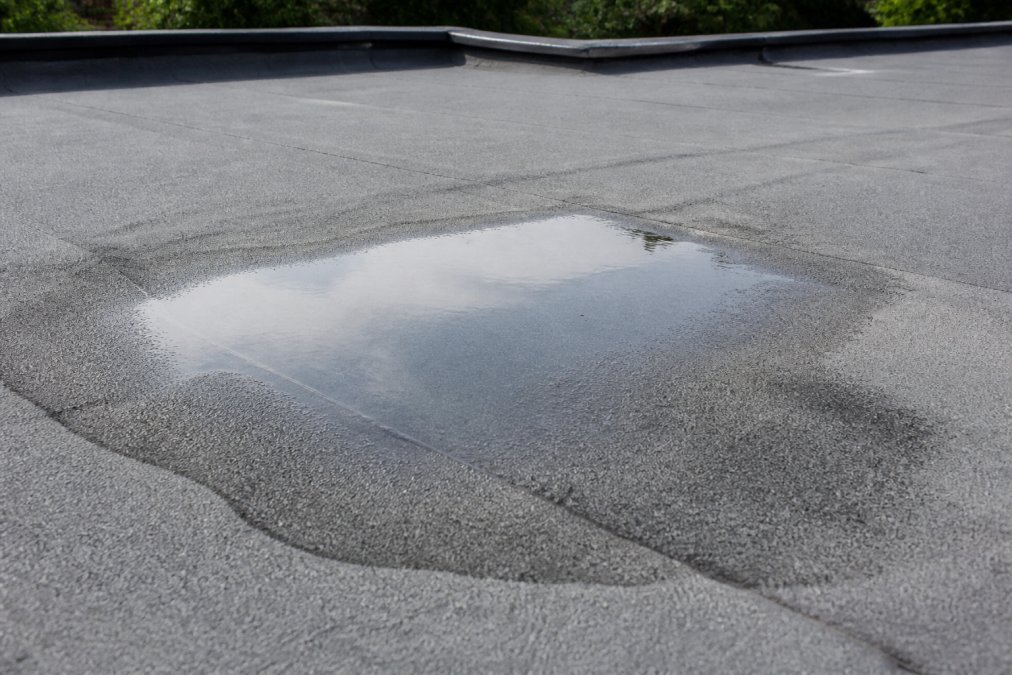
Ponding water refers to water that collects and remains on a flat roof surface for extended periods. Unlike pitched roofs where water naturally flows toward gutters, flat roofs rely on subtle slopes and drainage systems to move water away. When these systems fail or the roof develops low spots, water pools in depressions instead of draining.
Pooled water adds weight to your roof structure, sometimes hundreds of kilograms per square metre. Over time, this weight causes the roof to sag further, creating deeper depressions that trap more water. According to UK building standards guidance, water should drain completely within 48 hours of rainfall. If standing water remains longer, you have a drainage or structural problem that needs addressing.
Common Causes of Standing Water and Moisture Accumulation
Standing water doesn’t appear randomly. Understanding what caused the ponding is essential to fixing it permanently.
Structural deflection and sagging
When roof joists or the structural frame beneath your flat roof begin to sag, they create natural low points where water collects. Excessive loading from HVAC units, solar panels, or other equipment without proper structural reinforcement compresses the deck over time. Moisture damage itself accelerates sagging: when water penetrates the roof membrane and saturates the insulation or timber beneath, it adds weight while weakening structural integrity. The only permanent fix for structural deflection is either reinforcing the roof structure or installing tapered insulation that creates proper falls to direct water toward drainage points.
Blocked drainage outlets and gutters
Flat roofs typically use internal drains that funnel water down through the building, or perimeter gutters and scuppers that direct water to downpipes. Either system works only if debris doesn’t block the outlets. Leaves, moss, dirt, and silt accumulate in gutters and drain openings, especially in Buckinghamshire where deciduous trees shed leaves every autumn. Regular maintenance, clearing gutters at least twice yearly, prevents most water accumulation issues.
Poor roof pitch and thermal movement
Flat roofs aren’t actually flat. Building regulations require a minimum pitch of 1:40 (a rise of 25mm for every metre of run) to ensure water moves toward drainage points. Some older flat roofs, or those that have settled unevenly, fail to meet this standard. Thermal movement compounds the problem: roof materials expand and contract with temperature changes, sometimes by several centimetres over a day. If your roof membrane or the substrate beneath it has areas of poor support, this thermal cycling creates new low spots or deepens existing ones.
The 48-Hour Rule: Is Standing Water Normal?
The 48-hour rule is your diagnostic tool for determining whether standing water is a temporary nuisance or a sign of a real problem. According to UK building guidance, all standing water should drain completely within 48 hours of the last rainfall. If water remains on your roof after 48 hours of dry weather, you have a drainage or structural issue.
Testing the 48-hour rule is simple: after rain, mark the water level with chalk or take photos. Check again 48 hours later. If the water level hasn’t dropped substantially, or if water remains in certain areas while other parts of the roof have dried, you’ve identified your problem areas.
Identifying Low Spots and Depressions on Your Roof
Before you can repair standing water, you need to find where it’s pooling and understand the roof’s topography.
Visual inspection techniques
Start from ground level. Use binoculars to examine your roof after rain without climbing onto it. Look for areas where water clearly pools; these will be darker or shinier than surrounding dry areas. Moss or algae growth often indicates chronic moisture, so green patches usually mark problem zones. If you can safely access your roof, walk the surface after rain and mark low spots. Professional roof surveys use laser levels to measure the exact slope of your roof and identify deviations from the intended pitch.
Safety protocols for roof access
Accessing a flat roof carries real hazards. Wet surfaces are slippery, and falling from even a single storey causes serious injury. Wear appropriate footwear with good grip, use a safety harness if your roof is higher than 2 metres, and have someone else present who can call for help if you fall. Never work alone on a roof. For commercial properties or complex roofs, hire a professional surveyor.
Step-by-Step Repair Process for Flat Roof Standing Water
Once you’ve identified where water is pooling, the repair process follows a logical sequence. The steps you take depend on the cause of the ponding.
Step 1: Clear drainage outlets and scuppers
Start by ensuring water can actually escape. Clear any debris from gutters, downpipes, and roof drains using a stiff brush to remove moss, leaves, and silt. Flush the system with water to confirm it flows freely. For internal drains, you may need to remove the drain cover and clear blockages inside the pipe. If the drain is completely blocked and flushing doesn’t clear it, use drain rods or a high-pressure water jet. This step alone solves many standing water problems.
Step 2: Repair roof membrane and patch leaks
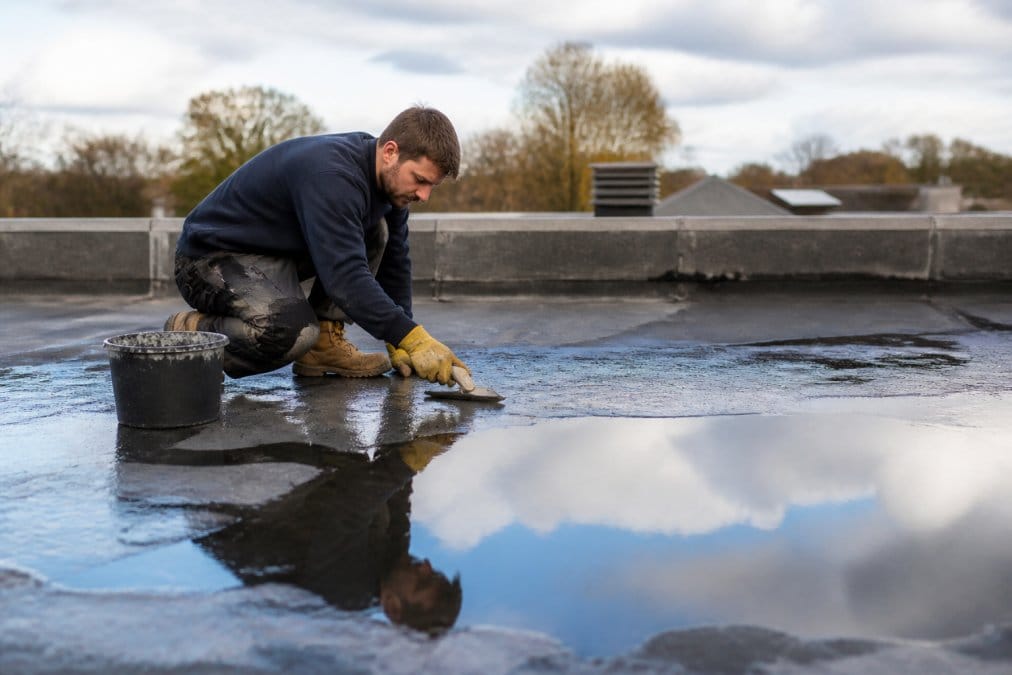
Once water is draining, inspect the roof membrane for damage. Small punctures or splits can be patched with specialist roofing tape or liquid sealant designed for your membrane type. Clean the area thoroughly, remove any algae or moss, and allow it to dry completely before applying the patch. Larger damage or extensive membrane degradation requires professional attention.
Step 3: Apply levelling compound to correct depressions
If the ponding is caused by minor deflection or uneven settling, levelling compound can restore proper slope without replacing the entire roof. Prepare the roof surface by cleaning it thoroughly and allowing it to dry. Apply the compound in layers if the depression is deep (more than 25mm). Once cured fully (typically 24-48 hours), the roof should have proper slope and no standing water.
Step 4: Seal with waterproof coating
After repairs are complete, apply a waterproof coating across the entire roof surface. This provides an additional protective layer against water ingress and extends the life of your roof membrane. In Buckinghamshire, reflective coatings offer the added benefit of reducing summer heat gain. Apply the coating according to manufacturer instructions, usually two coats with proper drying time between applications.
| Repair Step | Primary Purpose | Typical Timeline | When to Use |
|---|---|---|---|
| Clear drainage outlets | Allow water to escape | 2-4 hours | All ponding issues |
| Patch membrane damage | Prevent water ingress | 1-2 days | Visible splits or leaks |
| Apply levelling compound | Restore roof slope | 2-3 days (including cure) | Minor deflection only |
| Seal with waterproof coating | Protect against future damage | 2-3 days (including cure) | All repairs (final step) |
Flat Roof Drainage Problems: Solutions and Prevention
Standing water is fundamentally a drainage problem. Even if you repair the immediate issue, preventing future ponding requires understanding how drainage works and maintaining it properly.
Installing drain holes and improving water flow
If your roof lacks adequate drainage infrastructure, installing new drain holes or improving existing drainage is essential. Internal drains are most effective for large flat roofs; they’re installed through the roof deck and connect to downpipes inside the building. Perimeter drainage (gutters and scuppers) is simpler to install and maintain. When installing new drainage, ensure the system is sized for your roof area and local rainfall intensity.
Maintaining gutters and scuppers
Prevention is far more cost-effective than repair. Clear gutters at least twice yearly, spring (after winter debris accumulates) and autumn (after leaves fall). Remove leaves, moss, silt, and any other debris by hand or with a gutter scoop. Flush the gutters with water to confirm free flow. Inspect scuppers for blockages and damage. Check downpipes for splits, corrosion, or blockages. Corroded or damaged downpipes should be replaced to prevent water escaping onto the building facade or foundation.
Tapered Insulation for Flat Roofs: Creating Proper Falls
One of the most effective long-term solutions for standing water is installing tapered insulation for flat roofs. This creates a gentle, consistent slope that directs water toward drainage points without requiring structural changes. Tapered insulation consists of wedge-shaped insulation boards that gradually increase in thickness across the roof, creating a slope of 1:40, exactly what building regulations require.
Installation requires removing the existing roof membrane and insulation, installing the tapered boards, and then re-applying the membrane and protective coatings. For existing roofs with chronic ponding, it’s worth considering as a long-term solution that eliminates the problem at its root and extends the roof’s lifespan by 15-20 years.
Structural Implications of Standing Water and Long-Term Monitoring
Standing water isn’t just a surface problem. Over time, it creates structural damage that becomes increasingly expensive to repair.
Hydrostatic pressure and roof deck damage
Water exerts hydrostatic pressure, a downward force that increases with depth. A pool of water just 100mm deep exerts 1 kilogram of pressure per square centimetre. On a large roof, this translates to hundreds of tonnes of additional weight. This pressure accelerates the sagging that created the depression in the first place and forces water through tiny cracks or weak points in the membrane. Once water penetrates the membrane, it saturates the insulation and may reach the structural deck beneath. Wet insulation loses its thermal properties and becomes structurally weak. Timber decks absorb water and begin to rot. Steel decks rust. Concrete decks develop spalling and cracking.
When to seek professional structural assessment
If your roof has chronic standing water, or if you notice sagging, cracking, or visible structural deflection, hire a professional surveyor to assess the damage. Signs that structural assessment is needed include standing water that remains 48 hours after rain stops, visible sagging or dips in the roof surface, cracks in the roof membrane or surrounding walls, interior water stains or damp patches on ceilings, and soft or spongy areas when walking on the roof.
A structural survey involves measuring roof deflection, inspecting the deck and insulation for water damage, and assessing the integrity of supporting joists or beams. At Evershield Roofing, we offer free surveys and quotes for all roofing work.
Standing water on your flat roof demands attention, but it’s not a problem without solutions. Whether the issue is blocked drainage, minor deflection, or structural sagging, the right repair approach prevents water damage and extends your roof’s life by years.
If you’re dealing with standing water in Buckinghamshire or London, Evershield Roofing can help. We specialise in flat roof repair and have spent over 25 years solving exactly these problems. Our team provides free surveys, professional assessment of structural issues, and expert guidance on whether simple drainage clearing, membrane patching, or more comprehensive solutions like tapered insulation are right for your situation. Get your free roofing quote today and stop worrying about water damage.
Frequently Asked Questions
What causes standing water on a flat roof?
Standing water typically results from poor drainage, structural deflection (sagging), blocked gutters or drain holes, and inadequate roof pitch. Thermal movement of roofing materials and UV degradation of the membrane can also create depressions where water collects. Regular gutter clearance and proper drainage outlet maintenance help prevent ponding water from accumulating.
How much standing water is acceptable under the 48-hour rule?
The 48-hour rule states that water should drain from a flat roof within 48 hours of rainfall. Any standing water remaining after this period indicates a drainage or structural problem. If water persists, it suggests issues with roof pitch, blocked drainage outlets, or roof deck deflection that require repair to prevent water ingress and membrane damage.
What is roof levelling compound and when should I use it?
Roof levelling compound is a self-levelling material applied to flat roofs to fill depressions and correct low spots that cause ponding. Use it after clearing drainage and patching the roof membrane. It creates a smooth surface and improved falls toward drainage points. Application requires clean, dry conditions and proper surface preparation for the best adhesion and waterproofing results.
How much does flat roof standing water repair cost in the UK?
Repair costs depend on the extent of damage, roof size, and whether structural work is needed. Minor drainage clearing and patching may cost significantly less than comprehensive repairs involving levelling compound and membrane replacement. For an accurate quote tailored to your property's condition and roofing materials, contact Evershield Roofing for a free survey and detailed pricing.
Can standing water damage the structural integrity of my flat roof?
Yes. Prolonged ponding creates hydrostatic pressure that stresses the roof deck and joists, potentially causing permanent deflection. Water ingress through a compromised membrane leads to rot in timber framing and corrosion of steel elements. If standing water has persisted for weeks or months, a structural assessment is recommended to identify any permanent damage before repair.