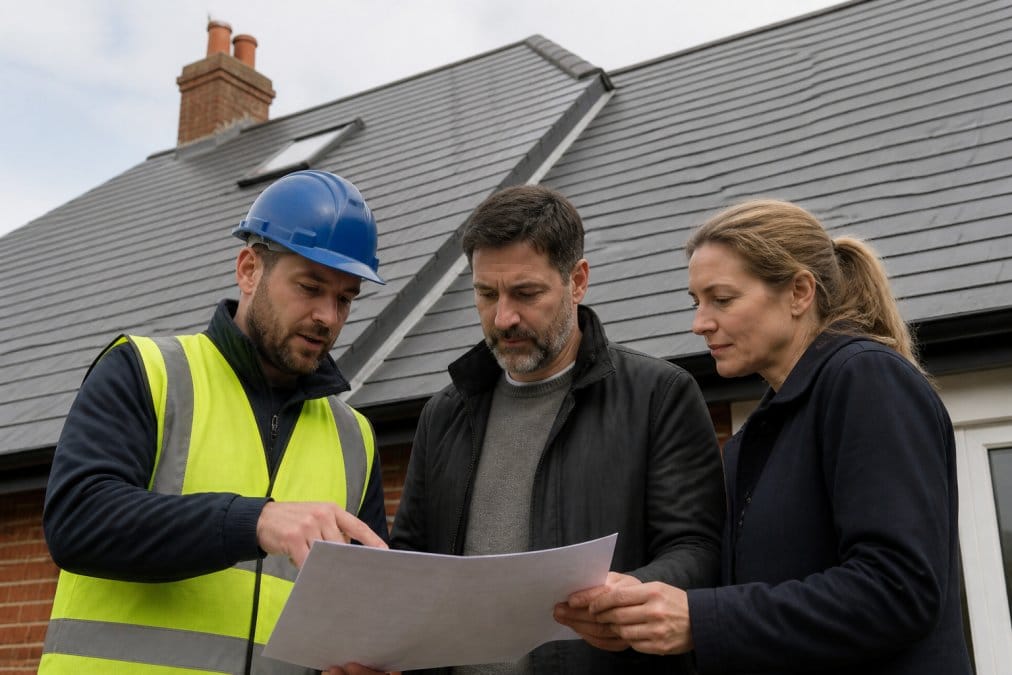
How to Identify Reliable Roofing Companies
Learn how to identify reliable roofing companies with our step-by-step guide. Check accreditations, insurance, reviews, and spot red flags before hiring.

Table of Contents
- Why Vetting a Roofing Contractor Matters
- Verify Professional Accreditations and Trade Memberships
- Check Roofing Contractor Insurance Requirements
- Review Customer Testimonials and Request References
- Questions to Ask a Roofer Before Hiring
- How to Spot Rogue Roofing Traders and Scams
- Understand Warranties, Contracts, and Payment Terms
- Conclusion
Last Updated: August 14, 2026
Why Vetting a Roofing Contractor Matters
A leaking roof is a financial and structural emergency. Water damage spreads fast, affecting insulation, ceilings, walls, and foundations. The difference between hiring a reliable roofing contractor and picking the wrong one can cost you thousands in repairs, months of disruption, and genuine safety risks. This guide from Evershield Roofing covers how to identify reliable roofing companies and protect yourself from poor workmanship, inflated costs, and disappearing contractors.
Most homeowners don’t vet roofing contractors properly. They call three numbers, compare quotes, and pick the cheapest option. A proper vetting process takes 2-3 hours upfront but saves you money, stress, and the headache of dealing with incomplete work or structural damage months after installation.
Key Takeaway
A reliable roofing contractor has verifiable credentials, insurance, references, and a clear contract. Vetting takes 2-3 hours upfront but prevents thousands in wasted money and project delays.
A reliable roofing contractor has verifiable credentials, insurance, references, and a clear contract. Vetting takes 2-3 hours upfront but prevents thousands in wasted money and project delays.
Verify Professional Accreditations and Trade Memberships
Accreditations and trade memberships are your first line of verification. They tell you a contractor has met industry standards, maintains professional liability, and submits to oversight.
Look for membership in recognised trade associations. In the UK, the National Federation of Roofing Contractors (NFRC), the Confederation of Roofing Contractors (CRC), and the Guild of Master Craftsmen (GMC) are established bodies that vet members and enforce codes of conduct. Membership requires proof of competence, insurance, and adherence to professional standards.
Ask directly: "Which trade associations are you a member of?" Get the membership number and verify it on the association’s website. Genuine members are proud to display their credentials because it differentiates them from unqualified operators.
Certifications matter too. Look for qualifications like NVQ Level 3 in Roof Slating and Tiling. Ask for copies of certificates; legitimate contractors have them readily available.
Watch Out
A contractor who refuses to provide trade membership details or cannot verify their accreditations is a red flag. Legitimate operators welcome this scrutiny because it proves their legitimacy.
A contractor who refuses to provide trade membership details or cannot verify their accreditations is a red flag. Legitimate operators welcome this scrutiny because it proves their legitimacy.
Check Roofing Contractor Insurance Requirements
Insurance is non-negotiable. A roofing contractor without proper coverage puts your property and finances at risk.
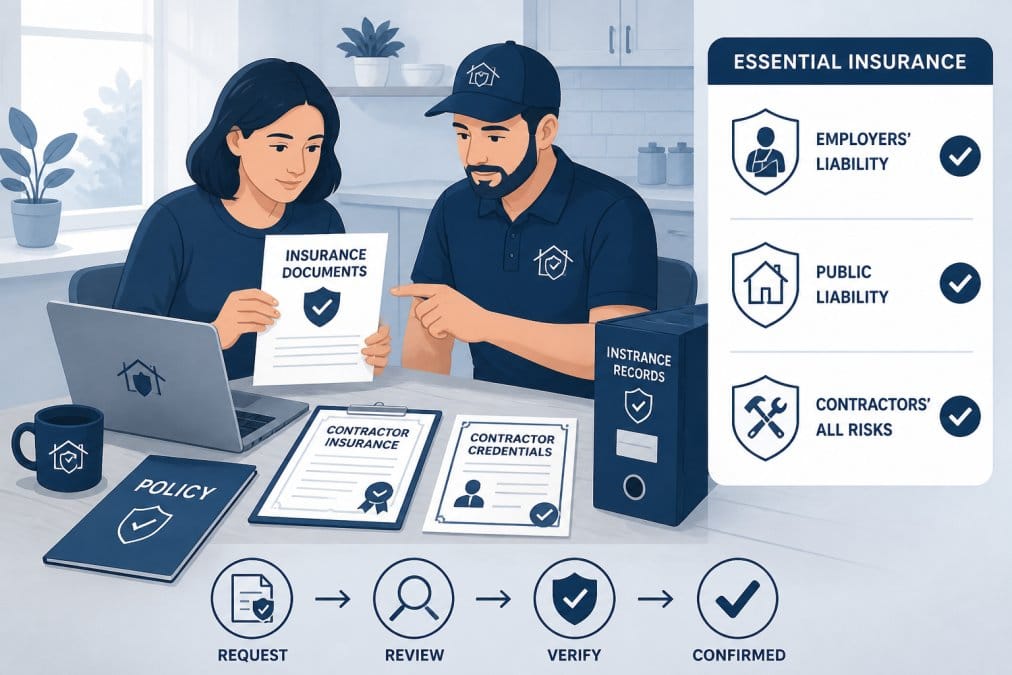
Public liability insurance is the minimum requirement. This covers damage to your property or injury to third parties caused by the contractor‘s work. Most reputable contractors carry at least £6 million in public liability coverage. Ask to see the certificate of insurance. The certificate should list your property as a "location of work" or be issued with sufficient coverage for your specific job.
Employer’s liability insurance is required if the contractor has employees. This covers injury to their workers on your site. It’s a legal requirement in the UK.
Professional indemnity insurance is valuable for complex projects like flat roofs or structural work.
Request proof of current insurance before work begins. Insurance policies expire, and a contractor might have had coverage last year but not now. If they hesitate or claim "it’s in the post," that’s a warning sign.
Pro Tip
Always verify insurance independently. Don’t just take the contractor’s word for it; contact the insurance provider directly or check the Financial Conduct Authority register to confirm coverage is active.
Always verify insurance independently. Don’t just take the contractor’s word for it; contact the insurance provider directly or check the Financial Conduct Authority register to confirm coverage is active.
Review Customer Testimonials and Request References
Customer testimonials and references are direct evidence of how a contractor performs. They reveal patterns: do customers report responsive communication, quality workmanship, and projects completed on time?
Start by reading online reviews on Google, Trustpilot, and local business directories. Look for patterns rather than isolated comments. If you see repeated complaints about the same issue, missed deadlines, poor communication, water leaks months later, that’s a pattern worth noting.
Ask the contractor for references directly. A reliable contractor will provide at least three recent references from customers whose work is similar to yours. Contact them and ask specific questions: Did the contractor start and finish on schedule? Did they communicate clearly? Were there any issues during or after the work?
For major projects, ask to see photographs of recent work. A contractor should have a portfolio showing roof installations, repairs, or replacements they’ve completed.
Pro Tip
When calling references, ask about specific details: How was the site left at the end of each day? Were there unexpected costs? How did the contractor handle problems? These questions reveal professionalism beyond just “the roof looks fine.”
When calling references, ask about specific details: How was the site left at the end of each day? Were there unexpected costs? How did the contractor handle problems? These questions reveal professionalism beyond just “the roof looks fine.”
Questions to Ask a Roofer Before Hiring
Before signing a contract, ask questions that reveal how the contractor operates and thinks about your project.
Project scope and timeline: "Can you walk me through exactly what work will be done, step by step?" A competent contractor will explain the process clearly: removing old materials, inspecting the structure, installing new materials, finishing details. For a full roof replacement on a three-bed semi, expect 5-10 days depending on weather and complexity.
Material specifications: "What roofing materials do you recommend, and why?" They should explain the differences between slate, tile, asphalt, or other materials, including lifespan, maintenance requirements, and cost implications.
Weather and site management: "How do you manage the site during the work? What happens if it rains?" Legitimate contractors have protocols for weather delays, site safety, and protecting your property.
Warranty and guarantees: "What warranty do you offer on your workmanship?" A reliable contractor typically offers a workmanship guarantee of 5-10 years. Get this in writing in the contract.
Subcontractors: "Will you handle all the work yourself, or do you use subcontractors?" If they use subcontractors, ask who they are and whether those subcontractors are also insured and accredited.
Payment schedule: "What’s your payment structure?" Avoid contractors who demand full payment upfront. A standard arrangement is a deposit (typically 10-25%) upon signing, progress payments as work advances, and final payment upon completion.
Contingency planning: "What if you find structural damage during the work?" A professional contractor has a process for this; an unprepared one will give a vague answer.
Get Your Free Roofing Quote Today! →
How to Spot Rogue Roofing Traders and Scams
Rogue traders exploit homeowners by cutting corners, disappearing mid-project, or charging inflated prices for substandard work.
No verifiable business details: A legitimate contractor has a registered business address, phone number, and website. If they operate only through a mobile number or refuse to put anything in writing, that’s a red flag.
Pressure to decide quickly: "I’ve got another job starting Monday, so I need your decision today." Legitimate contractors understand you need time to compare quotes and verify credentials.
Unsolicited door-to-door visits: "I noticed your roof looks damaged while driving past." Rogue traders use this approach to catch homeowners off-guard. Never hire someone who approaches you unsolicited.
Cash-only payment: "We do a discount if you pay cash." This is how rogue traders avoid leaving a financial trail. Legitimate businesses accept bank transfers, cards, and cheques.
Unrealistically low quotes: If a quote is significantly lower than others, ask why. Compare quotes, but don’t assume the cheapest is the best value.
No written contract: A contract protects both you and the contractor. If a contractor refuses to provide a written agreement, that’s a warning sign.
Lack of references or verifiable work: If a contractor can’t provide references or photographs of recent work, they may not have a track record worth showing.
Watch Out
If a contractor asks you to pay the full amount upfront, pressures you into a quick decision, refuses to provide insurance certificates, or won’t give references, do not hire them. These are hallmarks of rogue traders who disappear after taking payment.
If a contractor asks you to pay the full amount upfront, pressures you into a quick decision, refuses to provide insurance certificates, or won’t give references, do not hire them. These are hallmarks of rogue traders who disappear after taking payment.
Understand Warranties, Contracts, and Payment Terms
A clear contract and realistic warranty protect you from disputes and give you recourse if something goes wrong.
Workmanship warranty: This covers defects in installation caused by the contractor’s work. A standard workmanship warranty is 5-10 years. It typically covers leaks, loose tiles or slates, and failed seals caused by poor installation. Get the warranty period and coverage details in writing.
Material warranty: Roofing materials come with manufacturer warranties, usually 10-25 years depending on the material. The contractor should provide you with the manufacturer’s warranty documentation.
Contract essentials: A proper roofing contract should include:
- Detailed description of work to be done (including materials, colours, specifications)
- Project timeline and start/completion dates
- Total cost and payment schedule
- Insurance and accreditation details
- Warranty terms (workmanship and materials)
- Contingency clause for unforeseen damage or changes
- Site management and safety protocols
- Dispute resolution process
Read the contract carefully before signing. If anything is unclear, ask the contractor to explain or amend it.
Payment terms: Never pay the full amount upfront. A standard payment schedule protects both parties:
- Deposit (10-25%) upon signing the contract
- Progress payment (25-50%) as work advances
- Final payment upon completion and your inspection and approval
The final payment should be conditional on your satisfaction with the work.
Dispute resolution: The contract should specify how disputes are handled. Does the contractor offer a complaints process? What’s the timeline for addressing issues?
| Contract Element | What It Should Include | Red Flag |
|---|---|---|
| Scope of Work | Detailed description of materials, colours, and specific tasks | Vague language like "roof repair as needed" |
| Timeline | Start date, expected completion date, weather contingency | No dates or "we’ll let you know" |
| Payment Schedule | Deposit, progress payments, final payment amounts and dates | Full payment upfront or cash-only |
| Warranty | Workmanship period (years), what’s covered, what’s excluded | No warranty or warranty only on materials |
| Insurance | Contractor’s public liability and employer’s liability details | No insurance information provided |
| Dispute Process | How complaints are handled, timeline, escalation steps | No process described or "we’ll sort it out" |
Conclusion
Identifying a reliable roofing contractor requires verification at every stage: checking accreditations, confirming insurance, reading references, asking the right questions, and spotting warning signs.
At Evershield Roofing, we’ve built 25 years of reputation on transparency, quality materials, and responsive customer service. We provide free surveys and detailed written quotes, hold full public liability insurance, and offer clear workmanship guarantees on every project. If you’re ready to hire a contractor you can trust, get your free roofing quote today and see how we approach your project differently.
Frequently Asked Questions
How can I verify if a roofing company is reputable?
Check their trade association memberships (such as the National Federation of Roofing Contractors), verify public liability insurance, read customer testimonials, and request references from recent projects. Ask how long they've been operating and request evidence of completed work in your area. A reliable roofing contractor will provide this information readily and encourage you to speak with previous clients.
What questions should I ask before hiring a roofing contractor?
Ask about their accreditations, insurance cover, warranty terms, project timeline, payment schedule, and whether they'll provide a written quotation with a detailed cost breakdown. Enquire about their experience with your specific roofing material, whether they'll handle building regulations approval, and what happens if issues arise after completion. Request references and ask if they use subcontractors, if so, whether they're also insured.
How do I spot the signs of a rogue roofing trader?
Avoid traders who demand large cash deposits upfront, pressure you to decide immediately, offer prices significantly lower than competitors, lack verifiable insurance or accreditations, or have no verifiable online presence or references. Red flags include reluctance to provide written quotations, no clear contract terms, and unwillingness to answer questions about their background or previous work. Always check for complaints with local trading standards.
What insurance should a roofing contractor have?
Your roofing contractor must carry public liability insurance (typically £1 million minimum) to cover damage to your property or injury during work. Ask for proof of current cover and verify it directly with their insurer if needed. For larger projects, check if they have employer's liability insurance and professional indemnity cover. Never hire a contractor who cannot provide evidence of valid, current insurance.