6 Ways to Prevent Roof Leaks in Winter
6 ways to prevent roof leaks in winter: Stop winter roof leaks before they start. Learn 6 proven prevention methods to protect your home from water damage.

Table of Contents
- Why Winter Roof Leaks Happen
- 1. Keep Gutters Clear and Flowing
- 2. Inspect and Repair Roof Damage Before Cold Weather Arrives
- 3. Seal Cracks and Gaps in Roof Flashing
- 4. Improve Loft Insulation to Prevent Ice Dams
- 5. Remove Moss and Debris from Your Roof Surface
- 6. Schedule a Professional Roof Inspection
- Act Now to Protect Your Home
Last Updated: August 24, 2026
Why Winter Roof Leaks Happen
Winter brings a unique combination of challenges that make roofs vulnerable to leaks. At Evershield Roofing, we’ve seen how the season’s moisture, freeze-thaw cycles, and debris accumulation create perfect conditions for water ingress. Understanding why these leaks occur is the first step toward preventing them.
Cold temperatures cause water to expand when it freezes, putting pressure on roof materials and widening existing cracks (peer-reviewed research). Snow and ice melt during the day, then refreeze at night, forcing water deeper into gaps and fissures. Meanwhile, gutters clog with autumn leaves and moss, preventing water from draining properly. When water backs up, it finds its way under roof tiles or flashing. Ice dams form when warm air from poorly insulated lofts melts snow on the roof, which then refreezes at the cold eaves, creating a barrier that traps water.
The result is predictable: water seeps through, stains appear on ceilings, and damage compounds quickly. What starts as a small leak in November can become a structural problem by March if left unchecked. This is why winter roof leak prevention isn’t optional, it’s essential maintenance that protects your home’s integrity and your wallet.
1. Keep Gutters Clear and Flowing
Blocked gutters are the single most common cause of winter roof leaks. When leaves, moss, and debris accumulate, water has nowhere to go but up and under your roof covering. A clear gutter system is your first line of defense against winter water damage.
Why gutter blockages cause winter leaks
Standing water in gutters freezes solid in cold weather, creating ice dams that force water back toward the roof. This backed-up water seeps under tiles, into flashing gaps, and through any existing cracks. The weight of ice also stresses gutter fixings and can pull them away from the fascia, creating gaps where water runs behind the guttering entirely.
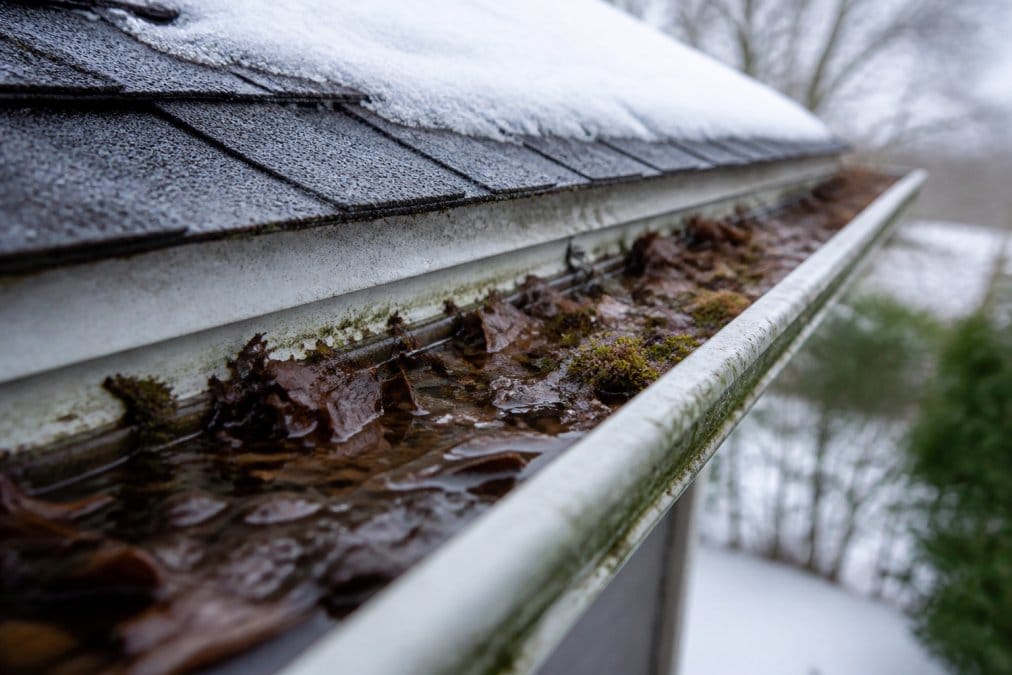
Debris-filled gutters also prevent proper drainage in milder periods. Even a light rain becomes problematic when water can’t flow freely. The longer water sits in your gutters, the more likely it is to find its way into your home.
How to clear blocked gutters safely
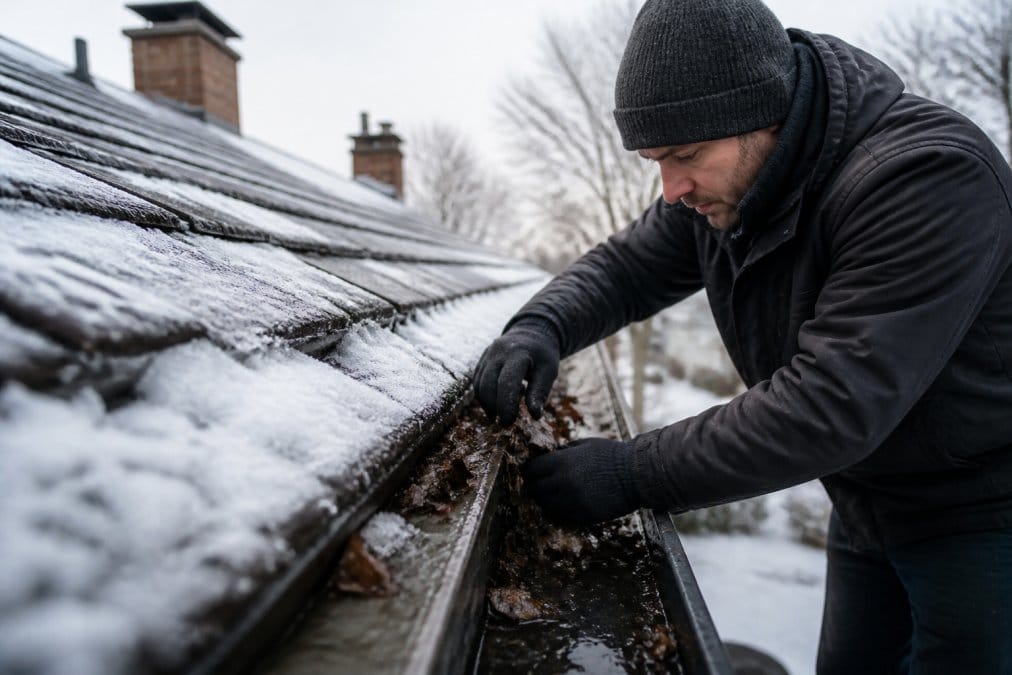
Start by removing large debris by hand, working from one end of the gutter toward the downpipe. Wear gloves and use a sturdy ladder positioned on level ground. Never overreach, move the ladder frequently rather than stretching sideways, which is how most gutter accidents happen.
Once you’ve removed the bulk of debris, flush the gutters with a garden hose. Start at the end opposite the downpipe and work toward it, watching how water flows. If water pools anywhere, you’ve found a blockage that needs clearing. Use a plumbing snake or high-pressure spray to break up stubborn debris.
Pro Tip
Check your downpipes too. Many people clear gutters but forget that downpipes can clog with compacted leaves. A blocked downpipe means water backs up into the gutter even if the gutter itself is clear.
Check your downpipes too. Many people clear gutters but forget that downpipes can clog with compacted leaves. A blocked downpipe means water backs up into the gutter even if the gutter itself is clear.
For properties with heavy tree cover or steep roofs, professional gutter cleaning is worth the investment. Evershield Roofing offers gutter cleaning services that include inspection for damage, ensuring your drainage system is ready for winter. This is particularly important in Buckinghamshire, where autumn leaf fall can be substantial.
Aim to clear gutters twice yearly, once in autumn after leaves have fallen, and again in early spring. In winter, check after heavy snowfall or ice melt events.
2. Inspect and Repair Roof Damage Before Cold Weather Arrives
Waiting until winter to discover roof damage is expensive. By then, water has already penetrated, insulation is saturated, and structural damage may be underway. A pre-winter inspection catches problems while they’re still manageable and inexpensive to fix.
Look for missing or broken tiles, which are obvious entry points for water. Check that roof flashing, the metal strips sealing joints and penetrations, sits flush and shows no gaps, cracks, or rust. Flashing around chimneys, vents, and skylights is particularly vulnerable. Run your hand along seams; if you feel movement or gaps, water will too.
Moss and algae growth, while not damage itself, traps moisture against roof materials and accelerates deterioration. Patches of discoloration often indicate water damage already in progress. Sagging sections of roof or visible rot in fascia boards are serious warning signs.
Signs of roof damage after winter exposure
After winter, inspect your roof for new damage caused by freeze-thaw cycles and weather exposure. Look for:
- Cracked or split tiles – freezing water expands inside porous materials, causing them to fracture
- Lifted or curled tiles – ice formation underneath pushes tiles upward
- Mortar erosion around ridge tiles – frost action degrades mortar joints
- Flashing separation – ice and snow movement can pull flashing away from the roof surface
- Granule loss from asphalt shingles – visible as bare patches or granules in gutters
- New leaks or water stains on ceilings – often appear days or weeks after freeze-thaw events
If you notice any of these signs, repair them promptly. Small cracks sealed now prevent major leaks later. A single missing tile might seem minor, but it’s an open door for water infiltration.
Evershield Roofing provides comprehensive roof inspections that identify damage you might miss. Our team has over 25 years of experience spotting early-stage problems in Buckinghamshire properties. We offer free surveys and quotes, so you know exactly what needs attention before winter weather arrives.
Watch Out
Delaying repairs after spotting damage is a false economy. A £50 tile repair in September becomes a £500 water damage claim in January. Act quickly when you notice problems.
Delaying repairs after spotting damage is a false economy. A £50 tile repair in September becomes a £500 water damage claim in January. Act quickly when you notice problems.
3. Seal Cracks and Gaps in Roof Flashing
Roof flashing is the vulnerable point where your roof meets chimneys, vents, skylights, and where roof planes meet walls. These joints move slightly as temperatures change, creating gaps that grow over time. Winter’s freeze-thaw cycles accelerate this deterioration.
Inspect all flashing carefully. Run your hand along seams to feel for gaps. Look for caulk that’s cracked, peeling, or missing entirely. If you see daylight through a gap or feel cold air, water will definitely penetrate during rain or snowmelt.
For small cracks and gaps, self-adhesive flashing tape offers a quick solution. Products like Bostik Flashband bond instantly to create a watertight seal. Clean the surface thoroughly, dry it completely, and apply the tape firmly, pressing out air bubbles. This works well for minor damage and as emergency temporary repair.
For larger gaps or deteriorated flashing, professional resealing is more reliable. A roofer will remove old caulk, inspect the underlying flashing for corrosion, and apply new sealant designed for roof exposure. This is not a DIY task if flashing is severely damaged, water behind flashing causes hidden damage that compounds quickly.
Key Takeaway
Flashing failures account for a significant portion [of winter roof leaks](/6-common-causes-of-roof-leaks-in-older-homes/). Sealing flashing gaps before cold weather is one of the highest-return prevention investments you can make.
Flashing failures account for a significant portion [of winter roof leaks](/6-common-causes-of-roof-leaks-in-older-homes/). Sealing flashing gaps before cold weather is one of the highest-return prevention investments you can make.
Evershield Roofing specializes in flashing repairs and replacement. Whether you need a quick seal or complete flashing replacement, our team ensures the job is done to last through multiple winters.
4. Improve Loft Insulation to Prevent Ice Dams
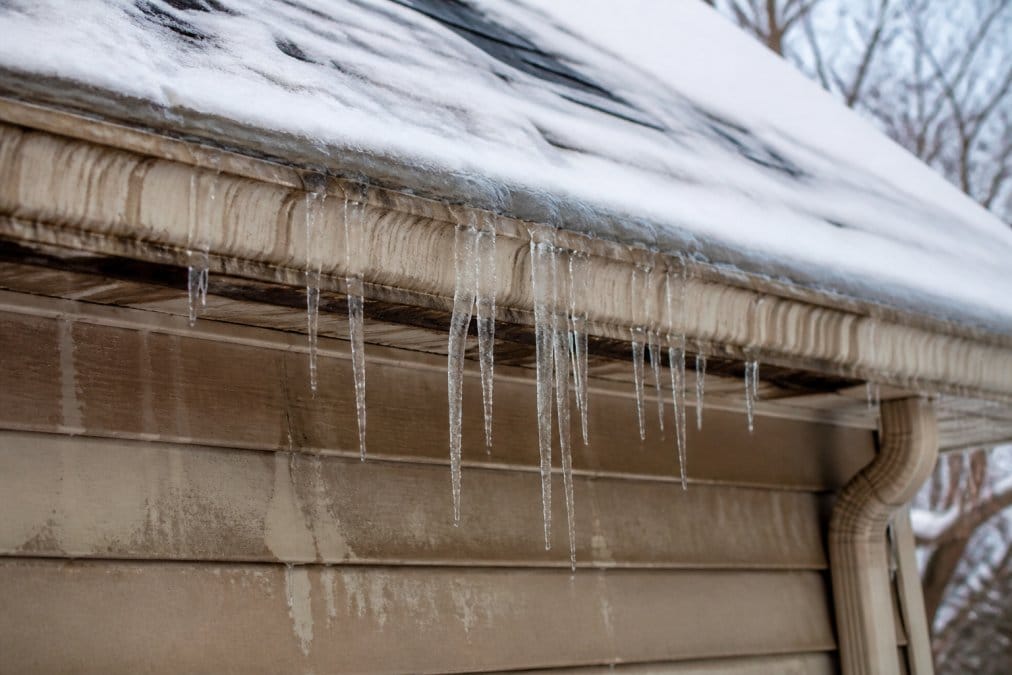
Ice dams form when warm air from your home melts snow on the roof, which then refreezes at the cold eaves. This creates a barrier that traps water, forcing it under roof tiles. The solution is to reduce heat loss through your roof by improving loft insulation.
The UK Building Regulations recommend loft insulation depths of at least 270mm for new construction and existing homes (gov.uk). Many older properties have far less, 50mm or even no insulation at all. Upgrading to modern standards dramatically reduces the temperature difference between your roof and the outside air, preventing the melt-refreeze cycle that creates ice dams.
Mineral wool insulation products like Knauf Earthwool Loft Roll are straightforward to install in accessible loft spaces. The material comes in rolls that unroll between joists, building up to the recommended depth. Proper ventilation is essential, insulation must not block airflow through soffit vents, which prevents moisture accumulation in the loft space.
If your loft is difficult to access or already partially insulated, professional installation ensures the job meets building standards and doesn’t create ventilation problems.
The investment in loft insulation pays dividends beyond ice dam prevention. You’ll see immediate reductions in heating bills, and your home will be warmer in winter and cooler in summer. Most properties see their investment back within 5-10 years through energy savings alone (gov.uk).
5. Remove Moss and Debris from Your Roof Surface
Moss and algae growth traps moisture against roof materials, accelerating deterioration and creating conditions where water penetrates. Winter moisture makes this worse, moss thrives in damp conditions, and its presence keeps surfaces wet longer.
Removing moss isn’t purely aesthetic. A moss-covered roof is a damaged roof in progress. The plants’ root-like structures penetrate into porous materials, and the organic matter holds water against the surface 24/7. This constant moisture causes tiles to crack, mortar to erode, and wood to rot.
For light moss growth, a stiff brush and garden hose work. Scrub gently, aggressive scrubbing damages tile surfaces and can dislodge tiles. Work from the top downward, always supporting yourself safely. For heavy moss or algae, professional roof cleaning is safer and more effective.
Roof cleaning services use low-pressure washing and appropriate cleaning solutions that kill moss at the root without damaging materials. Evershield Roofing offers specialist roof cleaning that removes moss buildup and organic residue, restoring your roof’s condition and appearance.
Prevention is easier than removal. Ensure gutters drain properly so water doesn’t pool on the roof. Trim overhanging branches to improve air circulation and reduce shade, which moss prefers. In damp areas or properties with heavy tree cover, periodic professional cleaning prevents moss from establishing.
Pro Tip
Moss returns faster to roofs with poor ventilation or heavy shade. If moss comes back within a year, the underlying cause is usually inadequate airflow or drainage, not just the moss itself. Address the root cause to prevent repeated growth.
Moss returns faster to roofs with poor ventilation or heavy shade. If moss comes back within a year, the underlying cause is usually inadequate airflow or drainage, not just the moss itself. Address the root cause to prevent repeated growth.
6. Schedule a Professional Roof Inspection
Even with regular maintenance, professional inspection catches problems you’ll miss. A trained roofer knows where leaks typically start, what early damage looks like, and how to spot issues before they become expensive.
Schedule inspections in autumn, before winter weather arrives, and again in spring to assess any winter damage. Annual inspections are standard practice for properties over 15 years old or in exposed locations. If your roof is nearing the end of its expected lifespan (typically 25-40 years depending on material), annual inspections become essential.
What to expect when hiring a professional roofer
A professional inspection begins with a visual assessment from the ground and extends to a thorough examination of the roof surface, flashing, gutters, and loft space. The roofer will walk the entire roof surface, checking tile condition, flashing integrity, and ventilation. They’ll inspect the loft for signs of water penetration, inadequate insulation, or ventilation problems.
A written report documents findings with photographs, prioritizing repairs by urgency. Some issues require immediate attention; others can wait for the next planned maintenance cycle. The report should be clear about what’s causing problems and what solutions are recommended.
When hiring a professional roofer in Buckinghamshire, verify their credentials. Ask about their experience with your specific roof type, slate, tile, asphalt, or flat roofs each have different vulnerabilities and repair approaches. Request references from recent jobs in your area. A roofer with 25 years of local experience will understand regional weather patterns and material performance in your climate.
Evershield Roofing provides comprehensive roof inspections with free surveys and quotes. Our team identifies problems early, explains what’s needed, and recommends the best solution for your situation. We’re fully insured and available for emergency roof repair work when urgent issues arise.
Best For
Properties over 15 years old or in areas with heavy tree cover should have professional inspections annually. Newer properties in sheltered locations can extend inspections to every 2-3 years.
Properties over 15 years old or in areas with heavy tree cover should have professional inspections annually. Newer properties in sheltered locations can extend inspections to every 2-3 years.
Act Now to Protect Your Home
Winter roof leaks are preventable with proper maintenance and early intervention. The six strategies covered here, clearing gutters, inspecting for damage, sealing flashing, improving insulation, removing moss, and scheduling professional inspections, address the root causes of winter leaks rather than just treating symptoms.
Start with gutters and a visual inspection this autumn. If you spot damage, repair it immediately rather than waiting for winter. Improve insulation if your loft is inadequately protected. Schedule a professional inspection if your roof is over 15 years old or if you’ve noticed recurring leaks.
Evershield Roofing has helped countless homeowners in Buckinghamshire prevent winter damage through proactive maintenance and timely repairs. Our team offers free surveys, professional inspections, and emergency repair availability when problems do occur. Get your free roofing quote today and ensure your home is protected through the winter months ahead.
=== FAQ ANSWERS (audit these too, same rules) ===
[1] Q: How do I know if my roof is leaking in winter?
A: Winter roof leaks often show as water stains on ceilings or walls, damp patches in lofts, or visible water dripping inside your home during or after rain and snow. Check your loft regularly for signs of moisture, discoloration, or mould. If you notice any of these, contact a professional roofer immediately to prevent further damage and identify the source before it worsens.
[2] Q: What are the signs of roof damage after winter?
A: After winter, look for missing or cracked roof tiles, damaged flashing around chimneys, sagging sections, moss or algae growth, and debris accumulation in gutters. Check for water stains inside your home and inspect the loft for damp patches. These signs indicate your roof may need repair. Professional roofers can conduct a thorough inspection to assess damage and recommend necessary repairs.
[3] Q: Can you repair a roof leak during cold weather in the UK?
A: Yes, emergency roof repairs can be carried out during cold weather, though conditions are challenging. Many roofers, including those with 25 years of experience, offer emergency repair services throughout winter. However, prevention is far more effective than emergency repairs. Addressing potential issues before winter arrives ensures your roof stays protected when temperatures drop and weather becomes severe.
[4] Q: How often should I clear blocked gutters to prevent winter leaks?
A: Clear gutters at least twice yearly: once in autumn after leaves fall and again in spring. In areas with significant tree cover, clear them every three months. During winter, check gutters after heavy rain or snow to ensure water drains properly. Blocked gutters cause water to back up under roof tiles, leading to leaks. Regular clearing prevents this damage and protects your home’s structure and interior.
Frequently Asked Questions
How do I know if my roof is leaking in winter?
Winter roof leaks often show as water stains on ceilings or walls, damp patches in lofts, or visible water dripping inside your home during or after rain and snow. Check your loft regularly for signs of moisture, discoloration, or mould. If you notice any of these, contact a professional roofer immediately to prevent further damage and identify the source before it worsens.
What are the signs of roof damage after winter?
After winter, look for missing or cracked roof tiles, damaged flashing around chimneys, sagging sections, moss or algae growth, and debris accumulation in gutters. Check for water stains inside your home and inspect the loft for damp patches. These signs indicate your roof may need repair. Professional roofers can conduct a thorough inspection to assess damage and recommend necessary repairs.
Can you repair a roof leak during cold weather in the UK?
Yes, emergency roof repairs can be carried out during cold weather, though conditions are challenging. Many roofers, including those with 25 years of experience, offer emergency repair services throughout winter. However, prevention is far more effective than emergency repairs. Addressing potential issues before winter arrives ensures your roof stays protected when temperatures drop and weather becomes severe.
How often should I clear blocked gutters to prevent winter leaks?
Clear gutters at least twice yearly: once in autumn after leaves fall and again in spring. In areas with significant tree cover, clear them every three months. During winter, check gutters after heavy rain or snow to ensure water drains properly. Blocked gutters cause water to back up under roof tiles, leading to leaks. Regular clearing prevents this damage and protects your home's structure and interior.
Winter roof maintenance isn’t glamorous, but it’s the most cost-effective protection you can invest in. A few hours of gutter clearing and a professional inspection in autumn prevent thousands of pounds in water damage, structural repair, and interior restoration. Evershield Roofing makes it simple, call for a free survey, identify what needs attention, and handle repairs before cold weather arrives. Your roof will thank you, and your home will stay dry.