EPDM vs GRP Roofing: Which Suits Your Home?
EPDM vs GRP roofing: Compare EPDM and GRP roofing for residential homes. Learn durability, costs, installation, and which material suits your needs. Get.

Table of Contents
- EPDM vs GRP Roofing: Key Differences at a Glance
- Installation Process and Maintenance for Both Materials
- Flat Roof Drainage Importance for EPDM and GRP Systems
- Cost of EPDM vs GRP Roofing per Square Metre
- Flat Roof Lifespan UK: EPDM and GRP Compared
- Which Material Is Right for Your Home?
- Conclusion
- Frequently Asked Questions
Last Updated: September 2, 2026
EPDM vs GRP Roofing: Key Differences at a Glance
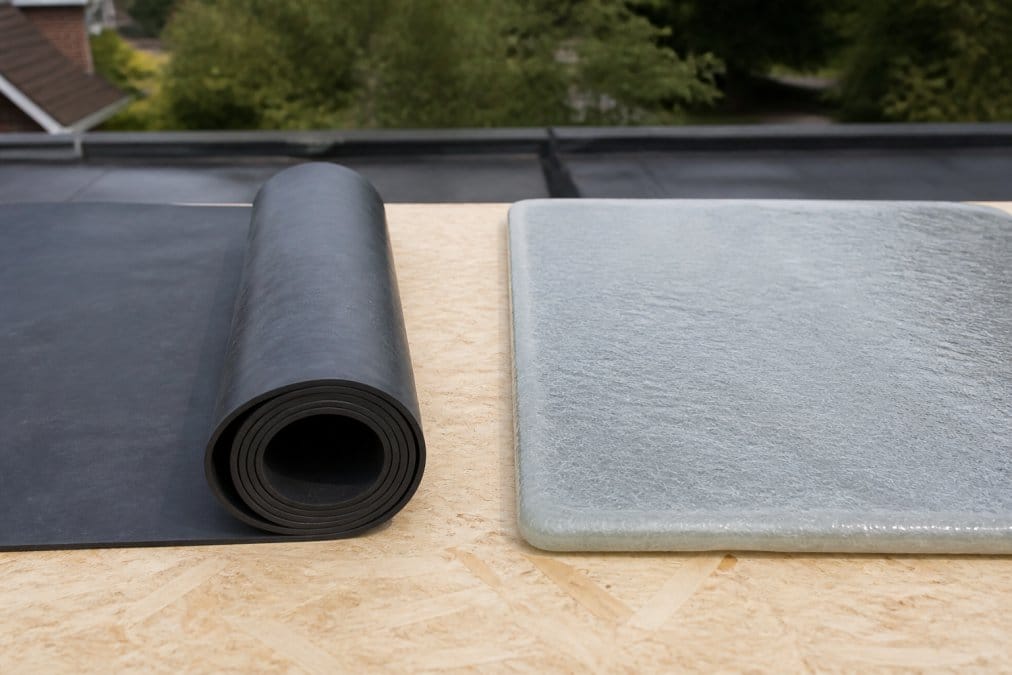
When choosing between EPDM and GRP roofing for residential homes, you’re comparing two fundamentally different approaches to waterproofing flat roofs. EPDM (ethylene propylene diene monomer) is a synthetic rubber membrane that comes in large sheets and relies on adhesive or mechanical fastening. GRP (glass reinforced plastic) is a fibreglass-based system that’s applied wet and cures into a seamless, rigid coating.
At Evershield Roofing, we’ve installed both materials across residential properties in London and Buckinghamshire for over 25 years. The choice isn’t about which is universally “better,” but which matches your roof’s structure, budget, maintenance tolerance, and desired lifespan. EPDM is faster to install, more forgiving with awkward roof shapes, and cheaper upfront. GRP takes longer to install and requires more skill, but delivers superior durability and a seamless finish.
| Aspect | EPDM | GRP |
|---|---|---|
| Material Type | Synthetic rubber membrane | Fibreglass composite |
| Installation Method | Sheet-based, adhesive or mechanical | Wet-applied, cures to solid |
| Typical Lifespan | 40-50 years | 50-100+ years |
| Seamless Coverage | Minimal seams with large sheets | Fully seamless |
| Maintenance | Low, occasional seam checks | Minimal, completely UV stable |
| Initial Cost | Lower per square metre | Higher per square metre |
| Installation Speed | Faster (1-2 days typical) | Slower (3-5 days typical) |
| Repair Difficulty | Simple (patch and tape) | More complex (requires recoating) |
| Weather Resistance | Excellent, but seams are vulnerable | Superior, no weak points |
| Best For | Budget-conscious, simple roof shapes | Long-term durability, complex designs |
Pro Tip
The real decision point: EPDM wins on speed and cost. GRP wins on longevity and peace of mind. If you’re planning to stay in your home for 20+ years, GRP’s longer lifespan often pays for itself. If you’re looking at a 10-year horizon, EPDM’s lower upfront cost makes more sense.
The real decision point: EPDM wins on speed and cost. GRP wins on longevity and peace of mind. If you’re planning to stay in your home for 20+ years, GRP’s longer lifespan often pays for itself. If you’re looking at a 10-year horizon, EPDM’s lower upfront cost makes more sense.
Installation Process and Maintenance for Both Materials
EPDM installation starts with preparing a clean, smooth substrate, typically plywood or concrete. The EPDM sheet is then unrolled and either fully adhered using contact adhesive or mechanically fastened around the edges with base flashing. Seams are sealed with tape or liquid sealant, which is where most installation errors occur. A skilled installer minimises seams by ordering the largest possible single sheet for your roof dimensions. Installation typically takes one to two days for a standard residential flat roof.
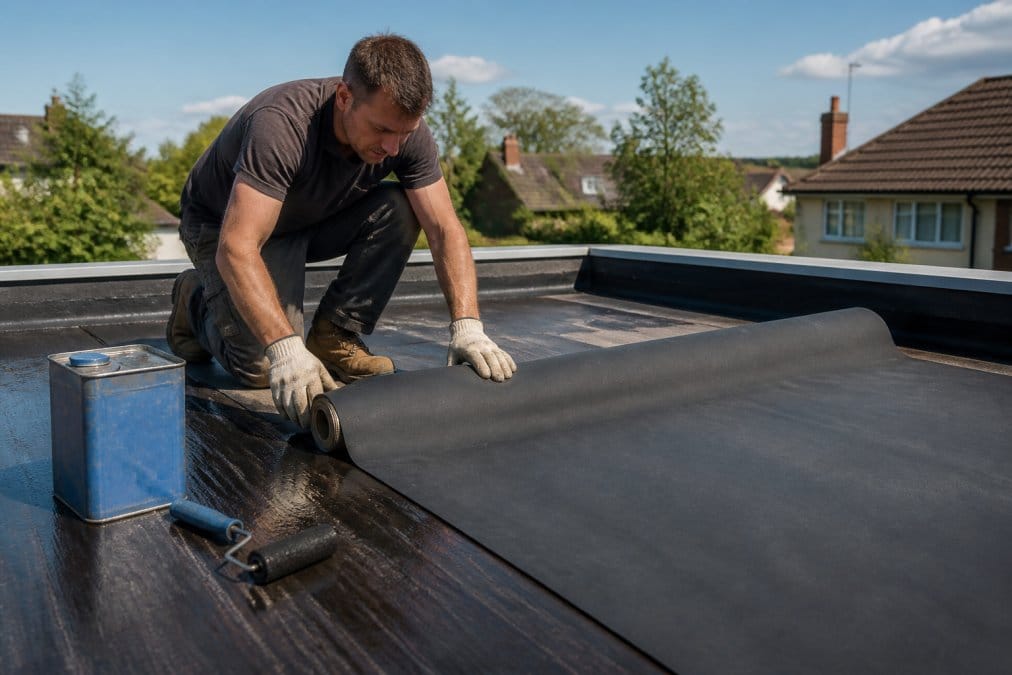
Once installed, EPDM requires minimal maintenance, occasional visual inspections to check that seams remain sealed and debris isn’t trapping moisture. Because EPDM is rubber, it degrades slightly under UV exposure over decades, though quality membranes resist this. Most EPDM roofs last 40-50 years with minimal intervention.
GRP installation is more labour-intensive and requires genuine skill. After preparing the roof deck, the GRP system involves applying a resin-based coating in layers. The first coat goes down wet, then fibreglass matting is embedded, then additional resin coats are applied. The whole system cures chemically into a single, rigid, seamless shell. Installation typically takes three to five days depending on roof size and complexity.
Maintenance for GRP is genuinely minimal. The material is completely UV stable and doesn’t degrade in sunlight like rubber does. It’s also harder and more resistant to puncture than EPDM. A simple annual visual inspection and clearing of debris is all that’s required. Because GRP has no seams, it avoids the failure mode that can affect EPDM after 20-30 years, when seams may require re-taping or section replacement.
Flat Roof Drainage Importance for EPDM and GRP Systems
Proper drainage is non-negotiable for both materials. A flat roof needs to slope toward drainage points at a gradient of at least 1 in 40 (roughly 2.5 degrees) to ensure water runs off rather than pooling. Standing water is the enemy of any roofing system.
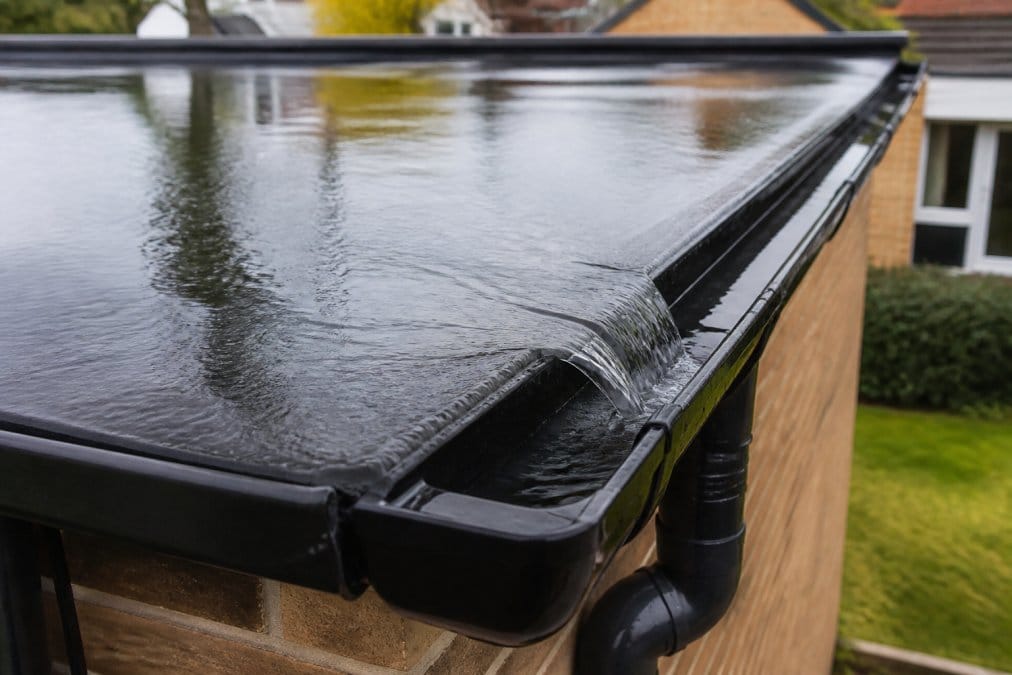
With EPDM, standing water accelerates seam degradation. Water sitting on a seam for weeks creates pressure and can work its way under the tape or sealant. Over years, repeated wet-dry cycling weakens the bond. With proper drainage, EPDM performs reliably.
GRP is more forgiving of poor drainage because it has no seams, but standing water still causes problems. It creates weight on the roof structure, promotes algae and moss growth, and can eventually lead to water finding its way through any tiny imperfection or around the edge flashing. Standing water also signals a structural problem, your roof deck is either sagging or the drainage system is blocked.
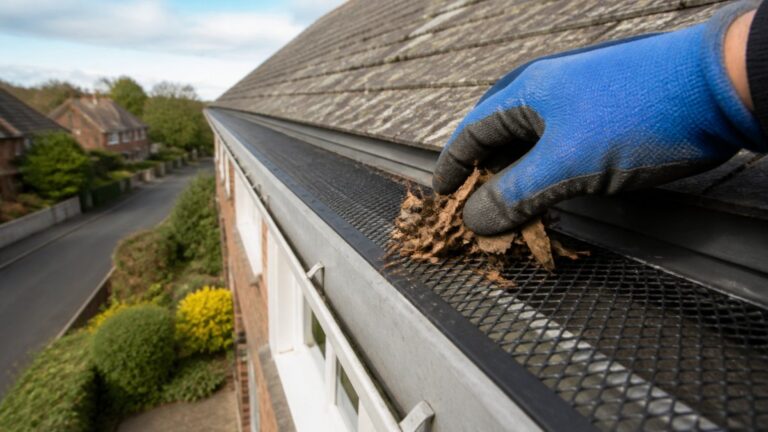
For both materials, the drainage system matters as much as the membrane itself. This includes guttering, downpipes, and internal roof outlets. Many residential flat roof failures happen not because the material failed, but because the drainage system was undersized, blocked, or poorly maintained. Leaves, moss, and debris accumulate in gutters and outlets, water backs up, and you’ve got a pond on your roof.
Watch Out
Standing water on a flat roof is a red flag. If water is pooling and sitting for days after rain, your drainage system is failing. This accelerates failure of any roofing material and can cause structural damage to the roof deck itself. Address drainage issues before or during any roof replacement.
Standing water on a flat roof is a red flag. If water is pooling and sitting for days after rain, your drainage system is failing. This accelerates failure of any roofing material and can cause structural damage to the roof deck itself. Address drainage issues before or during any roof replacement.
Cost of EPDM vs GRP Roofing per Square Metre
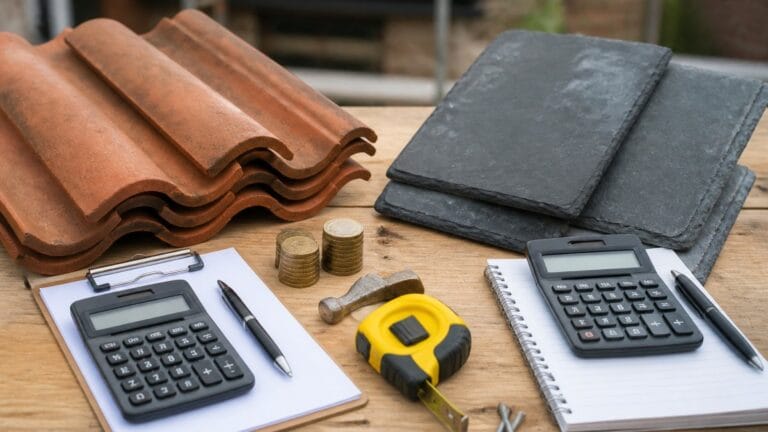
Material costs for EPDM typically range lower than GRP, but the difference narrows when you factor in labour and the full system cost. EPDM membrane itself is inexpensive, and installation labour is less intensive. GRP material costs more per square metre, and installation is more skilled and time-consuming, so the total project cost is typically higher.
However, the cost comparison depends on your specific roof. A simple rectangular roof with good drainage might cost significantly less with EPDM. A complex roof with multiple penetrations and valleys might actually cost less with GRP because there’s no seam-sealing labour for each detail.
For a typical 50 square-metre residential flat roof, EPDM would generally cost less upfront. GRP would cost more initially but might deliver better value over 50 years because you’re unlikely to need major repairs or replacement. The long-term cost per year of ownership often favours GRP, even though the upfront bill is higher.
Evershield Roofing offers finance available from 0% APR, which can make a higher-quality GRP installation more accessible. Over a 10-year finance term, the monthly cost of a premium GRP roof can be surprisingly close to a cheaper EPDM option, while delivering decades more protection.
Get a free survey and quote from Evershield Roofing to see what EPDM vs GRP roofing for residential homes would cost for your specific property.
Key Takeaway
Material cost alone doesn’t tell the story. A £2,000 EPDM roof that needs £1,500 in repairs in 15 years costs more over time than a £4,000 GRP roof that lasts 50 years with minimal maintenance. Calculate the true cost of ownership, not just the upfront price.
Material cost alone doesn’t tell the story. A £2,000 EPDM roof that needs £1,500 in repairs in 15 years costs more over time than a £4,000 GRP roof that lasts 50 years with minimal maintenance. Calculate the true cost of ownership, not just the upfront price.
Flat Roof Lifespan UK: EPDM and GRP Compared
EPDM roofs typically last 40-50 years in UK conditions. Some perform well beyond 50 years, but degradation accelerates after that point. The rubber material gradually hardens and becomes less flexible, seams can fail, and UV exposure takes its toll. Most homeowners expect to replace or significantly refurbish an EPDM roof around the 45-year mark.
GRP roofs commonly last 50-100 years or more. The fibreglass composite doesn’t degrade the way rubber does. It doesn’t harden, become brittle, or lose elasticity. A GRP roof installed in the 1980s can still be performing perfectly with no more than routine cleaning and inspection. Some manufacturers offer 40-year guarantees on GRP systems, and the material itself is capable of lasting far longer if properly installed and maintained.
This lifespan difference is significant for long-term planning. An EPDM roof installed today will likely need replacement around 2070-2075. A GRP roof installed today could still be protecting your home in 2125. For homeowners planning to age in place or caring about the property’s long-term value, the durability difference is real.
Get Your Free Roofing Quote Today! →
Climate in London and Buckinghamshire is relatively moderate, which helps both materials perform well. Heavy rainfall and freeze-thaw cycles are the main stressors. EPDM handles these reasonably well, but repeated expansion and contraction of the rubber over decades eventually affects seams. GRP’s rigidity works in its favour here, it doesn’t expand and contract as much, so there’s less stress on potential weak points.
An EPDM roof that’s inspected regularly and has seams re-sealed proactively can stretch toward 50 years. A GRP roof that’s simply left alone will still be fine at 50 years. If you’re not the type to schedule regular roof inspections, GRP’s “install and forget” durability is a genuine advantage.
Which Material Is Right for Your Home?
The answer depends on four factors: your budget, your roof’s shape and complexity, how long you plan to stay in your home, and your tolerance for maintenance.
Choose EPDM if:
- You’re budget-conscious and want the lowest upfront cost
- Your roof is a simple rectangular shape with minimal penetrations
- You plan to sell or significantly renovate within 15-20 years
- You’re willing to have the roof inspected every 5-10 years and seams re-sealed as needed
- You’re comfortable with a material that will eventually need replacement in 40-50 years
EPDM is a solid, proven choice for many residential roofs. It’s reliable when properly installed and maintained, and the lower cost makes it accessible to homeowners on tighter budgets.
Choose GRP if:
- You want a roof that will outlast your ownership of the home
- Your roof has a complex shape with multiple valleys, penetrations, or architectural details
- You value peace of mind and want minimal maintenance for decades
- You’re planning to stay in your home long-term or care about the property’s durability legacy
- You can accommodate a higher upfront cost in exchange for 50+ years of protection
GRP is the choice for homeowners who want to install a roof and genuinely forget about it. The seamless, rigid finish also appeals to those who prefer the aesthetic of a modern, clean roofline.
At Evershield Roofing, we have 25 years of experience installing both materials. We’ll assess your specific roof, discuss your priorities, and recommend the material that makes sense for your situation.
Best For
EPDM suits budget-conscious homeowners with simple roof shapes who plan to stay in their homes 10-20 years. GRP suits long-term homeowners, properties with complex roof geometry, and anyone who wants a roof that will outlast their ownership.
EPDM suits budget-conscious homeowners with simple roof shapes who plan to stay in their homes 10-20 years. GRP suits long-term homeowners, properties with complex roof geometry, and anyone who wants a roof that will outlast their ownership.
Conclusion
EPDM vs GRP roofing for residential homes isn’t a matter of one being objectively better. EPDM is faster, cheaper, and proven. GRP is more durable, seamless, and requires virtually no maintenance over its lifespan. The right choice depends on your specific property, budget, and how you plan to use your home.
Both materials, when properly installed with adequate drainage, will protect your home reliably for decades. The difference is in the long-term cost of ownership and the peace of mind you get from knowing your roof is built to last.
At Evershield Roofing, we’ve installed both on hundreds of residential properties across London and Buckinghamshire. We understand the real-world performance of each material, and we’ll help you make the choice that’s right for your home. We provide free surveys and quotes, and we offer finance from 0% APR, making premium roofing accessible even if the upfront cost feels daunting.
Get your free roofing quote today and let’s discuss which material makes sense for your home.
Frequently Asked Questions
Which is cheaper: EPDM or GRP roofing?
EPDM roofing typically costs less per square metre than GRP. However, total costs depend on roof size, complexity, and installation method. Request a free survey from Evershield Roofing for an accurate quote tailored to your specific property.
How long does an EPDM roof last compared to GRP?
Both materials offer exceptional longevity. EPDM roofs typically last 50 years or more, whilst GRP systems can exceed 100 years with proper maintenance. Flat roof lifespan UK standards favour both materials, though GRP’s potential for longer performance makes it attractive for homeowners planning long-term. Durability depends on installation quality, drainage maintenance, and environmental exposure. Evershield Roofing’s 25 years of experience ensures correct installation for maximum lifespan.
Is GRP roofing better than EPDM for UK weather conditions?
Both materials perform well in UK weather. EPDM offers excellent UV and ozone resistance with high flexibility to handle temperature fluctuations and building movement. GRP is equally UV-resistant and maintenance-free, with superior resistance to foot traffic and physical damage. The choice depends on your priorities: EPDM suits budget-conscious homeowners, whilst GRP suits those seeking maximum durability and aesthetic versatility. Both comply with UK Building Regulations when properly installed.
What is the flat roof drainage importance for EPDM and GRP systems?
Proper drainage is critical for both materials. Standing water accelerates wear, causes pooling damage, and shortens roof lifespan. EPDM’s flexibility can accommodate minor drainage issues, but GRP’s seamless nature prevents water ingress at joints. Both require sloped substrates or installed drainage systems to direct water away efficiently. Poor drainage is the leading cause of premature flat roof failure. Evershield Roofing ensures correct gradient and drainage installation during new roof projects, protecting your investment and maximising material longevity.
Which flat roofing material is easiest to repair?
EPDM is generally easier to repair. Small punctures or seam issues can be patched with adhesive-backed tape or patches without specialist equipment. GRP repairs require laminating knowledge and matching resin colours for seamless results, making professional repair advisable. However, both materials are durable enough that major repairs are rare. GRP’s advantage is superior resistance to accidental damage from foot traffic or debris. For peace of mind with either material, professional maintenance and prompt attention to minor damage extends lifespan significantly.