Why Flat Roof Drainage Is Important
Flat roof drainage prevents water damage, structural failure, and costly repairs. Learn why proper drainage matters and how to protect your roof.

Table of Contents
- Why Flat Roof Drainage Is Critical for Your Property
- Flat Roof Standing Water Problems and Their Impact
- Signs of Flat Roof Water Pooling You Shouldn’t Ignore
- Flat Roof Drainage Regulations in the UK
- How to Improve Flat Roof Drainage and Prevent Leaks
- Maintenance and Inspection: Keeping Your Drainage System Working
- Conclusion
Last Updated: August 26, 2026
Why Flat Roof Drainage Is Critical for Your Property
A flat roof without proper drainage is like a bathtub without a plug, water has nowhere to go. The difference is that a bathtub sits on the ground. Your roof sits above your home, and standing water becomes a structural problem within weeks.
At Evershield Roofing, we’ve spent over 25 years watching flat roofs fail. The pattern is always the same: drainage gets overlooked during installation, water pools after the first heavy rain, and six months later the property owner is calling about ceiling leaks. By then, the damage is already spreading into insulation, joists, and walls.
Proper flat roof drainage isn’t a luxury feature or an optional upgrade. It’s the difference between a roof that lasts 20 years and one that fails in five. Water is relentless. It finds every weak point, exploits every gap, and compounds damage exponentially once it starts. A flat roof that sheds water quickly stays dry. A flat roof where water sits becomes a liability.
The stakes are straightforward: ignore drainage and you’re paying for emergency repairs, ceiling replacements, and potential mould remediation. Get it right, and your roof performs exactly as intended. This guide explains why flat roof drainage matters so much, what goes wrong when it fails, and how to keep your system working properly.
Flat Roof Standing Water Problems and Their Impact
Standing water on a flat roof creates a cascade of problems, each one more expensive than the last. The moment water pools instead of draining, the clock starts on structural damage.
Water sits. Weight accumulates. A single centimetre of standing water across a typical flat roof adds hundreds of kilograms of load to your structure (peer-reviewed research). Repeat this after every rainfall, and you’re slowly pushing your roof downward. Over time, this causes the roof to sag further, which traps more water, which adds more weight. The cycle accelerates.
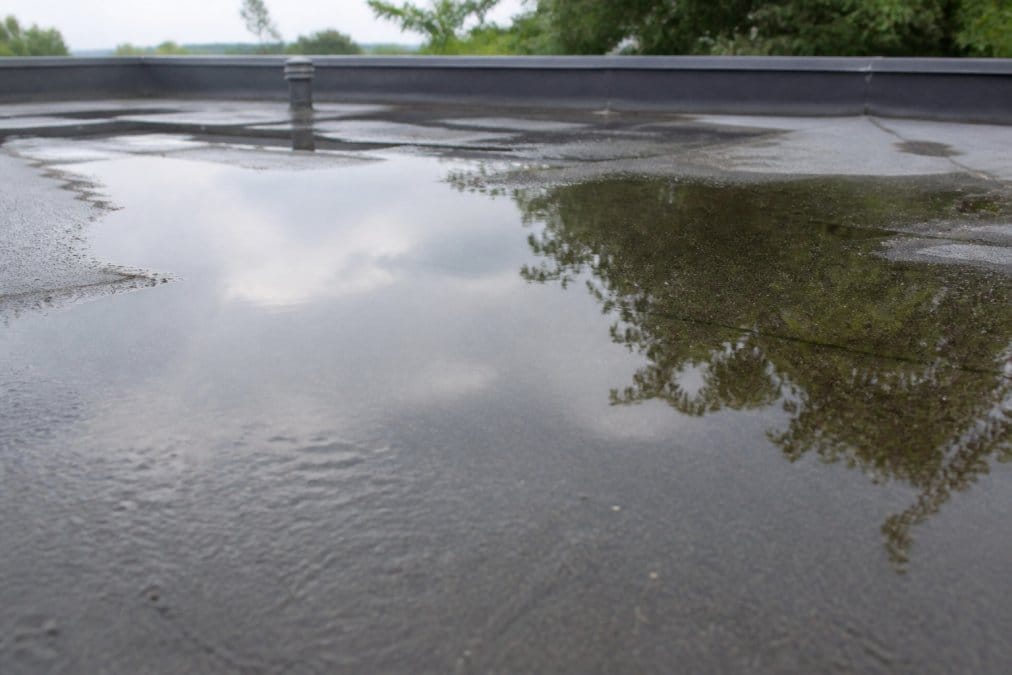
But weight is just the beginning. Standing water penetrates. Even the best roof membrane has seams, and water finds them. It creeps under flashing, works through tiny cracks you can’t see, and reaches the insulation layer beneath. Once water reaches the insulation, it loses all its insulating properties. A wet insulation layer becomes useless, and your heating and cooling costs spike immediately.
The real damage comes next: mould and rot. Trapped moisture creates the perfect environment for mould growth inside your roof cavity. You can’t see it from below, but it’s spreading. Wooden joists and beams absorb this moisture and begin to rot. Structural integrity deteriorates silently. By the time you notice water stains on your ceiling, the damage inside is often severe.
Algae and moss thrive in standing water too. They colonise the wet surface, trap more moisture, and accelerate membrane degradation. What started as a drainage problem becomes a biological problem. The roof surface breaks down faster than it should.
The financial impact is significant. A single ceiling leak repair runs into hundreds of pounds. Full insulation replacement costs thousands. Structural repairs for rotted beams cost far more. All of this is preventable with proper drainage from the start.
Signs of Flat Roof Water Pooling You Shouldn’t Ignore
Spotting water pooling early is the difference between a simple maintenance fix and an expensive structural repair. Here’s what to watch for.
After heavy rain, walk around your property and look at the roof from the ground. Do you see areas where water is clearly sitting? Pools that don’t drain within a day or two are a red flag. In the UK climate, where rain is frequent, water should drain within hours, not days.
Interior signs are harder to miss once they appear, but they’re also later-stage warnings. Damp patches on ceilings, water stains that reappear after rain, or soft spots in plasterboard all indicate that water has already penetrated the roof. By this point, the problem has been developing for weeks or months. The damage inside is already significant.
Look for sagging or deflection in the roof surface itself. A flat roof should be genuinely flat or have a slight slope toward drainage points. If you notice areas that dip or sag, water will pool there. This is especially visible after rain when the wet surface makes the low spots obvious.
Discolouration and algae growth on the roof surface indicate prolonged moisture. Patches of green or black growth mean water is staying wet long enough for biological colonisation. This accelerates the breakdown of the membrane.
Peeling or blistering on the roof membrane is another critical sign. These bubbles form when moisture becomes trapped between layers. The membrane is separating from its base, which means water is actively penetrating. This requires immediate attention.
Check your gutters and drainage channels. If they’re blocked with debris, water can’t flow away from the roof. Leaves, moss, dirt, and sediment all reduce drainage capacity. A blocked gutter system turns a sloped roof into a pooling surface.
Listen for water sounds in the roof cavity after rain. Dripping or trickling sounds mean water is actively moving through your insulation. This is a structural emergency.
Flat Roof Drainage Regulations in the UK
The UK Building Regulations set specific standards for roof drainage, and these rules exist because inadequate drainage causes exactly the problems we’ve outlined above. Understanding what the regulations require helps you evaluate whether your roof meets code.
Building Regulations Approved Document H covers roof drainage requirements. The core principle is straightforward: every roof must shed water efficiently and safely. For flat roofs, this means the roof must have a minimum slope or gradient toward drainage points. Even a "flat" roof isn’t actually flat, it’s designed with a subtle slope, typically 1 in 40 or steeper, to ensure water moves toward gutters and downpipes (gov.uk).
The regulations require that drainage systems be designed to handle the rainfall intensity expected in your region. This is based on a 1-in-50-year storm event, meaning the system must handle rainfall that occurs once every 50 years on average (gov.uk). For London and Buckinghamshire, this means designing for substantial rainfall volume.
Gutters, downpipes, and drainage channels must be sized correctly for the roof area they serve. An undersized gutter system can’t handle peak rainfall, which leads directly to pooling. The regulations specify minimum gutter and pipe diameters based on roof area and rainfall intensity.
Maintenance access is also required. The regulations expect that drainage systems will be inspected and cleaned regularly. This means your roof design should allow safe access to gutters and drainage points. A roof where you can’t reach the gutters is a roof that won’t be maintained properly.
The regulations also cover what happens when water does drain. Downpipes must discharge water safely away from the building foundation. Water directed against the building or pooling near the base causes foundation problems and damp in walls. Proper drainage routes water away from the structure entirely.
Get Your Free Roofing Quote Today! →
These aren’t suggestions. They’re legal requirements. If your roof doesn’t meet these standards, you’re not just risking damage, you’re potentially non-compliant with building code. This matters when you sell the property, when you claim on insurance, or if structural damage occurs. fixing drainage issues.
How to Improve Flat Roof Drainage and Prevent Leaks
Fixing flat roof drainage problems requires a clear-eyed assessment of what’s wrong and targeted action to correct it. Here’s how to approach it.
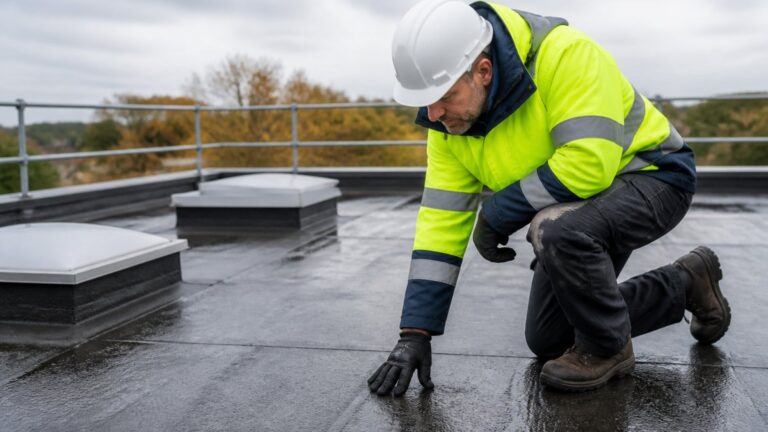
Start with a professional inspection. You need to understand your roof’s current condition and why water is pooling. Is the roof sagging? Are the gutters blocked? Is the slope inadequate? Is the membrane damaged? Each problem has a different solution. Evershield Roofing offers free surveys to assess your roof’s drainage performance and identify the specific issues affecting your property.
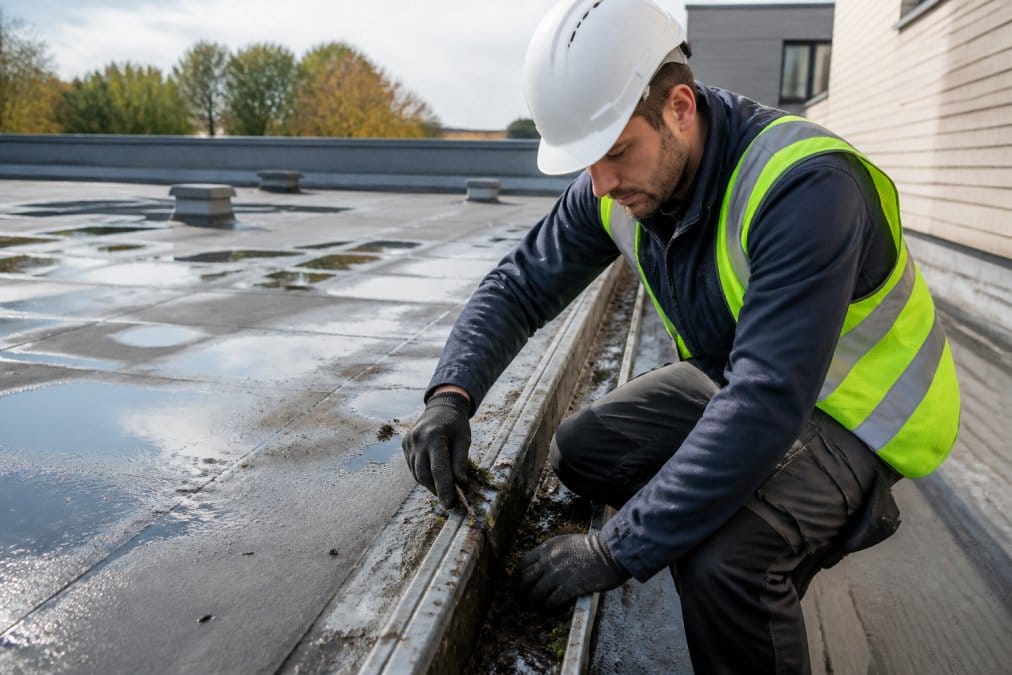
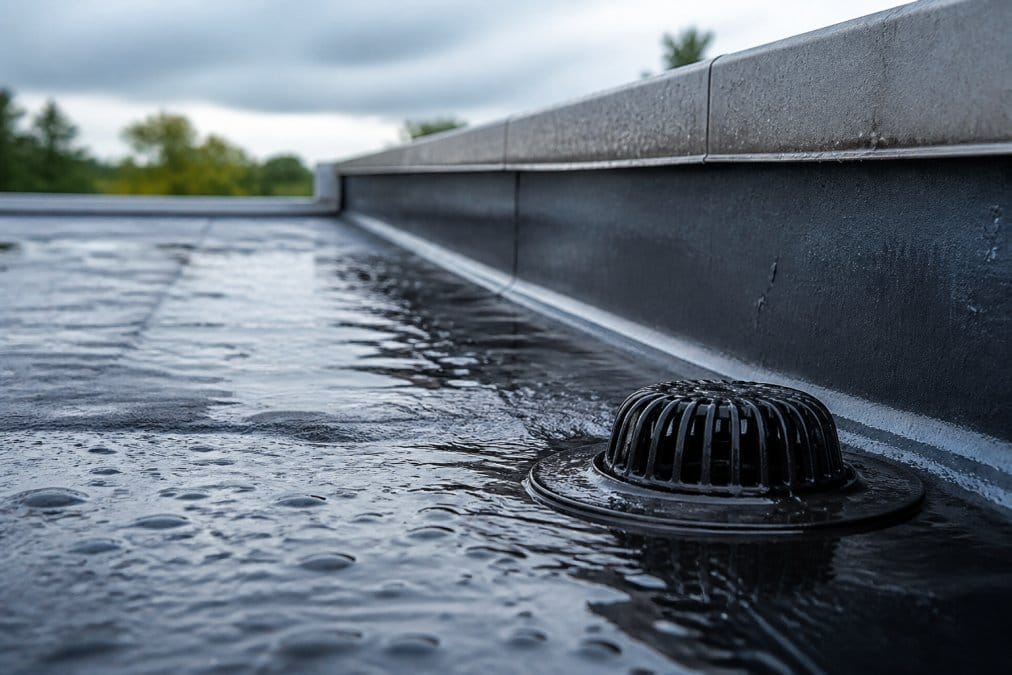
Clear all debris from gutters, downpipes, and drainage channels immediately. Leaves, moss, dirt, and sediment block water flow. After clearing, establish a regular cleaning schedule, at least twice yearly in spring and autumn, more often if you have overhanging trees. Many drainage failures are simply blocked gutters.
Check that downpipes are clear and discharging properly. Downpipe blockages are common and easy to miss. Water backing up in a gutter often means the downpipe below is blocked, not that the gutter is too small. Run water through the system and trace where it goes.
Inspect the roof membrane for damage. Cracks, blisters, and punctures all allow water to penetrate. Small membrane damage can be patched, but extensive damage requires membrane replacement. This is where a professional assessment becomes essential, you need to know whether repair or replacement is the right choice.
Evaluate the roof slope. If the roof is sagging or has inadequate slope, water won’t drain naturally. Correcting this requires either adding tapered insulation to improve slope or, in severe cases, structural remediation. This is a larger project, but it’s the permanent fix for a roof that’s fundamentally undersized for drainage.
Consider installing additional drainage points if the current system is overwhelmed. Additional gutters, scuppers, or internal drainage systems can be added to improve water shedding. This is especially useful for older roofs designed before current rainfall intensity expectations.
Upgrade to a high-performance roof membrane if your current membrane is aging. Modern membranes are more resistant to UV damage, have better sealing properties, and last longer. They also perform better in standing water situations because they resist water penetration more effectively.
Install proper insulation and ventilation. Trapped moisture in the roof cavity accelerates damage. Proper ventilation allows any moisture that does get in to escape. This reduces the risk of mould and rot even if water does penetrate the membrane.
Maintenance and Inspection: Keeping Your Drainage System Working
Proper maintenance is the cheapest insurance policy for flat roof drainage. A system that’s inspected regularly and cleaned properly performs reliably for years. Neglected systems fail predictably.
Establish a maintenance schedule. Spring and autumn are critical times, after winter weather and before the wet season. At minimum, inspect gutters and downpipes twice yearly. After storms, check for damage and debris accumulation. In areas with heavy tree coverage, you may need quarterly cleaning.
During inspections, look for the warning signs we discussed earlier: pooling water, membrane damage, algae growth, sagging, and discharge problems. Document what you find with photos. This creates a record of your roof’s condition over time and helps you spot trends.
Clean gutters properly. This isn’t a casual sweep, it’s removing all accumulated debris and flushing the system with water to ensure flow. Use a pressure washer on low setting to avoid damaging the gutter or membrane. Ensure downpipes discharge properly and water flows away from the building.
Check roof penetrations, vents, pipes, chimneys, and flashing. These are common leak points. Flashing should be sealed properly and free of cracks. Any deterioration here allows water to penetrate directly into the roof cavity.
Monitor for signs of interior water intrusion. Damp patches, water stains, or soft areas in ceilings indicate problems. Early detection means you can address the source before structural damage occurs.
Keep records of all maintenance and repairs. This documentation proves you’ve maintained the roof properly, which is important for insurance claims and property valuations. It also helps you identify patterns, if you’re cleaning gutters constantly, there’s a bigger problem.
Professional inspections every 3-5 years are worthwhile, especially for roofs over 10 years old. A qualified roofer can identify issues you might miss and recommend preventative work before problems become expensive.
Flat roof drainage isn’t glamorous, but it’s essential. Water damage spreads quickly and costs far more to repair than proper drainage costs to maintain. If you’re dealing with pooling water, membrane damage, or interior leaks, the time to act is now. At Evershield Roofing, we specialise in flat roof repairs and drainage solutions across Buckinghamshire. Our team has 25 years of experience identifying drainage problems and implementing fixes that work. Get your free roofing quote today and let us assess your roof’s drainage performance.
Frequently Asked Questions
Q: What happens if a flat roof does not have proper drainage?
A: Without proper flat roof drainage, water pools on the surface and penetrates the membrane, causing structural rot, mould growth, and interior water damage. Standing water adds weight to the roof structure, accelerating deterioration. Pooling water freezes in winter, expanding and cracking the membrane further. Over time, unaddressed drainage failure leads to costly repairs or full roof replacement. Regular inspection and maintenance prevent these expensive problems from developing.
Q: What are the common signs of poor flat roof drainage?
A: Look for standing water that remains after rainfall, visible sagging or dips in the roof surface, damp patches on interior ceilings or walls, mould or algae growth on the roof, and damaged or blocked gutters and downpipes. Cracked sealant around roof penetrations and peeling interior paint also indicate drainage failure. If you notice any of these signs of flat roof water pooling, contact a surveyor immediately to assess the damage and prevent further deterioration.
Q: Do flat roofs in the UK require a specific drainage system by law?
A: Yes. Building Regulations in England require flat roofs to have adequate fall (slope) towards drainage outlets to prevent water pooling. The minimum fall is typically 1 in 40 (2.5 degrees). Drainage systems must comply with BS 6229 and BS 8104 standards, which specify gutter design, outlet sizing, and overflow provisions. Compliance ensures your property meets legal building standards and protects against structural damage. When planning roof work, ensure your contractor designs drainage to meet current flat roof drainage regulations in the UK.
Q: How often should I inspect my flat roof drainage system?
A: Inspect your flat roof drainage at least twice annually: once in spring after winter weather and once in autumn before heavy rain and winter. After storms or heavy rainfall, check for pooling and blockages immediately. Clear gutters and downpipes of debris regularly, especially if trees overhang your property. Professional surveys every 3-5 years identify early signs of membrane wear or drainage deterioration. Regular maintenance prevents small issues from becoming expensive repairs and extends your roof's lifespan significantly.