How to Fix Standing Water on Flat Roof: Step-by-Step Guide
Learn how to fix standing water on flat roof with practical solutions. Discover drainage fixes, when to call a pro, and prevent costly damage.

Table of Contents
- What Causes Standing Water on Flat Roofs
- Is Ponding Water Normal? Understanding the 48-Hour Rule
- How to Fix Standing Water on Flat Roof: Immediate Actions
- Long-Term Drainage Solutions for Standing Water on Flat Roofs
- Flat Roof Drainage Solutions: Material-Specific Approaches
- Building Regulations for Flat Roof Falls: UK Compliance Standards
- Impact of Ponding on Roof Lifespan and Structural Integrity
- DIY vs. Professional Risk Assessment: When to Call a Roofer
Last Updated: August 3, 2026
What Causes Standing Water on Flat Roofs
Standing water on flat roofs develops when rainfall cannot drain efficiently from the surface. At Evershield Roofing, we’ve identified the primary culprits behind ponding water.
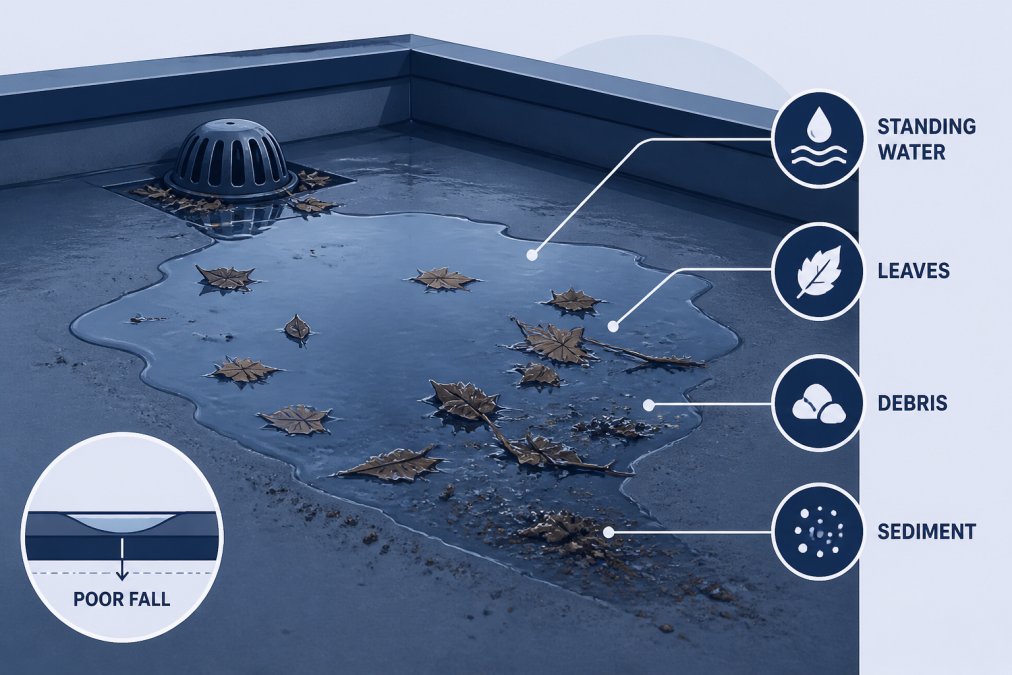
Inadequate roof pitch is the most common cause. Flat roofs are designed with minimal slope, typically 1 in 96 (approximately 10mm per metre), to allow water to move toward drainage points. When this slope is insufficient or the roof has settled unevenly over time, water pools in low spots rather than flowing toward gutters or drains.
Blocked drainage systems rank second. Gutters, downspouts, and internal rainwater outlets become clogged with leaves, sediment, and debris, preventing water from draining at the expected rate. Membrane degradation, cracks, blistering, or seam failures in EPDM rubber, felt, and asphalt membranes, also traps water in specific areas. Roof deflection under load from HVAC units, solar panels, or other equipment can create additional low spots where water accumulates.
Pro Tip
Check your roof after heavy rainfall. If water remains visible more than 48 hours after rain stops, you likely have a drainage or slope issue that needs [professional assessment](/flat-roof-standing-water-repair-guide/).
Check your roof after heavy rainfall. If water remains visible more than 48 hours after rain stops, you likely have a drainage or slope issue that needs [professional assessment](/flat-roof-standing-water-repair-guide/).
Is Ponding Water Normal? Understanding the 48-Hour Rule
Standing water that remains on a flat roof for more than 48 hours after rainfall is considered problematic ponding. Water should drain naturally within this timeframe under normal conditions.
Prolonged water contact with roofing membranes accelerates degradation. Standing water adds weight to the roof structure, increases hydrostatic pressure on seams and joints, and creates conditions for moisture entrapment. The longer water sits, the greater the risk of membrane blistering, seam failure, and water ingress.
Small puddles that evaporate within 24-48 hours are generally not a concern. However, if you observe water pooling in the same location repeatedly, or if ponding takes longer than 48 hours to clear, your roof needs intervention.
Watch Out
If ponding water remains visible for more than a week, especially during dry conditions, it indicates a serious drainage blockage or structural issue. Moisture trapped this long can cause membrane blistering and internal rot in wooden roof decks.
If ponding water remains visible for more than a week, especially during dry conditions, it indicates a serious drainage blockage or structural issue. Moisture trapped this long can cause membrane blistering and internal rot in wooden roof decks.
How to Fix Standing Water on Flat Roof: Immediate Actions
When you discover standing water on your flat roof, taking immediate action prevents damage escalation.
Step 1: Assess Ponding Depth and Location
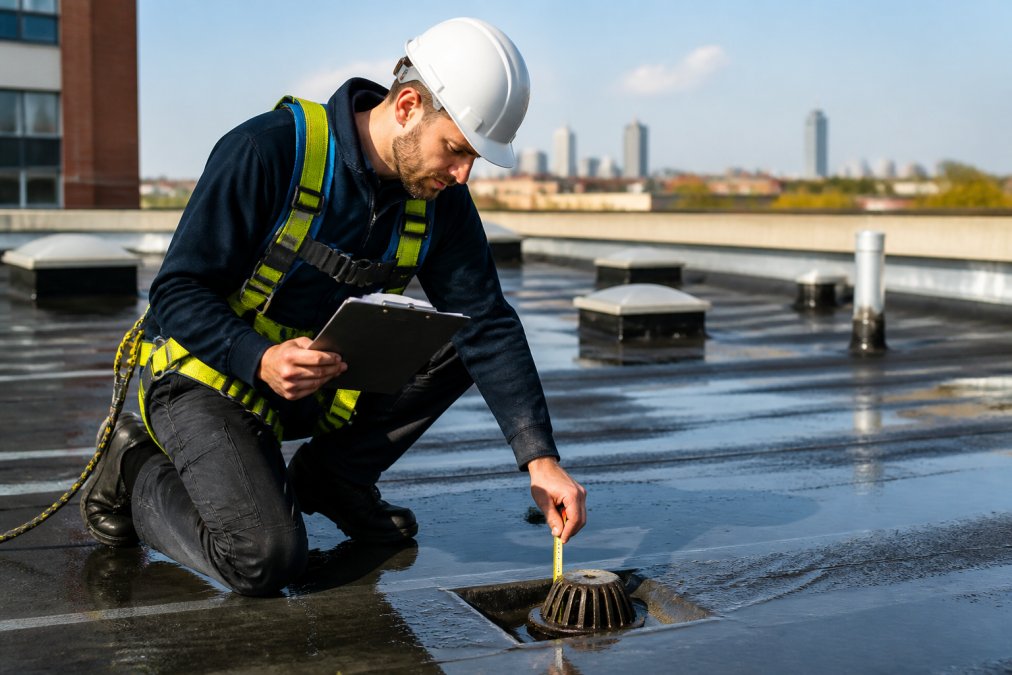
Measure the depth of ponding water using a ruler or measuring tape. Shallow puddles under 25mm deep are less urgent than deep pools exceeding 75mm, which indicate serious drainage failure or structural sagging.
Identify whether water pools in one spot, multiple areas, or across the entire roof surface. Single-location ponding suggests a local low spot or blocked drain. Widespread ponding indicates systemic drainage inadequacy or roof slope problems. Document the ponding with photographs, noting the date and time.
Step 2: Clear Gutters and Downspouts
Blocked gutters are the easiest drainage problem to fix. Remove visible debris, leaves, twigs, and sediment from gutters and downspout openings using a garden trowel or gloved hands. Flush the system with water using a garden hose. If water backs up or flows slowly, a blockage exists further down.
For stubborn blockages, a plumbing snake or high-pressure water jet may be necessary. Evershield Roofing offers gutter cleaning and soft washing services that address debris, algae, and moss growth.
Step 3: Remove Debris and Sediment Buildup
Debris accumulates directly on roof surfaces, particularly in low spots where ponding water collects. Use a soft-bristled broom or leaf blower to remove loose debris from the roof surface. Avoid pressure washers, which can damage membranes. For stubborn sediment, a stiff-bristled brush and gentle scrubbing can loosen material without damaging the membrane.
Once loose debris is cleared, use a wet vacuum to extract remaining moisture and fine sediment from low-lying areas.
Step 4: Use a Puddle Pump for Large Volumes
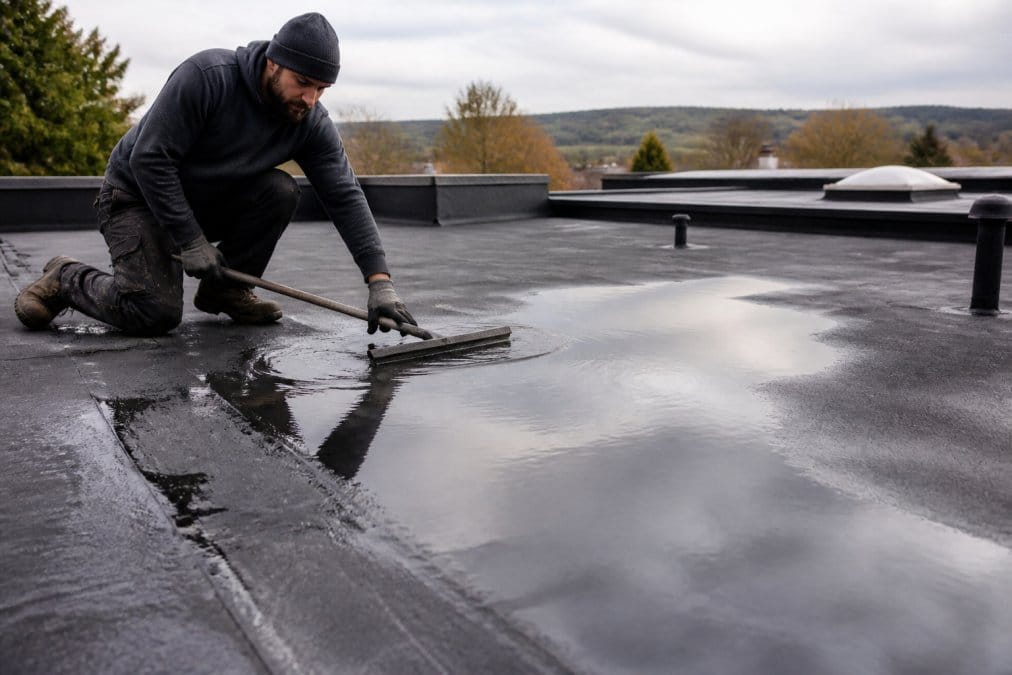
When ponding water exceeds 50-75mm deep or covers a large area, a puddle pump can extract standing water quickly. Place the pump intake in the deepest area of ponding water, positioning the discharge hose to direct water safely away from your building.
However, be cautious with puddle pumps on roofs with membrane damage. If water has penetrated beneath the membrane, pumping surface water away may not address the underlying problem. After pumping water away, observe whether ponding returns within 24 hours; if it does, internal drainage or structural issues require professional intervention.
Key Takeaway
The first 48 hours after rainfall are critical. If ponding persists beyond this window, the problem is structural or systemic; temporary removal won’t solve it permanently.
The first 48 hours after rainfall are critical. If ponding persists beyond this window, the problem is structural or systemic; temporary removal won’t solve it permanently.
Long-Term Drainage Solutions for Standing Water on Flat Roofs
Immediate actions address symptoms, but permanent solutions require addressing underlying causes.
Improving Roof Pitch with Levelling Compounds
Many flat roofs were installed with inadequate slope or have settled unevenly over decades. Installing a levelling compound, a self-levelling polyurethane or epoxy material, raises low spots and restores proper roof pitch without requiring structural modifications.
Levelling compounds are applied directly over existing membranes in layers up to several inches thick. They flow to create a smooth, sloped surface that directs water toward drainage points. This approach works well for roofs with minor slope deficiencies or isolated low spots. The cost-benefit analysis favours levelling compounds for many situations, as they’re significantly less expensive than structural repairs or full roof replacement and can extend roof lifespan by 10-15 years.
Installing Internal Rainwater Outlets
Internal rainwater outlets, also called roof drains, provide more reliable drainage than traditional gutters and downspouts. These outlets are installed through the roof deck, allowing water to drain directly into internal pipes that discharge through the building’s drainage system.
Multiple outlets can be installed across a large roof to ensure no area remains more than a certain distance from drainage. Installing internal outlets requires cutting through the roof membrane and deck, then connecting to the building’s internal plumbing. This work must be performed by qualified roofers to ensure proper waterproofing and structural integrity.
Adding Scuppers and External Drainage
Scuppers are openings in the roof perimeter that allow water to drain over the edge of the building into external gutters or downspouts. They serve as a secondary drainage system, preventing water from backing up if primary drains become blocked.
Scuppers are typically installed at regular intervals around the roof perimeter, usually spaced 6-9 metres apart. External drainage systems consisting of gutters, downspouts, and ground-level discharge points complement scuppers. These systems must direct water at least 1.8 metres away from the building foundation to prevent basement flooding and foundation damage.
Flat Roof Drainage Solutions: Material-Specific Approaches
Different roofing materials require tailored drainage solutions.
EPDM and Rubber Roofing
EPDM (ethylene propylene diene monomer) rubber roofing is durable and flexible, making it popular for flat roofs in London and Buckinghamshire. However, EPDM can develop seam failures and membrane degradation that impede water flow. Standing water accelerates this degradation by increasing hydrostatic pressure on seams.
For EPDM roofs with ponding, inspect seams for separation or deterioration. Small seam gaps can be sealed with EPDM-compatible sealant, restoring water-shedding capability. EPDM’s flexibility means it can sag under ponding water weight, creating deeper low spots. Installing additional roof supports or replacing sagging sections may be necessary if structural deflection is severe. Levelling compounds can restore slope without requiring structural work in many cases.
Felt and Asphalt Roofs
Felt and asphalt roofing materials are common on older properties throughout Buckinghamshire. These materials are prone to blistering when trapped moisture heats under sunlight. Standing water on felt and asphalt roofs often indicates seam or penetration failure rather than simple drainage blockage.
Levelling compounds work well with felt and asphalt roofs, but the underlying membrane must be in reasonable condition. For older felt and asphalt roofs with persistent ponding, replacement with modern EPDM or other synthetic membranes often proves more cost-effective than repeated drainage repairs.
Concrete Deck Roofs
Concrete deck roofs, common on commercial buildings, can develop surface irregularities that trap water. Concrete is porous and can absorb moisture, leading to sub-roof saturation if ponding persists.
Levelling compounds work exceptionally well on concrete decks, as the material bonds securely to the concrete surface. A properly applied levelling compound restores slope and prevents water absorption by creating a waterproof barrier. For concrete roofs, internal drainage outlets are particularly effective.
Best For
Concrete deck roofs with minor ponding and intact surfaces are excellent candidates for levelling compound solutions. This approach is cost-effective and provides 10-15 years of improved drainage performance.
Concrete deck roofs with minor ponding and intact surfaces are excellent candidates for levelling compound solutions. This approach is cost-effective and provides 10-15 years of improved drainage performance.
Building Regulations for Flat Roof Falls: UK Compliance Standards
UK building regulations establish minimum requirements for flat roof drainage to ensure structural safety and prevent water damage. According to Building Regulations Approved Document K, flat roofs must be designed and constructed to shed water effectively.
The minimum roof pitch for "flat" roofs is typically 1 in 96 (approximately 10mm per metre). However, many modern designs specify steeper pitches, 1 in 40 or greater, to provide additional drainage margin.
Buckinghamshire’s rainfall patterns influence drainage requirements. The area receives approximately 650-700 mm of annual rainfall, with heavy downpours concentrated in autumn and winter months. Drainage systems must accommodate peak rainfall rates, which can exceed 50 mm per hour during storms.
Building regulations also address internal drainage outlet sizing and placement. Outlets must be sized to handle peak rainfall rates without backing up, with maximum distances between outlets typically no more than 50 metres apart.
Impact of Ponding on Roof Lifespan and Structural Integrity
Standing water dramatically shortens flat roof lifespan if left unaddressed. Membrane degradation accelerates under ponding conditions, causing blistering, seam separation, material breakdown, and adhesive failure.
A typical EPDM or felt roof lasts 20-25 years when properly maintained and drained. Roofs with chronic ponding problems often fail within 10-15 years, requiring costly replacement decades early.
Structural damage compounds membrane failure. Water weight adds load to the roof structure, approximately 25 kg per square metre per 25mm of depth. Large ponding areas can add hundreds of tonnes of extra weight, stressing structural components and accelerating deflection.
Sub-roof saturation causes hidden damage. Wooden roof decks absorb moisture, leading to rot and structural weakening. Water ingress into building interiors causes mold growth, insulation deterioration, and interior finish damage. The long-term cost-benefit analysis strongly favours addressing ponding promptly. A £3,000-£5,000 investment in drainage improvements can prevent £20,000-£50,000 in water damage and structural repairs.
DIY vs. Professional Risk Assessment: When to Call a Roofer
Many property owners attempt to address standing water independently, but certain situations require professional expertise.
DIY approaches work well for simple drainage maintenance. Clearing gutters, removing debris, and flushing downspouts are tasks most homeowners can perform safely. If ponding resolves after drainage cleaning, you’ve likely solved the problem.
However, if ponding persists after drainage cleaning, or if it recurs regularly despite your maintenance efforts, professional assessment becomes necessary. A qualified roofer can identify structural issues, membrane damage, and inadequate slope that DIY approaches cannot address.
Working at height on a flat roof carries significant safety risks. Wet surfaces are extremely slippery, and falls from even modest heights can cause serious injury. Membrane damage requires professional repair using materials and methods designed to last and provide reliable waterproofing.
Structural issues, sagging, deflection, or settling require professional diagnosis. A roofer can measure roof slope precisely, identify low spots, and determine whether structural repair or levelling compound application is appropriate.
Evershield Roofing offers free surveys and quotes for roof assessment. Our team can identify the causes of your ponding water problem and recommend solutions tailored to your specific roof condition and building requirements. With over 25 years of industry experience, we understand the unique challenges that Buckinghamshire properties face. Emergency roof repair is available when water damage occurs.
Standing water on flat roofs represents a serious threat to structural integrity and interior spaces, but effective solutions exist for nearly every situation. Whether your ponding problem stems from blocked drainage, inadequate slope, or membrane damage, addressing it promptly prevents costly repairs and extends your roof’s lifespan significantly. Evershield Roofing specializes in flat roof drainage solutions, from simple gutter cleaning to comprehensive levelling compound and internal drainage outlet installation. Our team brings 25 years of experience diagnosing and solving ponding problems across Buckinghamshire properties. Contact us today for a free survey and quote, we’ll assess your roof’s specific needs and recommend the most cost-effective solution to keep your property dry and protected for years to come.
Frequently Asked Questions
How long can water sit on a flat roof before it causes damage?
Water should not sit on a flat roof for more than 48 hours. Beyond this period, standing water begins to stress the membrane, increase hydrostatic pressure, and risk water ingress. Prolonged ponding accelerates membrane degradation, causes blistering, and weakens structural integrity. If water remains for weeks or months, you risk costly interior damage, mould growth, and significantly shortened roof lifespan. Act quickly when you notice standing water.
What’s the difference between acceptable ponding and a drainage problem?
UK building regulations allow minimal ponding (typically under 12mm depth) on flat roofs if it drains within 48 hours. However, ponding that persists longer, exceeds 25mm depth, or occurs repeatedly indicates a drainage failure. Check your roof slope, gutter condition, and internal drain outlets. Material-specific solutions vary: EPDM roofs tolerate slightly more ponding than felt, but all require adequate fall to prevent water ingress and membrane damage over time.
Can I fix standing water myself, or do I need a professional roofer?
Simple fixes like clearing gutters, removing debris, and using a puddle pump are safe DIY tasks. However, installing levelling compounds, adding internal rainwater outlets, or addressing thermal movement and roof deflection requires professional expertise. If water returns repeatedly, the problem may involve structural issues, hidden membrane damage, or inadequate roof pitch. Evershield Roofing offers free surveys to assess whether DIY maintenance or professional drainage installation is needed for your situation.
What’s the typical cost for fixing standing water on a flat roof in the UK?
Costs depend on the solution required. Gutter cleaning and debris removal cost less than installing internal drains or applying levelling compounds. A full roof replacement with improved drainage is significantly more expensive. Flat roof repair costs UK vary by roof size, material type, and underlying damage extent. Evershield Roofing provides free quotes with no obligation, allowing you to compare options and financing plans (including 0% APR) before committing to any work.