Preventing Basement Flooding With Gutter Maintenance
Gutter maintenance helps prevent basement flooding. Learn how often to clean gutters, check downpipes and direct water away from your foundations.

Quick Summary
Blocked gutters overflow during heavy rain, pouring water down the wall beside the foundation where it soaks the soil and pushes against the basement walls. Regular gutter maintenance keeps water flowing into the downpipes, which can help protect a basement from flooding. Clean gutters twice a year, check downpipe outlets, and make sure water discharges well away from the house.
- Clean gutters twice a year, in late autumn and spring, more often under large trees.
- Check the downpipe outlet at the bottom, since a gutter can look clear but still be blocked.
- Watch for water running down the wall, sagging gutters, moss growth and damp patches.
- Fit downpipe extensions that carry water at least 1 to 2 metres from the foundation.
- Pour water into each downpipe to confirm it drains properly and does not overflow at a joint.
Is water getting into your basement?Evershield Roofing checks gutters and downpipes, with free surveys and quotes available.
Table of Contents
How Blocked Gutters Lead to Basement Water Problems
Most basement floods don’t start in the basement. They start on the roof. When gutters fill with leaves, grit and moss, rainwater spills over the edge instead of running into the downpipes. That water soaks the ground beside the house, builds up pressure against the walls, and finds its way in through cracks, gaps around pipes and the floor-to-wall joint. Keeping gutters clear through regular gutter maintenance can help protect a basement.
Here is the basic chain of events. A blocked gutter overflows during heavy rain. Water pours down the wall in a single spot, often right next to the foundation. The soil there becomes saturated and heavy, and the water pushes sideways against the basement wall. If the wall has any weak points, the water gets through.
Watch out: a gutter that looks clear from the ground can still be blocked at a downpipe joint. Check the outlet at the bottom, not only the trough at the top.
Common warning signs of a blocked gutter include:
- Water running down the wall during rain, rather than into the downpipe
- Sagging gutters, which hold standing water and debris
- Green moss or plant growth in the gutter trough
- Staining or damp patches on the external wall near the ground
How Often to Clean Gutters in the UK
For most UK homes, cleaning gutters twice a year is a sensible baseline. Many homeowners do it in late autumn, after the leaves have fallen, and again in spring, once the tree growth has settled. Homes under large trees, or in areas with heavy rainfall, may need cleaning three or four times a year.
Use these timings as a starting point and adjust them to your property:
- Late autumn: clear fallen leaves before winter rain arrives
- Spring: remove seed pods, blossom and debris
- After storms: check for debris pushed into the trough
- Any time water overflows: investigate straight away
Gutter Cleaning Walkthrough: Doing It Safely
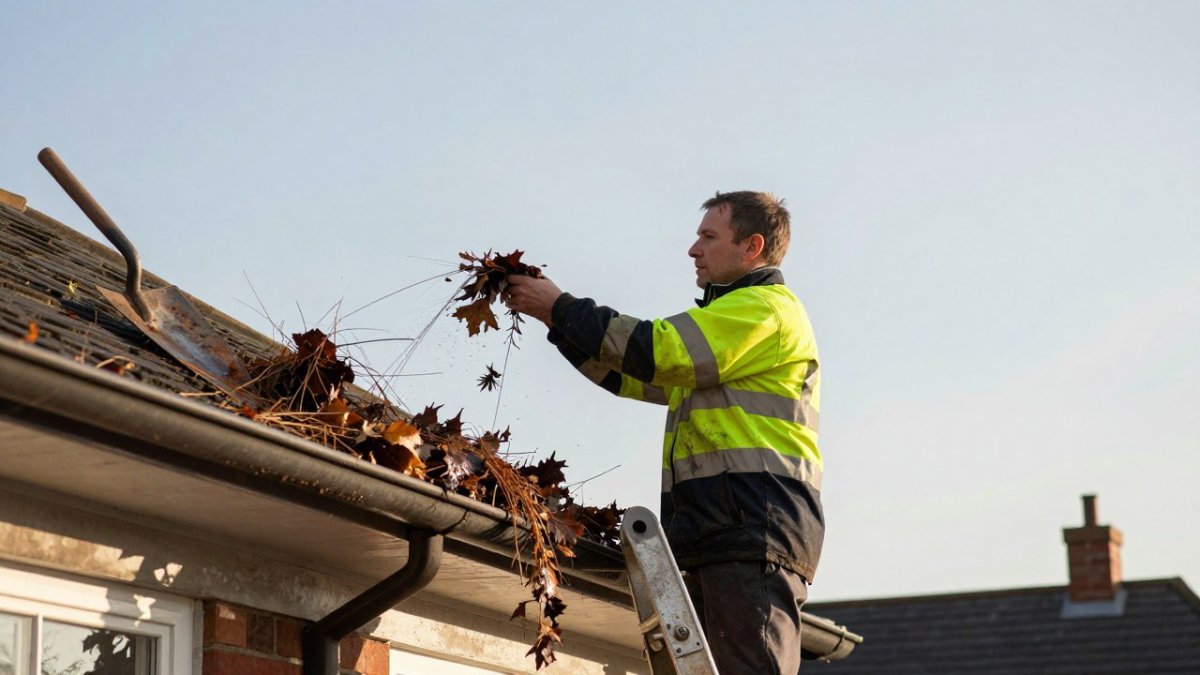
Cleaning gutters is useful work, but it carries real risks. Falls from ladders can cause serious injuries. If you can, use a long-reach tool from the ground, or hire a professional with the right equipment.
If you do climb, work through these steps:
- Set the ladder on firm, level ground and tie it off at the top where possible.
- Wear gloves, eye protection and sturdy footwear.
- Scoop debris by hand into a bucket, working from one end to the other.
- Flush the trough with water and check that the water flows towards the downpipe.
- Clear the downpipe outlet with a hose or a flexible rod.
- Look for cracks, loose brackets and sagging sections as you go.
Never lean out beyond your reach. Keep your belt buckle inside the ladder stiles at all times.
Gutter Maintenance Checklist for Each Season
Seasonal checks help you spot problems before they turn into floods. Use this simple list:
- Spring: clear debris, check downpipe outlets, look for cracked joints
- Summer: check for moss and plant growth, trim overhanging branches
- Autumn: clear leaves, confirm the trough slopes towards the downpipe
- Winter: look for ice build-up, check brackets after storms
- After any heavy storm: inspect the gutter and the ground beside the house
Keep a note of what you find. Repeated blockages in the same spot usually point to a fitting that needs adjusting or replacing.
Checking Downpipes and Where Water Discharges
A gutter only works as well as the downpipe beneath it. Check that every downpipe is firmly fixed and free of cracks. Pour water into the top of each pipe and watch where it comes out. Read about other water damage warning signs in older homes to check while you are up there. If it backs up, overflows at a joint, or drips from the wrong place, the pipe is blocked or misaligned.
Also check where the water ends up. In the UK, rainwater from roofs should discharge into a suitable drainage system, such as a surface water drain or a soakaway. Discharging rainwater onto a neighbour’s land or directly against a foundation can cause problems, and local rules may apply. If you are unsure where the water goes, speak to your local authority or a drainage professional.
Downpipe Drainage Away From Foundations
Water should leave the building and move well away from the foundations. A downpipe that empties at ground level next to the wall simply recycles water into the soil that presses on the basement. Fit a downpipe extension or a shoe at the base that carries water at least 1 to 2 metres from the wall, and make sure the ground slopes away from the house.
Booking a Gutter and Drainage Inspection With Evershield Roofing
If you are not confident clearing gutters yourself, or you have found water getting into the basement, a professional inspection is the safest next step. Guidance on choosing a reliable roofing contractor can help you decide who to hire. Explore the gutter repair and replacement service to see what is involved. Evershield Roofing offers gutter cleaning and soft washing and guttering services. You can also request a free survey and quote to find out what work is needed. For current prices, check the Evershield Roofing website or ask for a quote, as pricing depends on the size and condition of your property.
Frequently Asked Questions
Can cleaning gutters help prevent basement flooding?
Yes. When gutters are full of leaves and silt, rainwater overflows at the edges and runs down the walls, where it can soak into the ground beside the house. Keeping gutters clear lets water reach the downpipes and move away from the building. Gutter maintenance will not fix a leaking foundation or a poorly graded garden, so it works best alongside checking where the downpipes discharge.

How often should gutters be cleaned in the UK?
Most UK homes benefit from gutters being cleaned at least twice a year, typically in late spring and late autumn. Houses near trees, or in areas with heavy leaf fall, may need cleaning three or four times a year. Check gutters after storms as well, because a single gale can drop a surprising amount of debris. Exact costs depend on property size and access, so request a quote from Evershield Roofing for current prices.
How can I tell if a blocked downpipe is causing water to enter my basement?
Look for water pooling at the base of the downpipe during rain, staining or efflorescence on the walls near the downpipe, and damp patches that appear within an hour or two of heavy rainfall. Run a hose into the top of the downpipe: if water backs up or emerges from a joint, the pipe is blocked or leaking. Persistent damp in the basement after dry weather usually points to a different source, which a surveyor or roofer can diagnose.
Where should downpipes discharge water to keep it away from the foundations?
Downpipes should discharge onto a drain or soakaway a safe distance from the building, or onto a downspout extension that carries water well clear of the foundations. Many guides suggest directing water at least two metres from the walls. Check local drainage arrangements before changing a discharge point, since connections to public sewers and surface water drains are subject to local rules.