7 Roof Cleaning Products for Clay Tiles That Actually Work
These roof cleaning products for clay tiles include biocidal washes and moss removers. Compare options and learn safe application methods step by step.

Last Updated: November 20, 2026
Quick Summary
The safest roof cleaning products for clay tiles are biocidal cleaners with residual action, diluted per the label and applied at low pressure with a 30-60 minute dwell before a gentle rinse. Avoid abrasive powders and pressure washers, which open the pores of porous clay and cause lasting damage.
- Brush off loose moss with a soft brush before applying any biocide.
- Never use a metal blade or abrasive powder on clay tiles.
- Biocides need contact time; rinsing too early lets moss return within months.
- Sealer only works on clean, dry, sound clay and is not a repair.
- Keep biocidal runoff away from ponds, streams and vegetable beds.
Not sure if your clay roof needs cleaning or repair?Evershield Roofing surveys clay roofs across London and Buckinghamshire and quotes free.
Table of Contents
- Choosing Roof Cleaning Products for Clay Tiles: What Actually Works
- How to Clean Clay Roof Tiles: A Step-by-Step Guide
- The Best Roof Moss Remover for Tiles: Scrapers, Biocides and Brushes
- Pressure Washing Clay Roof Tiles: Why It’s Risky and When to Avoid It
- Roof Tile Sealer: Aftercare and Protection for Delicate Coatings
- Product Comparison: Active Ingredients, Use Cases and Pricing
- Environmental and Drainage Precautions for Runoff
- Safe Access and Working at Height Decisions
- Frequently Asked Questions
Choosing Roof Cleaning Products for Clay Tiles: What Actually Works
Clay roof tiles are porous, and that single fact shapes every product decision you make. The wrong cleaner etches the surface, strips the finish, or drives moisture deeper into the tile body. At Evershield Roofing, we have spent 25 years working on roofs across Buckinghamshire, and the failures that damage clay tiles most often come from harsh chemicals and high pressure, not from moss itself.
This guide covers roof cleaning products for clay tiles with an emphasis on compatibility, safe application, and honest trade-offs. Below, we break down what to check before treatment, how to apply a cleaner without harming the tile, and where DIY cleaning stops being worth the risk.
The short answer: a biocidal roof cleaner with residual action, applied at low pressure and rinsed thoroughly, is the safest route for clay. Abrasive powders and jet washers are not.
Health and Safety Executive guidance on working at height
How to Clean Clay Roof Tiles: A Step-by-Step Guide
Cleaning clay tiles safely takes a dry day, a low-pressure sprayer, and patience. The process is slower than pressure washing, but it preserves the tile surface and the coating underneath.
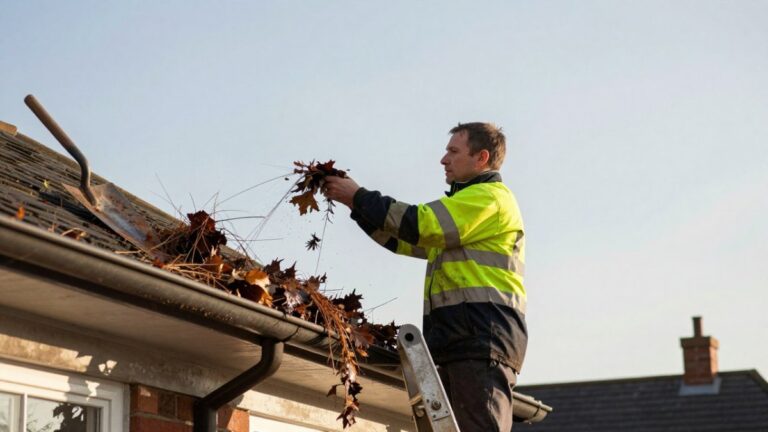
- Clear gutters and check drainage points first, so runoff has somewhere to go.
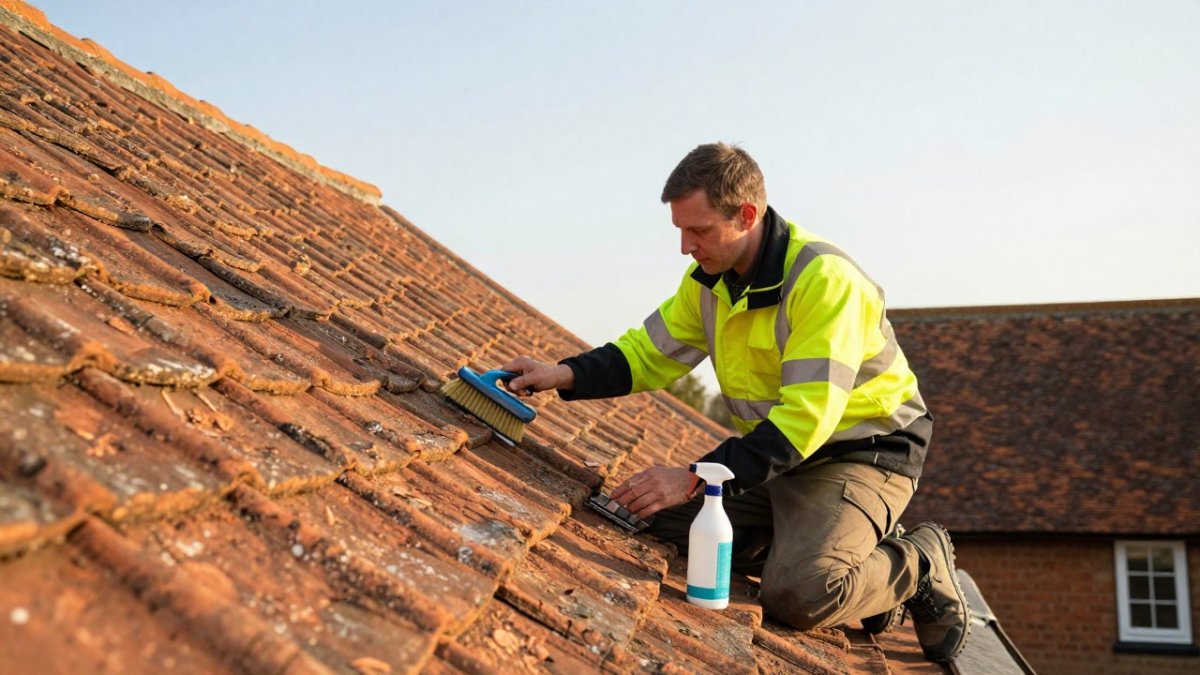
- Brush off loose moss and debris with a soft hand brush. Never scrape hard against the tile face.
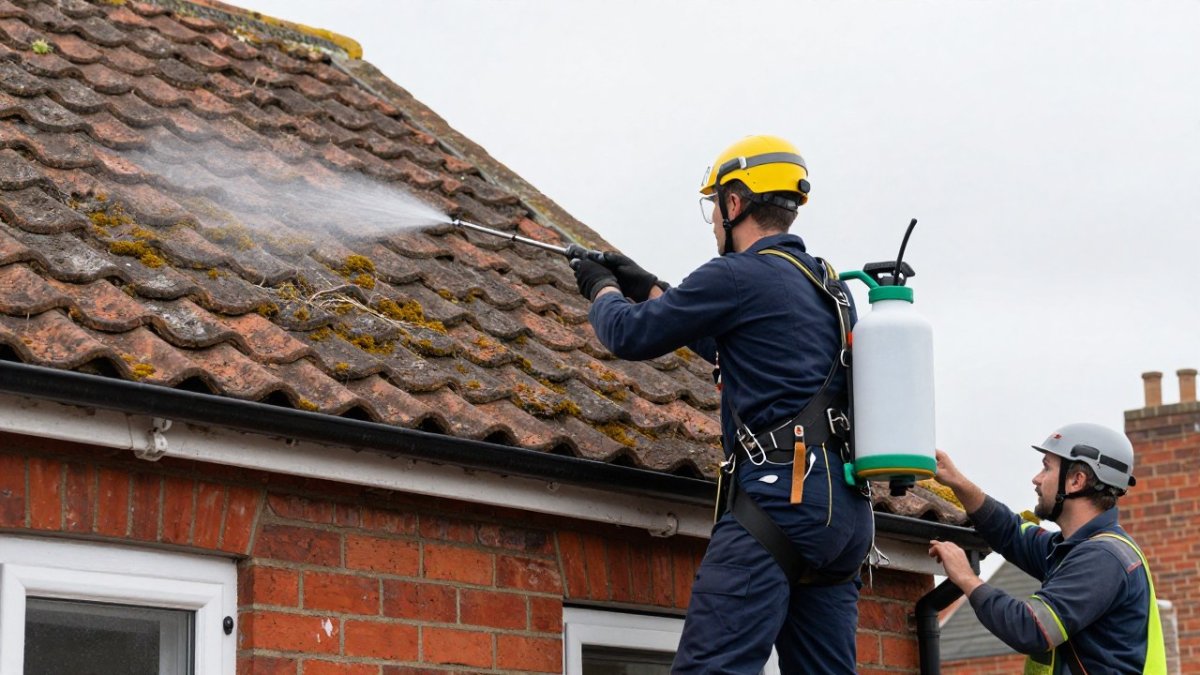
- Apply a diluted biocidal cleaner at low pressure, working from the bottom of the slope upward.
- Leave it to dwell for the time stated on the label, then rinse gently.
- Re-check gutters and downpipes after rinsing.
For a fuller walkthrough of the tools and technique, our how-to cleaning guides cover the practical sequence in more detail.
Pre-Cleaning Compatibility Checks
Before any product touches the roof, confirm what the tiles actually are. Clay, terracotta, concrete, slate and fibreglass all behave differently, and a cleaner that is fine on concrete can stain terracotta.
Check three things: the tile type, whether the surface has a factory coating or sealer, and whether any tiles are already cracked or friable. If the surface is flaking, cleaning will make it worse. Fix or replace damaged tiles first, and if you are weighing up repair costs against replacement, our guide to replacing damaged roof tiles sets out what to expect.
Application and Dwell Time
Dwell time is where most DIY jobs go wrong. People spray and immediately rinse, then wonder why the moss returns within months.
A biocidal cleaner needs contact time to work. Follow the label dilution ratio exactly, do not mix products, and do not let the solution dry on the tile in direct sun. Work in sections and keep the spray off plants, painted surfaces and neighbouring property. Rinsing with clean water at low pressure removes residue and stops streaking.
The Best Roof Moss Remover for Tiles: Scrapers, Biocides and Brushes
A roof moss remover for tiles works best as a two-part approach: physical removal first, chemical control second. Scrapers and brushes lift the moss mass; a biocide treats the roots and leaves a residual film that slows regrowth.
Tools worth having:
- A soft-bristled roof brush for loose moss
- A plastic scraper for thick clumps, never a metal blade on clay
- A low-pressure pump sprayer for the cleaning solution
- A moss-removal tool with a long handle for ground-based reach
What most guides miss is that scraping alone is temporary. Moss roots stay in the tile’s pores, and without a residual treatment the growth returns in a season or two. Conversely, biocide alone on heavy moss leaves dead material sitting on the roof, which traps moisture. Do both, in that order.
Pressure Washing Clay Roof Tiles: Why It’s Risky and When to Avoid It
Pressure washing clay roof tiles is the fastest way to damage them. A jet washer at close range blasts away the fired surface layer, opens pores, and forces water under the overlaps. On older clay, it can crack tiles outright.
Avoid pressure washing when:
- The tiles are aged, crazed or already porous
- The roof has a sealer or coating you want to keep
- The pitch is steep or access is awkward
- There is any history of leaks
Soft washing, where a low-pressure pump and a chemical cleaner do the work, is generally considered gentler on clay tiles than pressure washing. If pressure washing has already caused damage, a qualified roofer can assess what needs replacing. Evershield Roofing offers roof repairs if you need help.
Roof Tile Sealer: Aftercare and Protection for Delicate Coatings
A roof tile sealer is a protective coating applied after cleaning and full drying. It reduces water absorption and slows the return of algae and dirt, which matters on porous clay.
Sealer is not a fix for a failing roof, though. If tiles are cracked, the mortar is crumbling, or the felt beneath is shot, sealing just masks the problem for a season. Weigh up whether sealing is worth it against coating or full replacement using our roof replacement versus coating comparison before you commit.
Apply sealer only to a clean, dry surface. Trapped moisture under a sealer causes blistering and can worsen frost damage.
Product Comparison: Active Ingredients, Use Cases and Pricing
Most roof cleaning products for clay tiles fall into five families, and the differences that matter are the active ingredient, the dilution ratio, the dwell time and whether the product needs rinsing. Pricing depends on pack size, concentration and supplier, so check current prices on the Evershield Roofing pricing page or request a quote.
| Product type | Typical active ingredient | Dilution and dwell time | Rinsing | Clay-tile suitability | Typical UK pack price |
|---|---|---|---|---|---|
| Biocidal roof cleaner | Quaternary ammonium compounds (often benzalkonium chloride) | Dilute per label, often around 1:4 to 1:10; dwell 30-60 minutes | Rinse at low pressure after dwell | Good on sound, uncoated clay; keep off plants | £25-£60 for 5 L concentrate |
| Residual moss treatment | Benzalkonium chloride blends | Ready-to-use or dilute 1:10; dwell 1-2 hours | Usually no rinse; allow to dry | Good for regrowth control on clay | £20-£45 for 5 L |
| Mild detergent wash | Surfactants | Dilute 1:20 or per label; dwell 10-15 minutes | Rinse thoroughly | Safe on most clay but no residual action | £10-£25 for 5 L |
| White vinegar solution | Acetic acid (typically 5-8%) | Neat or 1:1; dwell 15-30 minutes | Rinse | Only for small algae patches; can affect some sealers | £3-£8 for 5 L |
| Sealer coating | Acrylic or silicone-based | Ready-to-use; apply two coats | Do not rinse; cure per label | Only on clean, dry, sound clay | £40-£90 for 5 L |
Read the label before buying. A product described as suitable for any roof may still stain terracotta or attack a factory coating, and dilution ratios differ widely between concentrates. Check the label wording and the environmental warnings on the container, as these govern safe use.
For clay specifically, favour a biocide with residual action over an abrasive powder. If you want to compare pack sizes and current prices side by side, browse our clay tile cleaning product range, and for a ranked roundup see our product listicle.
Watch out: mixing a biocide with a detergent or vinegar can produce a more aggressive solution than either product alone, and the label instructions no longer apply. Use one product at a time and rinse between treatments.
Typical UK pack prices for clay tile cleaning products (5 L)
Biocidal roof cleaner £25-£60
Residual moss treatment £20-£45
Mild detergent wash £10-£25
White vinegar solution £3-£8
Sealer coating £40-£90
Environmental and Drainage Precautions for Runoff
Runoff is the part most DIY guides skip. Biocidal cleaners are designed to kill organisms, and that includes aquatic life if they reach a watercourse.
Practical precautions:
- Never apply before heavy rain is forecast
- Divert downpipes away from drains that feed streams or ponds where possible
- Collect and dilute runoff where you can
- Keep spray well away from borders, ponds and vegetable beds
- Store and dispose of concentrate according to the label
In London and across Buckinghamshire, many properties drain to surface water systems rather than foul sewers. Check where your downpipes discharge before you start. UK guidance on pesticide and biocide use is set out by the Health and Safety Executive.
Safe Access and Working at Height Decisions
Roof cleaning is working at height, and the access question is often decided before anyone touches a cleaner. Properties with restricted access leave little room for ladders and no safe ground for a tower, while properties with more space often allow proper access equipment.
Work through these decisions in order:
- Can the whole roof be reached from the ground with long-reach tools? If yes, use a low-pressure pump sprayer with an extension lance and stay off the roof. This handles light moss on lower slopes, bargeboards and gutters.
- If not, is there stable ground for a tower or scaffold, and is the pitch shallow enough to work on with edge protection? Steep pitches, glass roofs and fragile tiles are not DIY surfaces.
- Is the weather dry, calm and clear, with no rain forecast for the dwell and rinse period? Biocide applied before rain washes into gutters and borders.
- Is someone spotting for you, and do you have a way to call for help?
If any answer is no, stay off the roof. Falls from ladders and roofs remain one of the most common causes of serious injury in the UK, and the HSE guidance on working at height applies to homeowners as much as to trades.
Access is often a major cost driver: restricted parking, shared boundaries and narrow gardens can mean a professional team needs a tower or a rope-access setup, which affects the quote more than the price of the cleaner. Because safe access can make roof work more involved, it is worth weighing how often cleaning is needed against the disruption, with Drive Revive Haddington as a useful next step.
Watch out: a ladder leaned against a gutter is not a working platform. Gutter brackets and fascia boards are not designed to take a person’s weight, and a ladder that slips on a wet clay verge is the most common way a straightforward cleaning job turns into a repair.
Frequently Asked Questions
What is the best product to clean clay roof tiles?
A biocidal cleaner with a residual action is usually the safest choice for clay tiles. These products kill moss, algae and lichen, then keep working for months after application. Look for a formula labelled for use on clay and terracotta, dilute it to the manufacturer’s ratio, and apply with a low-pressure sprayer. Avoid anything containing strong bleach or harsh acids, which can stain or weaken the tile surface over time.
Can you use a pressure washer on clay roof tiles?
Pressure washing clay roof tiles is risky. High pressure strips the protective surface, forces water under overlapping tiles and can crack older or frost-damaged tiles. If you need to rinse after treatment, use a low-pressure garden hose or a soft-wash system kept below 100 bar. For heavily soiled roofs, a roof scraper and brush are safer than a jet wash, especially on delicate or coated tiles.
How do you remove moss from clay roof tiles safely?
Start by scraping moss off gently with a plastic or soft-bristled roof scraper, working from the ridge down. Never use a wire brush on clay, as it scratches the surface. Apply a targeted roof moss remover for tiles, leave it to dwell as directed, then rinse with low pressure. Clear gutters and downpipes afterwards so the dead moss and runoff do not cause a blockage.
Do clay roof tiles need sealing after cleaning?
Sealing is optional but helpful on porous or older clay tiles. A breathable roof tile sealer locks out moisture and slows moss regrowth, but the roof must be completely dry and free of cleaner residue first. Avoid non-breathable sealers, which trap damp and can lead to frost damage. If your tiles have a delicate coating, check compatibility with the sealer manufacturer before applying.