Are Sustainable Roof Grants Available in the UK?
Sustainable roof grants can cover green roofs, insulation and energy upgrades. Learn who qualifies, how to apply and what funding is open now.

Quick Summary
Sustainable roof grants exist in the UK, but they rarely pay for a roof replacement on its own. Support is usually tied to energy-efficiency or green-infrastructure goals, so the roof must do a specific job, such as insulation, to qualify.
- Public support for domestic roofs usually funds insulation and heat-loss repairs, not sedum or wildflower planting.
- Check each scheme’s named eligible measures, not its marketing description, before assuming your project fits.
- Ask each London borough or Buckinghamshire Council for its current phase and whether budget remains.
- Stacking two grants on the same measure is usually not allowed, and claims can be clawed back after work.
- Get an itemised quote and confirm scheme approval in writing before any work starts.
Could your roof qualify for funding?Evershield Roofing offers free surveys and quotes across London and Buckinghamshire.
Table of Contents
- What Counts as a Sustainable Roof Under UK Schemes
- Green Roof Funding for Homeowners: What Is Actually Open
- Roof Insulation Grants UK: Eligibility and Application Steps
- How the Warm Homes: Local Grant Applies to Roof Improvements
- Sustainable Roofing Costs and Financing: Stacking Rules and Out-of-Pocket Spend
- Commercial Properties and Landlord Funding Routes
- Booking a Free Survey to Check Your Funding Options
- Frequently Asked Questions
Are Sustainable Roof Grants Available in the UK?
Last Updated: November 17, 2026
What Counts as a Sustainable Roof Under UK Schemes
Sustainable roof grants and incentives exist in the UK, but they rarely cover a roof replacement on its own. Most support is tied to a wider energy-efficiency or green-infrastructure goal, so the roof must do a specific job to qualify. People often assume any new roof is eligible, which is rarely the case.
A sustainable roof, in the context of funding, usually means one of four things. A green roof carries living planting over a waterproof membrane. A cool roof uses reflective finishes to reduce heat gain. Roof insulation improves thermal performance beneath the covering. Rooflights, meanwhile, bring in natural light and are rarely treated as an energy measure at all.
Keep those four categories separate. A scheme that funds loft insulation will not pay for a sedum roof, and a grant aimed at urban heat may ignore insulation entirely. Check what the scheme actually names before you assume your project fits.
Green Roof Funding for Homeowners: What Is Actually Open
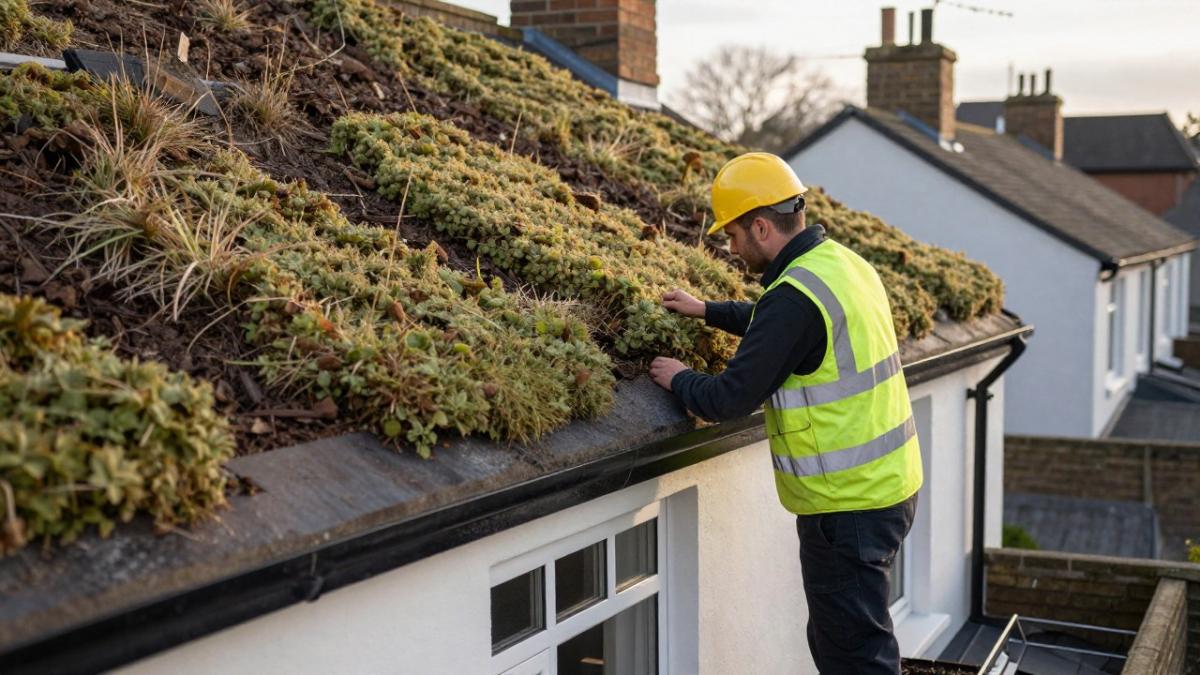
Green roof funding for homeowners is far more limited than many online guides suggest. Most public money for domestic roofs is channelled through energy-efficiency retrofit schemes, and those schemes usually fund insulation, draught-proofing, heating controls and sometimes rooflights or roof repairs that prevent heat loss, not sedum or wildflower planting.
That does not mean there is nothing open. It means you need to check the right door. The practical routes for a London or Buckinghamshire homeowner are set out below, with the questions to ask at each one.
London borough retrofit and climate programmes
Each London borough sets its own retrofit priorities, so availability genuinely varies street by street. Boroughs typically publish their current offer under ‘retrofit’, ‘climate action’ or ‘energy advice’ pages rather than under ‘roof grants’. When you contact your borough’s environment or housing team, ask four specific questions:
- Is the borough currently delivering a retrofit scheme for private owner-occupiers, and is it open or waitlisted?
- Which measures are in scope, loft insulation, flat-roof insulation, rooflights, ventilation, solar PV, green roof?
- Is there an income or means-test threshold, and what evidence is accepted (benefits letter, council tax reduction, household income declaration)?
- Does the scheme require a specific installer or a TrustMark-registered contractor, and does approval have to be in place before work starts?
A common pattern is that borough schemes are delivered in phases and close when the allocated budget is spent, so a scheme that was open last year may be closed now. Always ask for the current phase and the date the budget was last refreshed.
Buckinghamshire Council funding routes
Buckinghamshire Council publishes its energy and retrofit support on its own website, usually under ‘housing’, ‘energy efficiency’ or ‘cost of living’ pages. Eligibility for the council’s domestic retrofit offer typically depends on household income, property type, tenure and the measures being installed, and the council may deliver support through a contracted installer rather than a voucher. Before applying, confirm:
- whether the property is in the Buckinghamshire Council area (postcode check);
- whether the scheme is for owner-occupiers, private renters or landlords, these are often separate offers;
- which roof measures are eligible (loft insulation and flat-roof insulation are more commonly funded than green roofs);
- what evidence is required (proof of income, Energy Performance Certificate, photos of the existing roof);
- whether the council requires a survey before an application can be submitted.
The distinction that decides most applications
Before you spend time on any application, separate the four roof measures properly. A green roof (living planting over a waterproof membrane) is a biodiversity and stormwater measure. A cool roof (reflective finish) is a heat-gain measure. Roof insulation is a thermal-efficiency measure. Rooflights are a daylighting measure and are rarely treated as an energy measure at all. A scheme that funds loft insulation will not pay for a sedum roof, and a grant aimed at urban heat may ignore insulation entirely. Check the exact measure name in the scheme’s eligibility list, not the marketing description, before you assume your project fits. Keeping each measure distinct also helps when comparing roof work with other eligible upgrades, since an air source heat pump grant concerns a separate heating measure rather than a roofing one.
Roof Insulation Grants UK: Eligibility and Application Steps
Roof insulation grants UK are the most common route to public support for a roof project, because insulation directly reduces energy use. Eligibility typically depends on household income, the type of property and whether it is already insulated.
A typical application follows this order:
- Confirm the scheme is open in your area.
- Check the household and property eligibility rules.
- Get a survey that identifies the measures required.
- Submit the application and wait for approval.
- Only then book the installation.
How the Warm Homes: Local Grant Applies to Roof Improvements
The Warm Homes: Local Grant is designed to help lower-income households improve energy efficiency, and roof measures can sometimes form part of a qualifying package. Its availability and scope depend on where you live, so the local council is the right first contact.
Sustainable Roofing Costs and Financing: Stacking Rules and Out-of-Pocket Spend
Grants rarely cover the whole cost, and combining schemes is often restricted. The rules that matter are not generic, they are written into each scheme’s terms, and they change. The table below sets out the questions to ask and the typical pattern, not a fixed price list, because published grant amounts and eligible-cost caps are updated by the funding body and by the council delivering the scheme.
| Question | What to check | Typical pattern |
|---|---|---|
| What does the grant actually pay for? | The scheme’s eligible-measures list, not the headline | Insulation and heat-loss repairs are more commonly funded than green roofs |
| Is there a cost cap per measure? | The scheme’s grant offer or household cap | Caps are set per measure and per household; excess is paid by the owner |
| Can I stack two grants on the same measure? | Each scheme’s ‘combination’ or ‘duplication of funding’ clause | Usually no, one grant per measure; different measures may sometimes be combined |
| Is there a co-funding requirement? | The scheme’s contribution rate | Some schemes require the owner to contribute a percentage |
| Does the grant cover scaffolding and access? | The eligible-cost definition | Often excluded or capped, which matters on London terraces |
| Is VAT included? | The installer’s quote and the scheme rules | Check whether the grant is gross or net of VAT |
Because published amounts move, ask the council or scheme administrator for the current grant offer in writing before you sign anything, and ask them to confirm in the same email whether the scheme can be combined with any other funding you are considering.
What drives the price of a sustainable roof
The out-of-pocket figure depends on roof size and pitch, the existing covering and its condition, access and scaffolding, the number of rooflights or outlets, drainage and structural requirements for a green roof, and whether insulation is being upgraded at the same time. A flat roof on a London commercial unit and a pitched roof on a Buckinghamshire house are not comparable jobs. Ask every contractor for an itemised quote that separates labour, materials, access, drainage, structural work and VAT, so you can see exactly which lines a grant would and would not cover.
Financing the gap
Where a grant does not cover the work, the remaining cost is usually met from savings, a homeowner loan or a green finance product. Finance options may be available to spread the remaining cost without a large upfront payment, but check the total repayable and any early-repayment charge rather than the headline rate alone. For commercial and landlord properties, specialist commercial lenders and some council-run business support schemes may be more relevant than domestic retrofit grants.
A dated checklist before you commit
- Get the current scheme rules and grant amount in writing, with the date.
- Confirm which of the four roof measures (green roof, cool roof, insulation, rooflights) the scheme actually names.
- Confirm the stacking and co-funding rules for every scheme you are considering.
- Get an itemised quote and mark which lines are grant-eligible.
- Confirm approval is in place before any work starts.
Watch out: stacking rules are the most common source of clawback, if you claim two grants for the same measure, the administrator can recover one of them after the work is done.
Commercial Properties and Landlord Funding Routes
Commercial owners and landlords face different rules. Many public grants target domestic homes, so business premises and rental properties often fall outside them. Some landlord-focused energy programmes do exist, but eligibility varies and is usually tied to the energy performance of the building.
For commercial roofs, preventative maintenance can matter as much as new funding. Regular inspection protects the building and keeps repair costs predictable, whichever schemes you do or do not qualify for.
Booking a Free Survey to Check Your Funding Options
The fastest way to find out what applies to your roof is a survey. Evershield Roofing offers free surveys and quotes. Our team is fully insured and has over 25 years in the industry, so you can ask us anything before committing.
If you are unsure whether your roof needs replacing at all, start with a practical checklist for judging your roof’s condition. If you are weighing a full project, our guide to how a roof replacement works from start to finish explains each stage. Once you are ready to check funding, you can book a free survey with Evershield Roofing and get a clear picture of your options.
Frequently Asked Questions
Are there grants for installing a green roof in the UK?
Funding for green roofs in the UK is patchy and usually sits with local authorities rather than national government. Some councils, particularly in London, run schemes tied to flood risk, urban heat or biodiversity, and these can contribute towards installation costs. Eligibility often depends on your postcode, property type and whether the roof is part of a wider drainage or sustainability project. Check your local council’s website first, then ask a roofing contractor whether they know of current schemes in your area before committing to any work.
Can I get a government grant to replace or insulate my roof?
Roof insulation can qualify for energy-efficiency support in the UK, but the main national schemes change frequently and are usually targeted at low-income households or homes with poor energy ratings. A full roof replacement is rarely funded directly unless it is part of a wider energy-efficiency package. Review the current government and local authority funding pages, and confirm eligibility before you book work, since most schemes do not backdate payments for jobs already completed.
What is the Warm Homes: Local Grant and could it help with roof improvements?
The Warm Homes: Local Grant is a government-backed scheme delivered through local authorities to support energy-efficiency improvements for eligible households. Roof insulation and related fabric improvements can fall within its scope where they reduce heat loss. Eligibility is means-tested and location-specific, so contact your local council to check whether your property and household qualify. Ask for the current eligible measures list, as this can change between funding rounds.
Can homeowners in Buckinghamshire get funding for roof insulation?
Homeowners in Buckinghamshire may access insulation support through the county’s local authorities, depending on household income, property energy rating and scheme availability at the time of application. Funding pots open and close, so an enquiry made now may not be eligible later. Before paying for works, confirm in writing that your property meets the criteria, and keep receipts and installer certificates, as these are usually required to claim.