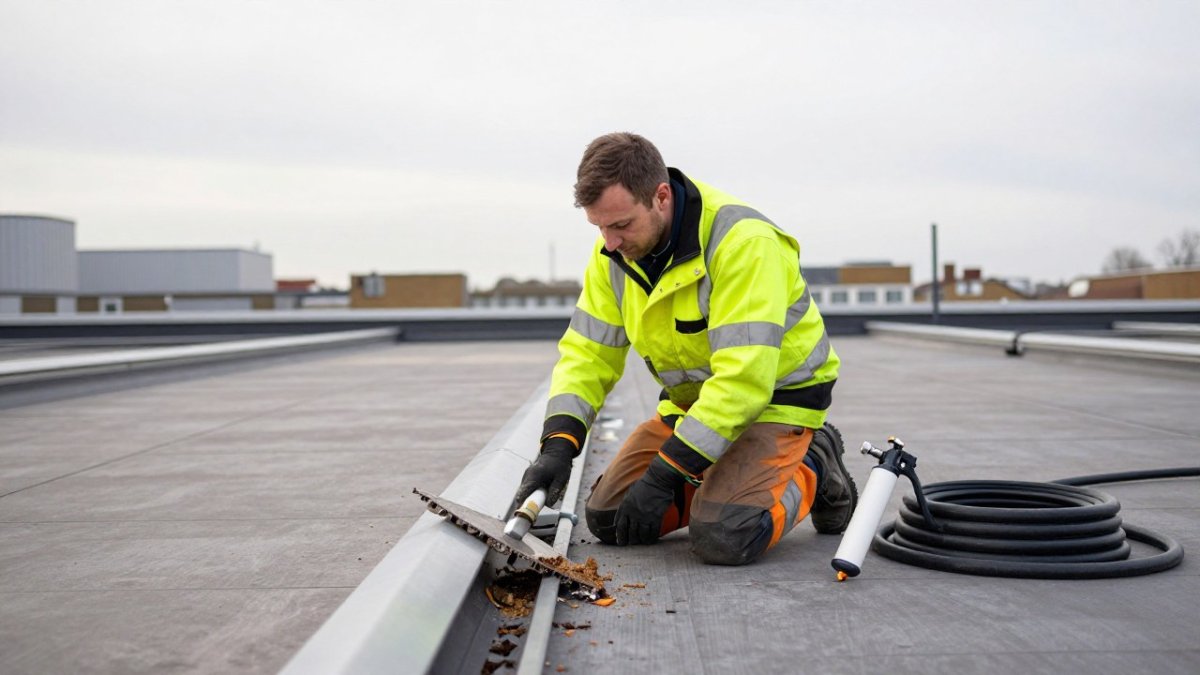
Commercial Roof Maintenance in London: A Practical Guide
Commercial roof maintenance in London: learn what to inspect, how often, and how to spot drainage faults before they cause leaks.

Quick Summary
Commercial roof maintenance is the planned upkeep of a flat or low-pitched roof to catch small faults before they become leaks or structural damage. For most London buildings it covers inspection, cleaning, drainage clearance, minor repairs and a dated written record. Inspections are typically needed at least twice a year.
- Inspect commercial roofs at least twice a year, typically in spring and autumn.
- Clear roof outlets, gullies and gutters of leaves, grit and litter before leaf fall peaks.
- Note any standing water on every visit, since ponding is a common cause of premature flat roof failure.
- Carry out a short check within 48 hours of severe wind or rain.
- Inspect again after any contractor has worked on the roof, as penetrations are common leak sources.
Table of Contents
- What Commercial Roof Maintenance Covers in London
- Commercial Roof Maintenance Checklist: Tasks to Schedule
- How Often a Commercial Roof Should Be Inspected
- Flat Roof Drainage Maintenance: Keeping Water Moving
- Commercial Roof Inspection in London: What to Expect
- Signs a Commercial Roof Needs Attention Now
- Vetting a Commercial Roofing Contractor in London
- Booking Your First Commercial Roof Inspection
- Frequently Asked Questions
What Commercial Roof Maintenance Covers in London
Commercial roof maintenance is the planned upkeep of a flat or low-pitched roof so small faults are caught before they turn into leaks, structural damage or closures. For most London commercial buildings, it covers inspection, cleaning, drainage clearance, minor repairs, and a written record of what was checked and when.
London buildings face a particular mix of conditions. Dense urban areas mean roofs collect soot, pigeon debris and blown litter, while tall neighbouring buildings can shelter roofs from drying winds, keeping moisture in membranes for longer. Many flat roofs are also reached only through internal access, so a missed inspection can go unnoticed until water appears inside.
A practical maintenance programme usually includes:
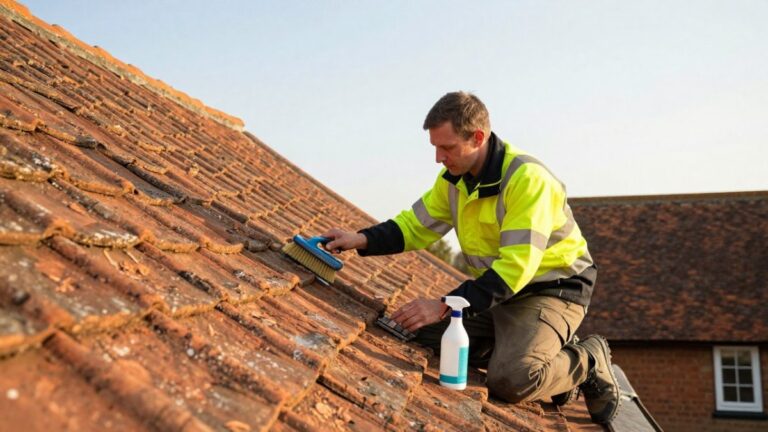
- Visual inspection of the membrane, edges, upstands and flashings
- Clearing outlets, gullies and gutters of debris
- Checking fixings, parapets and rooflights for movement or damage
- Recording findings with dated photographs for future comparison
Commercial Roof Maintenance Checklist: Tasks to Schedule
A written checklist turns maintenance from a reaction to leaks into a routine. The tasks below are a sensible starting point for most commercial roofs in London, though the exact schedule should follow the roof type, age and the guidance of a qualified contractor.
- Clear roof outlets, gullies and internal drains of leaves, grit and litter
- Inspect the membrane or covering for splits, blisters, ponding and bare patches
- Check upstands, parapet copings, flashings and roof edges for lifting or cracking
- Examine rooflights and penetrations such as pipes and vents for seal failure
- Look at gutters, downpipes and fascias for sagging, staining or blockages
- Confirm access points, handrails and safety fixings are secure
- Photograph all findings and log them against the previous inspection
Watch out: ponding water that remains days after rain is one of the most common causes of premature flat roof failure, so note any standing water on every visit.
Many managers keep this checklist with the building’s maintenance file, so a new facilities team can pick up the schedule without starting from scratch.
How Often a Commercial Roof Should Be Inspected
Most commercial roofs in London benefit from a formal inspection at least twice a year, typically in spring and autumn.
A practical schedule for a London commercial building usually looks like this:
- Spring (March to May): full inspection after winter, clearing outlets and checking for frost damage, lifted flashings and storm debris.
- Autumn (September to November): clear gutters and outlets before leaf fall peaks, confirm falls still direct water to drains, and check for ponding after the first heavy rain.
- Post-storm: a short check within 48 hours of severe wind or rain to confirm outlets are clear and no new leaks have appeared.
- Post-works: an inspection after any contractor has been on the roof, because plant, cabling and penetrations are common sources of later leaks.
- Annually: a written condition report with dated photographs, so slow deterioration can be tracked year on year.
Inspections should also follow any notable event, including a fire alarm, a change of tenant, or work on adjoining buildings that may have disturbed the roof.
Keeping a dated log makes it easier to spot slow deterioration. A patch that looks minor one year may show clear growth the next, and comparing photographs helps justify repair budgets.
Watch out: a roof that looks sound from ground level can still be holding water under the membrane, so never treat a visual check from the car park as a substitute for a proper inspection.
The article sets out a practical inspection schedule for London commercial roofs.
| Timing | Focus | Why |
|---|---|---|
| Spring (March to May) | Full inspection, clear outlets | Check for frost damage, lifted flashings and storm debris |
| Autumn (September to November) | Clear gutters and outlets | Prepare for leaf fall and the wettest months |
| Post-storm | Short check | Confirm outlets are clear and no new leaks |
| Post-works | Inspect penetrations | Plant, cabling and penetrations are common leak sources |
| Annually | Written condition report | Track slow deterioration with dated photographs |
Flat Roof Drainage Maintenance: Keeping Water Moving
Drainage is the part of commercial roof maintenance that most often prevents damage. Flat roofs depend on outlets, gullies and gutters to carry rainwater away, and when those clog, water pools and seeps into the structure. Clearing debris is usually simple, but it needs doing regularly, especially after autumn leaf fall in London’s tree-lined streets.
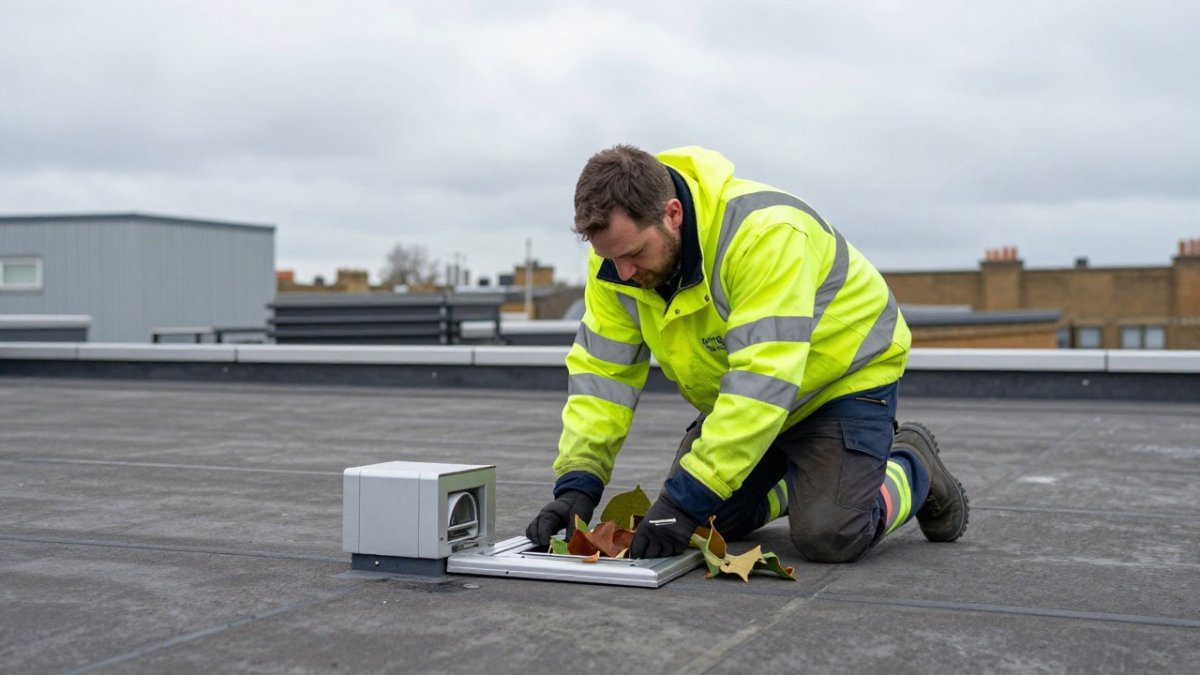
A practical drainage routine includes checking outlets for leaves and grit, confirming the falls on the roof still direct water towards the drains, and looking for pooling after rain.
The thing most people miss is that a single blocked outlet can cause water to back up under the membrane, where it is hard to see. Regular clearing is cheaper than repairing hidden saturation later.
Checking where downpipes discharge
In the UK, a downpipe should connect to a surface water drain, a combined sewer or a soakaway, and the connection should be visible at ground level. Before assuming a downpipe is working, check that it discharges to a suitable outlet rather than onto a path, wall or neighbouring property. If the connection is unclear, or if water pools at the base of the downpipe, consult a qualified drainage professional rather than guessing. Local authority building control and the water company can advise on connections in your area, and in London the local authority is the relevant regulator for drainage matters.
A safe maintenance walkthrough
- Work from ground level first: look for sagging gutters, staining on fascias, and water marks at the base of downpipes.
- Use a stable ladder on firm ground, with a second person footing it, and never lean out to reach a gutter.
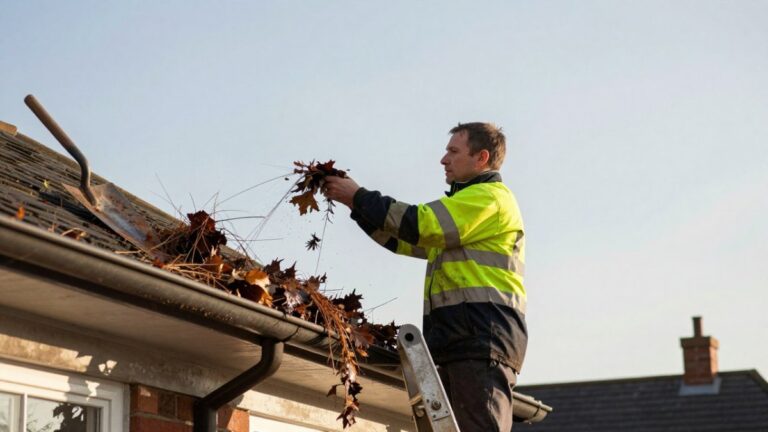
- Clear leaves and debris by hand or with a gutter scoop, bagging the waste rather than dropping it.
- Flush outlets and downpipes with a hose and check that water runs freely away.
- After cleaning, check for leaks at joints and confirm water is directed away from the building.
Watch out: never work at height alone or in high winds, and do not stand on the roof surface unless it has been assessed as safe for access.
Diagnosing the real source of water
Gutter overflow is only one cause of water near a building. Groundwater, leaking pipes, defective drains and foundation defects can all produce damp patches that look like roof leaks. Before commissioning repeated gutter cleaning, check whether staining appears after rain or continuously, whether it is worse at ground level or upper floors, and whether nearby drains smell or back up. If the source is unclear, a drainage survey is usually cheaper than repeated cleaning that does not solve the problem.
When to call a professional
Call a qualified contractor if water pools for more than a day after rain, if downpipes are blocked below ground, if you cannot safely access the roof, or if the building has a history of leaks.
Commercial Roof Inspection in London: What to Expect
A professional commercial roof inspection usually starts with a walk around the building to note the roof’s condition from ground level. Clearing debris from gutters and downpipes is a critical final step in this process, often requiring the specialized oversight provided by Pro Drain Experts to ensure that water management systems remain fully functional throughout the year.
Expect the inspector to take photographs, mark areas of concern and explain the likely cause of any faults. A good report separates urgent repairs from items that can be monitored, so you can plan budgets around actual needs.
Evershield Roofing offers free surveys and quotes, so you can understand the condition of your roof before committing to any work. For current prices or a quote, visit the Evershield Roofing website.
Signs a Commercial Roof Needs Attention Now
Some warning signs call for prompt inspection rather than waiting for the next scheduled visit. These include visible water staining on ceilings or walls, water pooling that lasts for days, cracked or bubbling membrane, daylight showing through rooflights, and a noticeable increase in moisture or mould inside the building.
Less obvious signs can also matter. Gutters that sag, fascias that look rotten, or debris building up around outlets often point to drainage problems that will worsen over time. Any sign of movement at parapets or edges should be assessed by a qualified contractor.
If you spot a leak during working hours, contain it with buckets or sheeting, note where it appears, and contact a roofer. Acting quickly limits damage to ceilings, stock and electrical fittings.
Vetting a Commercial Roofing Contractor in London
Choosing the right contractor makes a real difference to the quality and longevity of maintenance work. Start by checking that the firm carries public liability and employer’s insurance, and ask for evidence of current cover. Look for membership of recognised trade bodies and for references from commercial clients with similar buildings.
Ask how the contractor manages working at height, including safety equipment, method statements and site supervision. A firm that is clear about access arrangements, working hours and how it minimises disruption to tenants or business operations is usually easier to work with.
Compare quotes on the scope of work, not just the price. Check whether the quote includes inspection reporting, follow-up visits and warranties, and whether the contractor will provide a maintenance schedule. A lower quote that leaves out drainage clearance or reporting may cost more over time.
Booking Your First Commercial Roof Inspection
To book a first inspection, gather the basics: the building’s address, roof type if known, age of the roof, any previous repair records and a description of current concerns. This helps the surveyor prepare and make the most of the visit.
Evershield Roofing offers free surveys and quotes, and can carry out repairs or new installations if the inspection identifies work that is needed. Request a written report and agree on a maintenance schedule so the roof is checked regularly rather than only after a problem appears.
Once the first inspection is complete, log the findings, set reminders for the next visit, and keep the records with your building documents. A planned approach to commercial roof maintenance in London protects the building, reduces unplanned disruption and makes future budgeting far more predictable.
Frequently Asked Questions
How often should a commercial roof be inspected in London?
Most commercial roofs benefit from a professional inspection at least twice a year, typically in spring and autumn, so that winter storm damage and blocked drainage are caught early. Roofs that are older, have flat sections, or sit under mature trees may need checks more often. Inspect after any severe storm too, and keep a dated record of each visit so that changes in condition are easy to track over time.
What does commercial roof maintenance include?
Commercial roof maintenance usually covers clearing gutters, outlets and drains, checking the membrane or covering for splits, blisters and ponding, inspecting flashings, parapets and penetrations, and repairing small defects before they spread. Some providers also offer planned maintenance agreements that set out a schedule of visits and a written report after each one. Ask any contractor exactly what is included before agreeing a plan.
Why is flat roof drainage important for commercial buildings?
Flat roofs have little or no natural fall, so water relies on outlets, gutters and downpipes to leave the roof. When these become blocked with leaves, grit or debris, water pools, which adds weight, speeds membrane ageing and can lead to leaks into the building. Keeping outlets clear and checking for standing water after rain are among the simplest ways to protect a commercial roof.
How do I choose a commercial roofing contractor in London?
Look for contractors who are fully insured, can show examples of commercial work in London, and offer a free survey and written quote. Ask whether they provide planned maintenance as well as repairs, and how quickly they respond to urgent call-outs. Check references and ask who will carry out the work. A clear, itemised quote and a written maintenance schedule are good signs of a reliable firm.