Preventative Flat Roof Maintenance Tips: A Complete Guide
Learn essential preventative flat roof maintenance tips to extend roof lifespan, prevent water damage, and avoid costly repairs. Get expert guidance now.

Table of Contents
- Why Preventative Flat Roof Maintenance Matters
- Regular Roof Inspections and Early Detection
- Flat Roof Inspection Checklist: What to Look For
- Signs of Flat Roof Water Damage and What They Mean
- Drainage and Gutter Maintenance
- How to Clean Flat Roof Gutters and Downpipes
- Clearing Debris and Vegetation Growth
- Material-Specific Maintenance for Flat Roofs
Last Updated: August 11, 2026
Why Preventative Flat Roof Maintenance Matters
Flat roofs depend entirely on their membrane and drainage systems to shed water, unlike sloped surfaces where water naturally drains away. When maintenance is neglected, standing water pools on the surface, thermal stress cracks the membrane, and small leaks become costly structural damage.
A roof inspected regularly and cleaned twice a year will outlast one left to chance by a decade or more. The cost of prevention is negligible compared to failure: a gutter cleaned in autumn costs far less than replacing water-damaged interior ceilings in spring. This guide walks you through specific maintenance tasks that protect your flat roof, what to look for during inspections, and when to call a professional.
Regular Roof Inspections and Early Detection
Inspections are where preventative maintenance begins. A flat roof should be inspected at least twice yearly, ideally in spring and autumn, before damage becomes visible from inside the building.
During an inspection, look for three things: membrane integrity, drainage function, and structural soundness. The membrane is your primary defence against water ingress. Drainage systems must be clear and functioning. Structural elements like flashings and upstands must be intact.
Damage to a flat roof membrane is often invisible until water appears on your ceiling. By then, the problem has already spread. Professional inspections identify early-stage blistering, minor cracks, and drainage inefficiencies that an untrained eye would miss. If inspecting your own roof, use proper safety equipment and avoid the membrane when it’s hot, as thermal stress can cause additional damage.
Flat Roof Inspection Checklist: What to Look For
Work systematically across the entire roof surface, paying particular attention to high-risk zones where water pools or where different materials meet.
Membrane and Surface Condition
The roof membrane is the barrier between your building and the weather. Common types include bituminous felt, EPDM rubber, and synthetic materials. All show similar warning signs: visible cracks that can expand rapidly under thermal stress, blistering (raised bubbles indicating trapped moisture), and brittleness from UV degradation.
Check for areas where the membrane feels powdery or chalky, indicating deterioration. Seams and joints are particularly vulnerable, inspect them closely for separation or sealant failure. Surface debris matters significantly: leaves, moss, and algae trap moisture against the membrane and block drainage channels, forcing water to pool.
Flashing and Upstands
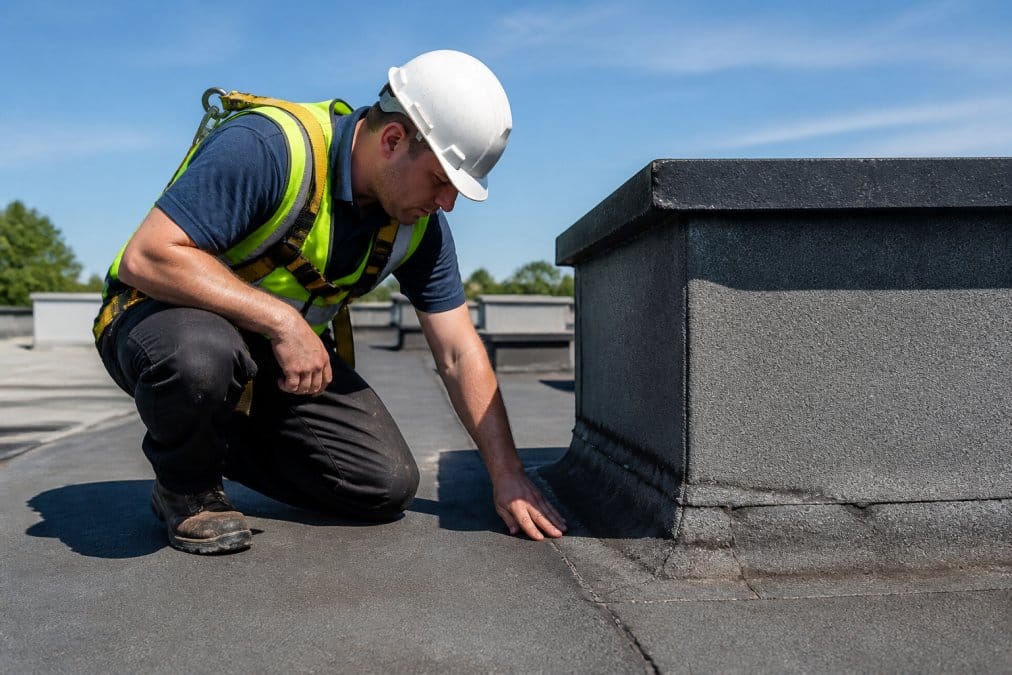
Flashings are the metal or membrane transitions where your roof meets walls, chimneys, and ventilation pipes. Check that all flashings are securely attached and not lifting away. Look for gaps between the flashing and wall, which allow water to run behind the flashing into the building. Sealant should be intact and flexible; cracked or missing sealant is an immediate problem.
Upstands should extend at least 150mm above the roof surface to prevent water from flowing back onto the membrane during heavy rain. Inspect the base of each upstand where it meets the main roof membrane, as this junction is prone to cracking under thermal movement.
Signs of Flat Roof Water Damage and What They Mean
Water damage on a flat roof rarely announces itself dramatically. Recognising early signs allows you to intervene before structural damage occurs.
Ponding Water and Drainage Failure
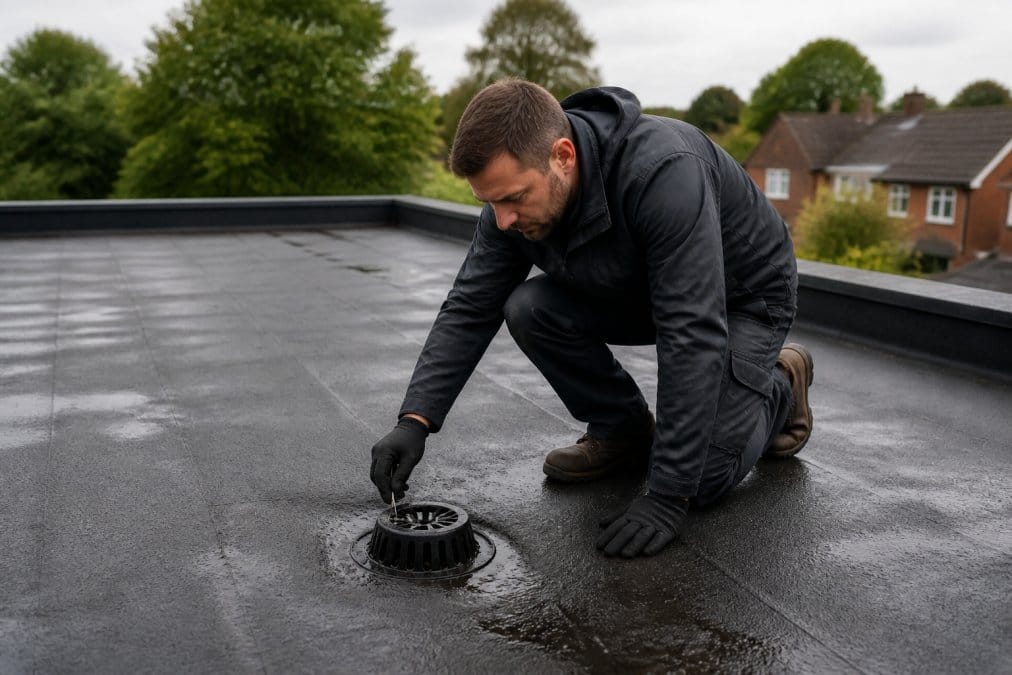
Ponding water, areas where water sits on the roof surface for days after rain, indicates a drainage problem. Flat roofs are designed with a slight pitch to encourage water to flow toward gutters and downpipes. If water pools instead, either the pitch is inadequate, the drainage system is blocked, or the roof has settled unevenly.
Standing water accelerates membrane degradation and increases leak risk. More concerning, ponding indicates that your roof’s structural integrity may be compromised. Drainage failure often stems from blocked gutters or downpipes clogged with leaves, moss, and debris.
Blistering, Cracking, and Membrane Deterioration
Blisters form when moisture becomes trapped between membrane layers. Left alone, they eventually rupture, creating openings for water penetration. Cracks develop from thermal movement, UV exposure, and impact damage. Small cracks can be sealed, but widespread cracking indicates the membrane is reaching the end of its serviceable life.
Membrane deterioration shows as discolouration, brittleness, or loss of flexibility. Bituminous membranes may become hard and chalky. EPDM and synthetic membranes may fade or become stiff. These changes indicate the material is aging and losing protective properties.
Drainage and Gutter Maintenance
A flat roof‘s drainage system is as critical as the membrane itself. Water must flow freely from the roof surface to gutters, through downpipes, and away from the building. Any blockage forces water to find alternative routes, usually into the building.
Gutters should slope toward downpipes at a minimum gradient of 1:100 (1mm drop per 100mm length). If a gutter is level or slopes the wrong direction, water won’t drain properly. Downpipes should be clear and properly connected to drainage systems, with water exiting away from the building’s foundation.
How to Clean Flat Roof Gutters and Downpipes
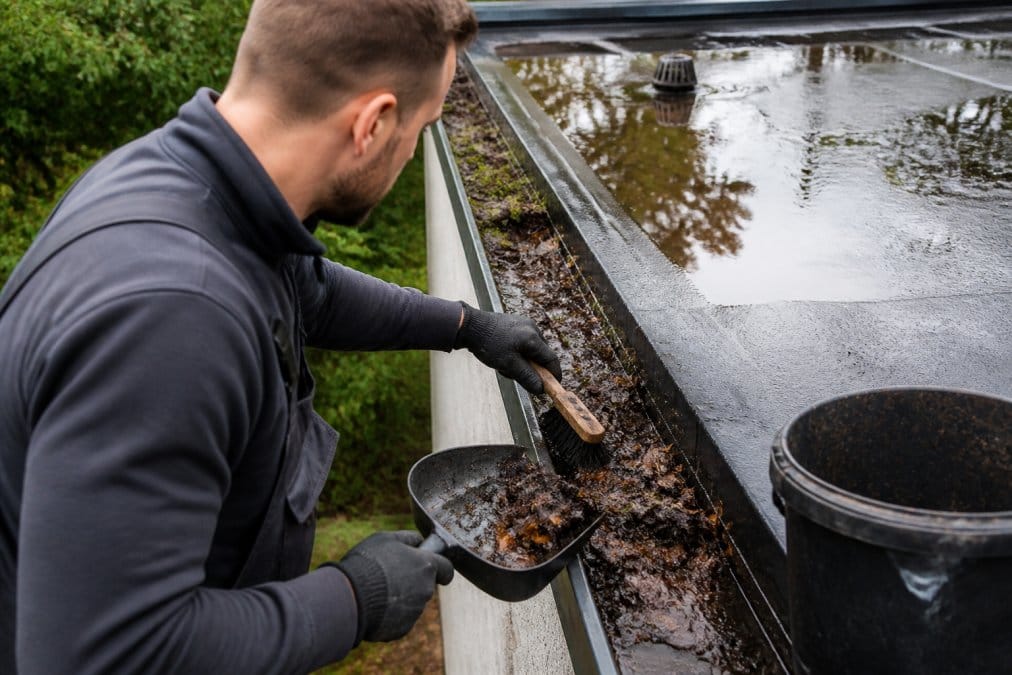
Gutter cleaning is the most accessible maintenance task most property owners can perform themselves, preventing a cascade of problems downstream.
Step-by-Step Cleaning Process
Step 1: Ensure Safety First
Never access a roof without proper precautions. Use a sturdy ladder positioned on level ground. Wear non-slip footwear and consider using a safety harness if uncomfortable with heights. If your roof is steep or you’re uncertain about your ability to work safely, hire a professional.
Step 2: Remove Large Debris
Remove leaves, twigs, and moss by hand or with a scoop. Don’t let debris accumulate on the roof surface, as it blocks drainage and adds weight.
Step 3: Flush the Gutters
Use a hose to flush gutters and downpipes with water. Start at the end furthest from the downpipe and work toward it. Water should flow freely toward the downpipe. If water pools or flows slowly, there’s a blockage further along.
Get Your Free Roofing Quote Today! →
Step 4: Clear Downpipe Blockages
If water doesn’t drain properly from the gutter, the downpipe is likely blocked. Use a plumbing snake or pressure washer to clear the blockage carefully. If you can’t clear it, call a professional.
Step 5: Inspect as You Clean
While cleaning, look for signs of damage. Check for cracks in the gutter, rust on metal gutters, or separation from the roof edge. Note any areas where water pools or drains slowly.
Step 6: Final Flush
Once debris is removed and blockages cleared, flush the entire system again. Water should flow freely without pooling or backing up.
Tools You’ll Need
A basic gutter cleaning kit includes:
- Sturdy ladder
- Safety harness or fall protection equipment
- Heavy-duty gloves
- Handheld scoop or small shovel
- Stiff-bristled brush for removing moss and algae
- Garden hose with spray nozzle
- Plumbing snake or pressure washer for downpipe blockages
- Bucket for collecting debris
- Torch or headlamp for detailed inspection
Professional gutter cleaning services use pressure washers and specialised equipment that removes stubborn deposits more effectively than manual cleaning.
Clearing Debris and Vegetation Growth
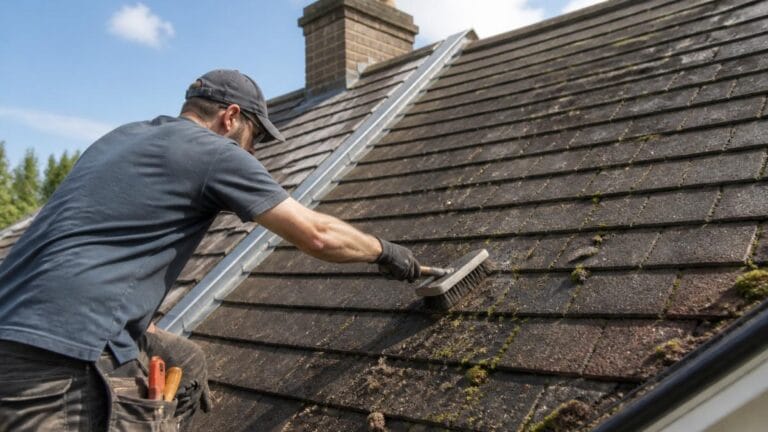
Debris accumulation is the primary cause of flat roof problems. Leaves, twigs, seeds, and dirt settle on the roof surface and trap moisture. Vegetation growth, moss, algae, and lichen, thrives in these moist conditions and accelerates membrane deterioration.
Clear the roof surface at least twice yearly, in spring and autumn. Use a soft-bristled brush or broom to remove debris. Avoid high-pressure washing on delicate membranes, as the force can damage seams. For moss and algae, a biocide treatment may be necessary, but always check the membrane manufacturer’s guidance before applying any chemical treatment.
Vegetation growth often indicates that moisture is lingering on the roof, pointing to a drainage problem. If you’re removing moss frequently, address the underlying drainage issue to prevent it from returning.
Material-Specific Maintenance for Flat Roofs
Different membrane materials require slightly different maintenance approaches.
Bituminous and EPDM Membranes
Bituminous membranes are common on older flat roofs and are durable but prone to thermal cracking as temperatures fluctuate. The material becomes brittle over time, particularly in areas exposed to intense sunlight.
Maintenance focuses on preventing UV exposure and managing thermal stress. Bituminous roofs benefit from a light-coloured coating or aggregate layer that reflects sunlight and reduces temperature extremes. EPDM rubber membranes are more flexible, making them less prone to cracking, but can be damaged by sharp objects and certain chemicals. Avoid unnecessary walking on EPDM roofs.
Both materials require regular inspection for seam separation. Reseal seams as soon as separation is noticed.
Rubber and Synthetic Roofing
Modern synthetic membranes offer improved durability and resist UV exposure better than traditional bituminous materials. They remain flexible across a wider temperature range but still require preventative maintenance.
Synthetic roofs are more resistant to thermal cracking but can still develop blistering if moisture becomes trapped. Ensure ventilation beneath the membrane is adequate. Chemical resistance varies by material type, check the manufacturer’s guidance before applying any cleaning products. Welded seams on synthetic membranes are stronger than glued seams but can still fail if the membrane around them is damaged.
Flat roof maintenance doesn’t require specialist knowledge, but it does require consistency. Properties that maintain their roofs twice yearly experience far fewer emergencies than those that neglect this responsibility. If you’re managing a flat roof in Buckinghamshire and need professional guidance, Evershield Roofing offers comprehensive roof inspections and maintenance services. Our team can assess your roof’s condition, identify problems before they become expensive, and recommend the most cost-effective maintenance schedule for your specific situation. Get your free roofing quote today and let our 25 years of experience protect your investment.
| Maintenance Task | Frequency | Time Required | Priority Level |
|---|---|---|---|
| Visual roof inspection | Twice yearly (spring and autumn) | 30-45 minutes | Critical |
| Gutter and downpipe cleaning | Twice yearly minimum | 1-2 hours | Critical |
| Debris removal from roof surface | Twice yearly | 30-60 minutes | High |
| Membrane and flashing inspection | Twice yearly | 30-45 minutes | Critical |
| Moss and algae treatment | As needed (quarterly in wet climates) | 1-2 hours | Medium |
| Sealant inspection and resealing | Annually | 1-3 hours | High |
| Professional full roof survey | Every 3-5 years | 2-4 hours | High |
Pro Tip
When inspecting your flat roof, always work on a cloudy day or in early morning. Avoid inspecting in direct sunlight, as the membrane becomes hot and can be damaged by foot traffic. Wear soft-soled shoes to minimise damage to the surface.
When inspecting your flat roof, always work on a cloudy day or in early morning. Avoid inspecting in direct sunlight, as the membrane becomes hot and can be damaged by foot traffic. Wear soft-soled shoes to minimise damage to the surface.
Watch Out
Never use a high-pressure washer on a delicate membrane without first confirming it’s suitable for your specific roof type. Pressure washing can damage seams, strip protective coatings, and create new leak points. When in doubt, use a soft brush and low-pressure water instead.
Never use a high-pressure washer on a delicate membrane without first confirming it’s suitable for your specific roof type. Pressure washing can damage seams, strip protective coatings, and create new leak points. When in doubt, use a soft brush and low-pressure water instead.
Key Takeaway
The single most impactful maintenance habit is clearing gutters and downpipes twice yearly. This one task prevents ponding water, which is the root cause of most flat roof problems. Everything else follows from proper drainage.
The single most impactful maintenance habit is clearing gutters and downpipes twice yearly. This one task prevents ponding water, which is the root cause of most flat roof problems. Everything else follows from proper drainage.
Frequently Asked Questions
How often should a flat roof be inspected?
Flat roofs should be inspected at least twice per year, in spring and autumn, to catch seasonal damage early. After severe weather, storms, or high winds, inspect immediately for damage. Regular inspections help identify ponding water, membrane degradation, and flashing issues before they become costly problems. Professional inspections can be more thorough and may reveal issues homeowners miss.
What are the most common signs of flat roof water damage?
Standing or ponding water on the roof surface is the clearest sign of drainage failure. Interior indicators include water stains on ceilings, damp patches on walls, and soft spots in the roof structure. External signs include blistering in the membrane, visible cracks, moss and algae growth, and deterioration around seams and joints. UV degradation and thermal movement can also cause the membrane to split, allowing moisture ingress that may not be immediately visible.
Can I perform flat roof maintenance myself, or do I need a professional?
Basic maintenance like gutter clearing and debris removal can be done by homeowners with proper safety equipment and precautions. However, inspecting for membrane damage, addressing ponding water, repairing flashing, and applying sealant require professional expertise and specialist tools. Professionals can also identify structural issues and ensure work meets building regulations. For safety and warranty reasons, complex repairs and maintenance should be handled by experienced roofers.
Does building insurance cover flat roof repairs?
Most buildings insurance policies cover flat roof damage caused by sudden events like storms or impact damage. However, insurance typically does not cover damage from lack of maintenance, wear and tear, or gradual deterioration. Keeping detailed maintenance records and performing preventative flat roof maintenance significantly strengthens insurance claims. Review your policy terms and inform your insurer of any damage promptly to ensure coverage.
What is the average lifespan of a flat roof in the UK?
Flat roofs typically last 15-25 years depending on material type and maintenance quality. Bituminous membranes often last 15-20 years, while EPDM rubber and synthetic materials can reach 25-30 years with proper care. Regular preventative maintenance, prompt repairs, and protection from UV degradation and thermal movement can extend roof lifespan significantly. Poor drainage and neglected maintenance reduce lifespan considerably.
How do I know when my flat roof needs professional repair versus routine maintenance?
Routine maintenance includes gutter cleaning, debris removal, and minor sealant touch-ups. Professional repair is needed for visible membrane damage, persistent ponding water despite cleared gutters, blistering or cracking, flashing separation, or interior water damage. If you notice structural sagging, widespread moss growth, or seams pulling apart, contact a roofer immediately. Professional assessment after severe weather or if you're unsure is always the safest option.