Signs of Roof Leak Damage: A Homeowner’s Guide
Signs of roof leak: Spot roof leak damage early. Learn 8 key signs from water stains to mould, how to inspect your loft, repair costs in the UK, and when.

Table of Contents
- 8 Key Signs of Roof Leak Damage
- How to Find a Roof Leak in the Loft
- Roof Leak Repair Cost in the UK
- Roof Maintenance Checklist to Prevent Leaks
- When to Call a Professional vs DIY Assessment
- Insurance Claim Documentation for Roof Damage
- Conclusion
Last Updated: August 8, 2026
8 Key Signs of Roof Leak Damage
A roof leak can escalate into costly structural damage if caught late. Water inside your home damages insulation, timber, and walls rapidly. At Evershield Roofing, we’ve helped hundreds of Buckinghamshire homeowners identify leaks early, the key is knowing where to look. Small leaks become structural rot, mould, or electrical hazards within weeks. The good news: roof leaks leave predictable markers, and early detection saves thousands in repairs.
Below are the eight most reliable indicators that your roof is leaking, what each means, and what to do next.
Water stains on ceilings and walls
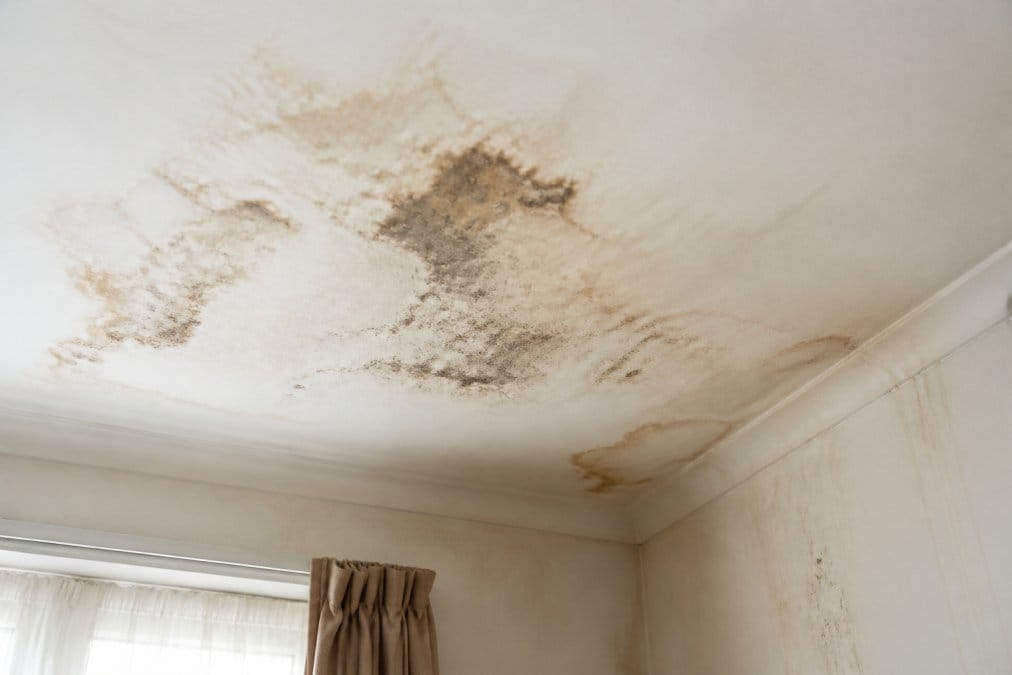
Water stains are often the first visible sign. A stain directly below the attic suggests a leak in that section; stains distant from the leak indicate water travelling along timber or insulation before dripping through. Look for discolouration ranging from light brown to dark yellow or grey. Fresh stains feel damp; older ones are dry but visible. Ring-pattern edges show how far water has spread. Multiple stains suggest multiple leak points.
Water stains indicate moisture is already inside your ceiling cavity or wall space, creating conditions for mould and timber decay even if the stain appears minor.
Damp patches and mould growth
Damp patches feel soft or spongy and often smell musty. Unlike water stains, they indicate active moisture penetration. Black or green mould spots on ceilings, walls, or in the loft signal moisture present long enough for fungal growth. Mould thrives in warm, damp conditions and spreads quickly, triggering respiratory issues in children and elderly people.
Where sustained moisture exists, mould follows. If you spot mould, the leak has been active for weeks. Your attic insulation is likely saturated, timber may be softening, and delays increase repair costs.
Damaged, missing, or curling shingles
Shingles are your roof’s first weather barrier. Damaged or missing shingles allow water underneath to the underlayment and roof deck. Look for shingles that are curling, cracked, missing granules, or blistered. Shingle granules collecting in gutters signal deterioration; missing granules expose asphalt to UV damage and weather.
If your roof is over 15-20 years old with curling or missing shingles, full replacement may be more cost-effective than patching. Evershield Roofing can assess whether targeted repairs or full installation suits your property.
Sagging roof deck or ceiling
A sagging roof deck or ceiling indicates structural timber has absorbed so much water it’s losing load-bearing capacity. Wet timber becomes heavier and weaker; the weight of saturated insulation combined with weakened support causes the roof to settle downward. This is a structural failure in progress and can lead to collapse.
Treat any roof sag as an emergency. Contact a qualified roofer immediately for structural assessment, this requires professional evaluation, not DIY work.
Leaking plumbing vent boots and flashing
Pipes and vents penetrate your roof, sealed with metal flashing and rubber vent boots. Over time, rubber degrades from UV exposure and temperature cycling, cracking and hardening. Flashing can rust, separate, or develop gaps. These leaks are often localised and straightforward to repair; a roofer can replace a vent boot or re-seal flashing in hours. If your water stain is near a bathroom or kitchen, this is a likely culprit.
Clogged gutters and blocked soffit vents
Gutters channel rainwater away from your roof and walls. Soffit vents allow air circulation through the loft, preventing moisture accumulation. Clogged gutters cause water to back up and sit on the roof, accelerating shingle deterioration. Blocked soffit vents trap moisture, leading to damp and mould even without active leaks.
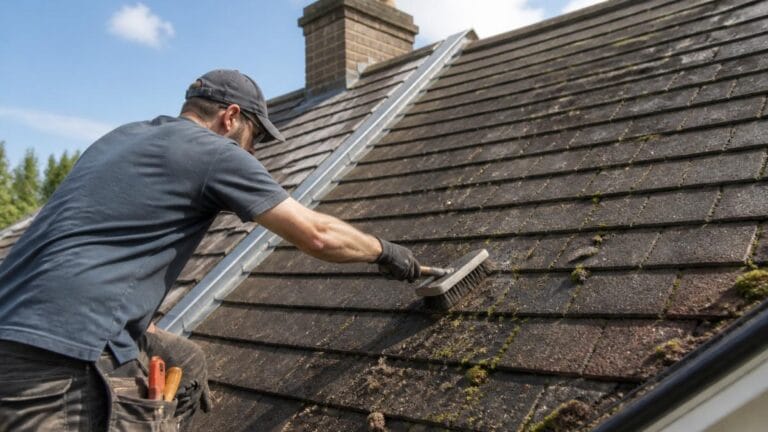
Check gutters regularly, especially after autumn leaf fall. Remove debris by hand or scoop. Look along the soffit line for clear, unobstructed vents. Moss or algae growth on the roof blocks drainage; professional cleaning may prevent future leaks.
Musty odours and shingle granules in gutters
A musty smell in your loft or upper rooms signals moisture accumulation from mould and damp timber. If strong, the problem has developed for weeks or months. Shingle granules in the gutter indicate deterioration; a noticeable pile suggests your roof is very old or shingles are damaged by weather, impact, or poor installation.
Both signs point to the same conclusion: your roof needs professional attention.
How to Find a Roof Leak in the Loft
Once you’ve spotted signs of roof leak damage, locate the actual leak point. The visible leak inside is often not directly above the source; water travels along timber before dripping through. Finding the source requires a systematic approach.
Visual inspection for water ingress
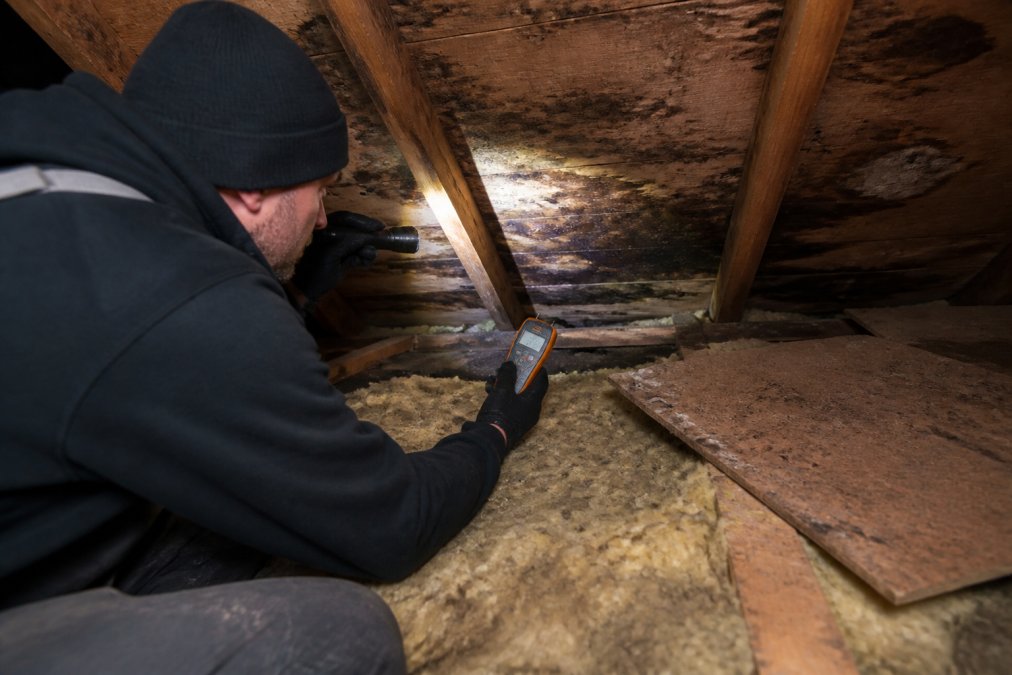
Start in the loft on a dry day with a torch and notebook. Look for dark staining on timber, wet insulation, or visible water trails along rafters. Follow water paths upward to find entry points. Check the roof deck underside for discolouration or soft spots. Look at the underlayment for tears, holes, or water staining. If you see daylight through the roof deck or water pooling on the underlayment during rain, you’ve located the leak area.
Pay special attention to roof penetrations: plumbing vent boots, roof vents, chimneys, and flashing. Look for gaps between flashing and roof, rust on metal, or cracks in rubber boots.
Using a moisture meter to detect damp penetration
A moisture meter measures moisture content in timber and insulation. You can buy one for £20-50 or hire a professional with thermal imaging. Press probes into timber, insulation, and drywall. Dry materials read low (typically under 15%); damp materials read higher. This maps moisture concentration and shows how far water has travelled.
Moisture meters are particularly useful when visual signs are unclear, definitively showing whether a damp patch is old or active.
Checking attic insulation and underlayment
Wet insulation loses thermal properties and becomes a mould breeding ground. Feel insulation in different areas; dry insulation is light and fluffy, wet insulation feels heavy, compressed, and cold. Look for darker patches indicating moisture concentration. Severely saturated insulation may need replacement; partial saturation can sometimes dry with improved ventilation.
The underlayment is the secondary water barrier between shingles and roof deck. Water staining, tears, or holes show where water enters the structure. Torn underlayment can be patched temporarily, but permanent repair requires replacing the affected section.
Roof Leak Repair Cost in the UK
Understanding what drives repair costs helps you make informed decisions about repair timing or full replacement.
Factors that affect repair pricing
Repair costs depend on leak location (edge leaks are easier to reach than mid-roof), roof type (pitched tile, slate, flat membrane), and extent of underlying damage. Emergency repairs carry a premium; seasonal demand also affects labour rates. The age and condition of your roof influence whether repair or replacement is more sensible. If your roof is 15-20 years old with multiple damage signs, full replacement often costs less over time than repeated repairs.
Get Your Free Roofing Quote Today! →
Emergency roof repair vs planned maintenance
Emergency repairs address active leaks; planned maintenance prevents them. Emergency repairs are reactive and expensive. A professional inspection within a week or two costs less than £200 and prevents emergencies. Regular maintenance, clearing gutters twice yearly, checking flashing annually, and professional inspection every 3-5 years, prevents most leaks. Evershield Roofing offers free surveys and quotes.
Roof Maintenance Checklist to Prevent Leaks
Preventing leaks is far more cost-effective than repairing them.
Seasonal inspection tasks
Spring (March-May): Inspect for missing or damaged shingles, debris, and water damage in the loft. Check gutters are clear and water drains freely. Look at flashing around chimneys and vents for gaps or rust.
Summer (June-August): Ideal weather for roof work. Check soffit vents for blockages. Look for moss or algae growth, which traps moisture and accelerates deterioration.
Autumn (September-November): Clear gutters before and after leaf fall. Check downpipes drain away from your foundation. Inspect for storm damage.
Winter (December-February): Avoid working on icy roofs, but visually inspect from the ground. Check gutters remain clear during heavy rain. Look for water stains after snow melts.
Gutter and fascia maintenance
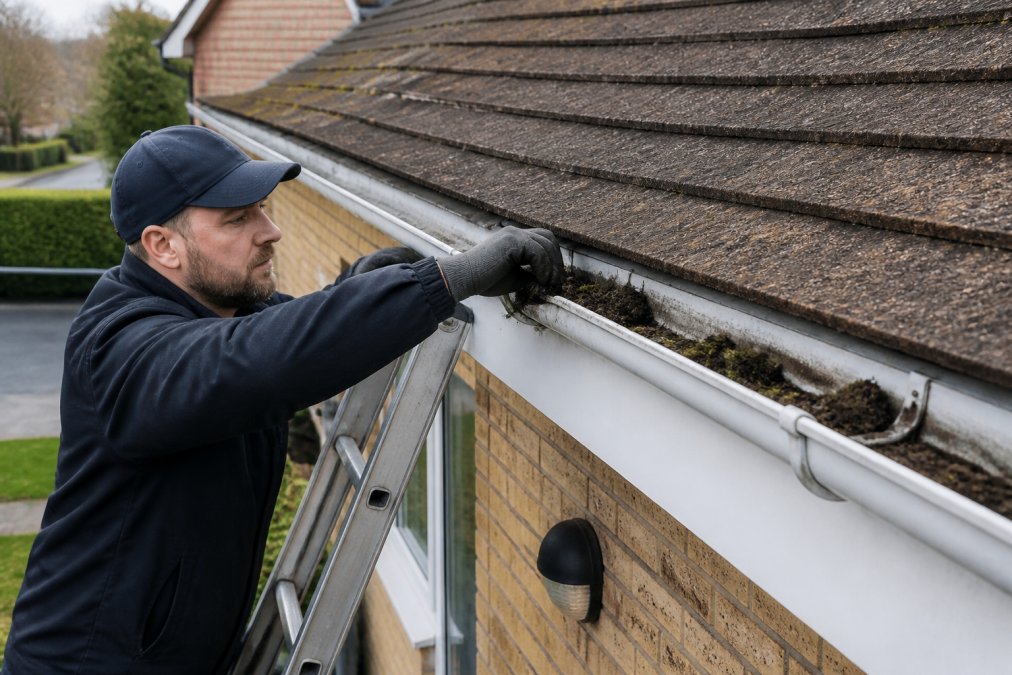
Clean gutters at least twice yearly to prevent water backing up and sitting on the roof. Check fascia boards for soft spots, cracks, or peeling paint; soft wood indicates rot requiring replacement. Ensure soffit vents are clear of debris, paint, or insulation blocking airflow.
| Maintenance Task | Frequency | What to Check |
|---|---|---|
| Clear gutters | Twice yearly (spring, autumn) | Debris, water flow, gutter attachment |
| Inspect shingles | Annually (spring) | Missing, curling, or damaged shingles |
| Check flashing | Annually (spring) | Gaps, rust, separation from roof |
| Inspect fascia and soffit | Annually (spring) | Soft spots, cracks, blocked vents |
| Professional inspection | Every 3-5 years | Overall roof condition, underlying damage |
| Roof cleaning | As needed (typically every 2-3 years) | Moss, algae, shingle granule loss |
When to Call a Professional vs DIY Assessment
Call a professional immediately if:
- Your ceiling is actively leaking or has a large water stain
- You notice sagging in your roof deck or ceiling
- You see mould growth in your loft
- Shingles are missing or severely damaged
- You’re uncomfortable working at height
DIY assessment is reasonable if:
- You’re checking gutters for debris from the ground or stable ladder
- You’re inspecting your loft for damp or water staining
- You’re documenting conditions with photos for professional review
- You’re checking soffit vents for blockages
The risk of DIY roof work is missing underlying damage. A professional roofer identifies the full extent of problems and recommends cost-effective solutions.
Pro Tip
If you’re in doubt, get a professional assessment. A free survey from a qualified roofer costs nothing and clarifies your options. Evershield Roofing offers free quotes in Buckinghamshire and London.
If you’re in doubt, get a professional assessment. A free survey from a qualified roofer costs nothing and clarifies your options. Evershield Roofing offers free quotes in Buckinghamshire and London.
Insurance Claim Documentation for Roof Damage
If roof damage is caused by a covered event, storm damage, falling tree branches, your home insurance may cover repairs. Documentation is critical for successful claims.
Take photographs immediately after discovering damage. Capture wide shots of overall damage and close-ups of specific areas: water stains, mould, damaged shingles, and debris. Include photos of affected interiors. Keep records of all expenses: emergency repairs, temporary measures, professional inspections. Get a professional assessment; your insurer may require this, and a detailed report carries more weight than your own assessment.
Notify your insurer promptly. Most policies require notification within a specified timeframe. Provide photographs, professional assessment, and receipts. Be clear about what caused the damage, as this determines coverage.
Watch Out
Delaying a claim or failing to document damage can result in denial. If you wait too long, proving the damage was caused by a specific insurable event becomes difficult. Act quickly after discovering damage.
Delaying a claim or failing to document damage can result in denial. If you wait too long, proving the damage was caused by a specific insurable event becomes difficult. Act quickly after discovering damage.
Conclusion
Signs of roof leak damage range from obvious (water dripping through your ceiling) to subtle (musty loft smells). Early detection minimises damage and repair costs. Water stains, damp patches, mould, damaged shingles, sagging ceilings, and blocked gutters all signal your roof needs attention.
If you’ve spotted any of these signs, contact Evershield Roofing for a free survey and quote. Our team has over 25 years of experience assessing roof damage in Buckinghamshire and London. We’ll identify the leak source, explain repair options, and provide a clear quote before work begins. Whether you need emergency repair, targeted fixes, or full replacement, we’re here to protect your home.
UK government guidance on home maintenance and repairs
Royal Institution of Chartered Surveyors guidance on roof surveys and inspections
British Standards Institution standards for roof design and installation
Frequently Asked Questions
What are the most common signs of roof damage in UK homes?
The most common signs include water stains on ceilings and walls, damp patches and mould growth in the loft, damaged or curling shingles, and musty odours in attic spaces. You may also notice sagging ceilings, clogged gutters, or shingle granules accumulating in downpipes. These indicators suggest water ingress and damp penetration that require prompt attention to prevent structural damage.
Can you have a roof leak and not know it?
Yes, absolutely. A roof leak can exist without visible water dripping into your home. Water may be soaking into attic insulation, the roof deck, or fascia boards before reaching your ceiling. This hidden moisture accumulation causes mould growth, wood rot, and deterioration of the underlayment. Regular loft inspections and moisture meter checks help detect leaks before they become visible problems.
How do I find a roof leak in the loft?
Start with a visual inspection of the loft on a dry day, looking for water stains, damp patches, and mould on insulation and timbers. Use a moisture meter to measure dampness levels and pinpoint affected areas. Check the roof valley, vent boots, and flashing carefully, as these are common leak sources. If you cannot locate the source, thermal imaging by a professional can reveal hidden water damage.
What should I expect to pay for roof leak repair in the UK?
Repair costs vary significantly based on leak location, extent of damage, roof material, and access difficulty. A simple flashing repair costs far less than replacing damaged underlayment or roof deck sections. Emergency repairs typically cost more than planned maintenance. Contact Evershield Roofing for a free survey and quote tailored to your specific situation, with financing options available from 0% APR.
When should I be concerned about a roof leak?
Act immediately if you notice active water dripping, large water stains, or signs of structural damage such as sagging ceilings. Even small stains warrant attention, as they indicate ongoing water ingress that will worsen over time. Musty odours, visible mould, or dampness in the loft are also urgent signals. The longer a leak persists, the more expensive repairs become due to water damage and deterioration.
What's the difference between a roof leak and roof damage?
Roof damage refers to physical deterioration such as missing shingles, cracked flashing, or damaged underlayment. A roof leak is the result of that damage allowing water to enter. You may have roof damage without an active leak if water hasn't yet penetrated, but damaged areas will eventually leak. Regular maintenance and prompt repairs prevent damage from developing into costly leaks.