Specialist Chimney Repair Services in Buckinghamshire
Expert chimney repair services in Buckinghamshire. Repointing, flashing, stack rebuilds & emergency repairs. Free quote from Evershield Roofing. Get.

Table of Contents
- What Specialist Chimney Repair Services Cover
- Signs of Chimney Structural Damage You Shouldn’t Ignore
- Chimney Stack Repair Cost UK: What Affects Your Quote
- Why HETAS Registered Chimney Sweeps Buckinghamshire Matter
- Building Regulations and Compliance for Chimney Work
- Emergency Chimney Repairs and When to Call
- Your Chimney Maintenance Checklist
- Why Choose Evershield Roofing for Your Chimney Repairs
Last Updated: August 7, 2026
What Specialist Chimney Repair Services Cover
Specialist chimney repair services Buckinghamshire address everything from minor cosmetic damage to structural failures that threaten your home’s safety. At Evershield Roofing, we’ve spent over 25 years handling chimney problems across the region, and we’ve learned that the right diagnosis separates a straightforward repair from a costly rebuild.
The services that fall under specialist chimney repair services are broader than most homeowners realise. You’re not just paying for someone to climb onto your roof and poke around. Professional chimney work involves assessing the integrity of your stack, identifying the root cause of problems, and executing repairs that last decades rather than months.
Chimney Stack Repointing and Flashing Repairs
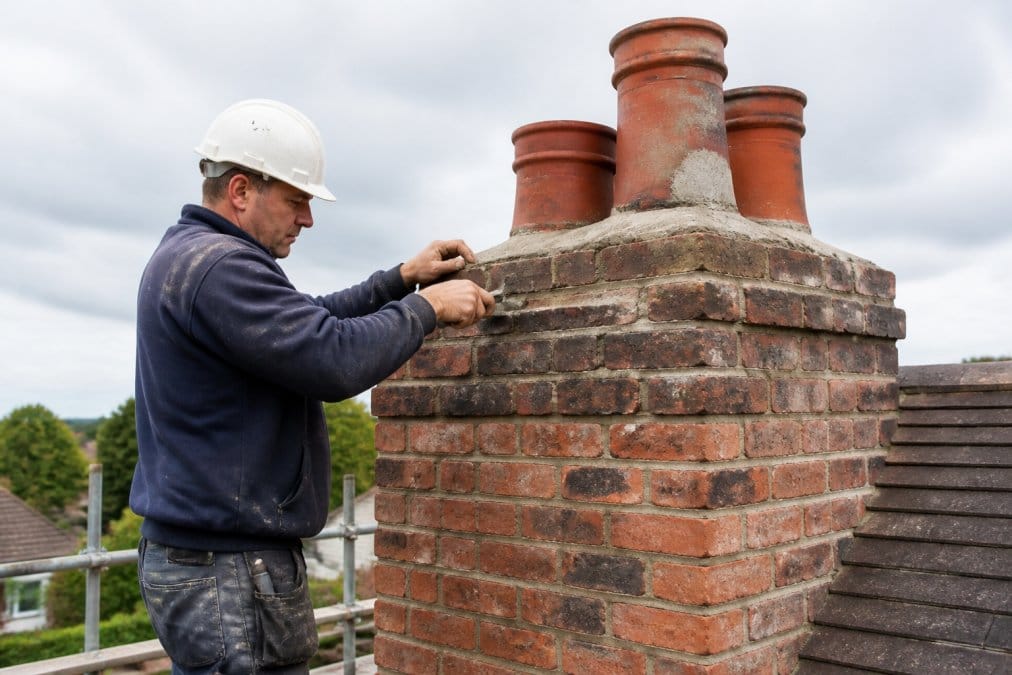
Repointing is the process of removing damaged mortar from between your chimney’s bricks and replacing it with fresh mortar. This isn’t cosmetic work, failing mortar allows water penetration, which accelerates structural failure.
The mortar joints in your chimney stack face constant exposure to weather, freeze-thaw cycles, and acidic gases from combustion. Over time, these joints crack and crumble. When water gets behind the brickwork, it causes spalling (where the brick face breaks away) and internal deterioration that spreads quickly.
Lead flashing, the waterproof seal where your chimney meets the roof, is equally critical. Flashing failures account for a significant portion of chimney leaks. The lead can crack from movement, corrode from exposure, or simply work loose as the roof settles. Replacing lead flashing with Code 4 or Code 5 lead (the standards for UK residential work) is essential for long-term weatherproofing.
Professional repointing uses weather-resistant mortar. For period properties, lime mortar is often specified to match the original material and allow the masonry to breathe. Getting this wrong creates a trapped moisture problem that damages the brickwork from inside.
Chimney Lining, Cowl Installation, and Full Rebuilds
Chimney lining protects the flue from corrosion and improves draft efficiency. Older chimneys often lack a proper lining, which means acidic flue gases attack the brickwork directly. Modern flue liners (typically stainless steel or ceramic) create a smooth, sealed passage for gases and condensation.
Cowl installation, fitting a chimney pot or cap at the top, serves multiple purposes. It prevents rain from entering the flue, stops birds and debris from nesting, and reduces downdraught problems that cause smoke to enter your home. The wrong cowl or improper installation can actually worsen draft issues, which is why this work requires specialist knowledge.
Full chimney rebuilds become necessary when structural damage is too extensive for repair. This might mean rebuilding the top section of the stack, or in severe cases, the entire chimney from the roof line down. Rebuilds must comply with Building Regulations and typically require planning permission from your local authority.
Signs of Chimney Structural Damage You Shouldn’t Ignore
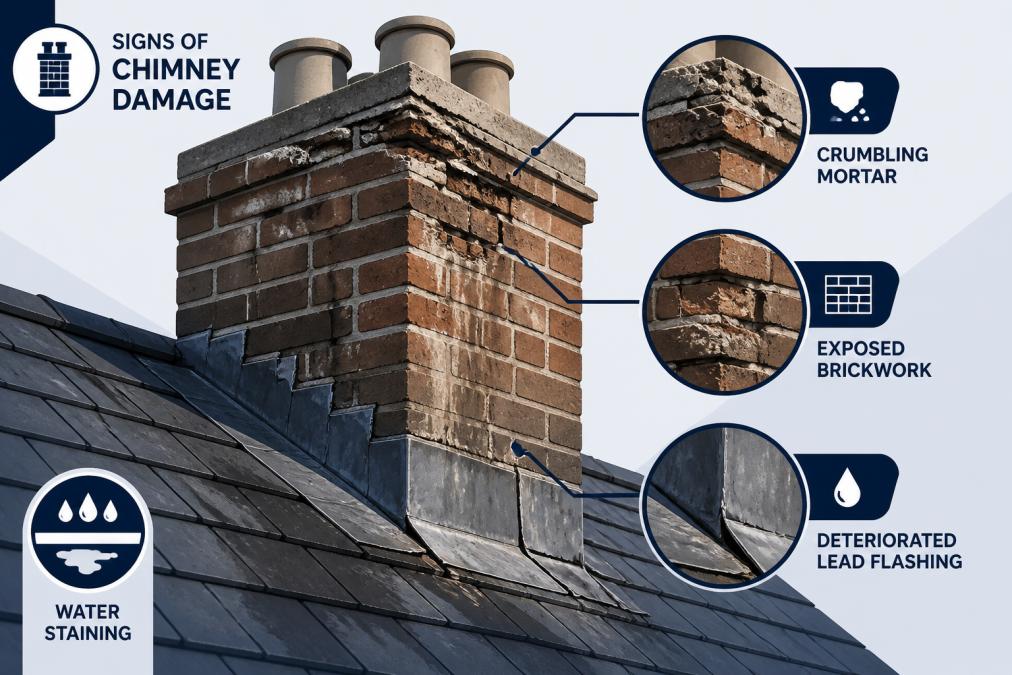
Visible damage to your chimney stack is your first warning sign. Crumbling mortar, missing bricks, spalling brickwork, or gaps between bricks indicate that water has already breached the exterior. Once you see this, the problem extends deeper than the surface.
Leaking chimneys present differently depending on where the failure is. Water staining around your fireplace, damp patches on the chimney breast inside your home, or discolouration on the exterior brickwork all suggest active water ingress. The longer you leave this unaddressed, the more the moisture spreads into surrounding timber and insulation.
Flashing failures often go unnoticed until significant damage occurs. Look for water stains on the roof around the base of the chimney, or check your loft space for damp or mould growth near the chimney penetration. Flashing leaks can saturate insulation and weaken roof timbers before you realise there’s a problem.
Tilting or leaning chimneys indicate structural movement. This is serious. A chimney that’s visibly out of plumb has lost its structural integrity and poses a safety risk. High winds or frost can cause sudden failure, potentially sending bricks through your roof or into your garden.
Efflorescence, white powder deposits on the brickwork, shows that salts are being drawn through the masonry by moisture. This is a sign of water penetration and ongoing deterioration inside the stack.
(/chimney-repairs-cost/) Structural Damage You Shouldn’t Ignore]
Watch Out
If you notice loose bricks, significant cracks, or a visibly tilting chimney, do not delay. These indicate imminent structural failure. Contact a specialist immediately, waiting weeks or months can turn a repair into an emergency.
If you notice loose bricks, significant cracks, or a visibly tilting chimney, do not delay. These indicate imminent structural failure. Contact a specialist immediately, waiting weeks or months can turn a repair into an emergency.
Chimney Stack Repair Cost UK: What Affects Your Quote
Several factors determine the final cost of chimney stack repair work in the UK. Understanding these helps you evaluate quotes fairly and avoid underestimating your budget.
Access and scaffolding is often the largest variable cost. If your chimney is easily accessible from a roof ladder, costs are lower. If the surveyor needs to erect full scaffolding, that adds significantly. A three-storey terraced house in a tight urban setting costs more to access than a detached property with clear roof access.
The extent of damage changes everything. A minor repointing job affecting the top metre of stack is straightforward. Full rebuilds of 3+ metres of chimney are substantially more expensive and time-consuming. Specialists need to assess whether repair is viable or whether rebuilding is the only lasting solution.
Material choices affect price. Standard mortar costs less than lime mortar for period properties. Lead flashing replacement uses premium materials. Chimney liners, cowls, and pots vary in quality and specification.
Location within Buckinghamshire influences labour costs. Work in High Wycombe, Aylesbury, or Beaconsfield may differ slightly due to local market rates, though specialist contractors typically charge consistently across the region.
Planning permission and Building Regulations requirements add time and cost. Full rebuilds usually require consent from your local authority. Your surveyor should clarify this during the initial assessment.
Key Takeaway
The cheapest quote is rarely the best value. A specialist who takes time to diagnose the root cause and explain what’s actually needed often costs more upfront but delivers lasting results. Budget-conscious decisions on chimney work often lead to repeat repairs within 3-5 years.
The cheapest quote is rarely the best value. A specialist who takes time to diagnose the root cause and explain what’s actually needed often costs more upfront but delivers lasting results. Budget-conscious decisions on chimney work often lead to repeat repairs within 3-5 years.
Why HETAS Registered Chimney Sweeps Buckinghamshire Matter
HETAS registration is the UK’s mark of competence for heating engineers and chimney specialists. It’s not optional, it’s the standard that separates qualified professionals from unvetted tradespeople.
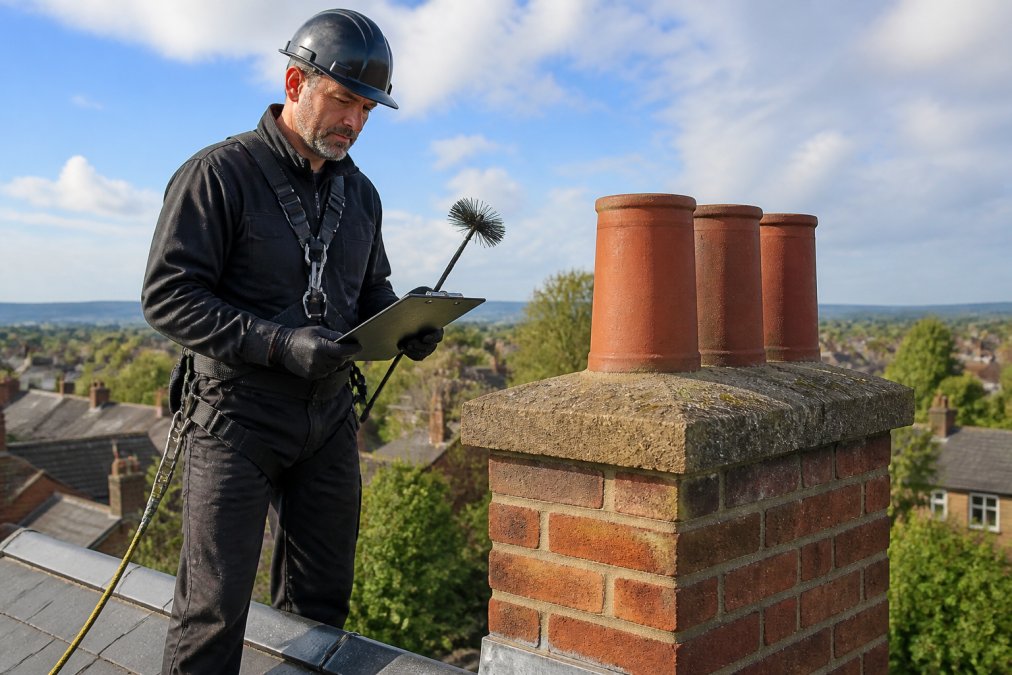
HETAS-registered sweeps have completed formal training, passed competency assessments, and commit to ongoing professional development. They understand flue integrity, carbon monoxide safety, and the specific requirements for solid fuel appliances. This matters because improper chimney work can create dangerous conditions, inadequate draft, carbon monoxide leaks, or fire risks.
When you hire a HETAS-registered specialist for chimney work, you’re getting someone who knows Building Regulations compliance. They understand what inspections are required, what certificates need to be issued, and how to document the work properly. If you ever sell your property, having certified work on record protects you from liability.
Insurance companies often require HETAS certification for chimney work. If you have a claim related to chimney failure and the work wasn’t done by a registered professional, your claim may be denied. This alone justifies the slightly higher cost of hiring a certified specialist.
The Institute of Chimney Sweeps is another recognised accreditation body in the UK. Sweeps holding this qualification have met rigorous standards for technical knowledge and customer service. When searching for chimney repair services Buckinghamshire, look for these credentials explicitly.
Building Regulations and Compliance for Chimney Work
Any chimney work affecting the structure or flue system must comply with UK Building Regulations. This isn’t bureaucracy, it’s a safety requirement that protects your home and future buyers.
Full chimney rebuilds require Building Regulations approval. Your contractor should submit plans before work begins and arrange for inspections at key stages. Once complete, they issue a completion certificate, which is essential documentation for your property records.
Chimney lining work falls under Building Regulations if it involves the flue system. The liner must be properly installed, sized correctly for your appliance, and certified. Improper lining can create condensation problems or inadequate draft.
Planning permission is required for chimney work that’s visible from the street in conservation areas or listed buildings. If you live in such an area, check with your local planning authority before committing to repairs. Competent person schemes (like HETAS) often allow registered professionals to self-certify certain work, avoiding lengthy Building Control approval timelines. This is another reason hiring a certified specialist saves time and hassle.
Pro Tip
Before accepting a quote, ask your contractor whether Building Regulations approval is required and who’s responsible for obtaining it. Reputable specialists will clarify this upfront and include it in their scope. If a contractor glosses over this, it’s a red flag.
Before accepting a quote, ask your contractor whether Building Regulations approval is required and who’s responsible for obtaining it. Reputable specialists will clarify this upfront and include it in their scope. If a contractor glosses over this, it’s a red flag.
Emergency Chimney Repairs and When to Call
Some chimney problems can’t wait for a scheduled appointment. Knowing when to treat something as an emergency saves your home from serious damage.
Leaking chimneys during heavy rain need urgent attention. If water is actively pouring into your home, the damage accelerates by the hour. Temporary measures (tarps, buckets, dehumidifiers) buy time, but you need a specialist assessment immediately. Water damage to ceilings, walls, and insulation becomes exponentially more expensive the longer it continues.
Loose or falling bricks are a safety emergency. Bricks falling from height can cause serious injury or damage. If you see bricks coming loose from your chimney stack, keep people away from the area and contact a specialist immediately.
Chimney fires, where creosote buildup ignites inside the flue, require emergency response. You’ll smell burning, see flames at the top of the chimney, or hear loud crackling sounds. Call the fire service first, then contact a specialist to assess flue damage once the immediate danger is past.
Structural movement (tilting or leaning) is a serious concern. If your chimney is visibly out of plumb or you notice new cracks forming, this indicates movement that could lead to collapse. This warrants urgent professional assessment.
Many specialist contractors in Buckinghamshire offer 24/7 emergency call-out services. Evershield Roofing provides emergency roof repair availability, and we can mobilise quickly for urgent chimney issues that affect your roof’s integrity.
Your Chimney Maintenance Checklist
Regular maintenance prevents small problems from becoming expensive repairs. This checklist helps you stay on top of chimney health.
| Maintenance Task | Frequency | What to Look For |
|---|---|---|
| Visual inspection from ground | Annually (spring) | Loose bricks, crumbling mortar, damaged flashing |
| Chimney sweeping | Annually or per appliance use | Creosote buildup, obstructions, flue integrity |
| Professional survey | Every 3-5 years | Structural movement, internal deterioration, water ingress |
| Flashing inspection | After storms | Gaps, lifting, corrosion, water stains inside |
| Cowl and pot check | Annually | Damage, blockages, movement, bird nests |
| Lime mortar repointing | As needed (typically 15-25 years) | Crumbling joints, spalling brickwork |
Spring inspection: After winter weather, check for new damage. Freeze-thaw cycles cause rapid deterioration, so spring is the ideal time to catch problems early.
Chimney sweeping: If you use your fireplace or stove regularly, annual sweeping is essential. Creosote buildup is a fire hazard and blocks proper draft. Even unused chimneys benefit from periodic cleaning to remove debris and assess flue condition.
After storms: High winds and heavy rain test your chimney’s integrity. If you’ve experienced severe weather, a visual inspection from the ground is worth doing. If you spot anything concerning, get a professional assessment.
Gutter maintenance: Clean gutters prevent water from backing up and saturating the area around your chimney. This indirect maintenance protects your chimney from unnecessary water exposure.
Best For
Homeowners in Buckinghamshire with regular fireplace or stove use should prioritise annual sweeping and spring inspections. Properties with unused chimneys can extend inspection intervals to every 3-5 years unless visible damage appears.
Homeowners in Buckinghamshire with regular fireplace or stove use should prioritise annual sweeping and spring inspections. Properties with unused chimneys can extend inspection intervals to every 3-5 years unless visible damage appears.
Why Choose Evershield Roofing for Your Chimney Repairs
Evershield Roofing brings 25 years of experience to specialist chimney repair services Buckinghamshire. We understand the specific challenges of the region’s properties, from period terraced houses in High Wycombe to modern detached homes across Aylesbury and Beaconsfield.
Our approach starts with a thorough free survey and quote. We don’t rush diagnosis. We explain what we find, why it matters, and what options exist. If repair is viable, we specify exactly what work is needed and why. If rebuilding is necessary, we’re clear about that too.
We’re fully insured and our team receives top-quality training in current industry standards. We keep up-to-date with Building Regulations changes and work closely with local authorities on planning and compliance matters. When you hire Evershield Roofing, you’re getting a contractor who handles the paperwork and ensures everything is done to standard.
We offer finance options from 0% APR, which helps when chimney work is urgent but your budget is tight. Emergency roof repair availability means we can respond quickly when weather damage affects your chimney or roof.
Our reputation for dependability and competitive pricing is built on delivering what we promise. There’s always an expert available at the other end of the phone to answer your questions or address concerns. We work closely with you from planning through completion, so you know exactly what to expect.
Frequently Asked Questions
How do I know if my chimney needs specialist repair?
Watch for crumbling mortar, loose brickwork, water stains inside your home near the chimney, or visible gaps in the flashing where the chimney meets the roof. If you notice a smoky smell indoors, damp patches on chimney breasts, or debris falling into the fireplace, these are clear signs you need specialist assessment. A professional survey, often free with established chimney repair services, will identify issues before they become structural problems.
What is the typical chimney stack repair cost UK?
Costs vary significantly based on the extent of damage and access. Minor repointing may cost less than major work, whilst full chimney stack rebuilds are more expensive. Factors affecting price include scaffolding requirements, brick matching, flashing replacement, and whether lime mortar is needed for period properties. Request a free quote from a local specialist to understand costs for your specific situation. Many offer fixed-price quotes after a survey.
Why should I hire HETAS registered chimney sweeps in Buckinghamshire?
HETAS registration ensures the sweep meets strict safety and competency standards set by the Health and Safety Executive. A HETAS registered professional understands flue integrity, carbon monoxide safety, and compliance with Building Regulations. They can identify issues that unregistered sweeps might miss and provide documentation of work completed, which is important for insurance and property sales in the UK.
Do I need building regulations approval for chimney repairs?
Yes, significant chimney work often requires Building Regulations approval in the UK. This includes full rebuilds, structural repairs, flue lining, and stove installations. Minor maintenance like repointing or flashing repair may not require approval, but it's best to check with your local council or ask your specialist. Approved work protects your property value and ensures work meets safety standards. Evershield Roofing handles the necessary paperwork with local authorities.
If you’re seeing signs of chimney damage in Buckinghamshire, don’t wait for the problem to worsen. Get your free roofing quote today from Evershield Roofing. We’ll assess your chimney’s condition, explain what’s needed, and give you a clear, competitive quote with no hidden costs. Contact us now to arrange your specialist survey, our team is ready to help protect your home.