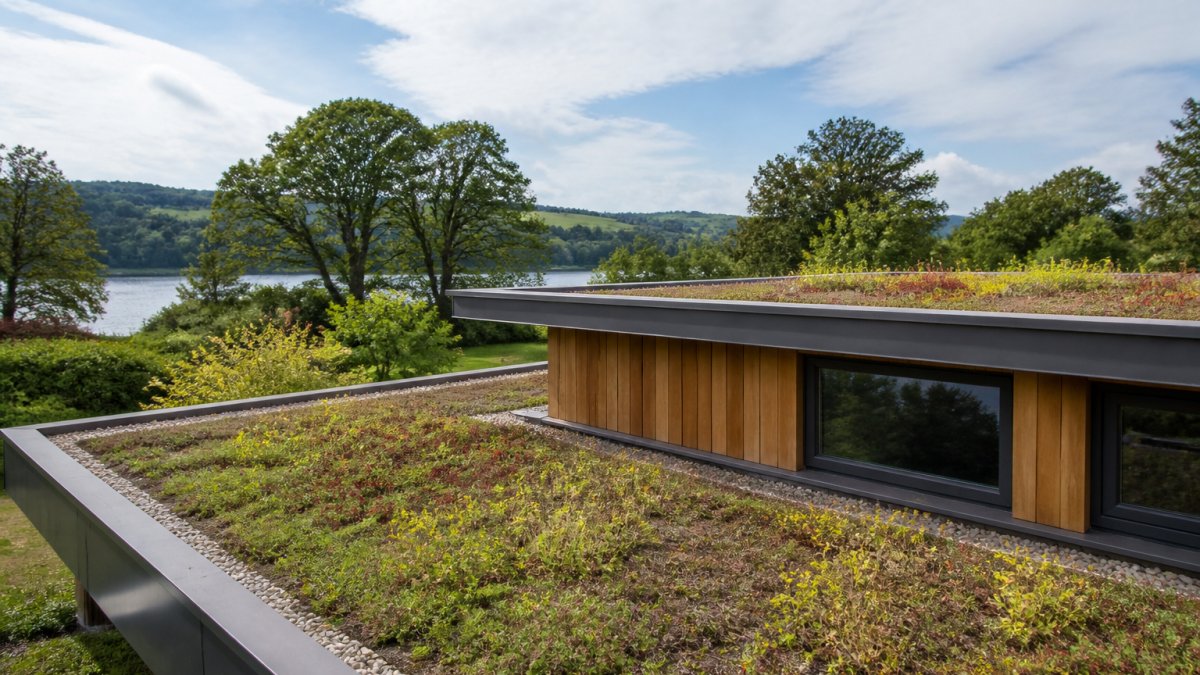
Long Term Savings of Sustainable Roof Systems
Discover the long term savings of sustainable roof systems, from lower energy bills to reduced repair costs. Make an informed choice for your property.

Table of Contents
- How Sustainable Roof Systems Cut Costs Over Decades
- The difference between upfront cost and lifetime cost
- Green Roof Costs UK: What You Pay and What You Get Back
- Energy Savings from Green Roofs: How Much Can You Realistically Expect?
- Green Roof Lifespan and Maintenance: The Long-Term Picture
- Green Roof Benefits and Disadvantages: A Balanced Look at Long-Term Value
- How to Work Out Your Payback Period
- Frequently Asked Questions
Last Updated: October 13, 2026
How Sustainable Roof Systems Cut Costs Over Decades
A sustainable roof is a roofing system designed to reduce environmental impact and running costs over its full service life, typically through living planted layers, high-albedo reflective surfaces, or long-life recyclable materials. At Evershield Roofing, we have spent 25 years installing and maintaining roofs across Buckinghamshire, and the pattern is consistent: the homeowners who save the most are the ones who stop comparing quotes on day-one price alone. Below, we break down the long term savings of sustainable roof systems using payback maths you can run yourself, plus the maintenance realities most guides leave out.
The distinction that matters is between upfront cost and lifetime cost. Upfront cost is the invoice you pay the installer. Lifetime cost adds energy use, maintenance visits, repair frequency, and how many years the roof lasts before replacement.
A cheap roof replaced twice in 40 years usually costs more than a better system installed once. That is the entire argument for sustainable roofing in one sentence.
Key Takeaway
The cheapest quote is almost never the cheapest roof. Compare total cost across the full service life, not the deposit you pay this month.
The cheapest quote is almost never the cheapest roof. Compare total cost across the full service life, not the deposit you pay this month.
The difference between upfront cost and lifetime cost
Lifetime cost is the sum of installation, energy, maintenance, and eventual replacement spread across every year the roof is in service. Upfront cost captures only the first of those four figures.
A conventional mineral felt flat roof might need replacing well before a properly specified sustainable alternative. Each replacement resets the clock and the invoice. Add scaffolding, disposal of old materials, and any interior damage from a leak, and the gap widens further.
We recommend clients write four numbers on one page before deciding:
- Installation cost
- Expected annual energy effect
- Annual maintenance allowance
- Expected years of service
Divide total lifetime cost by years of service and you have a comparable annual figure. It is a blunt method, but it exposes quotes that look cheap and are not.
Green Roof Costs UK: What You Pay and What You Get Back
Green roof costs in the UK depend on the system type, structural requirements, and access, so we quote each property individually rather than publishing a flat figure. What you get back is measurable in three places: reduced heating and cooling demand, a longer waterproofing lifespan because the membrane is shielded from UV and thermal shock, and, on larger commercial buildings, stormwater attenuation that can reduce drainage loads.
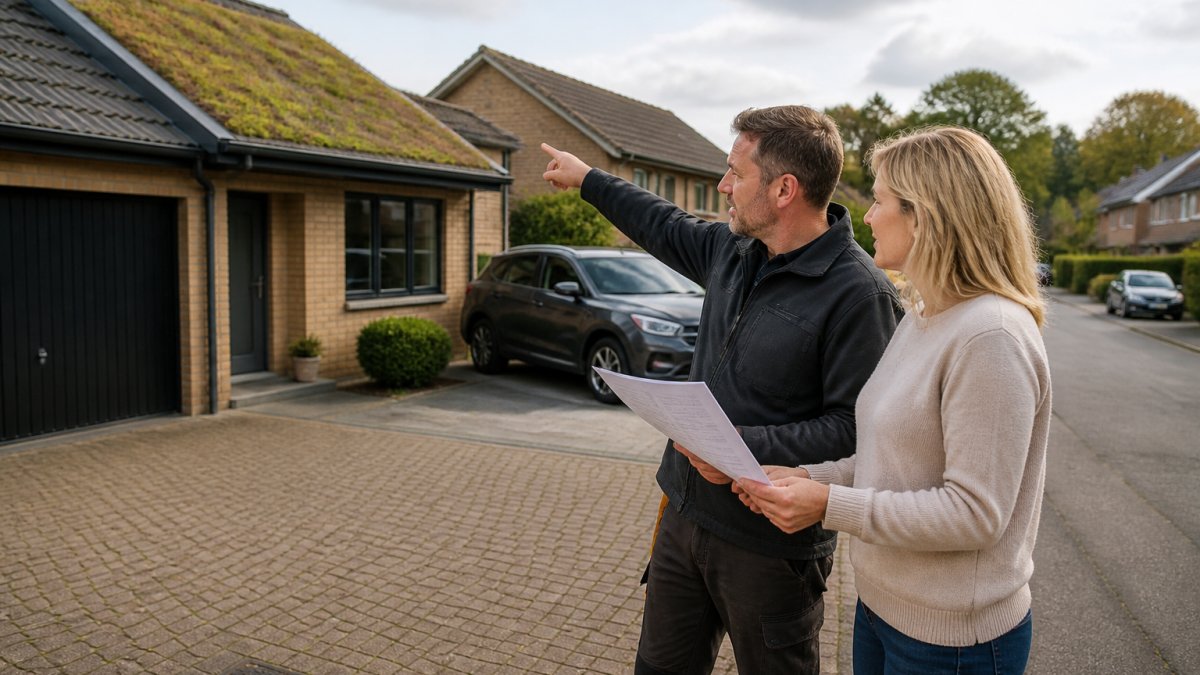
Extensive sedum systems, the lightweight type most suitable for domestic roofs, sit at the lower end. Intensive planted roofs, which support shrubs and deeper soil, sit considerably higher because they need structural assessment first. The honest answer on cost is that it varies with pitch, access, and whether the existing structure can carry the additional load. For current figures, Evershield Roofing’s quote process sets out how we survey and price a green roof, and the UK Green Building Council guidance on green infrastructure explains the wider performance case.
Energy Savings from Green Roofs: How Much Can You Realistically Expect?
Energy savings from green roofs are real but modest on a typical home, and anyone promising dramatic reductions is overselling. The soil and plant layer adds insulation and thermal mass, which smooths temperature swings and reduces peak heat loss in winter and heat gain in summer.
The effect is greatest on flat or low-pitch roofs and on buildings with poor existing insulation. If your loft is already well insulated, the marginal gain from a green roof shrinks considerably.
Where the savings become material is on commercial buildings with large roof areas, air conditioning loads, and long occupancy hours. In those settings, reduced cooling demand compounds year after year.
For domestic clients in Buckinghamshire, we frame energy savings as a supporting benefit, not the headline. The stronger financial case sits in lifespan and maintenance.
Green Roof Lifespan and Maintenance: The Long-Term Picture
Green roof lifespan and maintenance is where sustainable systems genuinely pull ahead. The growing layer shields the waterproof membrane beneath from direct sunlight, hail, and the daily expansion and contraction that ages conventional coverings.
That protection can extend membrane life well beyond what an exposed roof achieves, though the exact figure depends on the membrane specified and the quality of installation. We never quote a number without a survey.
Maintenance does not disappear. It changes shape:
- Inspect drainage outlets twice a year, typically spring and autumn
- Clear debris, moss, and organic residue from outlets and edges
- Check vegetation health and replant bare patches
- Have the membrane inspected periodically by a qualified roofer
Watch Out
Blocked drainage is the most common cause of green roof failure we see. Standing water on a planted roof adds load and finds any weakness in the membrane. Book a drainage check before winter, not after the first leak.
Blocked drainage is the most common cause of green roof failure we see. Standing water on a planted roof adds load and finds any weakness in the membrane. Book a drainage check before winter, not after the first leak.
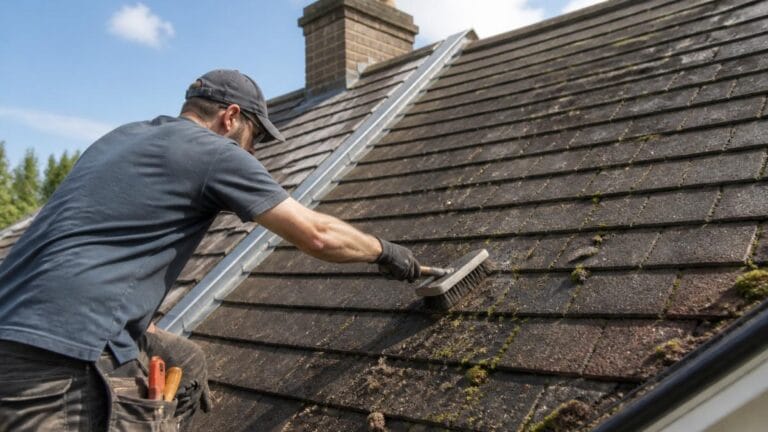
Homeowners dealing with moss buildup on existing roofs should treat that as a maintenance signal, not a cosmetic issue. Evershield Roofing’s roof cleaning service covers moss and organic residue removal, and the UK Centre for Ecology & Hydrology on green roof performance publishes research on how planted roofs behave over time.
Green Roof Benefits and Disadvantages: A Balanced Look at Long-Term Value
Green roof benefits and disadvantages need weighing honestly, because a sustainable roof is not right for every property.
Get Your Free Roofing Quote Today! →
Benefits:
- Longer membrane life through UV and thermal protection
- Reduced peak energy demand
- Improved stormwater management
- Habitat creation and visual improvement
- Potential planning and sustainability credit on commercial schemes
Disadvantages:
- Higher upfront cost than conventional coverings
- Structural assessment required before installation
- Ongoing maintenance obligation that cannot be skipped
- Not suitable for every pitch or every existing structure
- Repairs can be more involved because the growing layer must be lifted
When a sustainable roof makes financial sense
A sustainable roof makes financial sense when you intend to stay in the property long enough for lifespan and energy gains to outweigh the higher installation cost. That is usually a decade or more.
It also makes sense on commercial buildings where cooling loads are high and roof access is straightforward. On a short-hold property, or where the structure cannot carry the load without reinforcement, a conventional high-performance roof is the better financial decision. We tell clients that plainly rather than selling them a system that will not pay back.
For flat roofs specifically, Evershield Roofing’s flat roofing service covers the systems we install and how we assess load capacity before recommending a planted option. If you are searching for a roofer near me in Buckinghamshire, a free survey is the fastest way to get a property-specific answer.
How to Work Out Your Payback Period
Payback period is the number of years it takes for cumulative savings to equal the extra cost of the sustainable system over a conventional alternative. The formula is simple:
Payback years = (Sustainable installation cost − Conventional installation cost) ÷ Annual savings
Annual savings combine three streams: energy reduction, maintenance avoided, and replacement deferred. Work through this checklist with your own figures:
- Get both quotes: sustainable system and conventional equivalent
- Subtract to find the cost premium
- Estimate annual energy saving (ask your installer for a realistic range)
- Estimate annual maintenance cost for each option
- Divide the replacement cost of the conventional roof by its expected lifespan
- Add the three annual saving streams together
- Divide the premium by total annual savings
| Input | Conventional roof | Sustainable roof |
|---|---|---|
| Installation cost | Lower | Higher |
| Annual energy effect | Baseline | Reduced peak demand |
| Annual maintenance | Periodic repairs | Scheduled inspections |
| Expected service life | Shorter | Longer |
| Replacement frequency | More often | Less often |
| Payback period | Immediate, then recurring | Longer term, then lower |
If the payback lands inside the time you plan to own the property, the sustainable option wins. If it does not, be honest about that.
A roof decision made on day-one price alone tends to cost more by year fifteen. If you want the numbers for your own property rather than a generic range, Evershield Roofing provides free surveys and quotes, finance available from 0% APR, and full insurance cover on every job. We handle green roofs, flat roofs, roof repairs, guttering, and chimney repairs across Buckinghamshire, and we answer the phone when something goes wrong. Get your free roofing quote today and we will tell you honestly whether a sustainable system pays back on your property.
Frequently Asked Questions
Do sustainable roof systems save money in the long term?
Yes, though the savings build over time rather than appearing immediately. A sustainable roof typically lasts longer than a standard felt or tile roof, which delays the cost of replacement. Lower energy bills, reduced rainwater runoff and fewer emergency repairs all add up. The exact savings depend on the roof type, your property’s insulation, and local weather exposure. A professional survey will give you a clearer picture for your specific home.
How much does a green roof cost in the UK?
Green roof costs in the UK vary widely depending on the system type, roof size, structural requirements and whether you need additional waterproofing or reinforcement. Extensive sedum systems generally cost less than intensive planted roofs. Because every property is different, the most accurate figure comes from a survey and written quote. Evershield Roofing offers free surveys across Buckinghamshire, so you can get a clear price before committing.
How long does a green roof last compared with a conventional roof?
A green roof’s waterproofing membrane is shielded from UV radiation, temperature swings and physical damage by the layers above it, so it often outlasts a conventional roof covering. While a standard felt flat roof may need replacing within 15 to 20 years, a well-installed green roof system can extend the membrane’s life significantly. Regular checks on drainage outlets and vegetation keep it performing at its best.
Can a green roof reduce heating and cooling costs?
Green roofs add insulation and thermal mass, which slows heat loss in winter and reduces solar gain in summer. The effect is most noticeable on flat roofs and on properties with limited loft insulation. Savings vary by building, but many homeowners report a measurable drop in energy use after installation. Combining a green roof with proper loft insulation and ventilation gives the best results.
What maintenance does a sustainable roof need?
Sustainable roofs need less maintenance than many people expect, but they are not maintenance-free. Green roofs require occasional weeding, checking drainage outlets and trimming vegetation once or twice a year. Solar panels need cleaning and inverter checks. The waterproofing layer beneath should be inspected periodically, especially after severe storms. Evershield Roofing offers ongoing maintenance plans to keep your roof in good condition.
Which sustainable roofing systems are suitable for UK homes?
Green roofs, solar panel arrays, and high-performance membranes such as EPDM or GRP are all suitable for UK homes. Flat roofs are ideal for sedum green systems and solar mounts. Pitched roofs can take solar panels or recycled slate alternatives. Your choice depends on roof pitch, structural capacity and budget. A survey will confirm what your property can support.
How do you calculate the payback period for a green roof?
Add up the total installation cost, then estimate annual savings from energy bills, reduced drainage charges and avoided repair costs. Divide the upfront cost by the annual saving to get the number of years to break even. Most green roofs have a payback period of several years, after which the savings are effectively profit. Keep in mind that a longer-lasting roof also defers the next replacement cost.
Can sustainable roofing help manage rainwater and reduce drainage costs?
Yes. Green roofs absorb and slow rainwater runoff, which reduces the load on gutters, downpipes and surface water drainage. In areas with combined sewer systems, this can lower the risk of flooding and may reduce surface water drainage charges. Some water companies offer incentives for properties that manage runoff on site. Pairing a green roof with clean, well-maintained gutters gives the best drainage performance.