Best Roofing Materials for Buckinghamshire Homes 2026
Find the best roofing materials for Buckinghamshire homes in 2026. Compare clay, slate, concrete and metal options for durability, cost and planning. Get.

Table of Contents
- Roofing Materials Comparison for Buckinghamshire Homes
- Clay Tiles: Traditional Choice for Period Properties
- Concrete Tiles: Cost-Effective and Durable
- Natural Slate: Longevity and Aesthetic Appeal
- Metal Roofing: Modern and Lightweight
- Flat Roofing Options: Rubber and Insulated Panels
- Roof Replacement Costs Buckinghamshire: What to Expect
- Roofing Planning Permission UK: Rules for Buckinghamshire Homes
- Roof Maintenance Tips for Buckinghamshire Homes
- Frequently Asked Questions
Last Updated: September 24, 2026
Roofing Materials Comparison for Buckinghamshire Homes
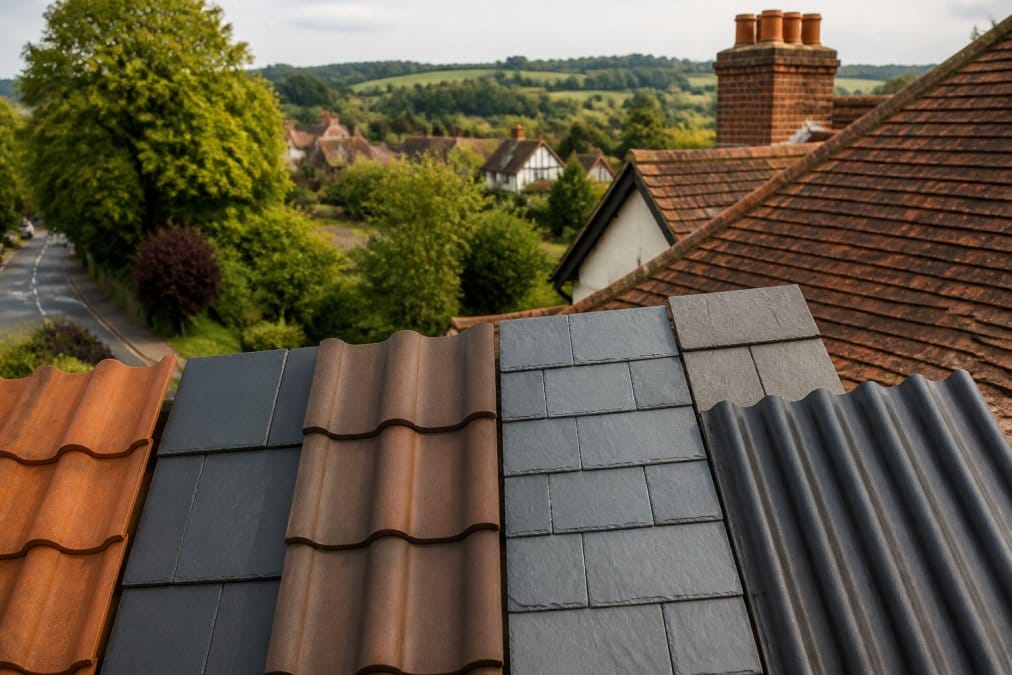
Choosing the best roofing materials for Buckinghamshire homes comes down to matching material to property type, planning constraints and budget. Clay and concrete tiles dominate pitched roofs, natural slate suits period and listed buildings, and metal or rubber systems work best on flat roofs and modern extensions.
This guide from Evershield Roofing covers what actually matters: how each material performs in local weather, what it costs relative to the alternatives, and which planning rules apply. With 25 years working on roofs across the county, we have seen which materials last and which ones homeowners regret.
The comparison below summarises the six main options before we examine each in detail.
| Material | Best For | Lifespan | Relative Cost | Maintenance |
|---|---|---|---|---|
| Clay tiles | Period properties, conservation areas | Very long | High | Low |
| Concrete tiles | New builds, budget replacements | Long | Low to mid | Low |
| Natural slate | Listed buildings, luxury homes | Longest | Highest | Very low |
| Metal | Contemporary extensions | Long | Mid to high | Very low |
| Rubber (EPDM) | Flat roofs | Long | Mid | Low |
| Insulated panels | Eco-homes, large flat roofs | Long | Mid to high | Very low |
Clay Tiles: Traditional Choice for Period Properties
Clay tiles remain the default choice for older Buckinghamshire housing stock, and for good reason. They weather gracefully, hold their colour for decades and satisfy conservation officers who expect traditional materials on period properties.
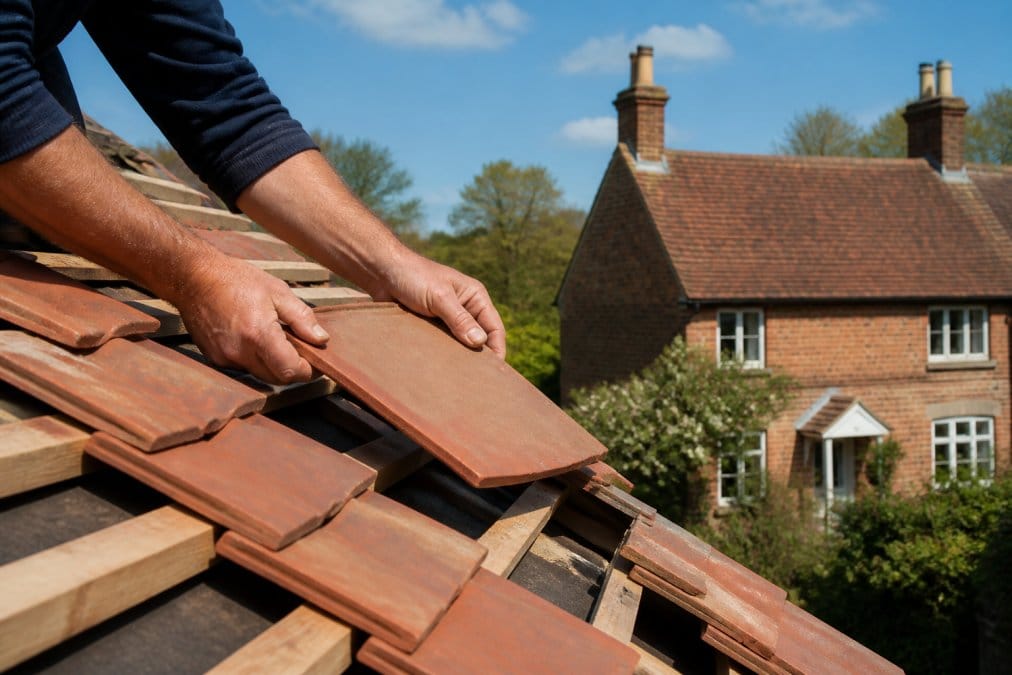
Clay plain tiles meet BS EN 1304, the British standard for clay roofing products, so you can verify compliance before ordering. The trade-off is cost. Clay costs more to buy and more to install than concrete because the tiles are smaller and heavier to lay.
Where clay wins: any home in a conservation area, a listed building, or a street where neighbouring roofs are already clay. Where it loses: tight budgets and large roof areas where the per-tile cost adds up quickly.
Concrete Tiles: Cost-Effective and Durable
Concrete tiles are the workhorse of UK roofing. They cost less than clay, come in profiles that mimic traditional designs, and stand up well to wind-driven rain.
Concrete ranges are tested for UK weather conditions, with interlocking designs that speed up installation. A 15-year guarantee on structural integrity is typical from major manufacturers.
The honest drawback is weight. Concrete tiles are heavier than clay or slate, so older roof structures sometimes need reinforcement before a swap. If your home was built before the 1970s, get the timbers checked first.
Pro Tip
Ask your roofer to confirm the tile’s wind-load rating for your postcode. Exposed ridge lines in the Chilterns take more wind uplift than sheltered valley streets, and a tile rated for the wrong zone is a warranty problem waiting to happen.
Ask your roofer to confirm the tile’s wind-load rating for your postcode. Exposed ridge lines in the Chilterns take more wind uplift than sheltered valley streets, and a tile rated for the wrong zone is a warranty problem waiting to happen.
Natural Slate: Longevity and Aesthetic Appeal
Natural slate is the longest-lasting roof covering available for pitched roofs, often exceeding 80 years with minimal attention. It is also the most expensive, which is why it appears mainly on high-end renovations and listed buildings.
Slate has low water absorption and natural frost resistance, qualities that matter through repeated freeze-thaw cycles. Slate is also non-combustible, which can help with building regulation compliance on some projects.
The catch is installation. Slate demands specialist skill, and a poorly fixed slate roof fails faster than a cheap concrete one. Always check that your contractor has genuine slate experience before signing.
Metal Roofing: Modern and Lightweight
Metal roofing has moved well beyond agricultural sheds. Metal roofing offers a lightweight, fully recyclable covering that suits contemporary extensions and architect-designed homes.
The main advantages are speed and structural load. Metal panels go on fast and weigh a fraction of tiles, so they rarely require reinforcement of existing timbers. Modern finishes hold their colour well and need almost no maintenance.
One practical warning: metal is noisy in heavy rain unless properly insulated. On a habitable room, specify a build-up with acoustic insulation, not just thermal.
Flat Roofing Options: Rubber and Insulated Panels
Flat roofs need different thinking to pitched ones. Two systems dominate current best practice: EPDM rubber and insulated metal panels.
EPDM rubber is a single-ply membrane that resists standing water, UV and frost. It suits garages, extensions and bay windows, and it handles the thermal movement that cracks older felt roofs.
Insulated panels, such as those from Kingspan, combine the waterproof layer and thermal insulation in one board. They comply with Part L of the UK Building Regulations, which governs energy efficiency, and they install quickly over large areas.
Standing water is the enemy of any flat roof. If water sits for weeks after rain, the falls are wrong and the covering will fail early regardless of material.
Roof Replacement Costs Buckinghamshire: What to Expect
Roof replacement costs in Buckinghamshire depend on roof size, pitch, access, material choice and whether the timbers need work. No honest roofer quotes a figure without a survey, and any company that does should be treated with caution.
Broadly, the material drives the largest share of the cost. Concrete sits at the affordable end, clay in the middle, and natural slate at the top. Scaffolding, disposal of old materials and any structural repairs sit on top of the tile price.
Watch Out
Never accept a full replacement quote given over the phone or from a photo. Access, chimney condition and timber rot are invisible until someone is on the roof, and a quote built without a survey almost always grows once work starts.
Never accept a full replacement quote given over the phone or from a photo. Access, chimney condition and timber rot are invisible until someone is on the roof, and a quote built without a survey almost always grows once work starts.
Evershield Roofing provides free surveys and quotes, so you get a figure based on what is actually up there, plus finance from 0% APR if you would rather spread the cost.
Roofing Planning Permission UK: Rules for Buckinghamshire Homes
Most roof replacements do not need planning permission, but the exceptions catch homeowners out. Under permitted development rights, you can usually re-roof in a like-for-like material without an application.
Problems arise when you change the material, alter the roof shape, or the property sits in a conservation area or is listed. In those cases, you need consent, and listed buildings need listed building consent on top.
For anything beyond a straight replacement, check with the local planning authority before ordering materials. It is far cheaper to confirm first than to remove a new roof later. Our government guidance on planning permission explains the permitted development rules in plain terms.
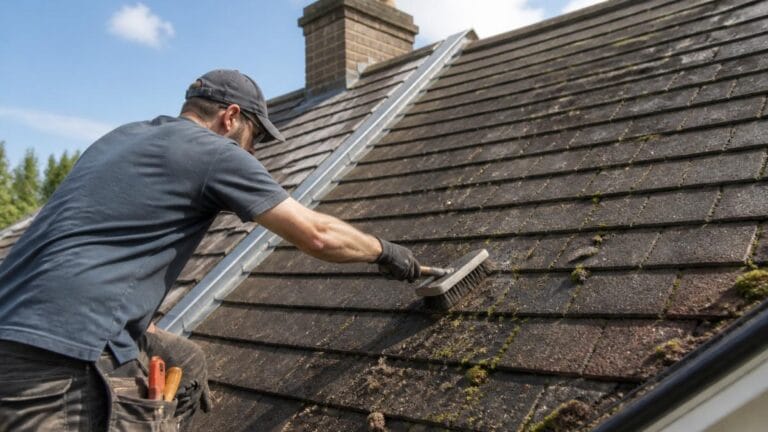
Buckinghamshire also has a high concentration of properties with moss and organic growth on roofs, which is worth managing alongside any replacement. Regular roof cleaning keeps moss from lifting tiles and trapping moisture, and clearing guttering prevents overflow damage to fascias. If you need a specialist near you, our flat roofs Buckinghamshire service covers both pitched and flat systems.
Roof Maintenance Tips for Buckinghamshire Homes
A roof that is inspected once a year lasts considerably longer than one that is ignored until water appears on a ceiling. Roof maintenance tips for Buckinghamshire homes start with the same routine: look, clear, and repair small faults early.
- Check for cracked or slipped tiles after winter storms
- Clear gutters and downpipes before autumn leaf fall
- Look for moss growth on north-facing slopes
- Inspect flashing around chimneys and skylights
- Confirm no daylight shows through in the loft
Book an inspection after any major storm. Small problems found early cost a fraction of a ceiling repair, and most emergency call-outs we attend started as a fault that was visible months earlier.
Frequently Asked Questions
Which roofing material is most durable for the Buckinghamshire climate?
Natural slate offers the longest lifespan, often exceeding 80 years, and handles frost and rain well. Clay tiles are also durable, lasting 50 to 70 years. Concrete tiles typically last 30 to 50 years. Metal systems like Tata Steel Colorcoat Urban are lightweight and weather-resistant. For period properties, slate or clay maintain character. For modern homes, metal or concrete can work. A professional roofer can assess your roof pitch and exposure to recommend the best fit.
What are the planning permission requirements for roof replacements in Buckinghamshire?
Most roof replacements fall under permitted development rights, but there are exceptions. If your home is listed or in a conservation area, you will need planning permission or listed building consent. Changes to roof pitch, height, or materials that alter the appearance may also require approval. In Buckinghamshire, local planning authorities enforce these rules. Always check with your local council before starting work. Evershield Roofing can guide you through the process and ensure compliance with UK building regulations.
How do I choose between clay tiles and concrete tiles for my home?
Clay tiles suit period properties and conservation areas because of their traditional look and long lifespan of 50 to 70 years. They cost more upfront but add character. Concrete tiles are cheaper, available in many profiles, and last 30 to 50 years. They are heavier, so your roof structure must support them. For modern homes or budget-conscious projects, concrete is a solid choice. For heritage homes, clay is often required. Consider your home’s age and local planning rules before deciding.
Is rubber roofing a good option for flat roofs in Buckinghamshire?
Yes, rubber roofing (EPDM) is a popular choice for flat roofs in Buckinghamshire. It is flexible, durable, and resistant to standing water, which is common on flat roofs. Installation is quick and creates a seamless membrane. It can last 20 to 30 years with minimal maintenance. However, it may not suit all flat roof structures. For commercial or large flat roofs, insulated metal panels like Kingspan offer better thermal performance. A free survey from Evershield Roofing can determine the best option.
Buckinghamshire’s weather is hard on roofs, and the wrong material choice shows up within a decade. Evershield Roofing has 25 years of experience matching materials to property type, handling everything from emergency roof repairs to full replacements, with free surveys, fully insured work and finance from 0% APR. Get started with Evershield Roofing and protect your home with a roof built to last.