Are Local Roofing Companies Better Than National Ones?
Are local roofing companies better than national ones? Compare costs, accountability and warranties to pick the right roofer for your home.

Table of Contents
- Local vs National Roofing Companies: The Real Differences
- How to Choose a Roofing Contractor in Buckinghamshire
- Questions to Ask a Roofer Before Hiring
- What Should a Roofing Quote Include?
- Roofing Guarantees and Workmanship Warranties Explained
- When a National Contractor Makes More Sense
- Conclusion: Making the Right Choice for Your Roof
- Frequently Asked Questions
Last Updated: October 15, 2026
Local vs National Roofing Companies: The Real Differences
Choosing between local roofing companies and national chains is one of the most consequential decisions a Buckinghamshire homeowner makes. The short answer: local roofers usually win on accountability, response time and price, while national firms occasionally make sense for large commercial contracts or insurer-backed warranty schemes. This guide from Evershield Roofing breaks down the trade-offs so you can decide with confidence.
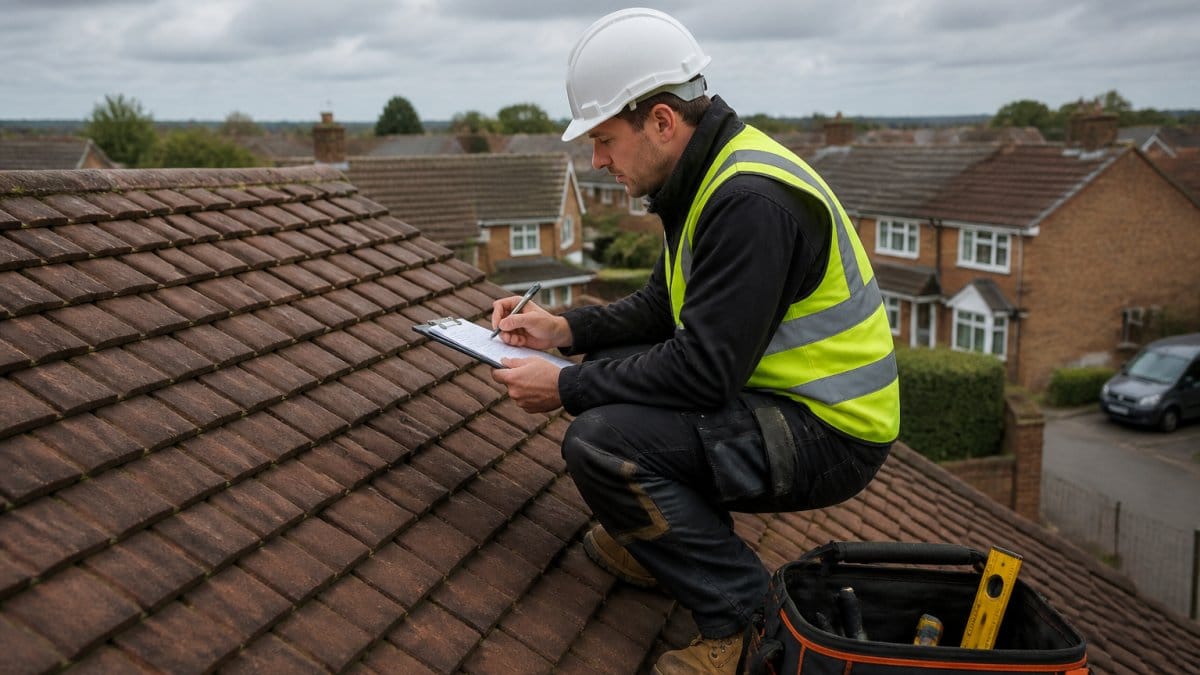
The difference comes down to who actually does the work. A local firm like ours typically sends its own directly employed roofers to your property. Many national companies subcontract the job to whichever crew is available in your area that week.
That single structural difference drives everything else: how fast someone answers the phone, who honours the guarantee, and whether the person quoting your job is the person doing it.
| Factor | Local Roofing Company | National Roofing Company |
|---|---|---|
| Who does the work | Usually directly employed roofers | Often subcontracted crews |
| Response time | Same-day or next-day in most cases | Call centre, then scheduling delay |
| Quoting | Owner or senior roofer surveys | Sales representative visits |
| Accountability | Reputation tied to the local area | Escalation through head office |
| Pricing | Lower overheads, often keener | Higher overheads built into quotes |
| Best for | Repairs, replacements, emergencies | Large multi-site commercial contracts |
Key Takeaway
The question is not really “local or national.” It is “who will physically be on my roof, and who do I call if something goes wrong?”
The question is not really “local or national.” It is “who will physically be on my roof, and who do I call if something goes wrong?”
How to Choose a Roofing Contractor in Buckinghamshire
Start with proof of local presence and insurance, then compare quotes on specification, not just price. A contractor who cannot show you recent work in your area, or who will not put their insurance details in writing, is a risk regardless of company size.
When you are searching for a roofer near me in Buckinghamshire, work through this checklist before you commit:
- Ask for the company’s public liability insurance certificate and check the policy is current
- Request two or three addresses of recent local jobs you can drive past
- Confirm whether the roofers on site are employed directly or subcontracted
- Check the company’s registered address and how long it has traded
- Get everything in writing: scope, materials, timescales and payment terms
- Never pay a large deposit upfront, and never in cash without a receipt
A common mistake is treating the cheapest quote as the best value. A quote that omits scaffolding, waste removal or replacement battens is not cheaper, it is incomplete. The final bill will land higher than the one you compared.
For homeowners in London and across Buckinghamshire, the practical test is simple: can you reach the same person who surveyed your roof when you have a question six months later? A local firm’s range of services usually reflects that same accountability, from roof repairs and new roof installation through to the smaller jobs that keep a roof watertight.
Questions to Ask a Roofer Before Hiring
The right questions separate a professional outfit from a chancer. Ask them before you sign anything, and pay attention to whether the answers come easily or get deflected.
- Are you insured, and can I see the certificate? Public liability cover protects your property if something is damaged.
- Who will be on my roof? Directly employed roofers are easier to hold accountable than anonymous subcontractors.
- What exactly is included in the price? Scaffolding, access, waste disposal and making good should all be listed.
- How long will the work take, and what happens if it rains? Weather delays are normal, but you deserve a realistic schedule.
- What guarantee do you provide, and is it in writing? Verbal promises are worth nothing when a leak returns.
- Will you handle building regulations or party wall matters if needed? A competent contractor knows when these apply.
Pro Tip
Ask for the guarantee in writing before work starts, not after. A one-page document naming the workmanship period, what it covers and how to make a claim is standard for a serious contractor. If a roofer hesitates to put it in writing, that tells you something.
Ask for the guarantee in writing before work starts, not after. A one-page document naming the workmanship period, what it covers and how to make a claim is standard for a serious contractor. If a roofer hesitates to put it in writing, that tells you something.
What Should a Roofing Quote Include?
A proper roofing quote is a written specification, not a single figure on the back of a business card. It should let a second contractor price the identical job from the same document.
Check that your quote covers:
- Scope of work: exactly which areas are being repaired or replaced
- Materials: tile or slate type, membrane, battens, fixings and their grades
- Scaffolding and access: who arranges it, who pays, and when it comes down
- Waste removal: skip hire and disposal of old materials
- Timescales: start date, expected duration and weather contingencies
- Payment schedule: staged payments tied to milestones, not large upfront sums
- Guarantee terms: workmanship period and any manufacturer product warranty
- VAT: shown separately and clearly, since domestic roofing work is normally standard-rated
If a quote is missing scaffolding or waste removal, ask why. Those costs do not disappear. They reappear as extras once the job is underway and you have already committed.
Roofing Guarantees and Workmanship Warranties Explained
Roofing guarantees come in two distinct types, and confusing them is how homeowners end up uncovered. A workmanship warranty covers how well the roof was installed. A manufacturer’s product warranty covers the materials themselves. You need both, in writing.
Workmanship warranty: This is the roofer’s promise that the installation was done correctly. It covers labour to fix defects like incorrectly laid tiles, poor flashing or failed fixings. The length varies by contractor, so confirm the period in writing before you sign.
Product warranty: This comes from the materials manufacturer and covers defects in the tiles, membrane or fixings themselves. It is usually far longer than the workmanship period, but it does not cover the cost of getting back on the roof to fit replacements.
Get Your Free Roofing Quote Today! →
The gap most homeowners miss is labour. A 30-year product warranty sounds reassuring until a tile fails in year three and you discover the workmanship cover expired after twelve months. Ask both questions: how long is the workmanship guarantee, and does the product warranty include labour?
Keep your paperwork. A guarantee is only as good as your ability to prove the work was done by that contractor on that date.
When a National Contractor Makes More Sense
National firms genuinely win in a few scenarios, and pretending otherwise would be dishonest. If your project is a large commercial roof across multiple sites, a national contractor with a single point of contact and national coverage can simplify coordination.
Other cases where a national company can be the better fit:
- Insurer-mandated schemes: some insurance-backed guarantee products require an approved national provider
- Multi-property portfolios: managing several buildings under one contract is easier with a single national supplier
- Specialist large-scale systems: certain industrial roofing systems are only installed by a limited number of accredited national firms
For a single home, though, the advantages rarely outweigh the drawbacks. You are paying for a national brand’s overheads, marketing and head office, and the crew on your roof may have no connection to the name on the van.
Watch Out
Never accept a cold call or doorstep offer of “leftover materials” from a recent job nearby. This is a well-known tactic used by rogue traders who take a deposit and disappear. Legitimate roofers do not drum up work this way.
Never accept a cold call or doorstep offer of “leftover materials” from a recent job nearby. This is a well-known tactic used by rogue traders who take a deposit and disappear. Legitimate roofers do not drum up work this way.
Conclusion: Making the Right Choice for Your Roof
The honest answer to whether local roofing companies are better than national ones is: usually, for domestic work, yes. Local firms live on their reputation in the area, respond faster, and are easier to hold to account when something needs fixing.
That does not make every local roofer good or every national firm bad. The deciding factors are always the same: who does the work, what the quote actually includes, and what the guarantee says in writing.
At Evershield Roofing, we have spent over 25 years serving homeowners and businesses across Buckinghamshire. We offer free surveys and quotes, finance from 0% APR on larger projects, and emergency roof repair when water is coming through. Every job is fully insured, and we walk you through the process from first survey to final sign-off.
Get your free roofing quote today and find out what a properly specified job looks like.
Frequently Asked Questions
Are local roofing companies better than national ones?
It depends on your project. Local roofing companies often provide faster response times, more personalised service and greater accountability because their reputation is tied to the community they serve. National companies may offer larger teams and broader coverage, but they sometimes use subcontractors. For most homeowners needing repairs or replacements, a local firm with verifiable experience and clear guarantees is the stronger choice.
How do I check if a roofing company is trustworthy in the UK?
Ask for their company registration number, proof of public liability insurance and examples of recent work you can visit. Check whether they belong to a trade association and whether they offer a written workmanship warranty. A reputable roofer will provide these without hesitation. You can also ask for references from customers in your area and verify the business address matches where they operate.
What should a roofing quote include?
A proper roofing quote should list the full scope of work, materials to be used, labour costs, estimated timeline, access requirements such as scaffolding, and how waste will be removed. It should also state whether VAT is included and what guarantee covers the workmanship. If a quote is vague or missing these details, ask for a revised version before committing to anything.
Should I get more than one roofing quote?
Yes. Getting at least three quotes helps you compare pricing, scope and professionalism. It also reveals whether one contractor is cutting corners or overcharging. Use each quote as a checklist: does it include scaffolding, waste removal and a workmanship warranty? The cheapest option is rarely the best if it leaves out essential items that you will pay for later.