Alternatives to Standard Roof Repair Methods
Alternatives to standard roof repair methods: Explore modern roof repair alternatives including liquid membranes, coatings, and green roofs. Compare.

Table of Contents
- Why Property Owners Are Moving Beyond Traditional Roof Repairs
- Liquid Rubber Roofing Benefits for Flat Roofs
- Roof Restoration vs Replacement Cost UK: Understanding Your Options
- Protective Coatings and Sealants as Repair Alternatives
- Roof Maintenance Best Practices to Extend Roof Life
- Specialist Repair Solutions: GRP, EPDM, and Drone Inspections
- Premium Alternatives: Green Roofs and Solar Tiles
- Choosing the Right Repair Alternative for Your Property
Last Updated: August 21, 2026
Why Property Owners Are Moving Beyond Traditional Roof Repairs
Traditional roof repair, identify the problem, patch it, hope it lasts, is giving way to alternatives offering better long-term value, faster installation, and solutions addressing root causes rather than symptoms. Property owners across London and Buckinghamshire are discovering that liquid rubber coatings, EPDM membranes, drone inspections, and specialist solutions reshape roof maintenance.
At Evershield Roofing, we’ve worked with homeowners facing this decision. Some properties have recurring leaks despite repeated repairs; others have flat roofs that won’t hold water. The common thread: standard repair methods treat symptoms, not underlying vulnerabilities.
This guide covers alternatives to standard roof repair reshaping the industry. Whether you’re dealing with persistent leaks, planning full restoration, or exploring preventative solutions, understanding your options helps you protect your property for decades.
Pro Tip
The best repair method depends on your roof type, damage extent, and timeline. A flat roof with ponding water needs different treatment than a pitched roof with missing tiles. Get professional assessment before committing to any approach.
The best repair method depends on your roof type, damage extent, and timeline. A flat roof with ponding water needs different treatment than a pitched roof with missing tiles. Get professional assessment before committing to any approach.
Liquid Rubber Roofing Benefits for Flat Roofs
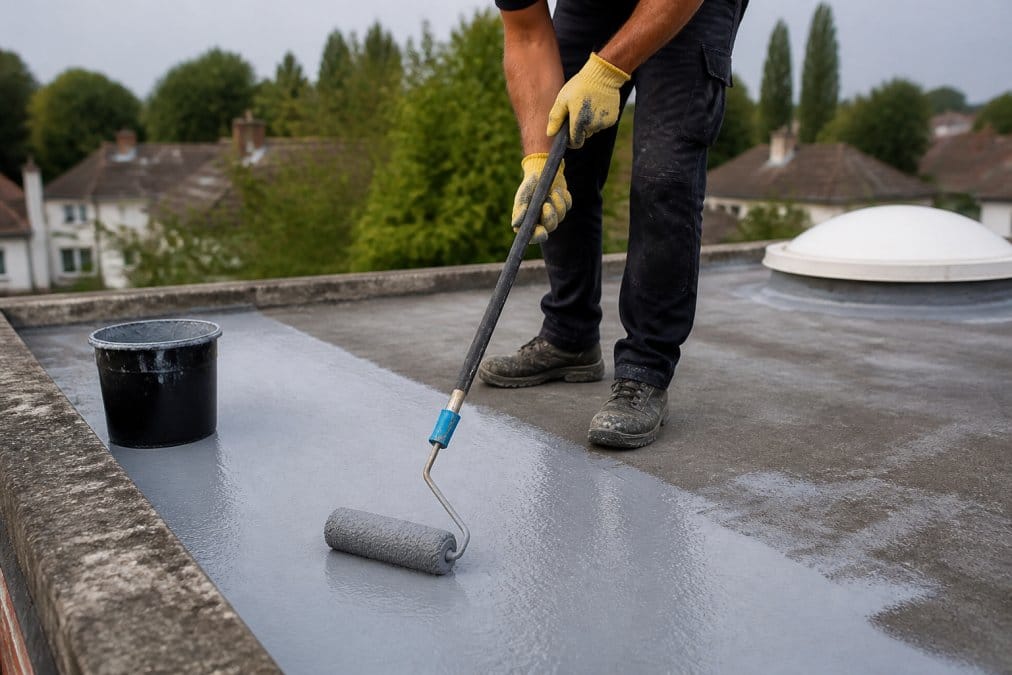
Liquid rubber roofing systems create seamless, monolithic membranes by applying elastomeric rubber directly onto the roof surface. Unlike traditional felt and bitumen layering, liquid rubber cures into a flexible, waterproof coating with no joints or seams where water can penetrate.
Liquid rubber eliminates common failure points because there are no seams to separate, no overlapping sections to degrade, and no vulnerability at flashings and edges. The coating maintains flexibility across extreme temperatures, from -40°C to 90°C, critical in the UK climate where thermal expansion and contraction stress roof materials constantly (peer-reviewed research). Many systems carry 20-year manufacturer warranties.
Installation is faster than traditional methods. A 1,000 square metre roof typically takes 5-10 days to coat, compared to weeks for conventional layering (the CDC). The system applies cold using a roller, brush, or spray, minimising property disruption. Cost savings are substantial: liquid rubber systems typically cost less than full roof replacement, making them attractive when the underlying structure is sound but surface protection has failed.
The limitation is surface preparation. The existing roof must be clean, dry, and properly prepared. If the underlying deck is saturated or structurally compromised, you’ll need to address the foundation issue first.
Key Takeaway
Liquid rubber roofing works best for flat roofs where the structure is sound but waterproofing has failed. It’s cost-effective, fast, and eliminates seams.
Liquid rubber roofing works best for flat roofs where the structure is sound but waterproofing has failed. It’s cost-effective, fast, and eliminates seams.
Roof Restoration vs Replacement Cost UK: Understanding Your Options
When facing major roof damage, property owners choose between restoring the existing roof or replacing it entirely.
Roof restoration involves applying protective coatings, sealants, or membranes to extend existing roof life. This might mean coating mineral tiles with hydrophobic sealant, applying liquid membranes to flat roofs, or installing EPDM rubber over deteriorated felt. Restoration typically costs significantly less than replacement because you’re not removing and disposing of the old roof or rebuilding the structure underneath.
Full replacement means removing the existing roof to the deck, installing new insulation and membranes, and fitting new covering material. This major undertaking involves scaffolding, structural work, and disposal costs. Replacement is necessary when the underlying structure is damaged, when the roof has reached end-of-life, or when installing fundamentally different systems like green roofs or solar tiles.
A restoration approach extends the existing roof’s life by 10-20 years, depending on method (the NIH). Replacement gives you a new roof with a full lifespan ahead. For property owners on tight budgets facing urgent leaks, restoration is often right. For long-term planning, replacement may offer better value over 30 years.
Evershield Roofing provides free surveys assessing your roof’s condition and recommending whether restoration or replacement makes sense for your property.
Watch Out
Attempting restoration on a roof with structural damage underneath is false economy. Water will find its way through. Professional assessment is essential before committing to either approach.
Attempting restoration on a roof with structural damage underneath is false economy. Water will find its way through. Professional assessment is essential before committing to either approach.
Protective Coatings and Sealants as Repair Alternatives
Protective coatings and sealants represent a middle ground between minor repairs and major replacement, forming protective barriers that extend roof life and improve water resistance without removing the existing roof.
RENOTEC Roof Coating for Mineral Tiles
RENOTEC is a two-coat, super-hydrophobic coloured roof coating for mineral roof tiles. The nano-technology formulation chemically bonds to the tile surface, creating a water-repellent layer that causes rain to bead and run off rather than soak in. Mineral tiles naturally absorb moisture, leading to frost damage, algae growth, and deterioration. By repelling water, RENOTEC prevents these failure mechanisms and discourages moss, algae, and lichen growth. RENOTEC comes with a 10-year manufacturer’s guarantee and 25-year life expectancy, available in multiple colours and is UV-resistant and breathable.
Everbuild Liquid Roof and Watco Membranes
Everbuild Liquid Roof is a fast-curing, polyurethane-based waterproofing membrane for flat and pitched roofs. The moisture-activated curing system means no catalyst is required, and the coating becomes rain-resistant within 10 minutes. This speed advantage is significant for property owners needing rapid protection against further water ingress.
Watco Liquid Roof Membrane offers reinforced waterproof protection for flat roofs, available in standard and anti-slip versions. Both products deliver long-lasting waterproofing at a fraction of full roof replacement cost and work best on roofs where the underlying structure is sound and the primary issue is surface waterproofing failure.
Best For
Property owners with flat roofs needing urgent waterproofing without full replacement. Fast curing means minimal weather delays.
Property owners with flat roofs needing urgent waterproofing without full replacement. Fast curing means minimal weather delays.
Roof Maintenance Best Practices to Extend Roof Life
The most cost-effective approach to roof protection is prevention. Regular maintenance catches small problems before they become expensive failures.
Clear gutters and downpipes regularly, particularly in autumn. Blocked gutters cause water to back up under roof tiles and into fascias, leading to rot and structural damage. Quarterly gutter cleaning prevents most water-related roof problems.
Inspect your roof after severe weather. High winds can displace tiles, heavy rain can expose flashing weaknesses, and frost can crack stressed tiles. Address moss and algae growth promptly, as these organisms trap moisture against the roof surface, accelerating deterioration.
Check flashings around chimneys, valleys, and roof penetrations. These high-risk areas where water collects need attention. For flat roofs, ensure drainage works, ponding water is the enemy of flat roof longevity. Monitor interior signs of roof problems: water stains on ceilings, damp patches on upper-floor walls, or visible mold growth indicate roof leaks needing urgent attention.
Specialist Repair Solutions: GRP, EPDM, and Drone Inspections
Some roof problems require specialist knowledge and materials. GRP fibreglass systems, EPDM rubber membranes, and drone inspections represent advanced approaches delivering superior results for specific situations.
GRP Fibreglass and EPDM Rubber Repairs
GRP (Glass Reinforced Plastic) fibreglass roofing is commonly used on flat roofs and extensions. When fibreglass roofs develop punctures, cracks, or delamination, specialist repair kits allow targeted fixing without full replacement. Done properly, a fibreglass repair provides waterproofing for 10-15 years at a fraction of replacing the entire roof.
EPDM rubber roofing is a flexible synthetic membrane with exceptional durability, up to 50 years with proper maintenance. EPDM won’t crack or become brittle under temperature extremes, UV exposure, or heavy rain. For existing EPDM roofs, specialist repair kits address punctures and tears. EPDM’s flexibility means repairs move with the membrane without cracking, extending repair life significantly.
Get Your Free Roofing Quote Today! →
Drone Inspections for Accurate Assessment
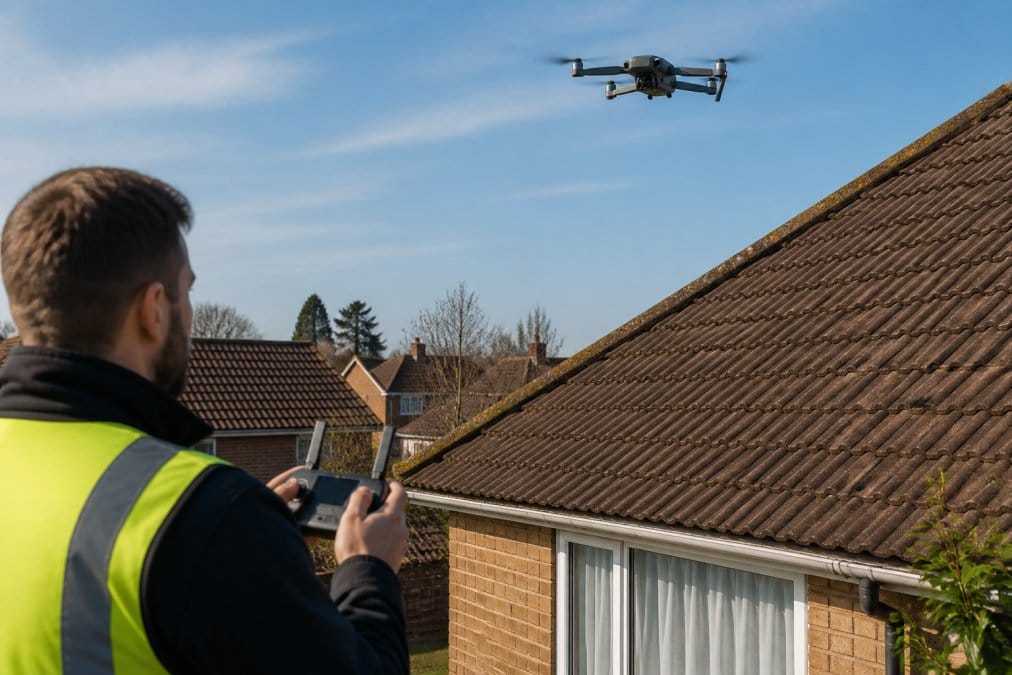
Drone inspections have transformed how roofers assess roof condition. High-resolution 4K footage captures detailed images of tiles, chimneys, gutters, flashings, and roof penetrations without requiring scaffolding or physical climbing.
A drone inspection eliminates safety risks and is faster and more thorough than traditional methods for steep or complex roofs. The footage provides a permanent record of roof condition, useful for insurance claims, property sales, and tracking deterioration. A typical residential drone inspection takes 30 minutes and produces detailed reports highlighting defects, wear patterns, and areas needing attention.
Pro Tip
Before committing to any major repair or replacement, get a professional drone inspection. The detailed assessment removes guesswork and ensures you’re addressing actual problems.
Before committing to any major repair or replacement, get a professional drone inspection. The detailed assessment removes guesswork and ensures you’re addressing actual problems.
Premium Alternatives: Green Roofs and Solar Tiles
For property owners willing to invest in premium solutions, green roofs and solar tiles offer benefits beyond traditional waterproofing, addressing roof protection while delivering additional value through sustainability or energy efficiency.
Green roof systems involve installing a waterproof membrane, drainage layer, growing medium, and vegetation on top of the existing roof structure. Modular systems like the M-Tray design offer instant green roof solutions that are sustainable and durable, with lightweight design and efficient drainage suited to UK weather. Green roofs provide insulation, reducing heating and cooling costs, support urban biodiversity, and manage stormwater by absorbing rainfall rather than allowing runoff.
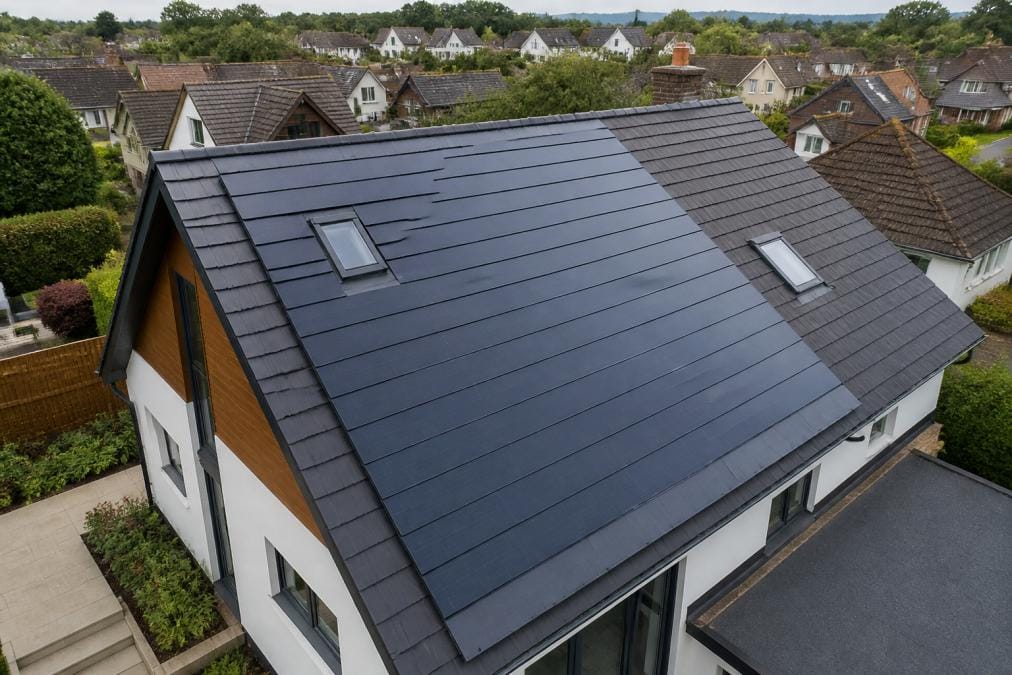
Solar roof tiles integrate photovoltaic panels directly into the roof covering, generating renewable electricity while maintaining traditional appearance. Unlike conventional solar panels that sit on top, integrated solar tiles sit flush with the roof plane, preserving aesthetics, important in conservation areas with planning restrictions. A typical 4kWp solar tile system can generate sufficient electricity to offset significant household consumption over the system’s 25+ year lifespan.
Both represent long-term investments paying dividends through energy savings, environmental impact, or enhanced property value, best suited to property owners planning to remain in their homes for 10+ years.
Best For
Property owners in conservation areas or seeking sustainable solutions. Solar tiles maintain traditional appearance while generating renewable energy. Green roofs provide insulation and environmental benefits.
Property owners in conservation areas or seeking sustainable solutions. Solar tiles maintain traditional appearance while generating renewable energy. Green roofs provide insulation and environmental benefits.
Choosing the Right Repair Alternative for Your Property
The best repair alternative depends on four factors: your roof type, damage extent, budget, and timeline.
Roof Type Matters. Pitched roofs with individual tiles respond well to targeted repairs, protective coatings, or selective tile replacement. Flat roofs with waterproofing failures benefit from liquid membranes or EPDM systems. Metal roofs have specialist repair approaches.
Extent of Damage. Minor leaks from isolated damaged tiles might need only tile replacement and flashing repair. Widespread water infiltration, structural rot, or deterioration affecting large roof areas suggests restoration or replacement. Ponding water on flat roofs indicates drainage or structural issues requiring professional assessment.
Budget Constraints. Liquid rubber coatings and EPDM membranes offer significant cost savings compared to full replacement. Protective coatings on mineral tiles are the most affordable option for extending roof life. Green roofs and solar tiles require premium investment but deliver additional benefits.
Timeline. Urgent leaks need fast solutions like liquid membranes that cure quickly or emergency repairs to stop water ingress. Planned maintenance allows time for thorough assessment and optimal solutions.
Evershield Roofing provides free surveys assessing your specific situation and recommending the most appropriate solution. Our team has 25 years of experience with residential and commercial roofs across London and Buckinghamshire, from emergency leak repairs to planned replacements and specialist installations.
The roof protecting your property deserves more than reactive patching. Whether you need urgent leak repair, planned restoration, or exploration of premium alternatives like solar tiles or green roofs, understanding your options ensures you make decisions that protect your investment. Get in touch with Evershield Roofing for a free assessment and quote. Our team will explain which alternatives make sense for your property, provide transparent pricing, and guide you through the process from survey to completion. With 25 years in the industry and finance available from 0% APR, we make quality roof protection accessible to every property owner in Buckinghamshire.
=== FAQ ANSWERS (audit these too, same rules) ===
[1] Q: What are the most durable alternatives to traditional roof patching?
A: Liquid rubber membranes, EPDM rubber sheets, and fibreglass (GRP) repair systems offer durability ranging from 15 to 50 years, compared to traditional patching which often lasts 5-10 years. Liquid rubber systems form seamless coatings that eliminate joint failures, whilst EPDM sheets resist extreme temperatures and UV exposure. These roof repair alternatives work best on flat or low-slope roofs and require proper surface preparation for optimal performance.
[2] Q: When should I consider roof restoration instead of standard repair?
A: Roof restoration is worth considering when your roof has widespread wear, multiple leak points, or is approaching the end of its serviceable life. If repairs are needed every 1-2 years, restoration using protective coatings or membranes often proves more cost-effective long-term. Restoration extends roof life by 10-20 years without full replacement, making it ideal for properties where replacement costs are prohibitive or where minimal disruption is essential.
[3] Q: Are liquid roofing membranes a viable alternative for flat roofs?
A: Yes. Liquid rubber roofing benefits include seamless application, excellent adhesion to existing substrates, and resistance to ponding water. These membranes cure to form flexible, waterproof coatings that eliminate seams where leaks typically occur. They can be applied over felt, bitumen, concrete, or metal, making them suitable for most flat roof scenarios. Installation typically takes 5-10 days for a 1,000m² roof, and most systems come with 20-year warranties.
[4] Q: Is it more cost-effective to repair or replace a roof?
A: Roof restoration vs replacement cost UK depends on damage extent and roof age. Liquid coatings and membranes can cost less than full replacement and extend roof life significantly. Repairs suit isolated damage, whilst restoration works for widespread wear. If your roof is over 20 years old with frequent leaks, replacement may offer better long-term value. Request a free survey to assess your specific situation and understand the most economical path forward.
Frequently Asked Questions
What are the most durable alternatives to traditional roof patching?
Liquid rubber membranes, EPDM rubber sheets, and fibreglass (GRP) repair systems offer durability ranging from 15 to 50 years, compared to traditional patching which often lasts 5-10 years. Liquid rubber systems form seamless coatings that eliminate joint failures, whilst EPDM sheets resist extreme temperatures and UV exposure. These roof repair alternatives work best on flat or low-slope roofs and require proper surface preparation for optimal performance.
When should I consider roof restoration instead of standard repair?
Roof restoration is worth considering when your roof has widespread wear, multiple leak points, or is approaching the end of its serviceable life. If repairs are needed every 1-2 years, restoration using protective coatings or membranes often proves more cost-effective long-term. Restoration extends roof life by 10-20 years without full replacement, making it ideal for properties where replacement costs are prohibitive or where minimal disruption is essential.
Are liquid roofing membranes a viable alternative for flat roofs?
Yes. Liquid rubber roofing benefits include seamless application, excellent adhesion to existing substrates, and resistance to ponding water. These membranes cure to form flexible, waterproof coatings that eliminate seams where leaks typically occur. They can be applied over felt, bitumen, concrete, or metal, making them suitable for most flat roof scenarios. Installation typically takes 5-10 days for a 1,000m² roof, and most systems come with 20-year warranties.
Is it more cost-effective to repair or replace a roof?
Roof restoration vs replacement cost UK depends on damage extent and roof age. Liquid coatings and membranes can cost less than full replacement and extend roof life significantly. Repairs suit isolated damage, whilst restoration works for widespread wear. If your roof is over 20 years old with frequent leaks, replacement may offer better long-term value. Request a free survey to assess your specific situation and understand the most economical path forward.