Common Roofing Problems in Semi-Detached Properties
Discover the most common roofing problems in semi-detached properties, from shared roof leaks to slipped tiles and chimney flashing faults. Know the signs.

Table of Contents
- Why Semi-Detached Roofs Develop Problems Differently
- Spotting a Semi-Detached Roof Leak Before It Spreads
- Roof Tile Damage and Slipped Tiles: The Most Visible Warning Sign
- Chimney Flashing Leaks and How They Let Water In
- Shared Roof Repairs on a Semi-Detached House: Who Pays for What
- Moss, Blocked Gutters and Other Slow-Burn Roofing Problems
- Prevention Checklist: Keeping a Semi-Detached Roof Sound
- Conclusion
- Frequently Asked Questions
Last Updated: October 17, 2026
Why Semi-Detached Roofs Develop Problems Differently
Semi-detached homes make up a huge share of the UK housing stock, and their roofs fail in ways that detached houses simply do not. At Evershield Roofing, we have spent 25 years repairing and replacing roofs across Buckinghamshire, and the pattern is consistent: the shared party wall, the long continuous ridge and the joined gutter runs all create weak points. Common roofing problems in semi-detached properties often start at the junction between the two homes, where water quietly finds a way in. That shared construction is the single biggest reason a semi-detached roof needs a different maintenance approach.
Most guides treat all pitched roofs the same. That is a mistake.
A semi-detached roof is really two roofs joined at the hip. Movement on one side can loosen tiles or flashing on the other. A leak that looks like bad luck is often a shared-structure issue.
Key Takeaway
On a semi-detached house, always check the party wall junction and the shared ridge first. That is where most water ingress begins.
On a semi-detached house, always check the party wall junction and the shared ridge first. That is where most water ingress begins.
Spotting a Semi-Detached Roof Leak Before It Spreads
A semi-detached roof leak rarely announces itself. By the time water drips through a ceiling, it has usually been travelling for weeks. The early signs are subtle: a faint damp patch on an upstairs ceiling, a musty smell in the loft, or dark streaks on a chimney breast. Catching a leak early saves money and stops rot spreading into timbers. If you spot any of these, get a survey before the next heavy rain.
Here is what to look for from inside the loft:
- Daylight showing through the roof felt or underlay
- Damp or stained roof timbers
- Water pooling on loft floorboards
- Sagging patches in the ceiling below
From outside, check the shared gutter line between the two homes. A leak on a semi-detached house often starts where the two gutter runs meet.
Roof Tile Damage and Slipped Tiles: The Most Visible Warning Sign
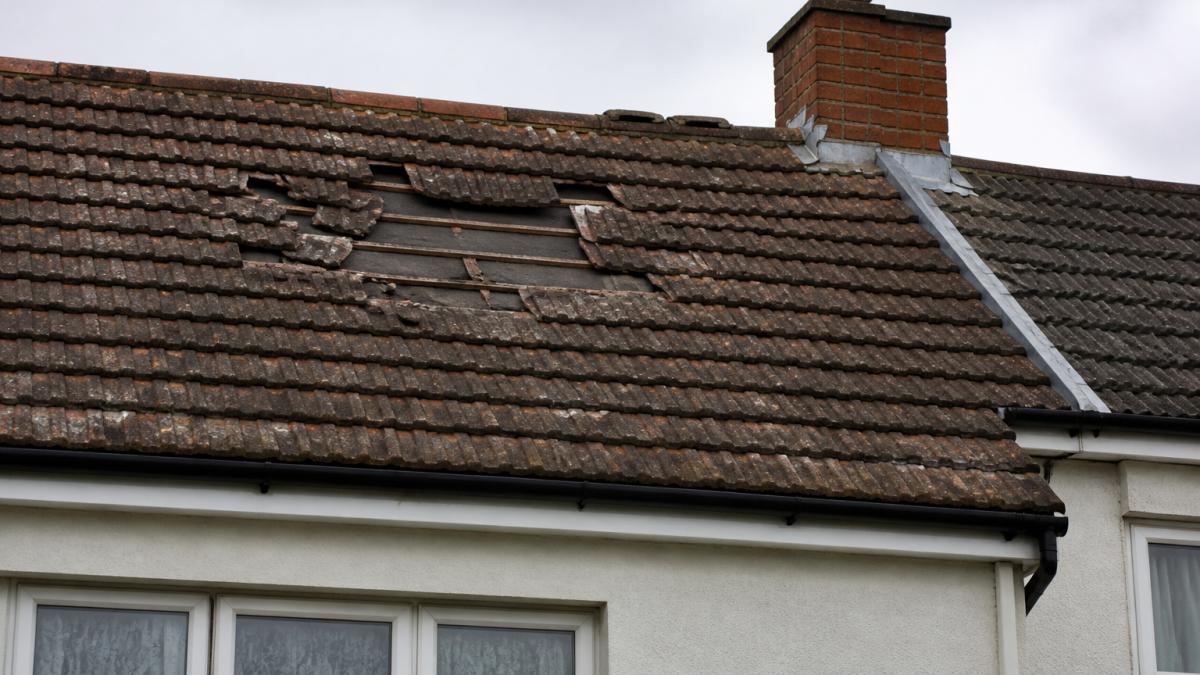
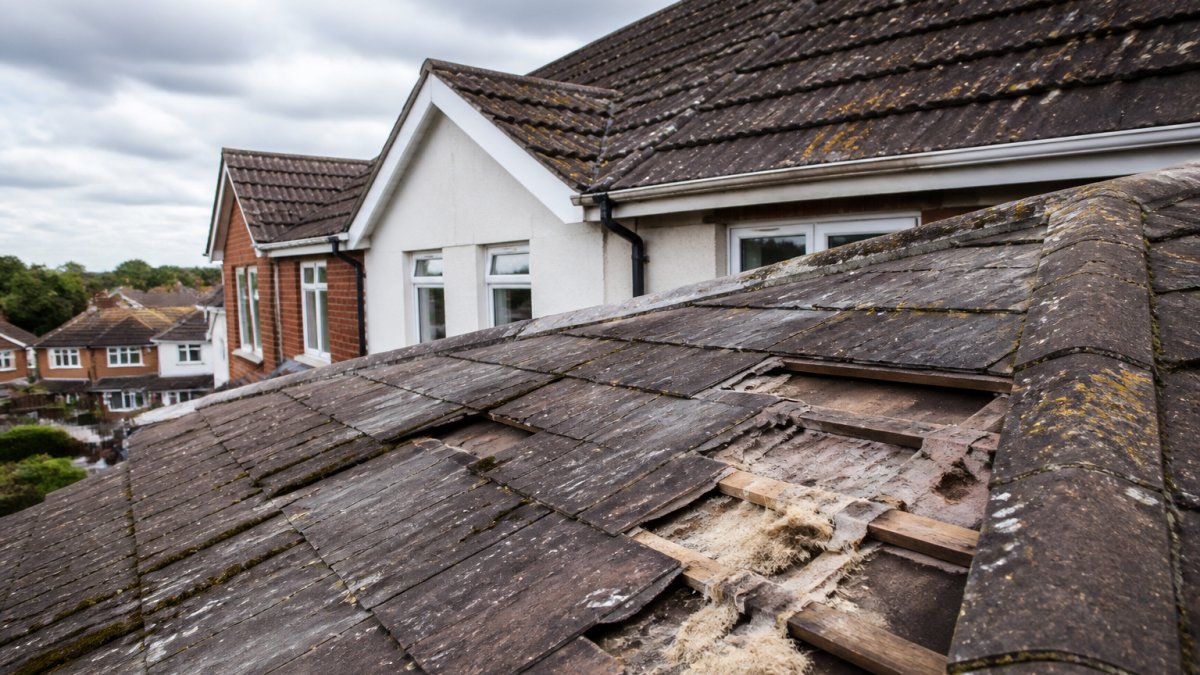
Roof tile damage and slipped tiles are the easiest problems to spot and the easiest to ignore. A slipped tile leaves the underlay exposed to wind-driven rain. One missing tile can let in litres of water over a stormy winter. Cracked tiles are just as bad: they look intact from the ground but shatter further under frost.
On a semi-detached property, tile damage on one side can affect the shared ridge. When tiles slip near the party wall, both homeowners have a stake in the repair.
What most guides miss is that slipped tiles are usually a symptom, not the cause. They often point to failed fixings, old mortar or a sagging batten. Fixing the tile alone without checking why it slipped leads to repeat problems.
Chimney Flashing Leaks and How They Let Water In
Chimney flashing leaks are among the most misdiagnosed roofing problems. Flashing is the metal strip that seals the gap where the chimney meets the roof. When it rusts, lifts or cracks, water runs straight down the chimney breast and into the loft. Homeowners often blame the chimney stack itself when the real culprit is the flashing.
On a semi-detached house, the chimney is often shared. That means one flashing failure can send water into either home, or both. A common mistake is patching the flashing with sealant instead of replacing it. Sealant fails within a season or two. Proper lead flashing, fitted by a roofer, lasts decades.
If you see damp around a chimney breast after rain, get the flashing checked before assuming the stack needs rebuilding. Our chimney repair service covers flashing and stack work together.
Get Your Free Roofing Quote Today! →
Shared Roof Repairs on a Semi-Detached House: Who Pays for What
Shared roof repairs on a semi-detached house are where neighbourly goodwill often breaks down. The rule is simpler than most people think: you pay for the part of the roof over your home, and shared parts are split. The party wall, the shared ridge and any shared chimney are usually joint responsibilities. Individual slopes and gutters are usually each owner’s own.
Get any agreement in writing before work starts. A short note of who pays for what, signed by both sides, prevents disputes later. Where the roof is genuinely shared and one owner refuses to contribute, the Party Wall etc. Act 1996 guidance sets out the formal process for resolving it.
Watch Out
Never let a roofer work on a shared section without the neighbour’s agreement in writing. If a dispute arises later, an undocumented repair can become a legal headache for both owners.
Never let a roofer work on a shared section without the neighbour’s agreement in writing. If a dispute arises later, an undocumented repair can become a legal headache for both owners.
Moss, Blocked Gutters and Other Slow-Burn Roofing Problems
Moss, blocked gutters and organic growth are the slow-burn roofing problems that quietly shorten a roof’s life. Moss holds moisture against tiles and lifts them as it grows. Blocked gutters overflow into the fascia and soffit, causing rot. Neither problem looks urgent, which is exactly why it gets ignored until the damage is expensive.
Left alone, these issues cause:
- Lifted and cracked tiles from moss growth
- Rotten fascias and soffits from overflowing gutters
- Damp walls where water tracks down
- Blocked downpipes that back up in heavy rain
Regular gutter cleaning and roof cleaning keep both problems in check. For homeowners searching for reliable roofers near me in Buckinghamshire, a simple annual check is the cheapest insurance there is.
Prevention Checklist: Keeping a Semi-Detached Roof Sound
Prevention beats repair every time. A semi-detached roof lasts far longer with a simple annual routine. Book a professional survey before winter, and keep an eye on the shared sections between the two homes.
- Check for slipped or cracked tiles after every storm
- Clear moss from tiles and the ridge at least once a year
- Clean gutters and downpipes before autumn
- Inspect chimney flashing for rust or lifting
- Look for damp patches in the loft after heavy rain
- Agree shared repair responsibilities with your neighbour in writing
- Book a professional roof survey every 12 to 18 months
For anything beyond a visual check, our roof repair team can survey and quote for free.
Conclusion
Semi-detached roofs demand attention at the joins, the shared ridge and the chimney, and small problems there escalate fast. If you have spotted a leak, a slipped tile or damp around the chimney, do not wait for the next storm to make it worse. Evershield Roofing offers fully insured roof repairs, free surveys and quotes, and finance from 0% APR, backed by 25 years of experience across Buckinghamshire. Get your free roofing quote today and protect your home before the weather turns.
Frequently Asked Questions
What roofing problems are most common in semi-detached houses?
The most frequent issues are slipped or cracked roof tiles, chimney flashing leaks, blocked gutters and moss buildup. Semi-detached properties also face problems at the party wall, where two roof slopes meet and water can track across from one side to the other. Because the roofs are often original and of a similar age, wear tends to appear on both halves at roughly the same time, so a single inspection often reveals issues on both sides.
Who is responsible for repairs to a shared roof on a semi-detached house?
Responsibility depends on the title deeds and whether the roof structure is shared. In many semi-detached properties, each owner is responsible for their own roof slope, while shared elements such as a party wall or shared chimney stack are jointly maintained. Check your deeds or lease before work begins. For shared roof repairs on a semi-detached house, it is sensible to agree the scope and split in writing with your neighbour so both sides are protected.
Can a roof leak affect both sides of a semi-detached property?
Yes. Water can travel along shared structures such as the party wall, chimney stack or valley gutter, so a leak that starts on one side may show as damp on the other. This is why a semi-detached roof leak should be traced to its source rather than patched where the stain appears. A roofer will inspect both slopes and the shared junctions to find where water is actually entering before recommending repairs.
How often should a semi-detached roof be inspected?
A visual check once a year, ideally after winter, plus a closer inspection after any storm, catches most problems early. Look for slipped tiles, cracked mortar around the chimney, sagging gutter runs and moss growth. Booking a professional survey every few years is worthwhile on older properties. Early attention to roof tile damage and slipped tiles usually costs far less than repairing the water damage that follows.