Fascias vs Soffits: What’s the Difference?
Fascias vs soffits: understand the key differences, how they protect your roof, and when replacement is needed. Learn what matters for your home.

Table of Contents
- What Are Fascias and Soffits?
- Fascias vs Soffits: Key Differences
- How Fascias and Soffits Work Together
- Signs of Rotting Fascia Boards and Damaged Soffits
- How to Clean Fascias and Soffits
- Fascia and Soffit Replacement Cost and Materials
- DIY vs Professional Installation
- Conclusion
Last Updated: August 15, 2026
What Are Fascias and Soffits?
Fascias and soffits are critical roofline components that protect your home’s structure and create a finished appearance at the roof edge. Understanding the difference between fascias vs soffits is essential for any homeowner planning maintenance or replacement work. At Evershield Roofing, we’ve seen countless properties suffer unnecessary damage simply because owners didn’t recognise early warning signs in these often-overlooked areas.
Fascia Boards Explained
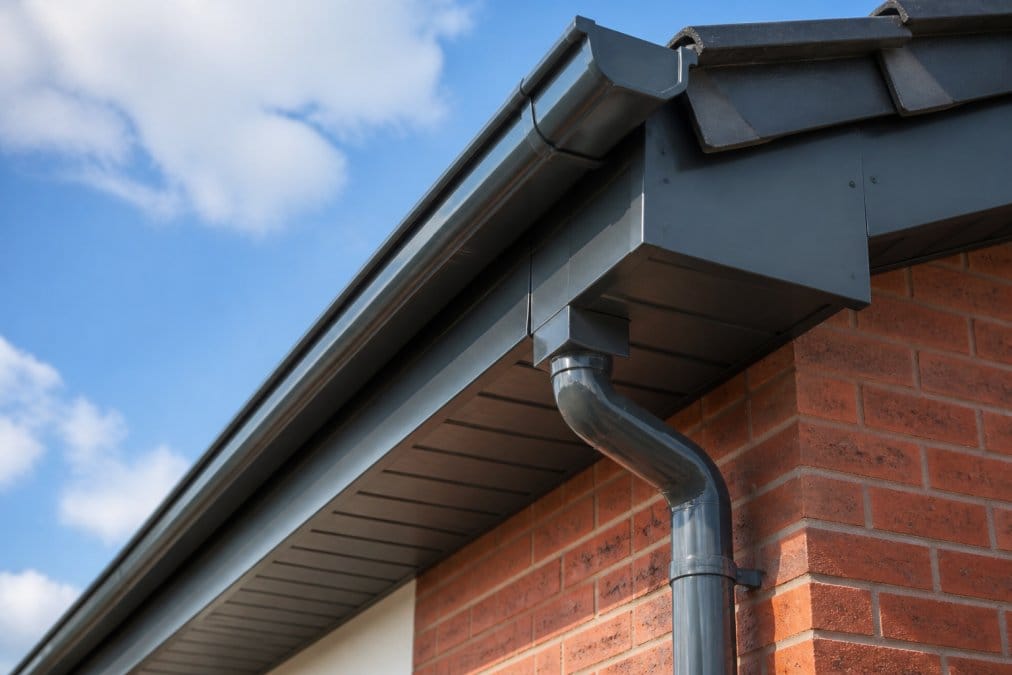
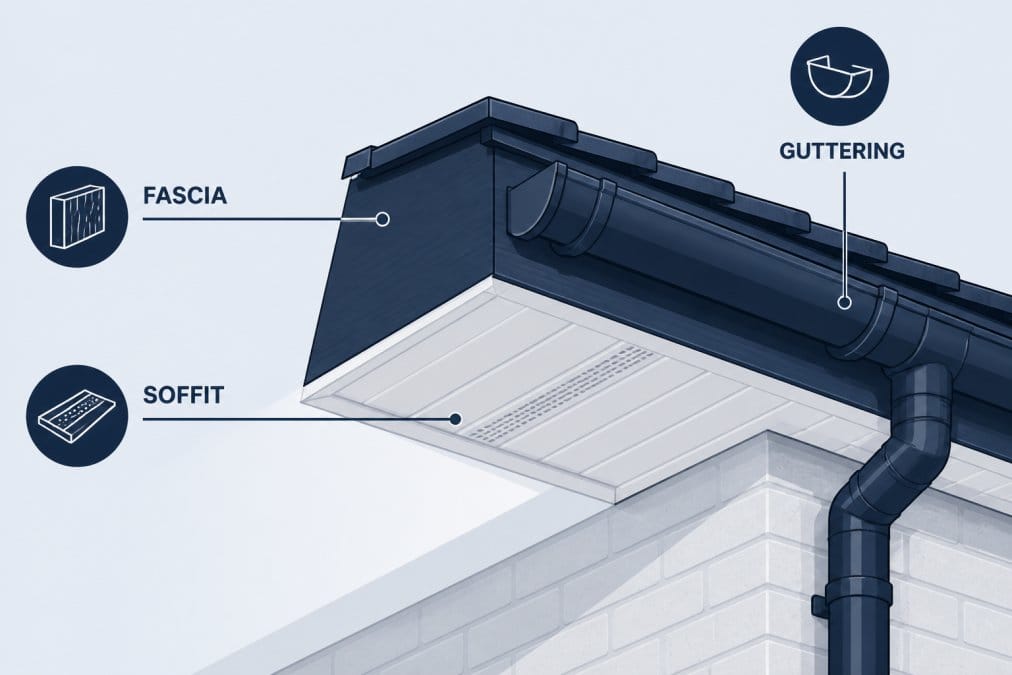
Fascia boards are the horizontal boards that run along the outer edge of your roof, directly attached to the rafter ends. They form the visible trim that frames your roofline and typically sit just above your guttering. Fascia boards serve a dual purpose: they provide a finished aesthetic appearance whilst protecting the rafters and roof structure from weather exposure.
Fascia boards are typically made from timber, uPVC, or aluminium. Timber fascias provide a traditional appearance but require regular maintenance and painting to prevent rot. uPVC fascias are maintenance-free and resist weathering without needing paint. The fascia’s primary job is to support your guttering system and shield the rafter tails from rain, wind, and pest intrusion.
Pro Tip
Fascia boards typically measure between 150mm and 300mm in height, depending on your roof’s overhang and the style you choose. Larger fascias often provide better visual impact and superior weather protection.
Fascia boards typically measure between 150mm and 300mm in height, depending on your roof’s overhang and the style you choose. Larger fascias often provide better visual impact and superior weather protection.
Soffit Boards Explained
Soffit boards are the horizontal boards that cover the underside of the roof overhang, running between the fascia and the wall of your property. They’re the part you see when you look up at the underside of your eaves. Soffits protect the rafters and underside of the roof structure whilst allowing air to circulate within the roof void.
Soffits come in three main types: solid, vented, and hollow. Vented soffits have small holes or slots that permit air circulation, which is crucial for preventing condensation buildup in your roof space. Like fascias, soffits are available in timber, uPVC, or aluminium. uPVC soffits offer durability and low maintenance, whilst timber soffits deliver a traditional look but demand regular upkeep.
Proper soffit installation is vital for roof health. Inadequate ventilation through soffits can trap moisture in your roof void, leading to condensation, mould growth, and premature deterioration of insulation and timber members.
Key Takeaway
Soffits are your roof’s ventilation system. Without them, moisture accumulates in the roof space and causes hidden damage that becomes expensive to repair.
Soffits are your roof’s ventilation system. Without them, moisture accumulates in the roof space and causes hidden damage that becomes expensive to repair.
Fascias vs Soffits: Key Differences
The main distinction between fascias vs soffits comes down to their location and function. Fascias are vertical (or near-vertical) boards at the outer edge of the roof, whilst soffits are horizontal boards underneath the overhang. Fascias face outward and bear the brunt of weather exposure, supporting your guttering and shielding rafter ends. Soffits face inward and upward, protecting the underside of the roof structure and managing airflow in the roof void.
| Feature | Fascia Boards | Soffit Boards |
|---|---|---|
| Location | Outer edge of roof, vertical | Underside of overhang, horizontal |
| Primary function | Weather protection, guttering support | Ventilation, underside protection |
| Visibility | Highly visible from ground | Visible when looking up at eaves |
| Material options | Timber, uPVC, aluminium | Solid, vented, or hollow uPVC/timber |
| Maintenance needs | Regular for timber; minimal for uPVC | Low for uPVC; higher for timber |
| Ventilation role | None | Critical for roof void airflow |
Both components work together as part of your roofline system. Damage to either one compromises the entire roof’s integrity.
Watch Out
Installing new fascias without addressing soffit ventilation is a common mistake. You’ll have a beautiful new fascia but a damp roof space underneath. Always treat them as a complete system.
Installing new fascias without addressing soffit ventilation is a common mistake. You’ll have a beautiful new fascia but a damp roof space underneath. Always treat them as a complete system.
How Fascias and Soffits Work Together
Your fascia and soffit form an integrated roofline system that protects your entire roof structure. The fascia supports the guttering, which channels water away from the property. The soffit provides the ventilation pathway that prevents moisture from accumulating in the roof void. When moisture enters the roof space through leaks or inadequate ventilation, it has nowhere to go if your soffits are blocked or missing, causing timber rot, mould growth, and damaged insulation.
A properly functioning roofline operates like this: rain falls on the roof, runs down to the guttering (supported by the fascia), drains away from the property, and any moisture that enters the roof void escapes through soffit vents. The fascia is typically nailed or screwed to the rafter ends, whilst the soffit is supported by the fascia on one side and the wall on the other. If the fascia weakens due to rot or damage, it can no longer properly support the soffit, creating a cascade of problems.
Evershield Roofing recommends inspecting both components together during any maintenance visit. A surveyor should check fascia condition, soffit ventilation, and guttering alignment as a complete system rather than addressing individual components in isolation.
Signs of Rotting Fascia Boards and Damaged Soffits
Recognising early warning signs of fascia and soffit damage can save thousands in structural repairs. Timber fascias are particularly vulnerable to rot, which develops when wood remains damp for extended periods.
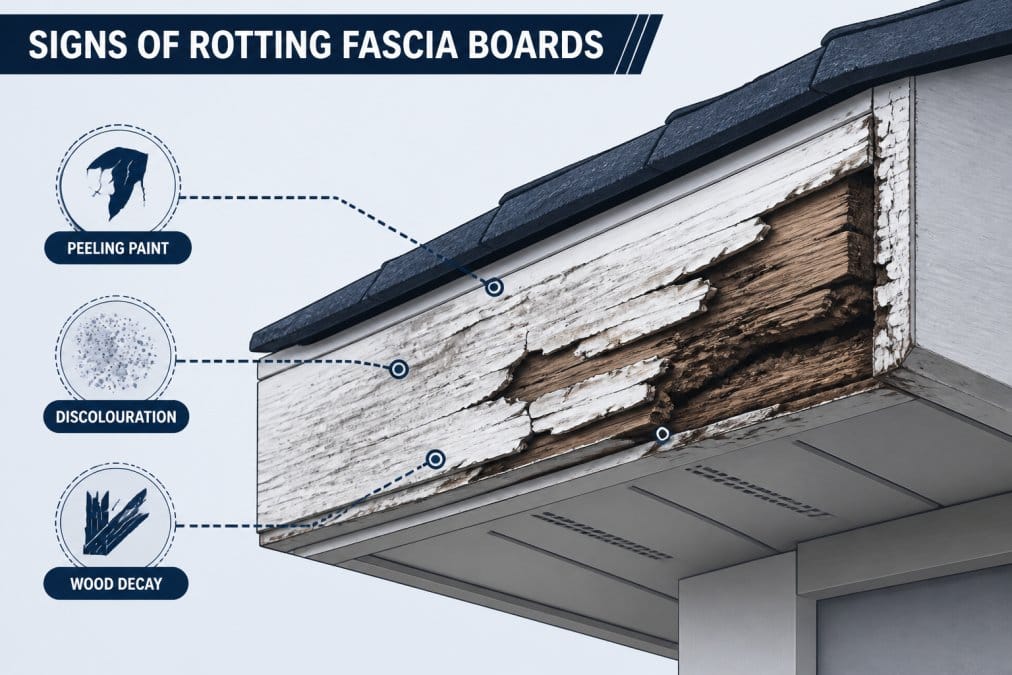
Common signs of rotting fascia boards include soft, spongy timber that yields to finger pressure, dark discolouration or black streaking, peeling or blistering paint, visible cracks or splits in the wood, and a musty smell near the roofline. Damaged soffits present different warning signs: sagging or warped boards, visible gaps between soffit and fascia, water stains or discolouration, cracks or splits, and visible holes or missing sections. If you notice damp patches on your ceiling near the roofline or musty odours in your loft, damaged soffits preventing proper ventilation may be the culprit.
Gaps in fascias or soffits allow birds, insects, and rodents to enter your roof space. Signs include bird nesting material visible in soffits, droppings around the roofline, or scratching sounds in the loft at night.
Watch Out
If you press a timber fascia with a screwdriver and the blade sinks in easily, rot has penetrated deeply. This requires urgent replacement to prevent structural damage spreading to the rafters themselves.
If you press a timber fascia with a screwdriver and the blade sinks in easily, rot has penetrated deeply. This requires urgent replacement to prevent structural damage spreading to the rafters themselves.
Early intervention prevents expensive structural repairs. A rotting fascia costs a few hundred pounds to replace when caught early; if rot spreads to the rafters, you’re looking at thousands in timber repairs.
How to Clean Fascias and Soffits
Regular cleaning extends the life of both fascias and soffits and helps you spot damage early. For uPVC fascias and soffits, use a soft brush or cloth with warm soapy water. Gently scrub away dirt, algae, and moss. For stubborn stains, use a mild detergent solution, but avoid harsh chemicals or abrasive scrubbers that can damage the uPVC surface.
Timber fascias require more care. Use a soft brush with warm soapy water, never a pressure washer, which can force water into the timber grain and accelerate rot. After cleaning, inspect the timber carefully for signs of damage. If the paint is peeling or cracked, plan for repainting within the year to maintain weather protection.
Soffits often accumulate debris from roof runoff and overhanging trees. Clear any visible debris with a soft brush. If soffits have vents, ensure these aren’t blocked by dirt or nesting material, as blocked vents trap moisture in your roof void.
Pro Tip
Autumn is the ideal time to clean fascias and soffits. Leaves and debris accumulate heavily, and you’ll spot any damage before winter weather arrives. Plan cleaning for September or October.
Autumn is the ideal time to clean fascias and soffits. Leaves and debris accumulate heavily, and you’ll spot any damage before winter weather arrives. Plan cleaning for September or October.
Fascia and Soffit Replacement Cost and Materials
Fascia and soffit replacement costs vary significantly based on material choice, property size, and labour complexity. uPVC fascias and soffits are the most popular choice for UK homeowners. They’re maintenance-free, resist weathering, and come in various colours and profiles. The total replacement cost depends on your property’s roofline length, whether you’re replacing just fascias or both fascias and soffits, accessibility, and whether additional structural work is needed due to underlying damage. For a precise quote tailored to your property, contact Evershield Roofing for a free survey.
Best For
uPVC fascias and soffits suit most modern properties. They’re cost-effective, durable, and require minimal maintenance. Choose timber only if your property’s style genuinely demands it and you’re committed to regular upkeep.
uPVC fascias and soffits suit most modern properties. They’re cost-effective, durable, and require minimal maintenance. Choose timber only if your property’s style genuinely demands it and you’re committed to regular upkeep.
DIY vs Professional Installation
Many homeowners consider DIY fascia and soffit replacement to save costs. Whilst some aspects are achievable for experienced DIYers, most projects benefit from professional installation. Common DIY pitfalls include improper ventilation in soffit installation, inadequate sealing that allows water penetration, misaligned guttering that doesn’t drain properly, and incomplete removal of old material that hides underlying damage.
Professional installation offers several advantages. Installers understand ventilation requirements and building regulations. They’ll identify underlying damage during removal and address it before installing new components. They have proper access equipment, ensuring safety and quality workmanship. Most importantly, professional work comes with guarantees. Many manufacturers offer extended guarantees when installation is completed by registered installers.
The labour cost for professional installation typically ranges from £1,000 to £3,000 depending on property size and complexity. This represents excellent value when you consider the cost of fixing mistakes. A poorly sealed fascia joint that allows water ingress can cause thousands in structural damage before you notice the problem.
Watch Out
If you’re not confident with heights or lack proper access equipment, professional installation isn’t optional, it’s essential for safety. Falls from height account for significant injuries in the UK each year.
If you’re not confident with heights or lack proper access equipment, professional installation isn’t optional, it’s essential for safety. Falls from height account for significant injuries in the UK each year.
For most homeowners, professional installation represents the best value. Evershield Roofing handles fascia and soffit installation as part of our complete roofline service, ensuring your entire roof system works together effectively.
Conclusion
Fascias and soffits are fundamental roofline components that protect your home’s structure and create a finished appearance. Fascias are the outer vertical boards that support guttering and shield rafter ends, whilst soffits are the horizontal boards underneath the overhang that provide ventilation and protect the roof void. Both components work as an integrated system. Damage to either one compromises your entire roof’s integrity. Regular inspection catches problems early, rotting fascias, damaged soffits, or blocked ventilation, before they become expensive structural issues.
Frequently Asked Questions
What is the main difference between a fascia and a soffit?
Fascias are the vertical boards attached to the ends of your roof rafters, running horizontally along the outer edge. Soffits are the horizontal boards underneath the roof overhang, covering the underside of the eaves. Fascias hold your guttering and support the roof structure; soffits protect the rafters from weather and allow airflow into the roof void to prevent condensation and moisture buildup.
What are the signs that my fascias and soffits need replacing?
Watch for peeling or flaking paint, visible rot or soft wood, sagging sections, pest damage, or water stains. If you notice bird nesting or gaps where pests can enter, replacement is urgent. uPVC fascias and soffits may show cracking, discolouration, or warping. These signs indicate your roofline protection is failing and water damage to your roof structure is likely.
Do fascias and soffits provide ventilation for the roof?
Soffits play a key role in roof ventilation. Vented soffit boards have small openings that allow air to flow into the roof void, which removes moisture and prevents condensation buildup. This airflow is essential for maintaining the structural integrity of your roof and extending the life of your roof materials. Fascias themselves are not ventilated but work with soffits to create a complete weatherproofing system.
Are uPVC fascias and soffits better than timber?
uPVC requires no painting or maintenance, resists rot and weathering, and lasts 50+ years with proper installation. Timber fascias and soffits need regular painting, are vulnerable to rot and pest damage, and typically last 15-20 years. uPVC is more durable and cost-effective over time, though timber offers a traditional aesthetic. Most modern installations use uPVC for its low-maintenance properties and long lifespan.
If you’re noticing signs of fascia damage or soffit deterioration, don’t delay. At Evershield Roofing, we specialise in fascia and soffit installation and replacement across the region. Our team provides free surveys, transparent quotes, and professional installation with guarantees. We handle everything from initial assessment through to completion, ensuring your roofline system protects your home for decades to come. Get Your Free Roofing Quote Today!