How to Safely Remove Snow from Your Roof
Before you remove snow from your roof, check the snow depth and roof load limits, then use a roof rake to clear edges safely. Learn when to call a pro.

Last Updated: October 24, 2026
Quick Summary
To safely remove snow from your roof, work from the ground with a long-handled roof rake and never climb onto the roof. Pull snow in small sections, starting at the bottom edge and working upward in strips, and leave a thin layer rather than scraping the surface. Clear snow in stages and keep ladders clear of snow, ice and wet grass.
- Wet snow is far heavier than dry powder and puts real strain on older timbers and fixings.
- Stand to one side when pulling snow, never directly under it, and use small steady pulls.
- On flat roofs, clear a channel to the drain first so meltwater can escape.
- Never walk on a flat roof covered in snow or ice, and use plastic tools rather than metal.
- Call a professional when snow is deeper than you can reach safely from the ground.
Table of Contents
- When Snow on Your Roof Becomes a Problem
- Safety Precautions Before You Remove Snow
- How to Remove Snow from Roof with a Roof Rake
- How to Remove Snow from a Flat Roof
- How Much Snow Can a Roof Hold?
- Signs of Roof Stress from Snow
- When to Call a Professional Roofing Team
- Book a Free Roof Inspection After Heavy Snow
- Frequently Asked Questions
When Snow on Your Roof Becomes a Problem
Snow on a Buckinghamshire roof is usually harmless. Problems start when it builds up, turns to ice, or sits against a weak spot. Knowing how to safely remove snow from roof surfaces starts with knowing when it’s actually worth the effort.
A light dusting does nothing. A thick, wet layer is a different story. Wet snow is far heavier than dry powder, and it can put real strain on older timbers, sagging felt and tired fixings.
Watch for these warning signs:
- More than a few centimetres of wet, compacted snow
- Snow that has turned to ice along gutters and valleys
- Visible sagging between rafters
- Cracks in plaster or sticking doors below the roofline
If any of those apply, act carefully. At Evershield Roofing, we get called out most often after a freeze-thaw cycle, when snow melts, refreezes and forces its way under tiles.
Safety Precautions Before You Remove Snow
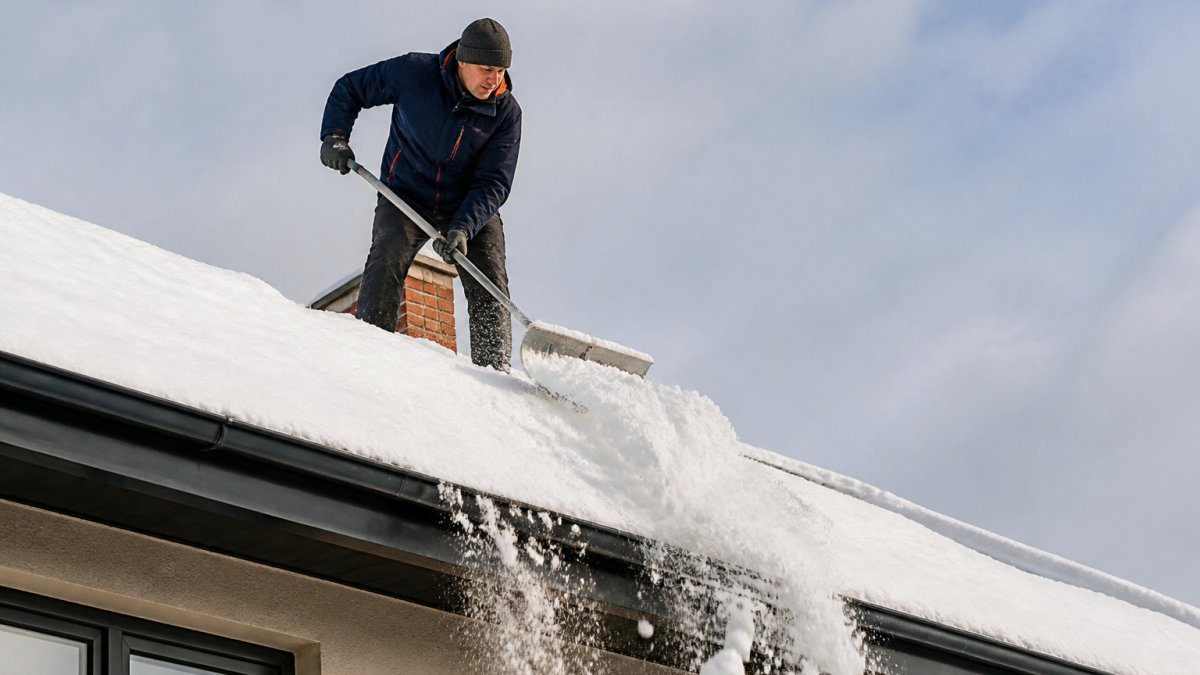
Safety comes first, and the ground is where you belong. Most winter roof injuries happen to people who climb up to clear snow themselves.
Follow these rules before you start:
- Work from the ground with a long-handled tool, never from the roof
- Keep ladders clear of snow, ice and wet grass
- Wear gloves, boots with grip and eye protection
- Check for overhead power lines and stay well clear
- Never work alone, and tell someone what you’re doing
- Clear snow in stages, starting at the edge
The Health and Safety Executive guidance on working at height is clear that falls from height remain one of the biggest causes of serious injury at work. The same caution applies at home.
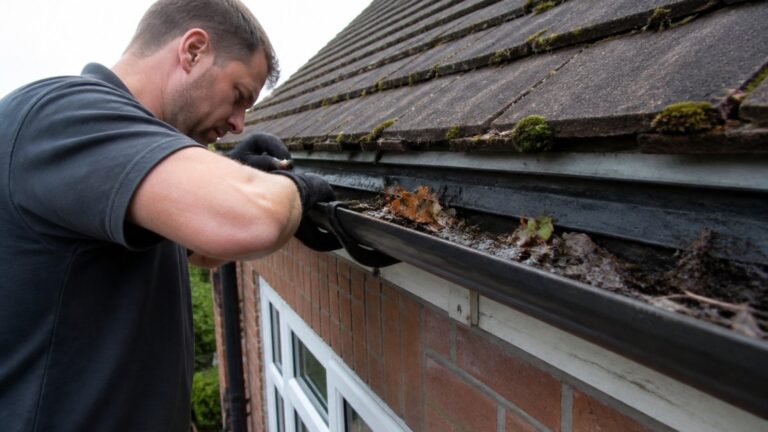
If you need to clear gutters as part of the job, read our guide on how to clean gutters safely at home before you touch a ladder.
How to Remove Snow from Roof with a Roof Rake
A roof rake is the safest tool for a pitched roof. You stand on the ground and pull snow down toward you, keeping your feet firmly planted.
Here’s how to remove snow from roof edges without climbing:
- Stand to one side, never directly under the snow
- Extend the rake and pull snow in small sections
- Start at the bottom edge and work upward in strips
- Pull the snow away from the gutter, not into it
- Leave a thin layer rather than scraping the surface
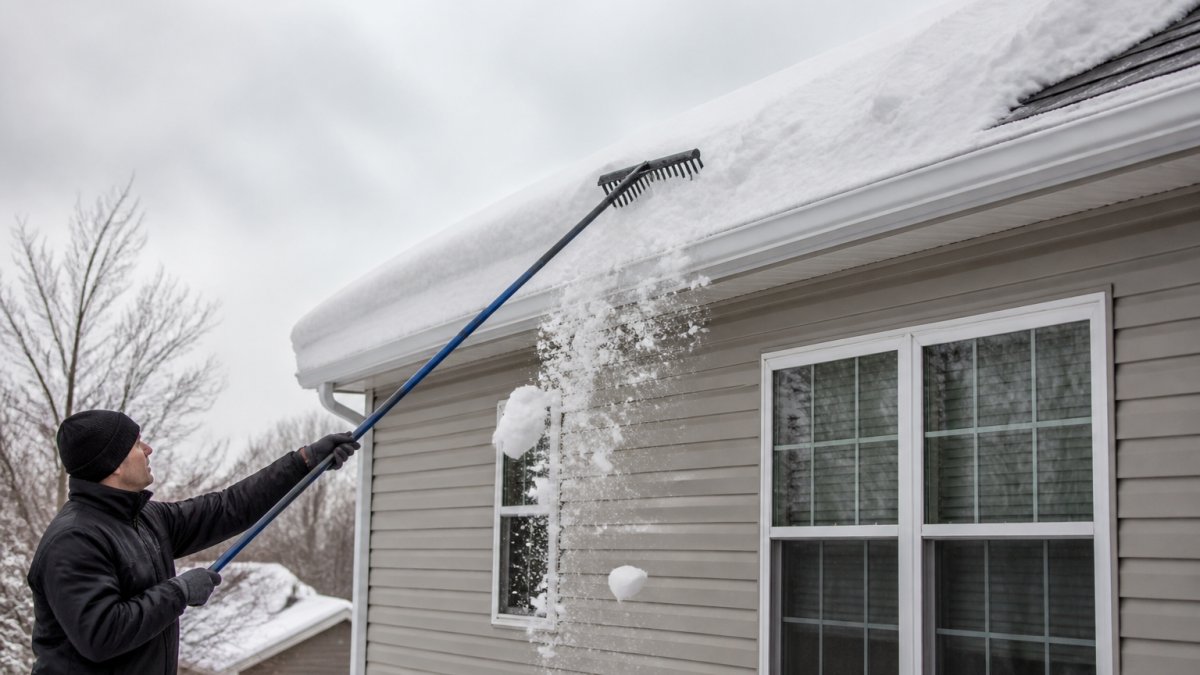
Watch out: pulling too much at once can bring down a heavy slab of snow and ice on top of you. Small, steady pulls are safer.
A roof rake lets you clear a pitched roof while standing safely on the ground.
| Step | What to do |
|---|---|
| 1 | Stand to one side, never directly under the snow |
| 2 | Extend the rake and pull snow in small sections |
| 3 | Start at the bottom edge and work upward in strips |
| 4 | Pull the snow away from the gutter, not into it |
| 5 | Leave a thin layer rather than scraping the surface |
How to Remove Snow from a Flat Roof
Flat roofs need a gentler approach. They hold water and weight more readily, and the surface is easy to damage.
The safest method for removing snow from a flat roof is to clear it in thin layers and keep drainage paths open. Use a plastic shovel or a soft-bristled broom, never a metal tool that can tear the membrane.
- Clear a channel to the drain first so meltwater can escape
- Work in small sections, not one heavy push
- Leave a thin layer to avoid scraping the surface
- Never walk on a flat roof covered in snow or ice
Standing water after a thaw is a common follow-up problem. Our guide on flat roof standing water repair explains how to deal with it before it turns into a leak.
How Much Snow Can a Roof Hold?
There’s no single number that fits every roof. How much snow a roof can hold depends on its age, design, condition and the type of snow.
Get Your Free Roofing Quote Today! →
Wet snow is much heavier than dry snow for the same depth. Old roofs, damaged felt and weakened timbers carry far less. A roof that has handled many winters may already be closer to its limit than you’d expect.
As a rough guide, treat these as reasons to act:
- Deep, wet snow that hasn’t shifted in days
- Snow that has absorbed rain and turned slushy
- Drifts piled against a wall or valley
If your roof is old or you’ve had leaks before, don’t guess. Get it checked.
Signs of Roof Stress from Snow
Your roof often tells you when it’s struggling. The signs of roof stress from snow are easy to miss if you don’t know what to look for.
Check for:
- Sagging or dipping in the roofline
- New cracks in ceilings or walls
- Doors and windows that suddenly stick
- Water stains spreading on ceilings
- Creaking or popping sounds from the roof
- Snow melting unevenly, which can signal heat loss
Any of these warrant a closer look. Ignoring them lets a small problem grow into a repair bill.
When to Call a Professional Roofing Team
Some jobs are not worth the risk. Call a professional when the snow is deep, the roof is steep, or you spot any sign of damage.
Get help if:
- Snow is deeper than you can reach safely from the ground
- You see sagging, cracks or leaks
- The roof is flat and water is pooling
- Ice has built up along gutters and valleys
- You’re unsure about the roof’s condition
A local team can assess the roof without putting you at risk. You can also compare top roofing contractors in Buckinghamshire reviews and ratings before you choose who to call.
Book a Free Roof Inspection After Heavy Snow
An inspection after heavy snow catches problems early. It’s the simplest way to confirm your roof came through winter intact.
At Evershield Roofing, we offer free surveys and quotes across London and Buckinghamshire. Our team has over 25 years in the industry, and we’re fully insured. We handle roof repairs, flat roofs, guttering and emergency call-outs.
Watch out: small leaks often appear weeks after a thaw, not during the snow itself. A prompt inspection is cheaper than a ceiling repair.
Frequently Asked Questions
Should you remove snow from your roof?
Yes, if the snow is deep or wet and heavy. Fresh, dry snow a few centimetres deep is usually harmless, but repeated snowfall or a thaw-and-refreeze cycle adds weight and can lead to ice dams. Clear snow from the lower edge of the roof and around gutters before it builds up. If you cannot reach it safely from the ground, or the roof is steep or fragile, call a professional rather than climbing up.
How do you remove snow from a roof without climbing onto it?
Use a roof rake with a long extendable handle so you can stand on the ground and pull snow down toward you. Work from the edge inward, keep clear of falling snow and stay away from overhead power lines. Never use a pressure washer or sharp tools, which can crack tiles. If the snow is compacted or the roof is flat, a professional team with the right access equipment is the safer choice.
Can removing snow damage roof tiles or gutters?
It can if you use the wrong method. Metal shovels, axes and ice picks chip tiles and slate, and dragging heavy snow against a gutter can pull it loose. A plastic roof rake used gently, pulling snow rather than pushing it, is much safer. Avoid standing on the roof or leaning ladders against gutters, and inspect the roof afterwards for cracked or displaced tiles.
When should you call a professional to clear snow from a roof?
Call a professional if the snow is deep, wet and heavy, if you spot sagging, cracks or water staining inside, or if your roof is flat, steep or hard to access safely. Commercial properties and older roofs with fragile tiles also warrant expert help. A free survey from an insured roofing team lets you confirm the roof’s condition before further snowfall or a thaw causes leaks.
Heavy snow exposes weak spots you’d never notice in summer. If your roof has taken a battering this winter, don’t wait for a leak to appear. Evershield Roofing offers free surveys and quotes, fully insured work, and emergency roof repair when you need it most. Get started with Evershield Roofing and book your free roof inspection today.