How to Spot Rotting Fascia Boards: 7 Warning Signs
Learn how to spot rotting fascia boards with our 7-point check. Identify water damage, know when to repair or replace, and protect your roofline.

Table of Contents
- Why Rotting Fascia Boards Are a Warning You Cannot Ignore
- The 7 Visual Signs of Rotting Fascia Boards
- How to Check Fascia Boards for Rot Safely
- Common Causes of Fascia Board Water Damage
- Fascia Board Repair or Replacement: Which Do You Need?
- Your Roofline Inspection Checklist
- When to Call a Professional
- Frequently Asked Questions
Last Updated: October 20, 2026
Why Rotting Fascia Boards Are a Warning You Cannot Ignore
Rotting fascia boards are one of the most overlooked signs of roof trouble, and spotting them early can save you thousands in repairs. At Evershield Roofing, we have spent 25 years climbing ladders across London and Buckinghamshire, and we can tell you plainly: fascia rot rarely stays put. It spreads.
Fascia boards are the timber strips fixed along the lower edge of your roof. They hold your gutters, support the bottom row of tiles, and keep rainwater away from the rafters behind them. When that timber softens, the whole roofline starts to fail.
Here is what most guides get wrong. They tell you to look for rot, but they never explain that by the time you can see soft wood, water has usually been getting in for months. The visible damage is the last stage, not the first.
So this guide shows you the early clues, the safe way to check, and how to tell a small repair from a full replacement. Keep reading because the difference between those two jobs is significant.
The 7 Visual Signs of Rotting Fascia Boards
The seven visual signs of rotting fascia boards are discolouration, flaking paint, crumbling edges, soft timber, sagging gutters, visible gaps, and mould or algae growth. Any one of these warrants a closer look.
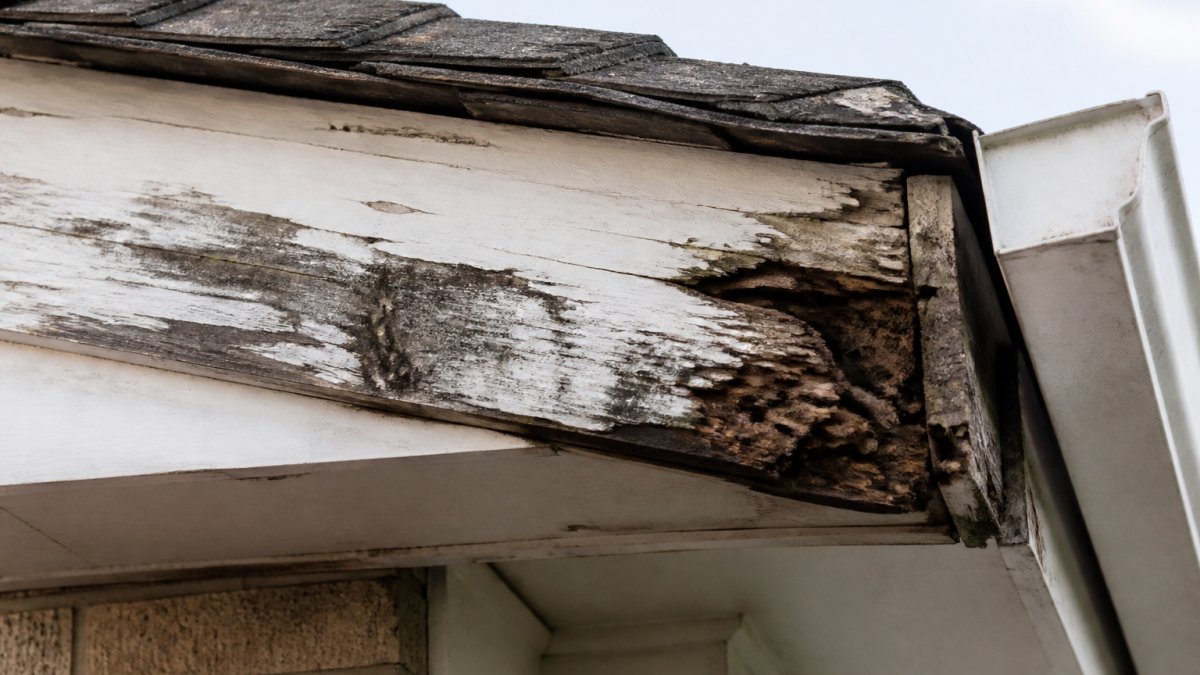
Discolouration and Dark Patches
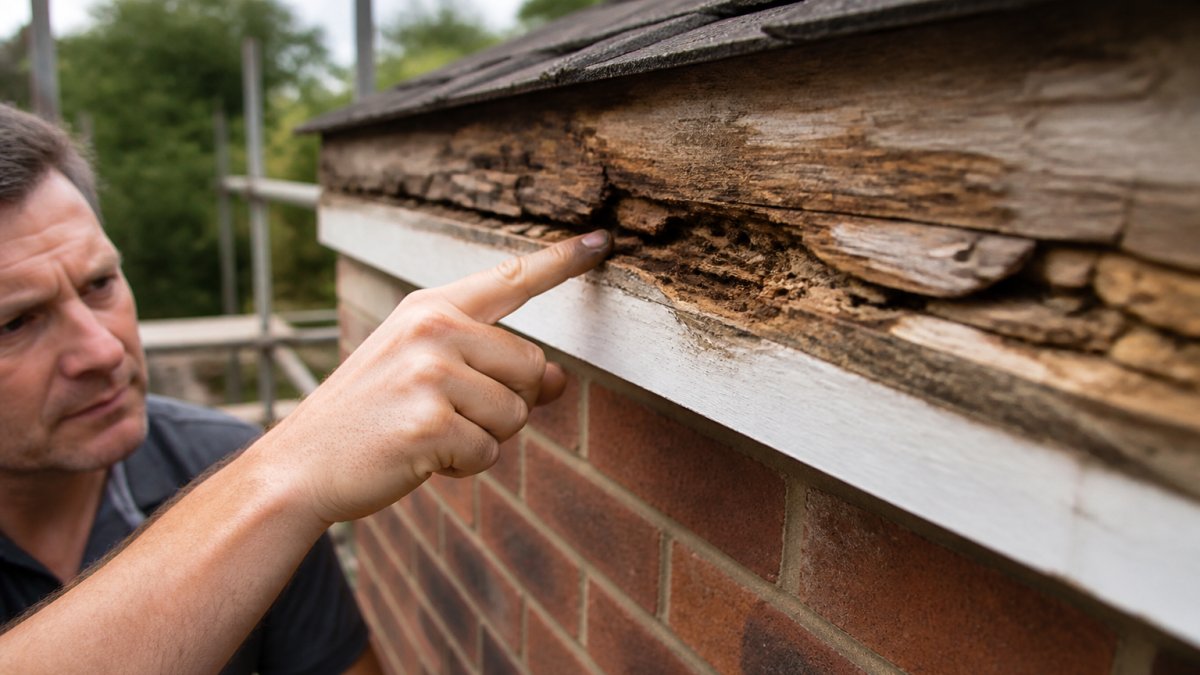
Dark patches or a blue-black tinge on painted timber usually mean moisture is trapped inside. Fresh rot often looks like a stain before the wood itself gives way.
Flaking Paint and Crumbling Edges
Paint that bubbles, flakes, or peels in strips is a classic early warning. When the edges of the board crumble under a light touch, the timber has already lost its structure.
The Other Five Signs
- Soft or spongy timber when pressed
- Gutters pulling away from the roofline
- Visible gaps between fascia and soffit
- Green algae or black mould on the board
- Water stains on the wall below
Pro Tip
Check the back of the fascia board where it meets the soffit. Rot often starts there, hidden from the street, because that is where water sits longest after rain.
Check the back of the fascia board where it meets the soffit. Rot often starts there, hidden from the street, because that is where water sits longest after rain.
How to Check Fascia Boards for Rot Safely
Checking fascia boards for rot safely means inspecting from the ground with binoculars first, then using a ladder only if you are confident and the weather is dry. Never lean out or overreach.
Work through this sequence:
- Stand back and scan the full roofline with binoculars
- Look for staining, sagging, and gaps
- Check gutters for overflow marks
- If safe, use a stable ladder on firm ground
- Press gently with a screwdriver handle, never a sharp tool
- Note soft spots and photograph them
If the timber dents easily, rot is present. Do not probe hard, as you can push through weakened boards and damage the gutter fixings.
Common Causes of Fascia Board Water Damage
Fascia board water damage almost always traces back to water that cannot escape. Blocked gutters, overflowing downpipes, failed paint seals, and leaking roof edges are the usual culprits.
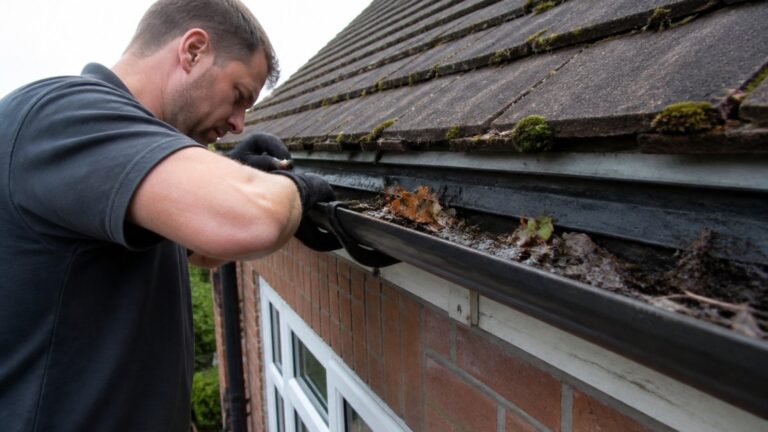
In our experience across Buckinghamshire, overflowing gutters cause more fascia rot than anything else. When gutters clog with moss and leaves, water spills down the back of the board and soaks into the timber. It never dries out properly.
Other frequent causes include:
- Cracked or missing roof tiles above the fascia
- Blocked or broken downpipes
- Poorly sealed joints around the roofline
- Age and general weathering of untreated timber
- Condensation from poor roof ventilation
Regular gutter cleaning is the cheapest insurance you can buy against fascia rot. It takes an hour and prevents a much bigger job later.
Get Your Free Roofing Quote Today! →
Fascia Board Repair or Replacement: Which Do You Need?
Fascia board repair suits small, isolated sections of rot where the surrounding timber is sound. Replacement is the better choice when rot has spread along several metres, when the board has lost structural strength, or when gutters are pulling away.
Use this guide to decide:
| Situation | Best Option | Why |
|---|---|---|
| Small patch under 30cm | Repair | Surrounding timber is sound |
| Rot along one full board | Replace that board | Partial repair rarely lasts |
| Multiple boards affected | Full replacement | Rot has likely spread behind |
| Gutters sagging badly | Replace plus refit gutters | Fixings have lost grip |
| Soft timber across the run | Full replacement | Structure is compromised |
Patching a board that is rotten behind the gutter is a false economy. We have seen it fail within a season. If more than a short section is soft, replacement is the honest answer.
Your Roofline Inspection Checklist
A roofline inspection checklist keeps you systematic, so you do not miss the quiet problems. Run through it twice a year, ideally in spring and autumn, and after any major storm.
- Scan the full roofline from ground level with binoculars
- Check fascia boards for stains, cracks, and flaking paint
- Press test any suspicious timber gently
- Confirm gutters are clear and firmly fixed
- Check downpipes for blockages and leaks
- Look for gaps between fascia and soffit
- Inspect for moss, algae, and mould growth
- Photograph anything unusual with a date stamp
- Note any water marks on walls below the roofline
If you spot two or more issues, book a professional survey rather than waiting for the next rainy season. Small problems on a roofline have a habit of becoming urgent ones.
Watch Out
Never stand on the bottom rung of a ladder or lean out to reach a corner. Falls from height cause serious injury, and a roofline inspection is never worth that risk. If you cannot reach it safely, call a professional.
Never stand on the bottom rung of a ladder or lean out to reach a corner. Falls from height cause serious injury, and a roofline inspection is never worth that risk. If you cannot reach it safely, call a professional.
When to Call a Professional
Call a professional when you find soft timber, sagging gutters, or rot across more than one board. Those signs usually mean water has reached the roof structure, and that is not a job for a ladder and a tube of sealant.
At Evershield Roofing, we offer free surveys and quotes, so you can get a clear picture before committing to anything. Our team is fully insured, and we handle fascia and soffit replacement alongside roof repairs and guttering.
We also know that a leaking roofline feels urgent. That is why we keep an expert on the phone to answer questions and arrange emergency roof repair when water is coming in.
If you are searching for fascia board repair near me, look for a firm that will inspect the whole roofline, not just the rotten board. Rot rarely travels alone.
Key Takeaway
Soft timber plus a sagging gutter means water has been getting in for a while. At that point, a professional survey is cheaper than waiting for the ceiling to stain.
Soft timber plus a sagging gutter means water has been getting in for a while. At that point, a professional survey is cheaper than waiting for the ceiling to stain.
Frequently Asked Questions
What are the first signs of rotting fascia boards?
The earliest signs are usually visual: dark patches or discolouration on the board, paint that flakes or bubbles, and crumbling edges where the timber meets the gutter. You may also notice sagging gutters pulling away from the roofline or small pieces of wood breaking off when touched. Catching these signs early makes repair far simpler than waiting for structural damage.
Can rotting fascia boards cause roof leaks?
Yes. Fascia boards support the gutter system, and when they rot, gutters can sag or detach. Water then runs down the wall or finds its way under roof tiles, leading to damp patches and leaks inside the property. Addressing fascia board water damage quickly prevents this chain reaction.
How much does it cost to replace fascia boards in the UK?
Costs vary with the length of roofline, access requirements, and whether soffits or guttering need replacing at the same time. Pricing depends on the scope of work and materials chosen. For an accurate figure, request a free survey and quote from a qualified roofer who can assess the extent of the rot on site.
How often should fascia boards be inspected?
A visual check once a year, ideally in spring or autumn, catches most problems early. After storms or prolonged wet weather, inspect again. If your property is over 20 years old or has timber fascias, consider a professional roofline inspection every few years as part of your maintenance plan.
Fascia rot is a slow problem with a fast ending, and the earlier you catch it, the less it costs. If your inspection turned up soft timber, dark patches, or gutters pulling away, do not patch over it and hope. Evershield Roofing brings 25 years of experience, free surveys, fully insured teams, and finance from 0% APR to every roofline we assess. Get your free roofing quote today and let us tell you honestly whether you need a repair or a replacement.