Why Emergency Roof Leaks Happen in Winter: UK Guide
Discover why emergency roof leaks happen in winter and how to stop them fast. Learn prevention tips, temporary fixes and when to call a roofer. Get.

Table of Contents
- Why Emergency Roof Leaks Happen in Winter: The Main Causes
- The Importance of Flat Roof Drainage in Cold Weather
- Signs of Roof Water Damage You Should Never Ignore
- How to Stop a Roof Leak Temporarily During a Winter Storm
- Preventative Maintenance to Avoid Winter Roof Leaks
- When to Call a Professional Roofer for Emergency Repairs
- Conclusion
- Frequently Asked Questions
Last Updated: September 20, 2026
Why Emergency Roof Leaks Happen in Winter: The Main Causes
Most of why emergency roof leaks happen in winter is not old age alone. They happen when water finds a weak point, then freezes, expands, and forces that weak point open. At Evershield Roofing, we handle emergency call-outs across Buckinghamshire every winter, and the pattern is always the same.
An emergency roof leak in winter is a sudden water ingress caused by frozen, thawing or blocked drainage systems rather than gradual wear. The cold does the damage fast, often overnight.
Two culprits cause most of these leaks. Let’s look at both.
Freeze-Thaw Cycles and Cracked Tiles
Water gets into small gaps during the day. Then night temperatures drop below zero and that water turns to ice.
Ice takes up more space than water. So it pushes tiles, mortar and flashing apart. When it melts, the gap is wider than before.
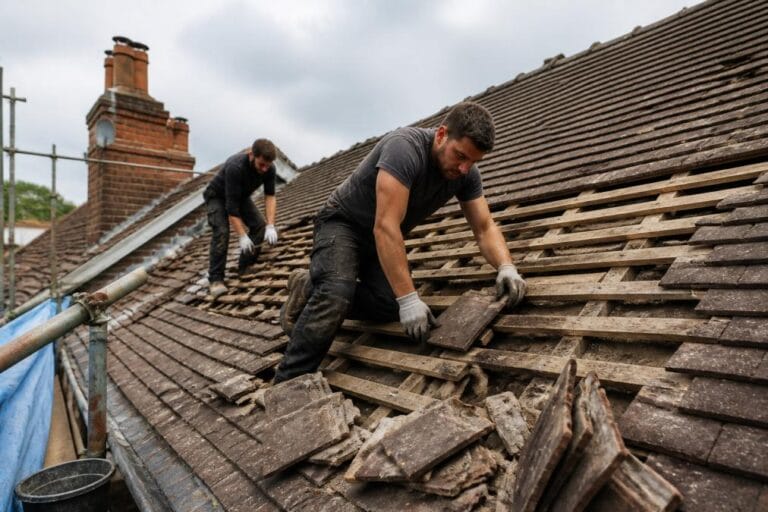
Repeat this for a few weeks and a hairline crack becomes a real leak. Flat roof membranes and old mortar joints are the most vulnerable.
Common weak points include:
- Cracked or slipped tiles
- Crumbling mortar around ridges
- Worn flashing around chimneys
- Perished seals on flat roof joints
Blocked Gutters and Overflowing Water
A blocked gutter in winter is a leak waiting to happen. Leaves, moss and debris freeze into a solid plug.
When snow melts or rain falls, the water has nowhere to go. It backs up under the roof edge and soaks into the fascia, soffit and wall.
Frozen gutters can also pull away from the building under the weight of ice. That opens a direct path for water.
If you have not cleared your gutters since autumn, this is the first thing to check. Evershield Roofing offers gutter cleaning and soft washing to clear blockages before they cause damage.
The Importance of Flat Roof Drainage in Cold Weather
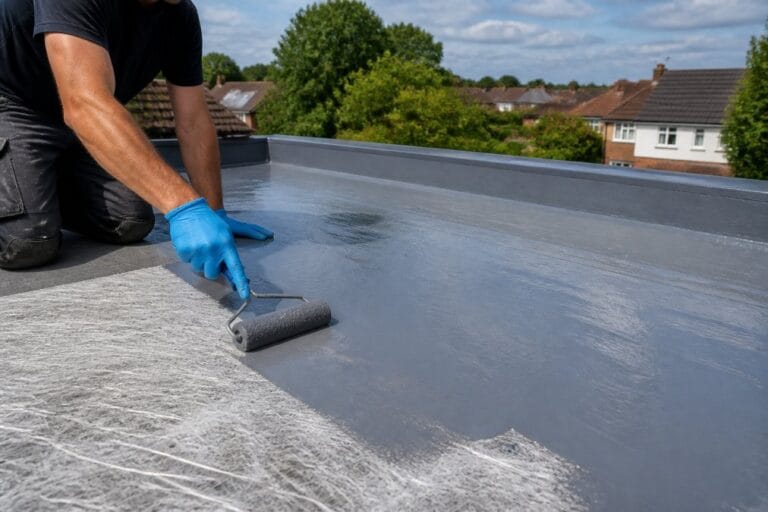
Flat roof drainage matters more in winter than at any other time of year. Standing water freezes, expands and stresses the membrane. Then it thaws and sits there again.
A flat roof should shed water within hours of rain stopping. If puddles linger, the drainage is failing.
Why cold weather makes it worse:
- Outlets and hoppers freeze solid
- Fall leaves block gratings
- Ice dams form at the lowest point
- Ponding water finds every seam
The British Standard for flat roof design and drainage sets out how flat roofs should be built to shed water. If yours holds water for days, it does not meet that standard.
Check your outlets before the first hard frost. Clear gratings, and look for sagging areas where water pools.
Signs of Roof Water Damage You Should Never Ignore
Catching roof water damage early saves thousands in repairs. The signs are easy to miss because they often appear far from the actual leak.
Watch for these warnings:
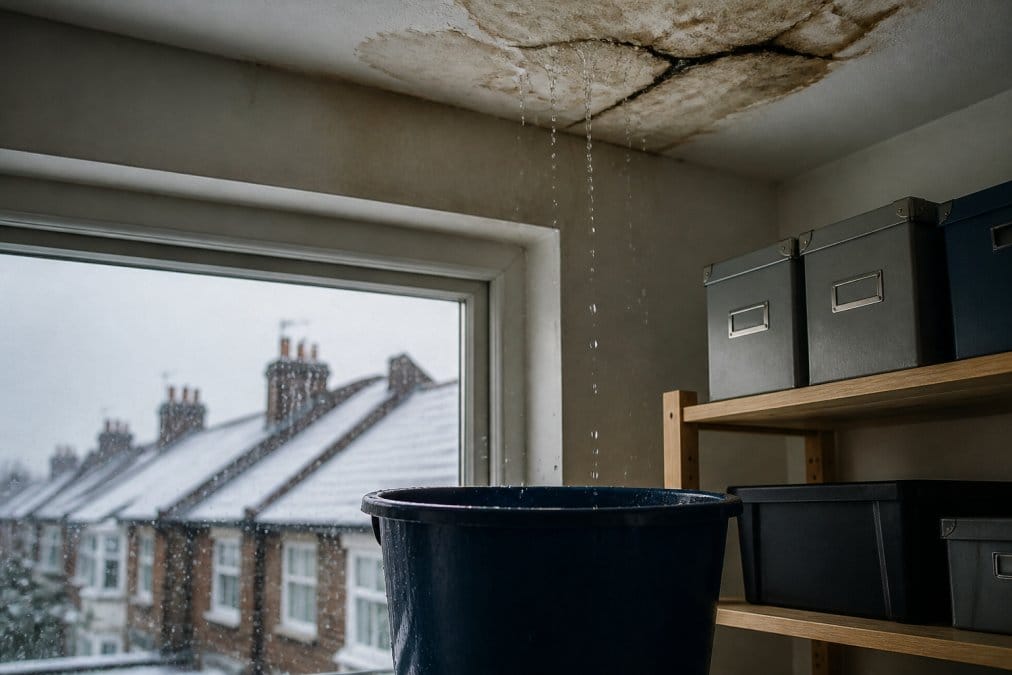
- Brown or yellow stains on ceilings
- Damp patches on upper walls
- Peeling paint or wallpaper
- A musty smell in the loft
- Dripping sounds after rain
- Sagging ceiling plaster
- Damp insulation in the roof space
Water travels. A stain on your bedroom ceiling may come from a leak ten feet away.
If you spot any of these, act fast. Small leaks become big problems once frost sets in. Evershield Roofing provides roof repairs to trace and fix the source before it spreads.
Watch Out
Ignoring a small damp patch in winter is a costly mistake. Once water freezes inside the roof structure, it can crack timbers and soak insulation. By the time the ceiling sags, the repair bill has grown well beyond a simple patch job.
Ignoring a small damp patch in winter is a costly mistake. Once water freezes inside the roof structure, it can crack timbers and soak insulation. By the time the ceiling sags, the repair bill has grown well beyond a simple patch job.
How to Stop a Roof Leak Temporarily During a Winter Storm
You can slow or stop a winter roof leak temporarily with a few safe steps. The goal is to limit damage until a roofer arrives. Do not climb onto a wet, icy or snow-covered roof.
Emergency Steps Before Help Arrives
Follow these steps in order. Safety comes first, every time.
- Move valuables and furniture away from the leak.
- Place buckets and towels under drips.
- Pierce a bulging ceiling with a small hole to release trapped water. This prevents a full collapse.
- Turn off electrics in affected areas if water is near wiring.
- Photograph the damage for your insurance claim.
- Call a professional roofer for emergency help.
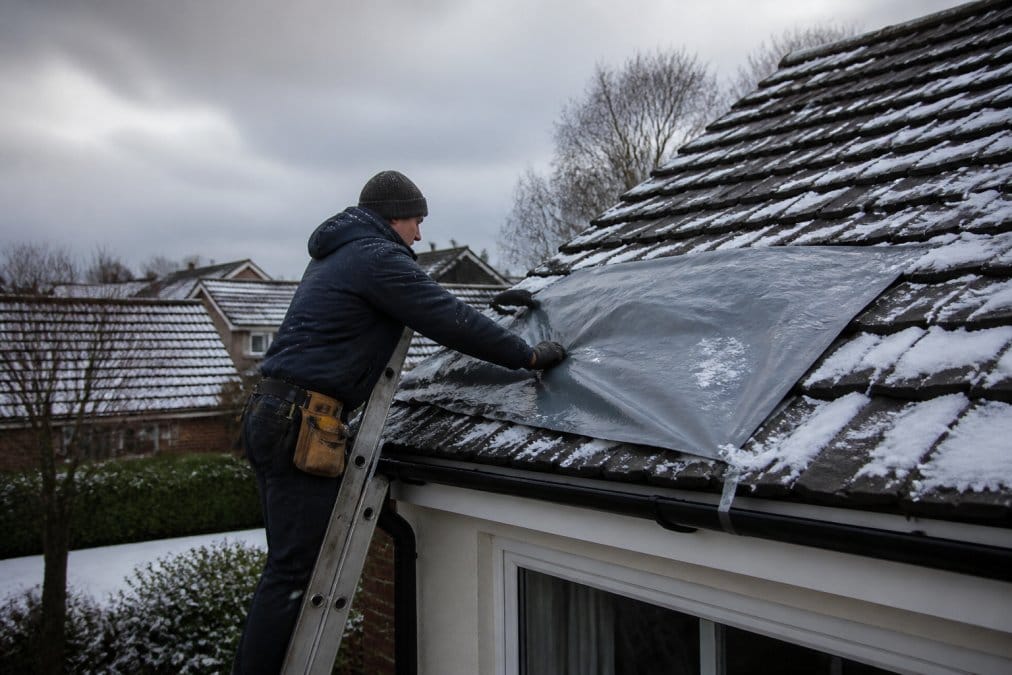
For a temporary external fix, only work from the ground or a stable ladder. Never step onto a frozen roof.
A common mistake is using a tarpaulin that is not tied down properly. Wind will rip it off and make things worse.
Pro Tip
If water is pooling on a flat roof, do not try to sweep it off in freezing conditions. The surface will be slick with ice. Call a roofer who can clear the drainage safely and check the membrane at the same time.
If water is pooling on a flat roof, do not try to sweep it off in freezing conditions. The surface will be slick with ice. Call a roofer who can clear the drainage safely and check the membrane at the same time.
Preventative Maintenance to Avoid Winter Roof Leaks
Prevention is far cheaper than emergency repairs. A few checks each autumn will get your roof through the coldest months.
Your winter prep checklist:
- Clear gutters and downpipes of leaves and moss
- Check for cracked or slipped tiles
- Inspect flashing around chimneys and vents
- Clear flat roof outlets and gratings
- Trim overhanging branches
- Check loft insulation for damp
- Book a professional survey if anything looks worn
The Met Office guidance on winter weather warns that repeated freeze-thaw cycles cause the most roof damage. That makes autumn the best time to act.
For flat roofs, Evershield Roofing offers flat roof services across Buckinghamshire to check drainage and membrane condition before winter bites.
When to Call a Professional Roofer for Emergency Repairs
Call a professional roofer the moment you see water coming in. Do not wait for a break in the weather.
Signs you need emergency help now:
- Water is dripping into living space
- The ceiling is bulging or sagging
- You cannot find the source of the leak
- The roof has storm damage
- Ice has pulled gutters loose
Trying to fix a winter leak yourself risks falls, electrics and further damage. A trained roofer can safely access the roof, find the true source and make it watertight.
Evershield Roofing has over 25 years of experience and offers emergency roof repair. We are fully insured, and there is always an expert on the other end of the phone.
If you are searching for a reliable “roofer near me” during a storm, look for a firm that answers the phone and can get to you fast. That is the difference between a small repair and a flooded home.
Conclusion
Winter roof leaks rarely come from nowhere. They build up through freeze-thaw cycles, blocked gutters and poor flat roof drainage. Catching the signs early, and acting fast when water appears, is what protects your home.
Frequently Asked Questions
Why does my roof only leak when it rains in winter?
Winter rain often follows a freeze-thaw cycle that widens existing cracks in tiles, mortar and flashing. Water that would normally run off freely can pool behind ice dams or enter gaps that have opened up. Blocked gutters and frozen downpipes also force water sideways under the roof covering. If your roof only leaks in winter, the likely culprits are cracked tiles, failed flashing or poor drainage rather than a sudden new defect.
Can freezing temperatures cause roof tiles to crack?
Yes. Water absorbed into porous tiles and mortar expands when it freezes, and that expansion can crack or lift the material. Repeated freeze-thaw cycles through a cold snap are particularly damaging. Older clay and concrete tiles, plus any mortar around ridge tiles and chimneys, are most at risk. A professional inspection before winter can catch weakened tiles before they fail completely.
Are flat roofs more prone to winter leaks than pitched roofs?
Flat roofs are more vulnerable because water drains slowly and any dip or blockage lets it pool. When that standing water freezes and thaws, it stresses the membrane and can open seams. Pitched roofs shed water faster, but they still leak if tiles crack or flashing fails. For flat roofs, keeping drainage clear and checking the membrane before winter makes the biggest difference.
What should I do immediately if my roof starts leaking during a storm?
Move valuables away from the leak, place a bucket underneath and puncture a small hole in any bulging ceiling plaster to release trapped water safely. Do not climb onto the roof in high winds or ice. Call an emergency roofer as soon as conditions allow. A temporary fix such as a waterproof cover can limit damage, but a proper repair should follow once the weather clears.
A leaking roof in the middle of winter is stressful, but you do not have to face it alone. Evershield Roofing offers emergency roof repairs, free surveys and quotes, and finance from 0% APR to spread the cost. With over 25 years in the industry and full insurance, our team is ready to make your roof watertight again. Get started with Evershield Roofing and protect your home before the next freeze.