7 Signs Your Roof Needs Urgent Repair
Roof needs urgent repair: Spot roof damage early. Learn 7 warning signs that demand immediate attention, from leaks to missing tiles. Act now to prevent.

Table of Contents
- 1. Water Stains and Ceiling Leaks
- 2. Missing, Cracked, or Slipped Roof Tiles
- 3. Sagging or Visibly Damaged Roof Structure
- 4. Moss, Algae, and Organic Growth
- Emergency Roof Repair in Gerrards Cross
- 5. Damaged Flashing and Chimney Issues
- 6. Granule Loss and Worn Roof Surface
- 7. Light Penetrating the Attic or Loft
Last Updated: August 23, 2026
1. Water Stains and Ceiling Leaks
Water stains on your ceiling, brown or yellow rings, indicate that water has penetrated the roofing layers and is dripping into your home’s interior. What starts as a small stain can quickly escalate into structural damage, mould growth, and costly repairs if left unaddressed.
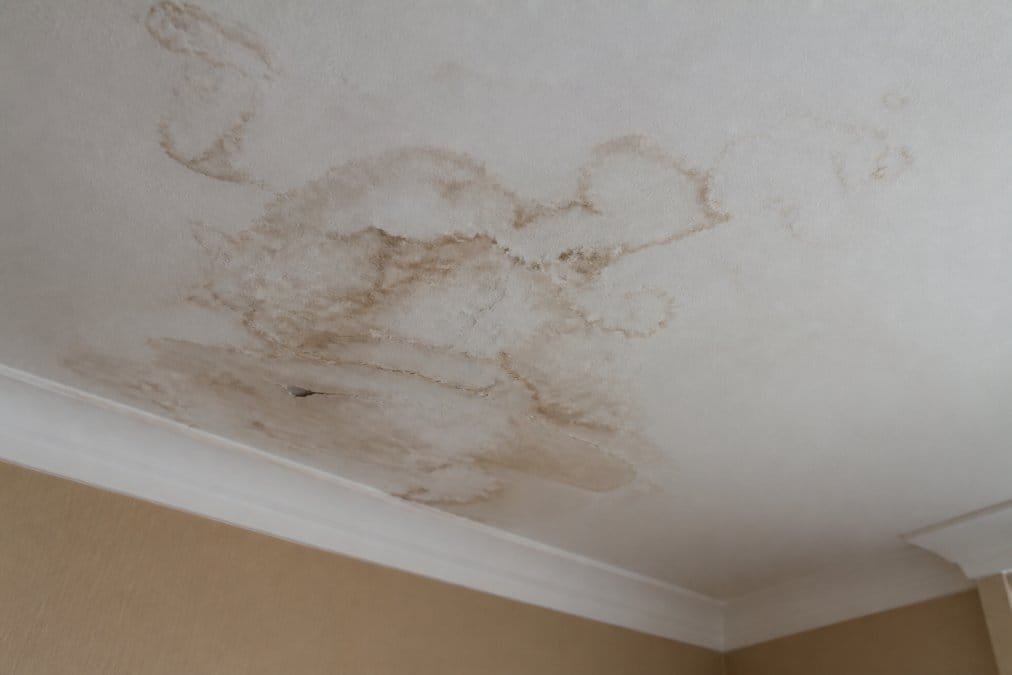
Water doesn’t always travel directly from roof to ceiling. It can travel along rafters, insulation, and timber before appearing below, meaning the actual leak point may be several feet away from the visible stain. Check your loft or attic during or immediately after heavy rain to trace the leak back to its origin. Look for wet insulation, damp timber, or active water dripping from above.
Watch Out
Ceiling leaks combined with soft or spongy plaster indicate prolonged water penetration. The structural integrity of your ceiling joists may be compromised, and mould spores are likely present in the insulation. This requires immediate professional assessment.
Ceiling leaks combined with soft or spongy plaster indicate prolonged water penetration. The structural integrity of your ceiling joists may be compromised, and mould spores are likely present in the insulation. This requires immediate professional assessment.
Water damage compounds over time, saturating insulation, weakening timber, and creating ideal conditions for mould (as highlighted by [EXTERNAL_LINK: Public Health England’s guidance on damp and mould | gov.uk/government/publications/health-effects-of-damp-and-mould]). If you spot water stains, locate the leak source and contain immediate water flow by placing buckets under dripping water. Then contact a roofing professional immediately for a full roof inspection.
2. Missing, Cracked, or Slipped Roof Tiles
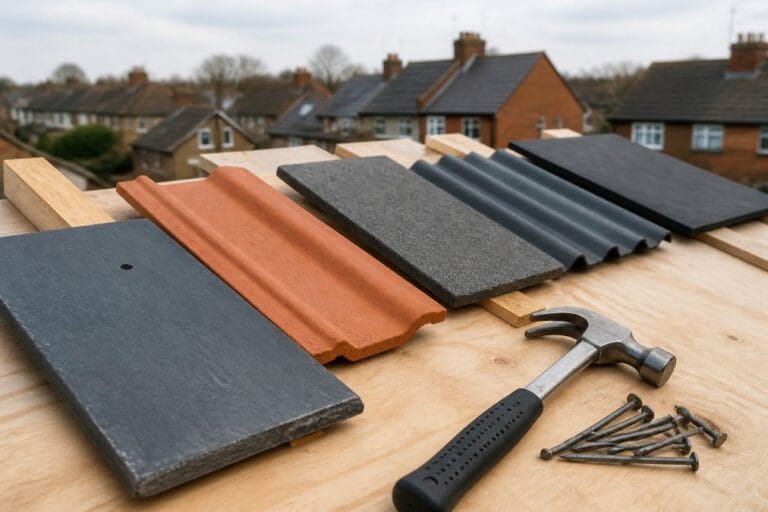
Roof tiles that are missing, cracked, or slipped out of position create direct pathways for water to enter your home. A single missing tile exposes the felt and timber underneath to rain, wind, and frost damage.
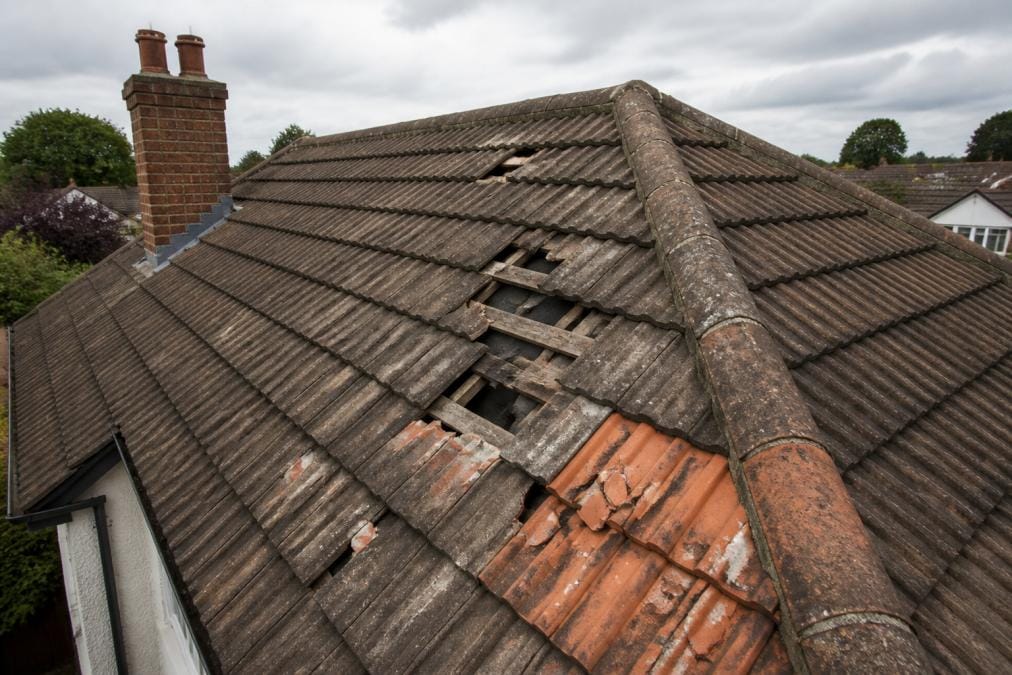
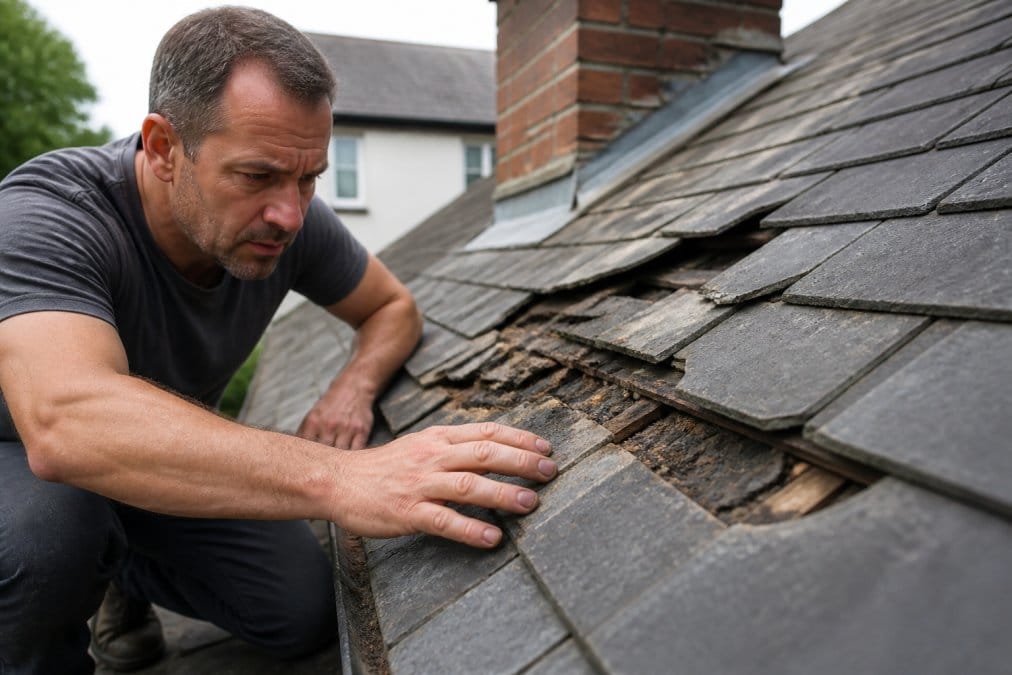
Tiles slip or crack due to high winds, heavy snow load, freeze-thaw cycles, and age. In the UK climate, water enters tiny cracks in tiles, freezes, expands, and shatters the tile from inside out. Slipped tiles often occur in clusters around the roof ridge where wind pressure is greatest. Cracked tiles may not be visible from the ground, but hairline cracks allow water in during heavy rain. By the time you notice water damage indoors, the crack has been admitting moisture for considerable time.
Pro Tip
Use binoculars to inspect tiles from ground level. Look for tiles that sit lower than neighbours (slipped), tiles with visible chunks missing, or tiles with hairline cracks. Document damage with photos and contact a roofer immediately. Never attempt to replace tiles yourself unless trained in roof work with proper fall protection.
Use binoculars to inspect tiles from ground level. Look for tiles that sit lower than neighbours (slipped), tiles with visible chunks missing, or tiles with hairline cracks. Document damage with photos and contact a roofer immediately. Never attempt to replace tiles yourself unless trained in roof work with proper fall protection.
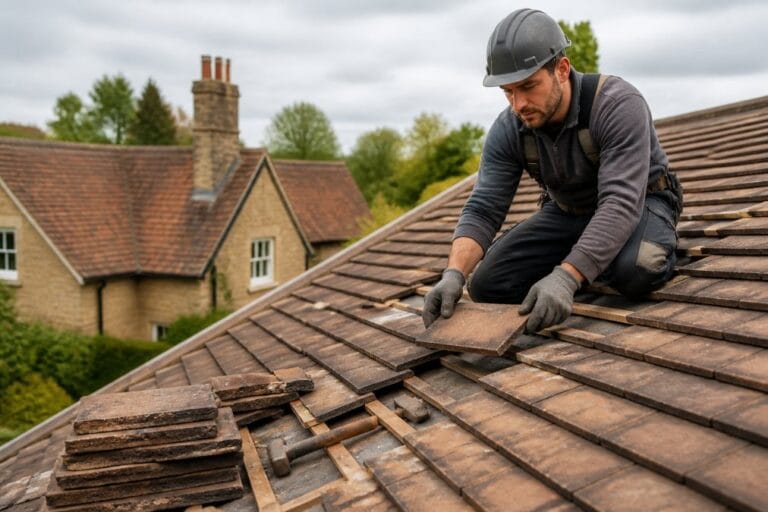
Replacing a few tiles is affordable and straightforward. Delaying the repair risks water damage to felt, timber structure, and interior. At Evershield Roofing, we recommend addressing missing or cracked tiles within days of discovery.
3. Sagging or Visibly Damaged Roof Structure
A sagging roofline indicates that structural timbers supporting your roof have weakened or failed, resulting from years of water damage, timber rot, inadequate support, or excessive snow load. This is a safety hazard and a sign of imminent structural failure.
When you look at your roofline from the street, it should appear straight and level. If the ridge line dips or sags in the middle, or if edges slope inward rather than outward, the structural timbers are failing. Water damage and timber rot are the primary causes. When water penetrates through failed tiles or flashing, it saturates the timber structure. Over months and years, the wood loses structural strength. Freeze-thaw cycles accelerate this process by forcing water deep into the timber grain.
Watch Out
A sagging roof can collapse under additional load, such as heavy snow or high winds. This is a genuine safety risk. Contact a structural surveyor and roofer immediately. The roof may need temporary bracing while repairs are planned. Do not allow anyone to work in the loft directly beneath a sagging roof section.
A sagging roof can collapse under additional load, such as heavy snow or high winds. This is a genuine safety risk. Contact a structural surveyor and roofer immediately. The roof may need temporary bracing while repairs are planned. Do not allow anyone to work in the loft directly beneath a sagging roof section.
Repairing a sagging roof requires replacement of the damaged timber structure, a major undertaking. The roof may need temporary support with props while old timbers are removed and new ones installed. This requires specialist contractors with structural knowledge.
4. Moss, Algae, and Organic Growth
Moss and algae growth on your roof indicates moisture retention and poor drainage, both of which accelerate roof deterioration. While moss-covered roofs may look picturesque, the organic growth traps moisture against tiles and felt, creating ideal conditions for water penetration, timber rot, and further damage.
Moss thrives in shaded areas where moisture lingers. North-facing roof slopes, areas beneath overhanging trees, and sections with poor drainage are particularly vulnerable. The moss roots penetrate into tile pores, gradually breaking them down. More importantly, the moss layer acts as a sponge, holding water against the roof surface, exposing the underlying structure to prolonged moisture.
The solution is twofold: remove the organic growth and address the underlying drainage or moisture issue. Pressure washing can remove moss and algae, but it must be done carefully to avoid damaging tiles. However, cleaning alone won’t solve the problem if the underlying cause, poor drainage, blocked gutters, or shaded exposure, remains unaddressed.
Key Takeaway
If you see heavy moss or algae growth, [inspect your](/how-to-inspect-your-roof-for-damage/) gutters and downpipes for blockages. Clogged gutters prevent water from draining properly, causing it to pool on the roof and creating damp conditions moss needs to thrive. Clearing gutters often reduces moss growth significantly.
If you see heavy moss or algae growth, [inspect your](/how-to-inspect-your-roof-for-damage/) gutters and downpipes for blockages. Clogged gutters prevent water from draining properly, causing it to pool on the roof and creating damp conditions moss needs to thrive. Clearing gutters often reduces moss growth significantly.
Heavy organic growth combined with other signs, water stains, damaged tiles, or sagging, suggests your roof’s condition is deteriorating rapidly.
Emergency Roof Repair in Gerrards Cross
When you discover signs that your roof needs urgent repair, knowing how to respond quickly is essential. In Gerrards Cross and surrounding Buckinghamshire, emergency roof repairs require a contractor who can respond within hours and understands local properties and climate conditions.
Emergency repairs differ from planned maintenance. They’re triggered by active leaks, storm damage, or visible structural failure that poses immediate risk. The goal is to stabilise the situation quickly, stopping the leak, securing loose materials, and preventing further water ingress, whilst a full repair or replacement is planned.
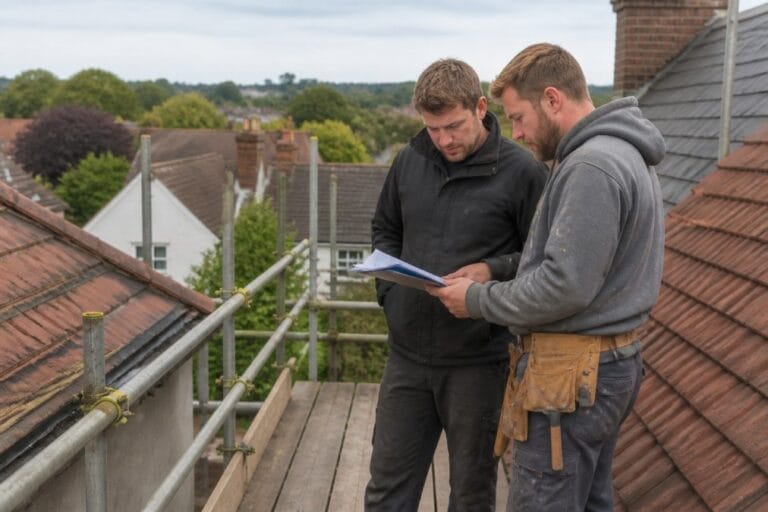
When you call for emergency roof repair, have specific information ready: where water is coming in, whether damage is visible from outside, and when the problem first appeared. At Evershield Roofing, we understand that roof leaks can’t wait for convenient business hours; water damage accelerates rapidly. Our team responds quickly to assess damage, implement temporary stabilisation measures if needed, and schedule the full repair. We’ve worked extensively throughout Gerrards Cross and Buckinghamshire, so we’re familiar with local building standards and common roof types.
Temporary fixes, such as tarping a damaged section or sealing a leak with roofing cement, can buy you time until permanent repair is possible. However, these are short-term measures only. Permanent repairs require addressing underlying damage, which may involve replacing tiles, repairing timber, or reinstalling flashing.
5. Damaged Flashing and Chimney Issues
Flashing is the metal trim that seals joints where your roof meets vertical structures like chimneys, walls, and vents. When flashing fails, water runs behind tiles and into gaps between the roof and structure, causing leaks that are often difficult to locate and repair. Damaged or corroded flashing is one of the most common sources of roof leaks.
Get Your Free Roofing Quote Today! →
Flashing is typically made from lead, zinc, or aluminium. Over time, these materials corrode or develop gaps where they overlap with tiles or mortar. Freeze-thaw cycles cause expansion and contraction, gradually separating flashing from the roof surface. Once flashing lifts or cracks, water flows directly into the gap, bypassing the protective tile layer.
Chimney flashing is particularly vulnerable because it’s exposed to temperature extremes and weather from all sides. The mortar around the chimney base can crack, allowing water to seep behind the flashing. Water behind chimney flashing can saturate the chimney structure and surrounding timber and masonry, leading to serious structural damage.
Inspect flashing visually from the ground using binoculars. Look for gaps between flashing and tiles, visible corrosion or rust, or flashing lifting away from the surface.
Watch Out
Chimney issues often involve both flashing failure and deterioration of chimney mortar. If your chimney is leaking, mortar joints between bricks may be crumbling, allowing water to enter the chimney structure. This requires both flashing replacement and chimney repointing, a specialist task. Do not ignore chimney leaks, as water damage can spread into your home’s structure.
Chimney issues often involve both flashing failure and deterioration of chimney mortar. If your chimney is leaking, mortar joints between bricks may be crumbling, allowing water to enter the chimney structure. This requires both flashing replacement and chimney repointing, a specialist task. Do not ignore chimney leaks, as water damage can spread into your home’s structure.
Repairing flashing involves removing tiles around the failed section, replacing or resealing the flashing, and reinstalling tiles. For chimneys, this may also involve repointing mortar joints. At Evershield Roofing, we offer chimney repairs and flashing replacement as part of our comprehensive roofing services.
6. Granule Loss and Worn Roof Surface
Modern asphalt tiles are coated with granules, small stones that protect the asphalt from UV damage and weather (as explained by [EXTERNAL_LINK: the National Federation of Roofing Contractors (NFRC) | nfrc.co.uk]). Over time, these granules wash away, leaving the underlying asphalt exposed. Significant granule loss indicates your roof is nearing the end of its serviceable life and needs urgent repair or replacement.
You’ll notice granule loss in gutters and downpipes, where washed-away granules accumulate, and on the roof surface itself, where tiles appear faded or underlying asphalt becomes visible. A few granules in the gutter is normal, but handfuls of granules after rain indicate tiles are deteriorating rapidly.
Granules protect the asphalt from UV degradation. Without granules, the asphalt oxidises and becomes brittle. Cracks form, and water penetration accelerates. Poor ventilation or excessive heat often causes premature granule loss. If your attic is poorly ventilated, heat builds up and cooks the underside of the roof, causing granules to loosen and wash away faster than normal.
Inspect for granule loss by looking at the roof surface up close or checking gutters after rain. If you find significant granule loss, plan for roof replacement within the next few years.
7. Light Penetrating the Attic or Loft
If you can see daylight coming through gaps in your roof structure when in the attic or loft, your roof has failed and needs urgent repair. Light penetration indicates holes, cracks, or gaps in the roof covering that allow both light and water to enter.
Light often enters through gaps where tiles have slipped or cracked, through holes in the felt layer, or through failed flashing. Sometimes you’ll see light streaming through in distinct beams on sunny days. Other times, you’ll notice general brightening of the attic space that shouldn’t be there. Either way, if light is getting in, water is getting in during rain.
Inspect your loft regularly, particularly after storms or heavy rain. Bring a torch and look for light gaps, water stains on timber, damp insulation, or active water dripping. If you see light penetrating, mark the location and inspect the roof surface above it from outside.
Key Takeaway
The attic or loft is your early warning system for roof failure. Regular inspections, at least twice yearly and after severe weather, catch problems before they cause interior water damage. Document what you see with photos, and contact a roofer if you spot light, water stains, or damp insulation.
The attic or loft is your early warning system for roof failure. Regular inspections, at least twice yearly and after severe weather, catch problems before they cause interior water damage. Document what you see with photos, and contact a roofer if you spot light, water stains, or damp insulation.
Light penetration combined with other signs, water stains, damaged tiles, or granule loss, indicates your roof’s condition is deteriorating rapidly.
Recognising these seven signs early gives you the best chance to protect your home from serious water damage and structural deterioration. Water damage compounds rapidly once it starts, and repair costs escalate dramatically when timber rot and mould are involved. If you spot any of these warning signs, contact a qualified roofer for a professional inspection and assessment.
At Evershield Roofing, we understand the urgency of roof problems. With over 25 years of experience serving properties throughout Buckinghamshire, we respond quickly to emergency calls and provide honest assessments of what repairs your roof actually needs. We offer free surveys and quotes so you can understand the full scope of work before committing. Get your free roofing quote today and protect your home before minor issues become major damage.
Frequently Asked Questions
How do I know if my roof needs urgent repair?
Look for water stains on your ceiling, missing or cracked tiles, sagging sections, or light coming through the attic. If you spot any of these signs of roof water damage, contact a roofer immediately. Delays allow water to penetrate deeper into your structure, causing costly damage to timbers, insulation, and walls. Urgent repairs prevent minor leaks from becoming major structural problems.
What are the most common signs of roof damage in UK homes?
The most frequent indicators include moss and algae growth, damaged flashing around chimneys, missing granules, and visible cracks or slippage in tiles. British weather, particularly heavy rain and wind, accelerates wear on pitched roofs. Flat roofs often develop standing water issues. A roof maintenance checklist UK homeowners should follow includes quarterly inspections, especially after storms, to catch damage before it spreads.
Can a leaking roof cause structural damage to my house?
Yes. Water ingress weakens timber roof trusses, causes rot in joists and rafters, and damages insulation and plasterboard. Over time, structural integrity fails, leading to expensive repairs. Mould growth also poses health risks. This is why emergency roof repair in Gerrards Cross and across Buckinghamshire should never be postponed, early intervention is far cheaper than rebuilding a damaged structure.
How often should I inspect my roof?
Inspect your roof at least twice yearly, spring and autumn, and always after severe weather. Look for loose tiles, blocked gutters, and flashing damage. If you spot problems, arrange a professional survey. Evershield Roofing offers free surveys to assess damage and recommend repairs. Regular checks catch small issues before they demand urgent attention and expensive remedial work.