Roof Replacement Process Explained for Homeowners
Roof replacement process explained for homeowners: from survey to final inspection, learn what to expect at every stage. Get your free quote today.

Table of Contents
- Signs You Need a New Roof (Not Just a Repair)
- What to Expect During Your Initial Roof Survey
- Roof Replacement Building Regulations UK: What Homeowners Must Know
- Step-by-Step: The Roof Replacement Process Explained
- How Long Does a Roof Replacement Take?
- How to Prepare Your Home and What It Costs
- Frequently Asked Questions
Last Updated: September 10, 2026
Signs You Need a New Roof (Not Just a Repair)
Most homeowners wait for water to hit the ceiling before they think about their roof. That’s a mistake. By the time a leak shows up indoors, the damage underneath has usually been spreading for months.
Knowing when to repair and when to replace saves you money and stress. Evershield Roofing has over 25 years of industry experience, and the pattern is always the same: the homeowners who act early spend less.
Here’s what to look for:
- Daylight through the loft. If you can see light coming through the roof boards, the covering has failed.
- Granules in the gutter. Asphalt tiles shed their protective coating as they age. A handful after a storm is normal; a gutter full of grit means the tiles are near the end of their life.
- Sagging or dipping rooflines. A wavy ridge line points to structural movement, not just worn tiles.
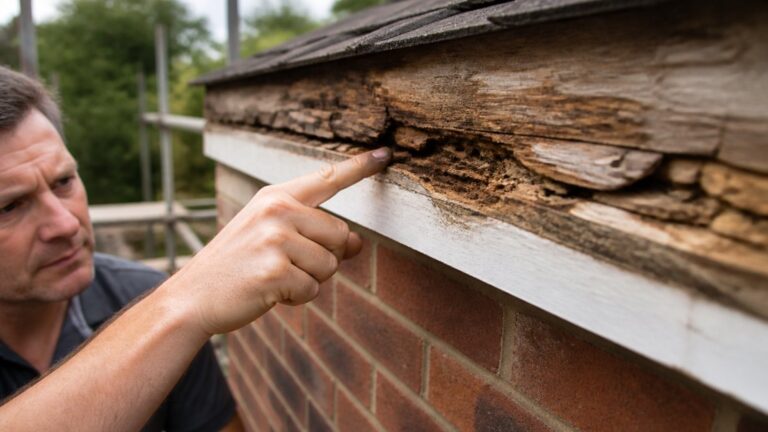
- Moss and dark staining. Persistent moss holds moisture against the roof surface and speeds up decay, a common problem on older properties in this region.
- Repeated leaks in different spots. One leak is a repair. Three leaks in two years means the roof is finished.
A roof that’s past its service life will keep costing you money in small repairs. At some point, replacement is the cheaper option.
Watch Out
Patching a roof that has reached the end of its life is a false economy. Each repair buys a few months, and the underlying problem, a failed covering, stays exactly where it was.
Patching a roof that has reached the end of its life is a false economy. Each repair buys a few months, and the underlying problem, a failed covering, stays exactly where it was.
What to Expect During Your Initial Roof Survey
A roof survey is a full inspection of your roof’s condition, carried out before any work is quoted. It should take 45 to 90 minutes for a typical home.
A good surveyor checks more than the tiles. They look at the battens, the felt or membrane underneath, the flashing around chimneys, the valleys, and the state of your gutters and fascias. These are the parts that cause most leaks, and they’re the parts you can’t see from the ground.
During the survey, expect the roofer to:
- Inspect the roof from ladders, a tower, or a drone where safe access allows
- Check inside the loft for damp, daylight, and damaged timbers
- Photograph any problem areas so you can see what they see
- Talk you through repair versus replacement, with reasons
Ask for the survey in writing. A reputable company will give you a clear report and a fixed quote, not a rough figure delivered at the door.
At Evershield Roofing, surveys and quotes are free, and there’s always someone available to answer questions before you commit to anything. If you’re searching for a roofer near me, start with a company that puts its findings in writing.
Roof Replacement Building Regulations UK: What Homeowners Must Know
Roof replacement in the UK is covered by the Building Regulations, and your roofer is responsible for making sure the work complies. You don’t need to apply for permission yourself in most cases, but you do need to know what applies.
The key requirements are:
- Thermal performance. If you replace more than a small section of the roof, the new covering must meet current insulation standards. In practice, this usually means adding insulation while the roof is open.
- Structural integrity. The roof must safely carry the weight of the new covering and any increased load from insulation.
- Weather resistance and drainage. The finished roof must shed water properly, with correctly sized gutters and downpipes.
For most domestic roof replacements, the work falls under competent person arrangements or is certified by the installer, which means you receive a certificate on completion. Keep that certificate. You’ll need it if you sell the property.
For listed buildings or homes in a conservation area, you’ll also need to check with your local planning authority before any work starts. Materials may need to match the original.
If a roofer tells you regulations don’t apply to a full replacement, that’s a red flag. They do.
Step-by-Step: The Roof Replacement Process Explained
The roof replacement process explained below follows the same sequence on almost every job. Timings shift with weather and roof size, but the order never changes.
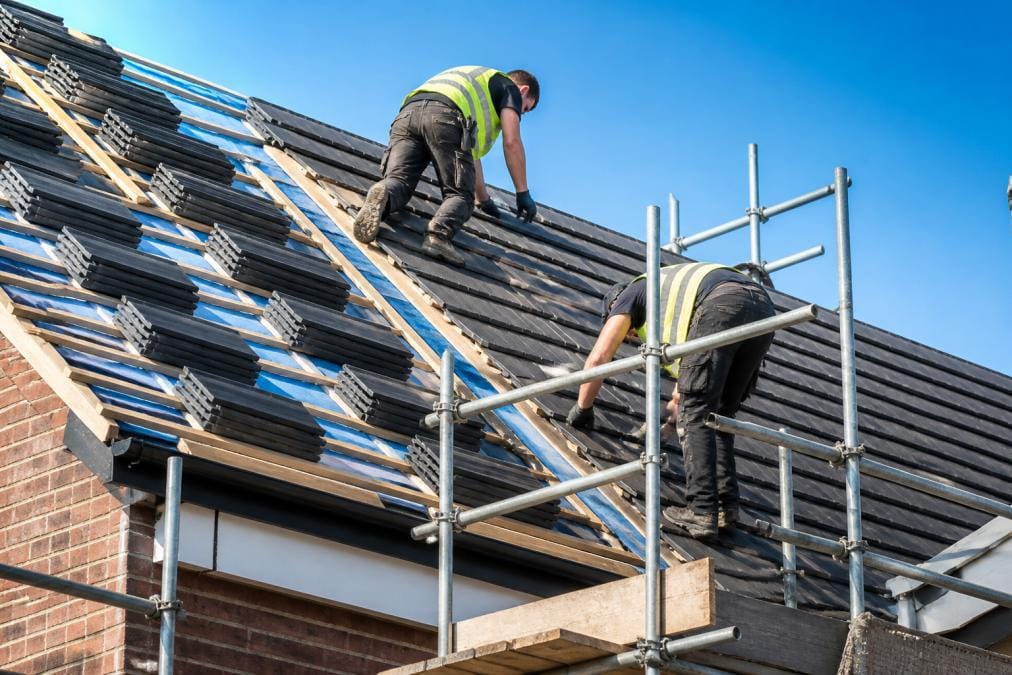
Step 1: Scaffolding and Site Preparation
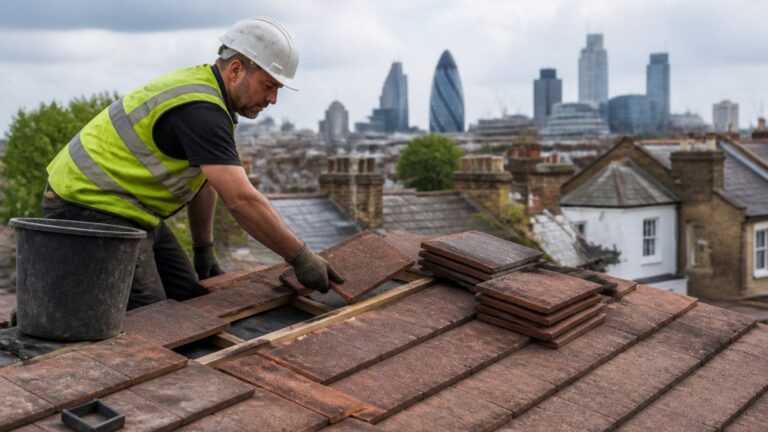
Scaffolding goes up first. This usually takes half a day, and it needs to be erected by a trained team to current safety standards. Your roofer will also lay protective sheeting over driveways, gardens, and anything below the working area.
Expect some noise and a temporary loss of access to the side of your house. Move your car off the driveway before the crew arrives.
Get Your Free Roofing Quote Today! →
Step 2: Stripping the Old Roof Covering
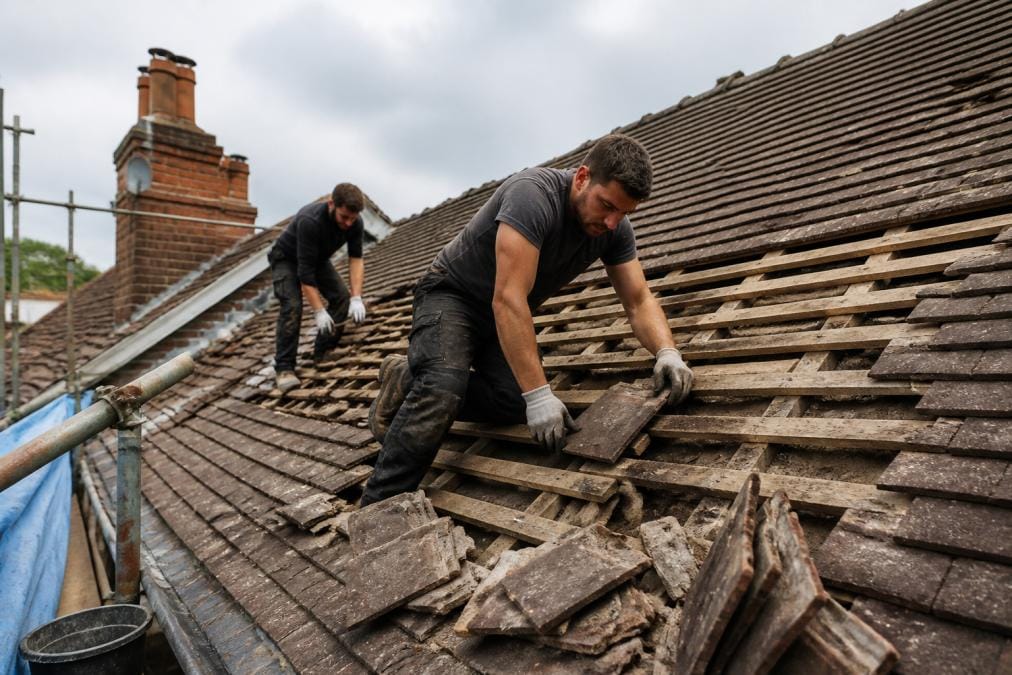
The old tiles or slates come off next, working from the ridge down. The battens and felt are removed too, so the roof structure is fully exposed. This is the noisiest stage, and it’s when any hidden rot or damaged timbers are found.
If the timbers need replacing, this is the point where the quote may change. A good roofer will show you photos and explain the extra cost before doing the work.
Step 3: Installing New Roof Covering and Finishing
New membrane, battens, and covering go on in that order. Ridge tiles, flashing around chimneys, and any new guttering are fitted last. The scaffolding comes down once the roof is watertight and the site is cleared.
Most jobs finish with a walkthrough, so you can see the completed work and ask questions.
Pro Tip
Ask your roofer to photograph the roof at each stage, before the new covering goes on. Those photos prove the timbers and membrane underneath were sound, which matters if you ever sell.
Ask your roofer to photograph the roof at each stage, before the new covering goes on. Those photos prove the timbers and membrane underneath were sound, which matters if you ever sell.
How Long Does a Roof Replacement Take?
A typical roof replacement on a three-bedroom semi-detached house takes three to five working days. Larger or more complex roofs can take one to two weeks.
Here’s how that time usually breaks down:
| Stage | Typical Duration | What’s Happening |
|---|---|---|
| Scaffolding and preparation | Half a day | Access, safety, protection |
| Stripping old covering | One day | Removal of tiles, battens, felt |
| Structural repairs (if needed) | One to two days | Timber replacement, if found |
| New covering and finishing | Two to three days | Membrane, battens, tiles, flashing |
| Site clearance | Half a day | Scaffolding down, tidy up |
Weather is the biggest variable. Heavy rain stops work, and a wet roof can’t be covered safely. Most roofers build a buffer into the schedule for this reason.
How to Prepare Your Home and What It Costs
Preparation is simple but worth doing properly. Clear the loft of anything you don’t want covered in dust, move vehicles off the driveway, and take down hanging baskets or anything fixed to the exterior walls near the scaffolding.
Cost depends on roof size, pitch, covering material, and whether structural repairs are needed. Because those factors vary so much from property to property, the honest answer is that no two quotes are the same. Ask for a written, itemised quote that separates labour, materials, and any potential repair work, so you know what you’re paying for. Evershield Roofing offers finance from 0% APR, which spreads the cost for homeowners who’d rather not pay everything upfront.
A few things to confirm before you sign:
- The quote is fixed and in writing
- Scaffolding, waste removal, and VAT are included
- The workmanship guarantee is stated, in years
- The company is fully insured
- You’ll receive a Building Regulations certificate on completion
Key Takeaway
The cheapest quote is rarely the best value. Check the guarantee, the insurance, and what’s excluded before comparing prices.
The cheapest quote is rarely the best value. Check the guarantee, the insurance, and what’s excluded before comparing prices.
A roof replacement is one of the biggest jobs you’ll ever have done on your home, and the process can feel daunting when you don’t know what’s coming next. The right contractor makes it straightforward: a clear survey, a fixed quote, and a team that explains each stage as it happens.
Evershield Roofing has over 25 years of industry experience, offering services from roof repairs and new installations to flat roofs, guttering, and chimney work. Free surveys, fully insured teams, and finance from 0% APR mean you can get the job done without the guesswork. Get your free roofing quote today and find out what your roof actually needs.
Frequently Asked Questions
How long does a roof replacement take in the UK?
Most residential roof replacements take between one and three weeks, depending on the size and complexity of your roof. A simple two-bedroom property might be finished in under a week, while larger homes with multiple elevations or chimney work can take longer. Weather also plays a part, as heavy rain or high winds can pause work. Your roofer should give you a realistic timeline during the survey, and you can ask for a written schedule before work begins.
Do I need planning permission for a roof replacement?
In most cases, a like-for-like roof replacement does not require planning permission, as it falls under permitted development rights. However, if you live in a conservation area, a listed building, or a designated area of outstanding natural beauty, you will likely need approval before changing materials or altering the roof’s appearance. Building regulations may also apply for structural changes or thermal upgrades. Always check with your local planning authority before work starts to avoid costly delays.
What are the signs that my roof needs replacing rather than repairing?
Several signs point to replacement rather than repair. These include missing or cracked tiles across large areas, sagging roof lines, daylight visible through the roof boards, and recurring leaks despite previous repairs. Granules collecting in gutters, moss growth that keeps returning, and a roof older than 20 to 25 years are also strong indicators. If your roofer finds widespread damage during a survey, replacement often works out cheaper than repeated patch repairs over several years.
How much does a roof replacement cost on average in the UK?
Roof replacement costs vary widely based on roof size, pitch, materials, and access requirements. Factors like scaffolding, chimney repairs, and whether you choose tiles or slate all affect the final figure. Rather than relying on generic averages, ask for a detailed written quote that breaks down materials, labour, and any extras. A reputable roofer will survey your property first and provide a fixed price so you know exactly what you are paying before work begins.