Alternatives to Slate Roof Installation
Explore practical alternatives to slate roofing, from synthetic tiles to metal options. Compare costs, durability, and installation requirements for your.

Table of Contents
- Why Homeowners Consider Alternatives to Slate Roofing
- Synthetic Slate Roof Tiles: Cost and Performance
- Lightweight Metal Roofing as a Slate Alternative
- Building Regulations for Roof Replacement
- Cost Comparison and Long-Term ROI
- Structural Reinforcement and Weight Considerations
- Installation Complexity and Timeline
- Environmental Impact and Recycled Material Options
Last Updated: August 12, 2026
Why Homeowners Consider Alternatives to Slate Roofing
Natural slate has dominated residential roofing for centuries, but modern alternatives have emerged. Traditional slate carries significant drawbacks: its weight strains older structures, installation requires specialist skills that drive labour costs higher, and replacement slates are increasingly difficult to source. Understanding what alternatives exist could save you thousands of pounds and months of installation time.
At Evershield Roofing, we work with homeowners who face this decision. Some inherit period properties with failing slate roofs and discover that structural reinforcement alone costs more than switching materials entirely. Modern alternatives to slate roof materials have evolved dramatically, they replicate the aesthetic of traditional slate, often outperform it in durability, and can be installed on structures that would collapse under natural slate’s weight.
This guide explores genuine alternatives to slate roofing, breaking down cost, installation complexity, regulatory requirements, and long-term value so you can make an informed decision based on your specific situation.
Pro Tip
The single biggest mistake homeowners make is assuming all alternatives to slate roof materials are “cheap substitutes.” Modern synthetic slate and metal roofing often outlast natural slate whilst costing significantly less upfront and requiring far less maintenance.
The single biggest mistake homeowners make is assuming all alternatives to slate roof materials are “cheap substitutes.” Modern synthetic slate and metal roofing often outlast natural slate whilst costing significantly less upfront and requiring far less maintenance.
Synthetic Slate Roof Tiles: Cost and Performance
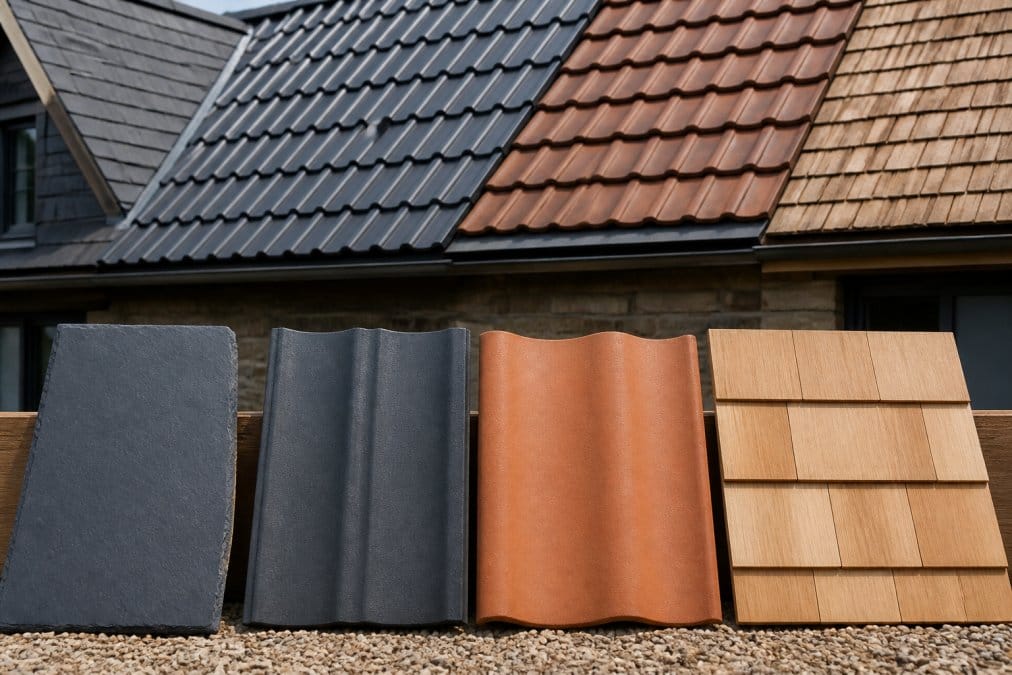
Synthetic slate tiles replicate traditional slate’s appearance whilst eliminating most associated problems. These tiles are manufactured from recycled polymers, limestone blends, or composite materials designed to match authentic slate without the fragility or weight burden.
Synthetic tiles weigh roughly 12 kilograms per square metre compared to natural slate at 50-60 kilograms per square metre. That weight difference means many older properties that couldn’t support a slate replacement can accept synthetic alternatives without expensive structural work.
Installation is faster and more forgiving than slate. Tiles come pre-marked with nailing guides and integrated spacers, so roofers don’t need years of specialist training. Labour costs drop accordingly. Most synthetic slate systems include 40-year weatherproofing warranties, matching what you’d expect from slate.
The trade-off is authenticity at close range. Whilst modern synthetic tiles look convincing from ground level, an inspector standing on the roof will notice the difference. For conservation areas or listed properties, this matters legally. Check with your local authority before committing.
TapcoSlate and Britmet LiteSlate Compared
Two brands dominate the synthetic slate market: TapcoSlate Classic and Britmet LiteSlate.
TapcoSlate Classic uses a recyclable blend of limestone and polypropylene moulded from authentic slate samples. Individual tiles cost approximately £3.07 per tile, or around £76.87 for a pack of 25 covering one square metre. Installation requires minimum roof pitch of 12 degrees. The warranty covers 40 years against weathering, cracking, and delamination.
Britmet LiteSlate uses over 90% recycled content, making it the most environmentally responsible synthetic option. Tiles weigh the same as TapcoSlate but cost slightly less at approximately £48.40 per pack of 22 tiles. Britmet achieves BS476-3 Fire Rating (AA classification), which matters in high fire-risk areas. The minimum roof pitch is 15 degrees.
The practical difference comes down to environmental commitment and fire rating. If your property is in a high-fire-risk area or you prioritise recycled materials, Britmet makes sense. If visual authenticity is your priority and you want the lowest minimum pitch requirement, TapcoSlate edges ahead.
| Material | Weight per m² | Minimum Pitch | Cost per Unit | Warranty | Best For |
|---|---|---|---|---|---|
| TapcoSlate Classic | 12 kg | 12° | £3.07/tile | 40 years | Visual authenticity, lower pitch requirements |
| Britmet LiteSlate | 12 kg | 15° | £48.40/pack | 40 years | Recycled content, fire rating priority |
| Natural Slate | 50-60 kg | 25°+ | £10-20/tile | 80+ years | Period properties, listed buildings |
Key Takeaway
Synthetic slate tiles cost significantly less than natural slate whilst weighing a fraction of the load. For most homeowners, they’re the most practical alternative to slate roof installation, balancing aesthetics, durability, and installation simplicity.
Synthetic slate tiles cost significantly less than natural slate whilst weighing a fraction of the load. For most homeowners, they’re the most practical alternative to slate roof installation, balancing aesthetics, durability, and installation simplicity.
Lightweight Metal Roofing as a Slate Alternative
Modern metal tiles are engineered to replicate slate or traditional shingles, using high-grade steel with stone-chip finishes that look nothing like corrugated barn roofing.
Metrotile Shingle represents the best execution of this approach. Manufactured from ZAM steel (a corrosion-resistant coating combining zinc, aluminium, and magnesium), each tile weighs only 6-7 kilograms per square metre, half the weight of synthetic slate and roughly one-tenth the weight of natural slate. The hidden-fix system eliminates exposed fasteners, creating a seamless aesthetic whilst improving weatherproofing.
The real advantage is longevity combined with minimal maintenance. Metrotile carries a 40-year weatherproof guarantee and high fire rating (EXT.S.AA). Installation works on roof pitches from 15 degrees to vertical, making it suitable for unusual architectural shapes where slate struggles. Individual tiles cost approximately £10.44 each, positioning metal as competitive with synthetic slate on price.
The honest drawback: metal roofing can amplify rain noise. Modern installations address this with acoustic underlay, but it adds cost. Homeowners in areas with frequent heavy rain should budget for this additional layer.
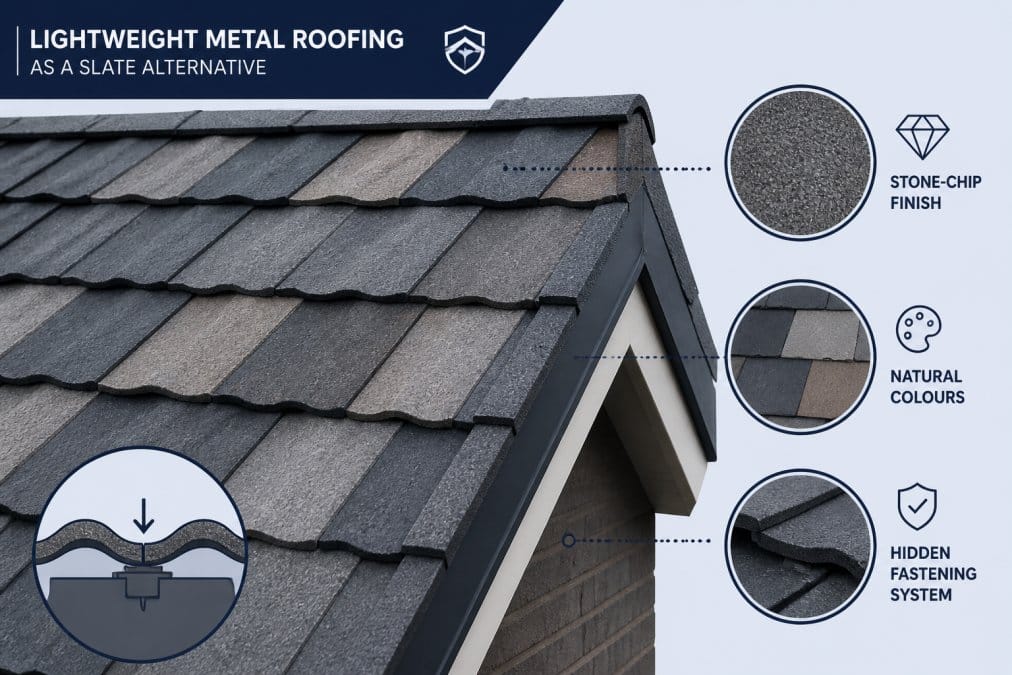
For properties where weight is critical, older timber-frame buildings, converted barns, or structures with limited load capacity, metal roofing often becomes the only practical alternative to slate roof materials that doesn’t require expensive structural reinforcement.
Building Regulations for Roof Replacement
Replacing a roof isn’t simply a matter of choosing a material and hiring a contractor. Building regulations govern what you can install, and they vary depending on your property’s age, location, and whether it’s listed or in a conservation area.
In England, roof replacements must comply with Building Regulations Part L (Conservation of fuel and power) and Part F (Ventilation). Part L requires that any roof replacement improves thermal performance, you can’t simply swap one slate roof for an identical synthetic slate roof without upgrading insulation. This typically means adding insulation between rafters or installing a warm roof system, which adds cost.
If your property is listed or located in a conservation area, additional restrictions apply. Listed Building Consent is required before replacing a roof, and local authorities often mandate that you maintain the original material type. Conservation areas have less rigid requirements, but authorities still expect replacements to match the character of the area. Check with your local planning authority before committing to any material choice.
Building Regulations Part L guidance specifies minimum U-values for roof insulation. For most properties, this means upgrading to a minimum of 0.16 W/m²K thermal resistance. Synthetic slate and metal roofing both accommodate this requirement easily.
Budget for Building Control approval, which typically costs £200-400 and requires an inspection before and after installation. If your property is listed, add another 4-8 weeks for Listed Building Consent applications.
Watch Out
Proceeding with a roof replacement without Building Regulations approval can result in fines up to £5,000 and difficulty selling the property later. Local authorities conduct random inspections, and unpermitted work is a red flag during conveyancing surveys.
Proceeding with a roof replacement without Building Regulations approval can result in fines up to £5,000 and difficulty selling the property later. Local authorities conduct random inspections, and unpermitted work is a red flag during conveyancing surveys.
Cost Comparison and Long-Term ROI
Upfront material cost tells only half the story. Maintenance, repair, and replacement cycles determine genuine long-term cost.
Natural slate costs approximately £10-20 per tile, but specialist slate roofers charge premium rates. A full roof replacement on a three-bedroom semi typically costs £15,000-25,000 for slate alone, before scaffolding, insulation upgrades, or structural work. If structural reinforcement is needed, add another £5,000-10,000.
Synthetic slate runs approximately £3-5 per tile installed, bringing total replacement cost to £8,000-14,000 for the same property. Installation is faster, typically 5-7 days instead of 3-4 weeks.
Get Your Free Roofing Quote Today! →
Metal roofing costs roughly £4-6 per tile installed, landing in the £9,000-15,000 range. The advantage emerges in maintenance. Slate requires ongoing roof repairs as individual tiles crack or delaminate, typically costing £500-1,500 annually for aging roofs. Synthetic slate and metal roofing are maintenance-free for the warranty period.
Over 30 years, a slate roof might cost £20,000 upfront plus £15,000-20,000 in repairs. An alternative to slate roof installation might cost £12,000 upfront with virtually no maintenance costs. The break-even point arrives around year 8-10.
| Material | Upfront Cost | Annual Maintenance | 30-Year Total | Best ROI For |
|---|---|---|---|---|
| Natural Slate | £18,000-25,000 | £500-1,500 | £33,000-50,000 | Listed properties, heritage value |
| Synthetic Slate | £10,000-14,000 | £0-200 | £10,000-20,000 | Most homeowners, budget-conscious |
| Metal Roofing | £11,000-15,000 | £0-100 | £11,000-18,000 | Exposed locations, minimal maintenance |
Structural Reinforcement and Weight Considerations
Natural slate roofing exerts tremendous downward force on timber frames and wall structures. Older properties, particularly those built before 1950, were often designed for lighter roofing materials like thatch or wood shingles. Installing slate on these structures requires reinforcement: additional timber members, steel beams, or even complete frame rebuilding.
A structural engineer’s assessment costs £400-600 and typically reveals one of three outcomes: the existing structure can support slate with minor reinforcement (£2,000-4,000), significant reinforcement is needed (£5,000-10,000), or the structure cannot safely support slate at any cost. In that third scenario, alternatives to slate roof installation become your only viable path forward.
Synthetic slate at 12 kilograms per square metre requires no structural reinforcement on most properties. Metal roofing at 6-7 kilograms per square metre is even lighter. This weight difference explains why so many homeowners with older properties choose alternatives.
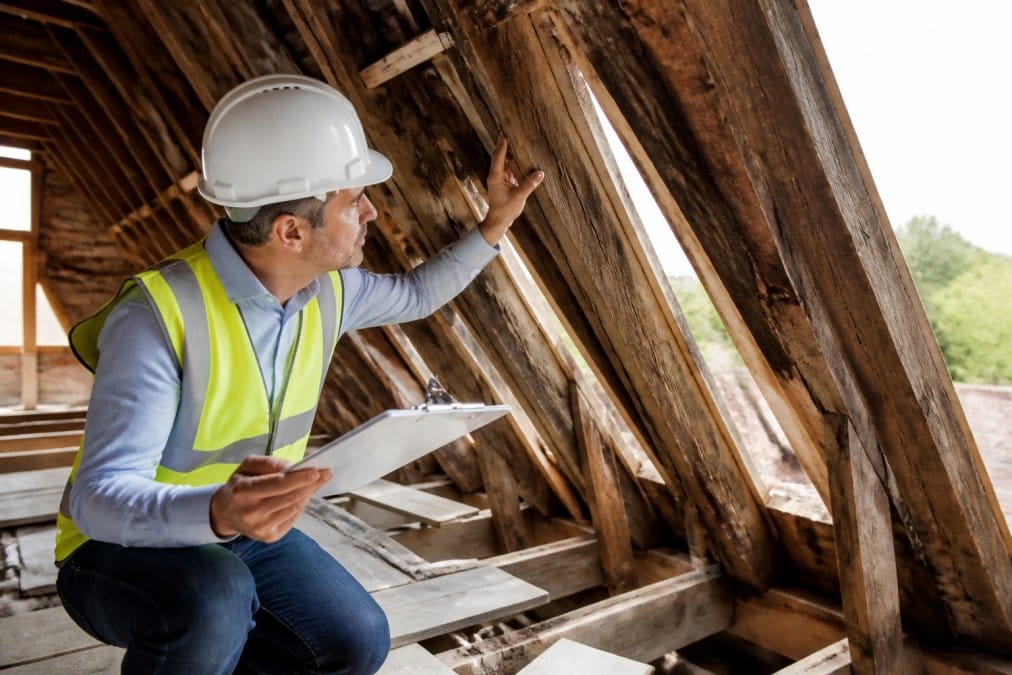
For properties with known structural limitations, the weight consideration becomes decisive. A barn conversion with original timber framing, a Victorian cottage with compromised rafters, or a 1920s bungalow with undersized beams all benefit enormously from lightweight alternatives to slate roof materials.
Pro Tip
Request a structural survey before committing to any roofing material. It costs £400-600 upfront but prevents £5,000-10,000 in unexpected reinforcement work and clarifies which alternatives to slate roof installation are actually viable for your property.
Request a structural survey before committing to any roofing material. It costs £400-600 upfront but prevents £5,000-10,000 in unexpected reinforcement work and clarifies which alternatives to slate roof installation are actually viable for your property.
Installation Complexity and Timeline
How long your roof replacement takes directly impacts your disruption, insurance costs, and overall project stress. Alternatives to slate roof installation shine compared to traditional slate.
Natural slate installation is deliberately slow. Each tile must be individually positioned, nailed, and checked for proper overlap and alignment. A skilled slate roofer installs perhaps 30-40 tiles per day. A typical three-bedroom semi requires roughly 3,000-4,000 tiles, meaning 8-12 weeks of continuous work. Weather delays this further.
Synthetic slate installation runs at roughly double the speed. Pre-marked nailing guides and integrated spacers mean roofers work faster. The same property typically completes in 4-6 weeks. Metal roofing is faster still, with some systems achieving installation in 2-3 weeks.
This speed difference isn’t trivial. Your property is exposed during installation. Faster installation means shorter exposure and lower probability of weather-related damage. Labour availability also favours alternatives, specialist slate roofers are increasingly rare, whilst general roofers trained in synthetic slate and metal roofing are far more common.
Installation complexity also determines cost predictability. Slate installations frequently encounter surprises: rotten timber, unexpected structural issues, or incompatible existing materials. Synthetic slate and metal roofing installations are more standardised, so surprises are rarer and costs more predictable.
For homeowners with limited tolerance for disruption, the installation speed advantage of alternatives to slate roof installation often justifies the choice on its own.
Environmental Impact and Recycled Material Options
Modern roofing materials increasingly emphasise environmental responsibility. Alternatives to slate roof installation offer genuine advantages over traditional slate.
Natural slate extraction is energy-intensive. Quarrying, splitting, and transporting heavy tiles creates a substantial carbon footprint. Once installed, slate’s longevity is its primary environmental advantage. However, if your property doesn’t require slate for heritage reasons, alternatives often deliver better environmental outcomes.
Britmet LiteSlate uses over 90% recycled polymers, diverting waste from landfills. The manufacturing process is significantly less energy-intensive than slate quarrying. Metal roofing uses virgin steel but benefits from steel’s recyclability, at end-of-life, metal roofing can be recycled into new steel products indefinitely with no degradation.
TapcoSlate uses limestone and recycled polypropylene, incorporating recovered materials whilst avoiding the energy intensity of slate extraction.
The disposal question matters too. Old slate roofing becomes landfill waste. Synthetic slate has limited recycling options currently. Metal roofing has established recycling pathways. If environmental impact influences your decision, metal roofing edges ahead, with Britmet LiteSlate as the best synthetic alternative.
Choosing an alternative to slate roof installation requires balancing aesthetics, budget, structural requirements, and regulatory constraints. Synthetic slate tiles offer the best visual match with lower cost and faster installation. Metal roofing delivers superior durability and minimal maintenance for exposed locations. Both eliminate the weight concerns that make slate impractical for many older properties.
The decision ultimately depends on your specific circumstances. If your property is listed or in a conservation area, check with your local authority first. If structural limitations exist, weight becomes the deciding factor. If budget and maintenance matter most, synthetic slate typically delivers the best value.
Evershield Roofing has guided homeowners through this decision. We conduct free surveys, explain your regulatory obligations clearly, and help you understand the genuine long-term costs of each alternative to slate roof installation. Whether you’re exploring new roof installation options or need advice on protecting your existing roof with gutter cleaning and maintenance, our team is here to help. Get your free roofing quote today and discover which material makes sense for your home.
Frequently Asked Questions
What is the best alternative to a slate roof?
The best alternative depends on your priorities. Synthetic slate tiles like TapcoSlate and Britmet LiteSlate offer authentic appearance and durability at lower cost and weight. Lightweight metal roofing (such as Metrotile) provides exceptional durability and fire resistance. If budget is primary, bitumen sheets work for outbuildings but lack residential aesthetic appeal. Consult a surveyor to assess your roof structure's load capacity before deciding.
How much do synthetic slate roof tiles cost compared to natural slate?
Synthetic slate roof tiles cost significantly less upfront. TapcoSlate Classic costs approximately £3.07 per tile, whilst Britmet LiteSlate averages around £48.40 per square metre. Natural slate can exceed £200 per square metre installed. However, total project cost depends on labour, structural work, and your roof size. Request a free survey from a qualified roofer for an accurate quote tailored to your property.
Do lightweight roofing alternatives meet building regulations for roof replacement?
Yes, modern synthetic and metal roofing alternatives meet Building Regulations when installed correctly. They must achieve appropriate fire ratings (typically AA classification), weatherproofing standards, and structural adequacy. Conservation areas may have additional restrictions requiring slate-like appearance. Your surveyor will confirm compliance during the design phase. Always use a contractor familiar with current Building Regulations to ensure your project receives proper certification.
What are the main disadvantages of natural slate roofing?
Natural slate is extremely heavy (around 50kg per square metre), requiring significant structural reinforcement and increasing installation costs. It's fragile and prone to cracking in freeze-thaw cycles. Installation is labour-intensive and slow, requiring specialist craftspeople. Maintenance involves regular inspections for broken tiles and moss. Long-term costs accumulate through repairs and replacements. Synthetic alternatives eliminate these issues whilst maintaining slate's aesthetic appeal.