Roof Replacement Cost for Semi-Detached Homes: 2026 Guide
Roof replacement cost for semi detached: Complete breakdown of roof replacement costs for semi-detached homes. Materials, labour, hidden costs, timescales.

Table of Contents
- Average Cost of Roof Replacement for Semi-Detached Homes
- Factors Affecting Roof Replacement Costs
- Material Costs: Tiles, Slate and Roofing Felt
- Labour Costs and Roofing Contractor Rates
- How Long Does a Roof Replacement Take
- Building Regulations for Roof Replacement
- Roof Replacement Planning Permission UK Requirements
- Hidden Costs and Contingencies to Budget For
Last Updated: August 6, 2026
Average Cost of Roof Replacement for Semi-Detached Homes
Roof replacement costs for semi-detached homes vary widely depending on materials, labour, and structural requirements. A semi-detached property offers advantages over detached homes, shared wall construction reduces some structural complexities, but requires coordinating with neighbours on timing and access.
At Evershield Roofing, we’ve helped homeowners in London and Buckinghamshire navigate this decision. Costs vary significantly based on roof pitch, existing condition, and whether you’re upgrading insulation or ventilation systems simultaneously. An accurate survey is essential, as hidden structural damage often emerges once work begins.
Factors Affecting Roof Replacement Costs
Several interconnected variables determine your final bill: roofing materials, roof structure condition, and location within the UK.
Roofing materials and pitched roof vs flat roof
Your choice between pitched and flat roofs fundamentally shapes cost. Pitched roofs are more common on semi-detached homes and typically cost less because the slope naturally sheds water. Flat roofs require different waterproofing approaches and specialised materials like roofing felt or rubber membranes.
Clay and concrete tiles dominate the UK residential market. Slate roofing offers superior longevity, 100+ years, but commands significantly higher material and labour costs due to specialist installation requirements. Flat roofs demand roofing felt or EPDM rubber; felt typically lasts 15-20 years, whilst rubber membranes can exceed 30 years.
Roof structure and condition assessment
A professional roof survey identifies structural integrity issues before work begins. Timber rot, inadequate ventilation, or previous water damage can necessitate structural repairs that inflate costs dramatically. The roof pitch affects labour intensity; steeper pitches require more scaffolding and safety equipment.
Structural repairs often emerge during work. Discovering rotten timbers or inadequate ventilation mid-project requires immediate attention. Building regulations compliance means you cannot simply patch over problems; the structure must meet current standards.
Location and regional price variance
Roof replacement costs vary noticeably across the UK. London and Buckinghamshire experience higher labour rates than rural areas. Material transport costs also differ; remote locations may incur delivery surcharges.
Local building regulations enforcement varies between councils. Conservation areas may restrict material choices, potentially limiting cost-saving options. Buckinghamshire’s climate favours pitched roofs with good water shedding; flat roofs in areas with heavy rainfall require premium waterproofing solutions.
Material Costs: Tiles, Slate and Roofing Felt
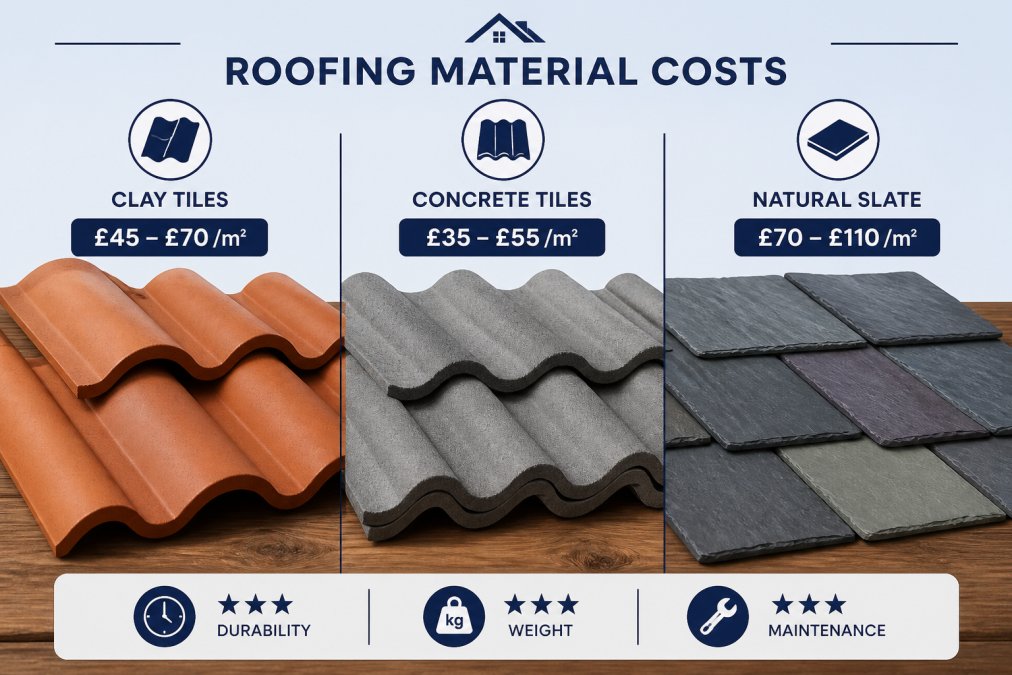
Materials represent roughly 40-50% of total roof replacement cost for semi-detached properties.
Clay tiles, concrete tiles and slate options
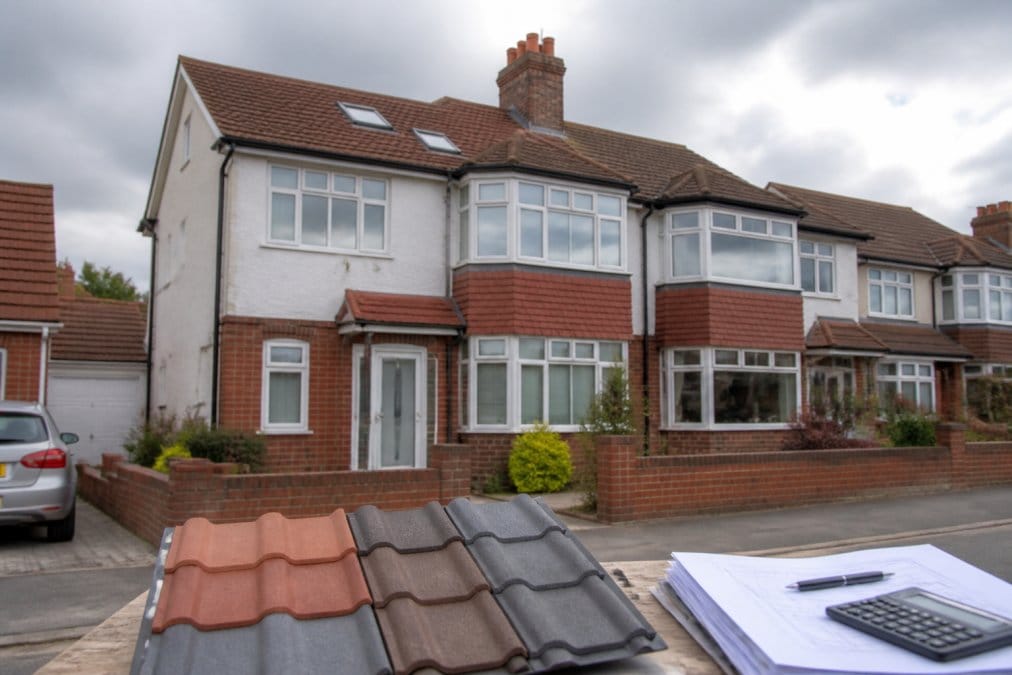
Clay tiles are traditional and durable, lasting 50-60 years with proper maintenance. They’re heavier than concrete tiles, requiring strong roof structure underneath. Concrete tiles cost less but still offer 40-50 year lifespans and are lighter, reducing structural load.
Slate roofing represents the premium option, lasting 100+ years and making it a genuine long-term investment. Installation requires specialist roofers trained in slate-specific techniques, and slate’s weight demands reinforced roof structure. For most semi-detached homes in Buckinghamshire, concrete or clay tiles offer the practical balance between cost and performance.
Roofing underlay and lead flashing
Modern synthetic underlays outperform traditional roofing felt, offering better tear resistance and longer lifespan. Lead flashing seals joints where the roof meets chimneys, valleys, or walls, lasting 100+ years and preventing costly water ingress. Cheaper alternatives like zinc or aluminium require replacement sooner. Proper flashing installation is critical; poor technique causes more leaks than failed tiles.
Labour Costs and Roofing Contractor Rates
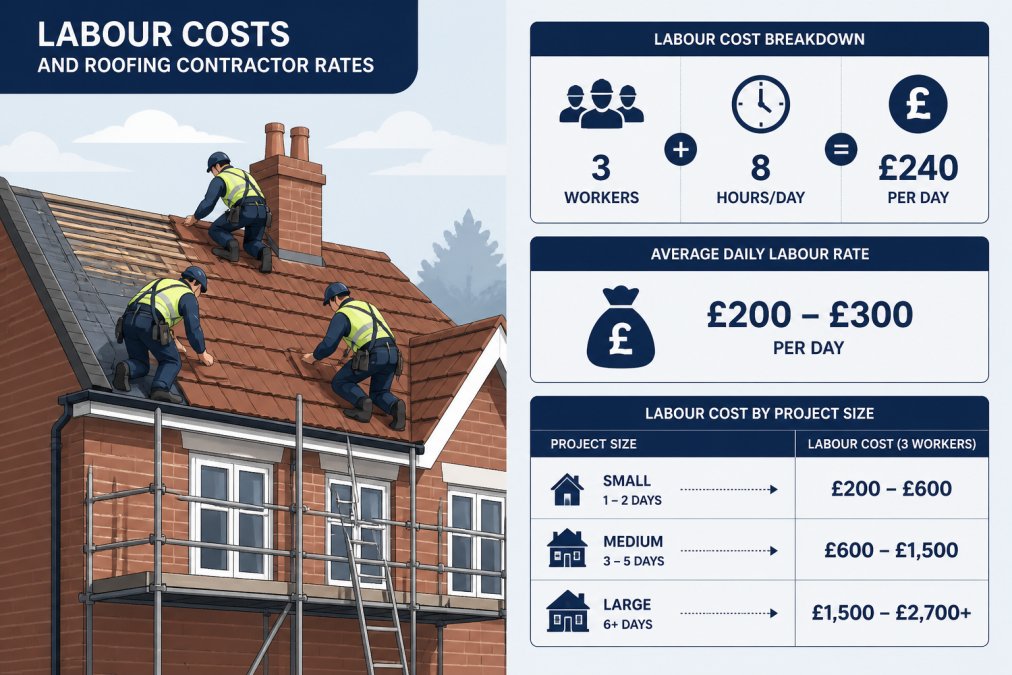
Labour typically represents 40-50% of total roof replacement cost. Skilled roofers command premium rates because the work is physically demanding, weather-dependent, and requires years of training.
A full roof replacement on a semi-detached property typically requires 5-10 working days depending on complexity, roof size, and weather. Contractor experience matters significantly; a roofer trained in slate installation costs more but prevents costly mistakes. Evershield Roofing’s 25 years in the industry reflects the value of experience, our team understands local building regulations, anticipates hidden structural issues, and works efficiently to minimise disruption.
Weather delays extend timelines unpredictably. Rain stops work immediately; tiles cannot be laid in wet conditions. Winter months bring shorter daylight hours. A project estimated at 7 days might stretch to 10 days due to weather.
How Long Does a Roof Replacement Take
A typical roof replacement for a semi-detached home takes 1-3 weeks from start to finish, depending on size, complexity, and weather conditions. This timeline includes scaffolding erection, tile removal, structural inspection and repairs, new material installation, and final inspections.
Scaffolding setup consumes 1-2 days. Removing old tiles and roofing felt typically takes 2-3 days. Structural repairs, if needed, add 2-5 days depending on severity. New material installation proceeds once the structure is sound and weather permits. Final inspections, flashing installation, and gutter reconnection consume 1-2 days.
Weather is the primary variable. A dry spell accelerates progress; autumn rain can halt work entirely. Winter projects take longer due to shorter daylight and cold conditions.
Building Regulations for Roof Replacement
UK building regulations govern roof replacement to ensure structural safety, energy efficiency, and fire safety. Any roof replacement must comply with current Building Regulations, even if the original roof predates them.
Modern regulations mandate improved insulation performance; you cannot simply replace old tiles without upgrading insulation to current U-values. This requirement adds cost but improves energy efficiency long-term, reducing heating bills. Fire safety regulations affect material selection, and structural adequacy means the roof must safely support its own weight plus snow load and wind pressure relevant to your area.
Get Your Free Roofing Quote Today! →
Building regulations compliance requires either building control approval or a structural engineer’s sign-off. This adds cost and timeline but prevents future legal complications when selling the property.
Roof Replacement Planning Permission UK Requirements
Most roof replacements don’t require planning permission if you’re using materials matching the original roof and not altering the roof line. However, planning permission IS required if you’re changing the roof profile, adding dormer windows, or significantly altering the building’s appearance.
Semi-detached homes in conservation areas face stricter rules; you may need conservation area consent even for material changes. Flat roof conversions to pitched roofs require planning permission because they alter the building’s silhouette.
The distinction between planning permission and building regulations is crucial. Planning permission concerns visual impact; building regulations concern safety and standards. Most roof replacements need building regulations approval but not planning permission. Evershield Roofing advises whether your specific project requires permissions and manages the application process if needed.
Hidden Costs and Contingencies to Budget For
Budget surprises plague roof replacement projects. Planning for contingencies prevents financial shock when unexpected issues emerge.
Scaffolding hire, skip hire and waste disposal
Scaffolding hire costs depend on roof complexity and access. A simple semi-detached pitched roof might require basic scaffolding; properties with multiple roof levels need more extensive setup. Skip hire for old materials adds cost, as removing and disposing of old tiles, felt, and timber generates significant waste.
Asbestos-containing materials in older roofs trigger additional costs. If your semi-detached home was built before the 1990s, asbestos surveys may be required. Asbestos removal demands licensed contractors and specialist disposal, adding substantially to project costs.
Fascias, soffits and guttering replacement
Whilst you have scaffolding erected, replacing fascias and soffits makes economic sense. These timber elements weather constantly and often need replacement alongside roofing. Guttering often requires replacement or repair during roof work; old guttering may not fit new roof profiles or may have deteriorated beyond repair.
Roof ventilation upgrades improve energy efficiency and prevent condensation issues. Installing soffit vents or ridge vents during roof replacement costs less than retrofitting later.
Structural repairs and roof ventilation upgrades
Discovering rotten timbers mid-project forces immediate decisions. Timber replacement costs vary by extent; ignoring rot spreads damage, making later repairs exponentially more expensive.
Inadequate roof ventilation causes premature tile failure and interior moisture problems. Upgrading ventilation during replacement prevents future issues. Insulation upgrades during roof replacement improve energy efficiency dramatically and reduce heating bills for decades.
| Cost Category | Typical Scope | Budget Consideration |
|---|---|---|
| Materials (tiles, felt, flashing) | 40-50% of total | Varies by material choice (tiles vs slate) |
| Labour (roofers, installation) | 40-50% of total | Depends on complexity and local rates |
| Scaffolding hire | 2-4 weeks | Essential safety requirement |
| Skip hire and waste disposal | Full project duration | Larger for older properties with asbestos concerns |
| Fascias, soffits, guttering | Optional but recommended | Cost-effective when bundled with roof work |
| Structural repairs | Variable | Often discovered mid-project |
| Insulation upgrades | Building Regulations compliance | Improves long-term energy efficiency |
Roof replacement represents a significant investment for any homeowner in Buckinghamshire. The complexity of semi-detached properties, with shared walls and coordinated access requirements, demands experienced contractors who understand local conditions and regulations. Evershield Roofing brings 25 years of industry experience to every project, ensuring your roof replacement meets Building Regulations, uses quality materials, and delivers protection for decades. Get Your Free Roofing Quote Today and let our team assess your specific situation with a detailed survey and transparent cost breakdown.
Frequently Asked Questions
How much does it cost to replace a roof on a 3-bedroom semi-detached house in the UK?
The cost of roof replacement for a semi-detached home varies significantly based on materials, labour rates, and regional factors. A full roof replacement typically includes material costs for tiles or slate, roofing felt, underlay, and labour from experienced roofing contractors. Factors like roof pitch, structural condition, and whether you need scaffolding hire all influence the final price. Contact Evershield Roofing for a free survey and personalised quote to understand your specific costs.
Do I need planning permission to replace my roof in the UK?
Most roof replacements in the UK do not require planning permission, as they fall under permitted development rights. However, if your property is listed, located in a conservation area, or if you're making significant changes to the roof structure or pitch, planning permission may be required. Building regulations approval is almost always necessary. Evershield Roofing can advise whether your specific project needs planning permission during the survey stage.
How long does a roof replacement take on a semi-detached property?
A typical roof replacement for a semi-detached home takes between 5 to 10 working days, depending on roof size, weather conditions, and material choice. The timeline includes preparation, removal of old roofing felt and tiles, structural inspection, installation of new underlay and materials, and finishing work on fascias, soffits, and guttering. Complex projects involving structural repairs or chimney work may take longer. Weather delays can extend the project duration.
What factors affect the cost of a new roof most significantly?
The biggest cost drivers are roofing material type (clay tiles, concrete tiles, or slate), roof pitch and surface area, labour rates for your region, and structural condition. Additional factors include whether you need scaffolding hire, skip hire for waste disposal, and whether fascias, soffits, or guttering require replacement. Energy efficiency upgrades and damp proofing also add to the cost. A professional roof survey identifies all these factors before quoting.
Is it cheaper to repair or replace a roof?
Repairs are cheaper in the short term, typically costing significantly less than full replacement. However, if your roof is over 20 years old, has extensive damage, or requires repeated repairs, replacement offers better long-term value. A roof survey helps determine whether repair or replacement makes financial sense. Evershield Roofing provides honest guidance on whether your roof can be repaired or needs full replacement.
What building regulations apply to roof replacement in the UK?
Roof replacements must comply with current Building Regulations, which cover structural integrity, insulation standards, roof ventilation, and fire safety. The specific requirements depend on whether you're replacing a pitched roof or flat roof. Regulations also address roofing underlay, flashing, and guttering installation. Building control approval is typically required before work begins. Your roofing contractor should handle all building regulations compliance and certification.
Can I upgrade my insulation during roof replacement?
Yes, roof replacement is an ideal opportunity to improve insulation and energy efficiency. You can upgrade roofing underlay with higher-performance materials, add additional insulation between rafters, or improve roof ventilation to meet current insulation standards. These upgrades reduce heating costs and improve home comfort. The additional cost is often modest compared to the long-term energy savings. Discuss insulation options with your roofing contractor during the planning stage.
What warranty or guarantee comes with a new roof?
Most roofing materials come with manufacturer warranties ranging from 10 to 30 years, depending on the product. Professional roofing contractors typically offer their own workmanship warranty, usually 5 to 10 years. This covers installation defects and labour-related issues. Some warranties require regular maintenance to remain valid. Evershield Roofing provides clear warranty terms and guidance on maintenance schedules to protect your investment.