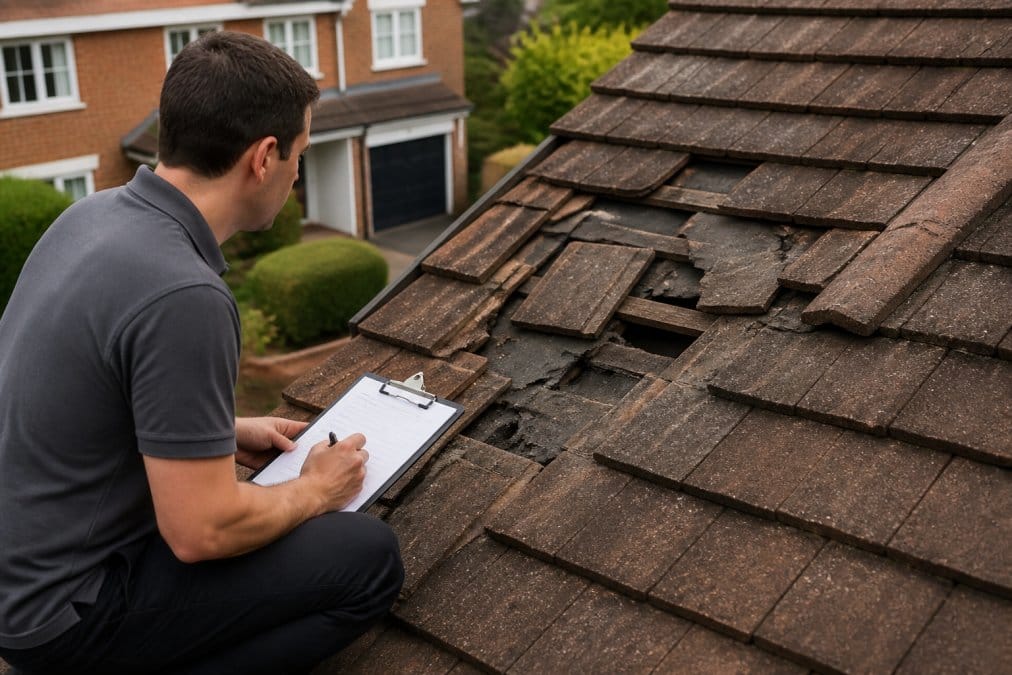
Is a Roof Inspection Worth It Before Buying a House?
Is a roof inspection worth it before buying a house: Discover why a roof inspection before buying a house protects your investment. Learn what surveyors.

Table of Contents
- Why a Roof Inspection Is Critical Before Buying
- Common Roof Defects to Look for During a House Viewing
- RICS Home Survey Roof Issues: What Surveyors Actually Check
- General Survey vs Specialist Roof Inspection: Which Do You Need?
- Cost of Roof Survey UK and What Affects the Price
- Negotiating House Price After Survey: Your Next Steps
- What Happens If Roof Issues Are Discovered
- Conclusion
Last Updated: August 10, 2026
Why a Roof Inspection Is Critical Before Buying a House
A roof inspection reveals hidden structural and safety issues that could cost thousands to repair or replace, protecting your investment before you commit to purchase. A full roof replacement can run into five figures depending on property size and material type. Without professional inspection, you’re buying blind, relying on visual observation from the ground rather than expert assessment.
At Evershield Roofing, we’ve seen countless situations where buyers discovered roof problems after completing the purchase, facing unexpected bills and stress. An inspection before you buy shifts that risk entirely, giving you the information needed to make an informed decision, negotiate repairs, or walk away if damage is too severe.
Pro Tip
Request a specialist roof inspection as a condition of your offer, not after you’ve already committed. This gives you leverage to renegotiate or withdraw if serious issues emerge.
Request a specialist roof inspection as a condition of your offer, not after you’ve already committed. This gives you leverage to renegotiate or withdraw if serious issues emerge.
The roof protects everything beneath it. Leaks lead to damp, mould, timber rot, and structural damage that spreads quickly through insulation, joists, and internal walls. Catching these problems early, before you own the property, is the difference between manageable negotiation and expensive nightmare.
Common Roof Defects to Look for During a House Viewing
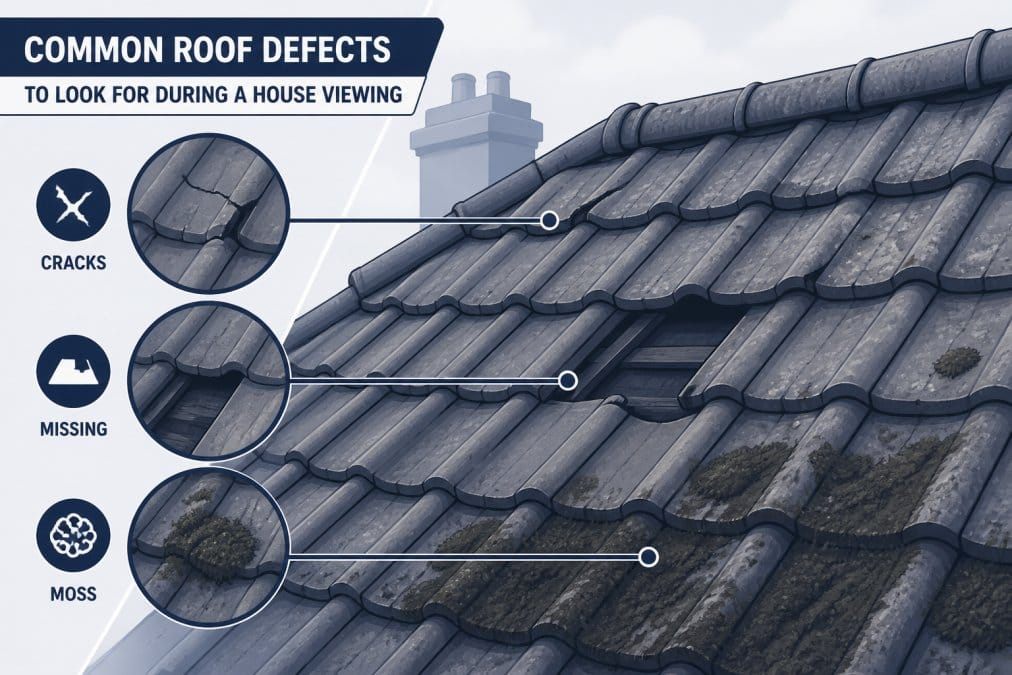
The most common roof defects include missing or broken tiles, visible moss growth, sagging sections, deteriorated flashing, and signs of water ingress inside the property. What you should look for depends heavily on the roof type, as slate, clay tile, and flat EPDM roofs each have material-specific vulnerabilities.
Slate roofs: slipped slates, cracked edges, and corroded fixings
Slate can last 100+ years but individual slates are vulnerable to specific failure modes. When viewing a slate roof, look for slipped or displaced slates (indicating failed fixings), cracked or broken slate edges (allowing water penetration), corroded or missing fixings, uneven roof lines (suggesting underlying timber rot), and heavy moss buildup (indicating poor drainage and moisture retention). Slate repairs are expensive because individual slates must be carefully replaced by skilled roofers.
Clay tile roofs: cracked tiles, lifted edges, and deteriorated mortar
Clay tiles are common on older properties but have specific vulnerabilities: cracked or broken tiles (from frost, impact, or age), lifted or curled tile edges (allowing water underneath), deteriorated mortar between tiles (letting water seep into gaps), spalling or surface erosion (exposing porous interior), and uneven colour or patchy areas (indicating water staining or previous repairs). Clay tile repairs are labour-intensive and full replacement costs significantly more than asphalt shingles due to weight and skilled labour requirements.
Flat EPDM and felt roofs: blistering, pooling water, and seam failure
Flat roofs have different failure modes than pitched roofs: blistering or bubbling in the membrane (indicating water ingress), pooling water or poor drainage (causing eventual penetration), visible seams or joint failure (the most common leak point), cracked or deteriorated membrane, moss or algae growth (indicating poor drainage), and deteriorated or missing edge flashing (allowing water into walls below). Flat roof repairs are often cheaper than pitched roof repairs because access is easier.
Asphalt shingles: curled edges, missing granules, and exposed nails
Asphalt shingles are common on modern properties and most affordable: curled or cupped edges (allowing water underneath), missing or worn granules (indicating deterioration), exposed or raised nail heads (no longer sealed), bald patches or bare spots (exposing underlying felt), and algae or moss growth (indicating moisture retention). Asphalt shingles typically last 15-20 years; if older than 15 years and showing multiple signs of wear, replacement is likely within 5 years.
Universal defects across all roof types
Regardless of material, watch for deteriorated or missing flashing around chimneys and valleys (critical seals preventing water seepage), visible water stains or damp patches on internal ceilings and walls (indicating roof failure), sagging or uneven roof lines (suggesting compromised supporting timbers), and guttering and downpipe damage (preventing proper water drainage).
Watch Out
Never assume minor cosmetic damage is acceptable. Moss growth, missing tiles, or deteriorated flashing are entry points for water that will cause structural damage within months if left unaddressed. Material-specific defects are particularly serious because they indicate the roof’s primary defence against water has failed.
Never assume minor cosmetic damage is acceptable. Moss growth, missing tiles, or deteriorated flashing are entry points for water that will cause structural damage within months if left unaddressed. Material-specific defects are particularly serious because they indicate the roof’s primary defence against water has failed.
RICS Home Survey Roof Issues: What Surveyors Actually Check
A RICS home survey is the standard property survey in the UK and always includes a roof assessment. The depth depends on survey level and whether the surveyor can safely access the roof.
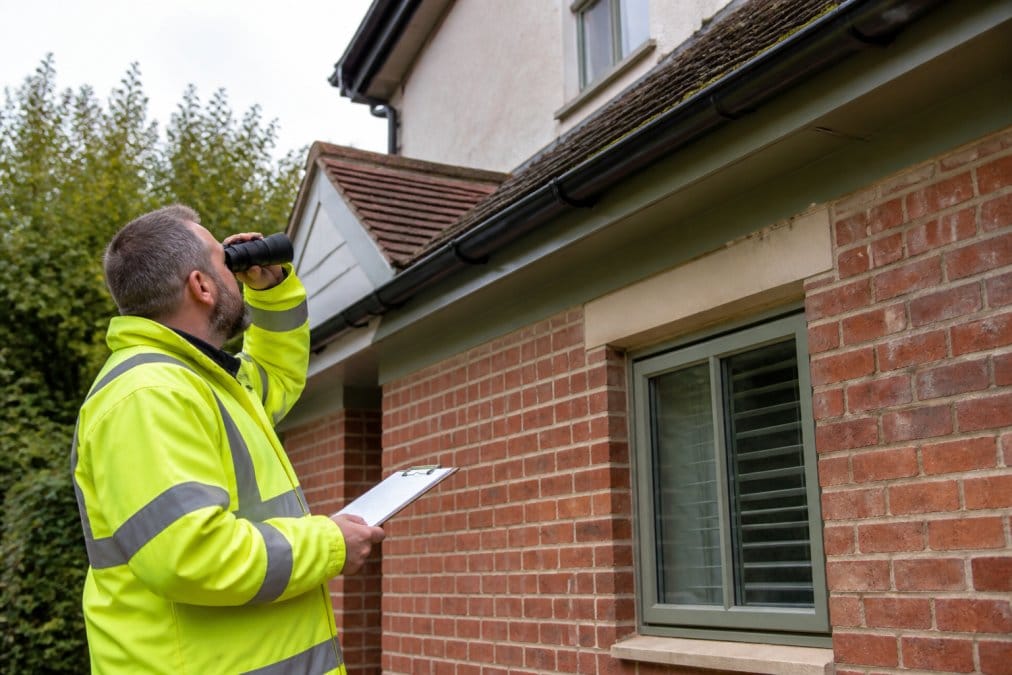
RICS surveyors check for structural integrity, signs of water ingress, condition of tiles or slates, flashing condition, guttering and downpipes, and evidence of pest damage or timber rot. They assess whether the roof has adequate ventilation and insulation, both affecting long-term performance and energy efficiency.
However, RICS surveyors cannot always access the roof safely or fully. If the roof is steep, wet, or in poor condition, they may only inspect from ground level or via binoculars, missing issues visible only during detailed close-up inspection. That’s where a specialist roof survey comes in.
General Survey vs Specialist Roof Inspection: Which Do You Need?
A general RICS survey gives an overview of the property’s condition across all major systems. A specialist roof inspection focuses entirely on the roof and provides far greater detail about its current state and remaining lifespan.
The general survey is mandatory for mortgage purposes and provides essential baseline information. However, if the surveyor flags concerns about the roof or if the property is older than 40 years, a specialist inspection is worth the additional cost. A specialist will climb onto the roof, examine every section close-up, test materials, and provide a detailed report on repairs needed and expected lifespan.
For properties in London and Buckinghamshire with older roofs, slate or tile coverings, or any visible damage noted in the general survey, the specialist route is strongly recommended. The cost of a specialist inspection (typically several hundred pounds) is negligible compared to discovering a £10,000 roof problem after exchanging contracts.
Key Takeaway
If the general survey mentions any roof concerns whatsoever, commission a specialist inspection before proceeding. The additional cost is insurance against buying a property with a failing roof.
If the general survey mentions any roof concerns whatsoever, commission a specialist inspection before proceeding. The additional cost is insurance against buying a property with a failing roof.
Cost of Roof Survey UK and What Affects the Price
A specialist roof survey typically costs between £300 and £800 for a residential property. Larger properties with complex roof shapes, multiple levels, or difficult access cost more. Surveyors may need specialist equipment, scaffolding, or additional time if the roof is steep or in poor condition. Listed buildings or properties with unusual materials also command higher fees.
Factors influencing pricing include property size, roof pitch and complexity, material type, accessibility, and surveyor experience. For Evershield Roofing clients considering whether to invest in a specialist survey, the answer is straightforward: the cost is minimal compared to the protection it provides. A survey identifying a roof needing replacement could save you from purchasing a property with a significant liability.
Negotiating House Price After Survey: Your Next Steps
Once the survey is complete and issues are identified, you have three options: renegotiate the price downward, ask the seller to repair the roof before completion, or walk away from the purchase.
Get Your Free Roofing Quote Today! →
Timing is everything: before or after exchange of contracts
If you’re still in the offer stage (before exchange of contracts), you have maximum flexibility. A roof survey finding can be grounds to renegotiate or withdraw without penalty. Your solicitor can formally communicate the survey findings to the seller’s solicitor and propose a revised offer price or request repairs as a condition of proceeding.
Once you exchange contracts, your legal position changes fundamentally. You’re committed to the purchase regardless of survey findings unless you negotiated a specific survey contingency clause into your offer beforehand. Without such a clause in writing before exchange, discovering roof problems after exchange leaves you with almost no recourse.
Structuring your renegotiation: price reduction vs. seller repairs
Price reduction is the most common and cleanest approach. If the roof needs repairs, you can ask the seller to reduce the asking price by that amount. Sellers often prefer this because they avoid managing contractors and timelines. Alternatively, you can ask the seller to complete repairs before completion, though you lose control over quality and contractor selection.
Getting quotes: the foundation of credible negotiation
Obtain repair quotes from at least two or three local, established contractors. Specific numbers backed by professional estimates are far more persuasive than vague claims about damage. For example: "The specialist roof survey identified missing flashing and deteriorated tiles requiring replacement. We’ve obtained quotes from two local contractors for the necessary repairs. We’re requesting a price reduction to cover these costs and the inconvenience of managing the work post-purchase."
Documenting everything through your solicitor
All renegotiations should be formalised in writing through your solicitor. Your solicitor will communicate the survey findings formally, present your renegotiation request with supporting documentation, negotiate on your behalf, and ensure any agreed price reduction or repair conditions are formally recorded in an amended contract.
When to walk away
If roof damage is severe, structural failure, extensive timber rot, asbestos in roof materials, or replacement costs exceeding £15,000, you may decide the property isn’t worth the risk. Walking away before exchange of contracts is straightforward; after exchange, you may forfeit your deposit and face legal action.
Pro Tip
Always include a survey contingency clause in your initial offer: “This offer is conditional upon a satisfactory specialist roof survey. Should defects requiring repair costs exceeding £[amount] be identified, the buyer reserves the right to renegotiate or withdraw without penalty.” This protects you before exchange of contracts.
Always include a survey contingency clause in your initial offer: “This offer is conditional upon a satisfactory specialist roof survey. Should defects requiring repair costs exceeding £[amount] be identified, the buyer reserves the right to renegotiate or withdraw without penalty.” This protects you before exchange of contracts.
What Happens If Roof Issues Are Discovered
If inspection reveals roof problems, your timeline and next steps depend on how serious the issues are and whether you’re still in the offer stage or have already exchanged contracts.
Before exchange of contracts, you have maximum flexibility to renegotiate the price, request repairs, or withdraw your offer entirely. After exchange, your options are limited and you’re legally committed to the purchase.
For minor issues like missing tiles or deteriorated flashing, repairs can be completed within days. For major issues like structural failure, extensive rot, or a roof nearing the end of its lifespan, costs escalate quickly. A full roof replacement can cost depending on property size and material.
If asbestos is discovered in older roof materials or insulation, you must disclose this to your mortgage lender. Some lenders will not lend on properties with asbestos, and removal is expensive and heavily regulated.
Once you own the property, any roof problems become your responsibility. This is why identifying and addressing them before completion is critical. At Evershield Roofing, we’ve worked with many homeowners who discovered roof damage after purchase and faced unexpected bills. Prevention through pre-purchase inspection is far cheaper than emergency repairs later.
A roof inspection before buying a house is an investment that protects your most significant financial decision. It reveals hidden problems, gives you negotiating leverage, and prevents you from inheriting a failing roof. Whether you’re a first-time buyer in London or an experienced property investor in Buckinghamshire, this step is non-negotiable.
When you’re ready to assess roof condition or discuss repairs on a property you’re considering, Evershield Roofing offers free surveys and quotes. Our team can review survey findings, provide detailed repair estimates, and guide you through the process with the expertise that comes from 25 years in the industry. Get your free roofing quote today and make your property purchase with confidence.
Frequently Asked Questions
Should I pay for a roof inspection before buying a house?
Yes. A roof inspection before buying is one of the most important investments you can make. Roof repairs or replacement can cost thousands of pounds, and structural damage from undetected leaks can affect your entire property. A professional roof inspection identifies costly defects early, protects your investment, and gives you solid ground to renegotiate the house price if issues exist. It's far cheaper than discovering problems after completion.
What's the difference between a RICS home survey and a specialist roof inspection?
A RICS HomeBuyer Report includes a roof assessment, but it's a visual check from ground level or binoculars. A specialist roof inspection involves a surveyor climbing onto the roof to examine flashing, underlayment, tiles, and internal timbers up close. If the RICS report flags concerns or your property is older, a specialist roof inspection provides the detailed evidence you need to negotiate repairs or price reductions effectively.
How much does a professional roof survey cost in the UK?
Specialist roof surveys typically range from £150 to £500 depending on roof size, pitch, and accessibility. A RICS HomeBuyer Report (which includes roof assessment) costs between £300 and £800. Costs vary by surveyor and location. Get quotes from multiple surveyors to compare. Many roofing specialists, including Evershield Roofing, offer free initial surveys to assess your roof's condition before you commit to a full inspection.
Can I negotiate the house price if a roof survey reveals significant damage?
Absolutely. If your roof survey uncovers structural issues, leaks, or materials nearing end-of-life, you have three options: ask the seller to repair before completion, request a price reduction to cover repairs yourself, or withdraw from the purchase. Document all findings in writing from your surveyor. Use repair estimates from qualified contractors to justify your renegotiation. Sellers often prefer a price reduction to avoid delays, making this a practical way to protect your investment.