Emergency Roof Repair vs Full Replacement
Roof repair vs replacement: Compare emergency roof repair and full replacement: costs, timelines, and when each option makes sense. Learn which choice.

Table of Contents
- Emergency Roof Repair vs Full Roof Replacement: Key Differences
- Comparison Table: Emergency Repair and Full Replacement
- Signs You Need a New Roof
- Roof Replacement Cost Breakdown in the UK
- Roofing Building Regulations and Compliance
- How to Decide: Repair or Replace?
- Conclusion
- Frequently Asked Questions
Last Updated: September 3, 2026
Emergency Roof Repair vs Full Roof Replacement: Key Differences
When water starts dripping through your ceiling or storm damage tears off tiles, the decision between emergency roof repair and full roof replacement becomes urgent. At Evershield Roofing, we’ve helped property owners in Buckinghamshire understand when to patch the problem and when to replace the entire roof. This guide breaks down the practical differences, costs, and decision-making framework to help you choose the right path.
The core distinction is simple: emergency roof repair addresses immediate damage to stop leaks and prevent further deterioration, while full roof replacement removes the old roof entirely and installs new materials. But the choice between them isn’t always obvious. A small leak might signal the beginning of the end for an ageing roof, or it could be a one-off issue on a roof with years of life left. Understanding the signs, costs, and long-term implications will help you make the right call.
Comparison Table: Emergency Repair and Full Replacement
| Factor | Emergency Roof Repair | Full Roof Replacement |
|---|---|---|
| Scope | Targeted fix to damaged area | Complete removal and reinstallation |
| Time to Complete | Hours to 1-2 days | 3-7 days typically |
| Immediate Cost | Lower upfront investment | Significant capital expense |
| Longevity | 5-15 years depending on roof age | 20-50 years with quality materials |
| Best For | Recent damage, young roofs, temporary solutions | Aged roofs, repeated issues, long-term value |
| Future Repairs | Likely needed again | Minimal repairs for decades |
| Insurance Claims | Often covered for storm/sudden damage | May be covered for structural failure |
Signs You Need a New Roof
A roof showing multiple warning signs typically needs replacement rather than repair. If your roof is over 20 years old and has experienced significant damage, replacement often makes financial sense. Roofs in the UK typically last 20-40 years depending on material and climate exposure, but age combined with damage accelerates decline.
Look for these indicators that replacement is overdue: widespread missing or cracked tiles, sagging sections that suggest structural compromise, moss or algae growth covering more than half the surface, daylight visible through the roof from the attic, or multiple leak repairs in different areas within a short timeframe. A single leak on a young roof can be repaired. Multiple leaks across different sections suggest the underlying material has deteriorated beyond targeted fixing.
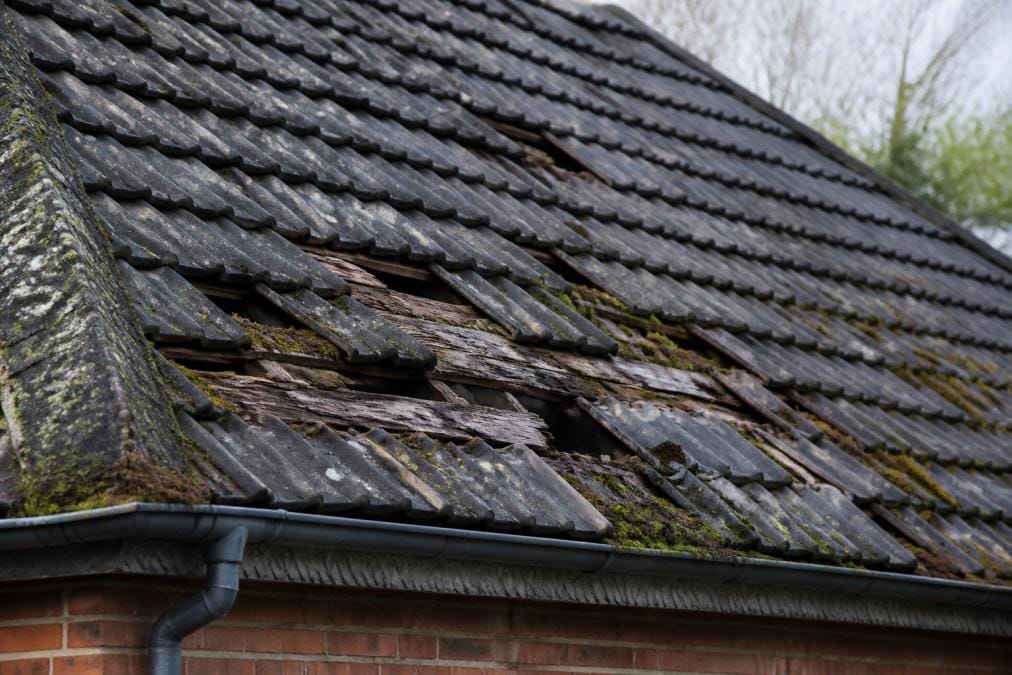
Water staining on interior ceilings is another red flag. One stain might indicate a localised leak. Stains in multiple rooms or recurring stains in the same spot after repair suggest systemic failure. Granule loss from tiles (visible as grit in gutters) indicates UV damage and material breakdown. Curling or cupping shingles show that the roof has expanded and contracted beyond its design limits, typically from age or poor ventilation.
The cost difference between repair and replacement becomes irrelevant if you’re patching the same problem repeatedly. Many property owners spend thousands on repairs over several years, only to need replacement anyway. Evershield Roofing recommends a professional survey if your roof is over 15 years old and has sustained damage. A detailed assessment can quantify remaining lifespan and help you avoid false economy.
Roof Replacement Cost Breakdown in the UK
Roof replacement costs vary significantly based on roof size, pitch, material choice, and local labour rates. Factors affecting your final cost include the square meterage of your roof, the pitch or slope (steeper roofs cost more due to safety requirements), material selection (slate, tile, or modern alternatives), removal and disposal of old materials, and any structural repairs discovered during installation.
A typical semi-detached house in Buckinghamshire with a standard pitched roof will require different investment than a bungalow or large detached property. Flat roofs, which are common on extensions and some commercial properties, have different cost profiles than pitched roofs. The labour cost component varies by region.
Material choice is the biggest variable. Traditional clay tiles or slate cost more than modern concrete alternatives, but they last longer and offer superior aesthetics. Asphalt shingles are cheaper but have a shorter lifespan. Rubber or felt systems for flat roofs cost less than pitched roof materials but require specialist installation.
For emergency repairs, costs are typically lower but depend on damage extent. A small leak repair might cost a few hundred pounds, while extensive storm damage requiring multiple tiles or sections replaced could run into thousands. The advantage of emergency repair is that you pay only for what’s broken.
Evershield Roofing offers free surveys and quotes for both repair and replacement work, allowing you to compare options without obligation. We can show you the long-term cost per year for different approaches, helping you make a financially sound decision rather than choosing based on immediate price alone.
Roofing Building Regulations and Compliance
Building regulations in England require that roof work meets specific standards for safety, weather resistance, and structural integrity. When you carry out emergency repairs or full replacements, the work must comply with Building Regulations Part L (conservation of fuel and power) and Part A (structure). This applies whether you’re repairing a single tile or replacing the entire roof.
For emergency repairs, regulations require that work restores the roof to a safe condition and prevents water ingress. The repair must not compromise structural integrity or create safety hazards. If you’re only fixing storm damage with like-for-like materials, the compliance burden is lighter. However, if you’re upgrading materials or making structural changes, Building Control notification may be required.
Full roof replacement triggers stricter compliance requirements. New roof installations must meet current thermal efficiency standards under Part L regulations. This means modern insulation and ventilation standards apply, even if the original roof didn’t meet them. Many older properties in Buckinghamshire have roofs that predate modern energy efficiency requirements. Replacement is an opportunity to improve thermal performance, but it also means the work must be certified and inspected.
You’ll need Building Regulations approval before starting a full replacement. The process involves notification to your local authority, inspection during and after installation, and final certification. Evershield Roofing handles all Building Regulations compliance as part of our replacement service, ensuring your new roof meets current standards and is properly certified.
For emergency repairs, Building Regulations compliance is still required, but the process is simpler. The work must be safe and weather-tight, but you’re not upgrading the entire system. If your repair involves more than 25% of the roof area, Building Control notification becomes mandatory, so understanding the scope of your damage matters for regulatory purposes.
How to Decide: Repair or Replace?
The decision hinges on three factors: roof age, damage extent, and cost-benefit analysis. If your roof is under 10 years old and the damage is localised (a single leak, a few missing tiles, storm damage to one section), repair is almost always the right choice. The roof has many years of life remaining, and targeted fixing restores function without unnecessary expense.
If your roof is 15-20 years old, the decision becomes more nuanced. A single repair might be cost-effective, but if you’re on your second or third repair in that timeframe, replacement starts to make financial sense. Calculate the total spent on repairs over the past five years. If that total exceeds 50% of replacement cost, you’re approaching the break-even point where replacement becomes the better investment.
If your roof is over 20 years old, replacement is usually the better long-term choice, even if current damage is repairable. You’re at the end of typical roof lifespan, and another repair might buy you only a few years. The cost per year of a replacement is often lower than continuing to patch an ageing roof.
Consider the impact on your daily life. Emergency repairs are disruptive but quick. Replacement takes longer but is a one-time major project. If you’re planning to stay in your property for another 10+ years, replacement offers peace of mind and eliminates recurring repair costs. If you’re selling within 5 years, a repair might be sufficient, though buyers often view an old roof as a liability.
Insurance coverage also factors in. Storm damage is often covered by home insurance, making emergency repair cost-free or low-cost out-of-pocket. Replacement due to age-related wear is rarely covered. If you’re facing replacement, you’re paying the full cost yourself, so financing options become important. Evershield Roofing offers flexible financing from 0% APR, making replacement more accessible.
Get a professional assessment if you’re uncertain. Evershield Roofing provides free surveys and detailed quotes showing both repair and replacement options. A surveyor can assess remaining roof life, identify hidden damage, and quantify the cost per year for each approach. This removes guesswork and lets you make a decision based on solid information rather than fear or false economy.
Conclusion
Emergency roof repair addresses immediate crises and makes sense for young roofs with localised damage. Full roof replacement is the right choice for ageing roofs, repeated failures, or when long-term value matters more than short-term cost. The decision isn’t about choosing the cheaper option, it’s about choosing the option that protects your property and your finances over the years ahead.
If you’re facing roof damage in Buckinghamshire, Evershield Roofing is ready to help. Our team brings 25 years of industry experience to every job, from emergency repairs to complete replacements. We provide free surveys and transparent quotes so you can compare your options without pressure. Contact us today for a professional assessment and discover which solution is right for your roof.
=== FAQ ANSWERS (audit these too, same rules) ===
[1] Q: How do I know if my roof needs an emergency repair or a full replacement?
A: Emergency roof repair is appropriate for isolated damage such as leaks from storm damage, missing tiles, or punctures in flat roofs. Full replacement becomes necessary when your roof shows widespread deterioration, is nearing the end of its serviceable life (typically 20-30 years), or has repeated failures across multiple areas. A professional survey from Evershield Roofing can assess whether patching will suffice or if replacement offers better long-term value and protection.
[2] Q: What are the signs you need a new roof rather than repairs?
A: Key indicators include sagging or uneven roof lines, widespread missing or curled shingles, persistent leaks in multiple locations, interior water stains appearing regularly, granule loss from tiles, and visible structural damage. If your roof is over 25 years old and showing multiple signs of wear, replacement is typically more cost-effective than repeated repairs. Professional assessment helps confirm whether repair or replacement is the right choice for your property.
[3] Q: Does my home insurance cover emergency roof repairs in the UK?
A: Most buildings insurance policies cover emergency roof repairs caused by sudden, accidental damage such as storms, fallen trees, or vandalism. However, coverage depends on your specific policy terms and whether the damage is considered accidental rather than resulting from lack of maintenance. Wear and tear or gradual deterioration are typically not covered. Review your policy details or contact your insurer to confirm coverage before work begins, and keep documentation of the damage for your claim.
[4] Q: How long does a full roof replacement typically take?
A: A complete roof replacement on a standard residential property usually takes 3-7 working days, depending on roof size, weather conditions, and the complexity of the work. Larger properties, commercial buildings, or those requiring structural repairs underneath may take longer. Evershield Roofing provides a clear timeline during the quotation stage, and factors such as seasonal weather and material availability can affect scheduling. Emergency repairs typically take 1-2 days to complete.
Frequently Asked Questions
How do I know if my roof needs an emergency repair or a full replacement?
Emergency roof repair is appropriate for isolated damage such as leaks from storm damage, missing tiles, or punctures in flat roofs. Full replacement becomes necessary when your roof shows widespread deterioration, is nearing the end of its serviceable life (typically 20-30 years), or has repeated failures across multiple areas. A professional survey from Evershield Roofing can assess whether patching will suffice or if replacement offers better long-term value and protection.
What are the signs you need a new roof rather than repairs?
Key indicators include sagging or uneven roof lines, widespread missing or curled shingles, persistent leaks in multiple locations, interior water stains appearing regularly, granule loss from tiles, and visible structural damage. If your roof is over 25 years old and showing multiple signs of wear, replacement is typically more cost-effective than repeated repairs. Professional assessment helps confirm whether repair or replacement is the right choice for your property.
Does my home insurance cover emergency roof repairs in the UK?
Most buildings insurance policies cover emergency roof repairs caused by sudden, accidental damage such as storms, fallen trees, or vandalism. However, coverage depends on your specific policy terms and whether the damage is considered accidental rather than resulting from lack of maintenance. Wear and tear or gradual deterioration are typically not covered. Review your policy details or contact your insurer to confirm coverage before work begins, and keep documentation of the damage for your claim.
How long does a full roof replacement typically take?
A complete roof replacement on a standard residential property usually takes 3-7 working days, depending on roof size, weather conditions, and the complexity of the work. Larger properties, commercial buildings, or those requiring structural repairs underneath may take longer. Evershield Roofing provides a clear timeline during the quotation stage, and factors such as seasonal weather and material availability can affect scheduling. Emergency repairs typically take 1-2 days to complete.
Evershield Roofing has been protecting properties across Buckinghamshire for over two decades. Whether you need an emergency repair to stop a leak or a full replacement to restore your roof’s integrity, we’re here to guide you through every step. Our commitment to quality materials, expert workmanship, and transparent pricing means you’ll get a strong, long-lasting roof backed by our guarantee. Get Your Free Roofing Quote Today!