7 Signs You Need a Roof Replacement in Buckinghamshire
Spotting signs you need a roof replacement in Buckinghamshire early saves money. Learn the 7 warning signs, lifespan, costs and rules. Get a free survey.

Last Updated: November 7, 2026
Quick Summary
The clearest signs you need a roof replacement in Buckinghamshire are leaks that return after two or more repairs, a sagging roofline or daylight in the loft, and damage spreading across two or more slopes. Widespread moss, granule loss and a thin covering also point to roof replacement rather than another patch.
- A leak that returns after two or more repairs is the strongest single replacement signal.
- Damage across two or more slopes usually means fixings or underlay have failed roof-wide.
- Sagging, daylight in the loft and active water ingress are urgent: arrange an inspection.
- Ask for a written quote that separates labour, materials, scaffolding, waste removal and structural work.
- Evershield Roofing offers free surveys and quotes, with finance from 0% APR.
Worried about your roof? Get it checked free.Evershield Roofing surveys roofs across Buckinghamshire and gives you a clear repair or replace recommendation.
Table of Contents
- 7 Signs You Need a Roof Replacement in Buckinghamshire
- Roof Repair or Replacement: How to Decide
- How Long Does a Roof Last UK? Age, Materials and Wear
- What Roof Replacement Costs in Buckinghamshire
- Building Regulations for Roof Replacement UK
- What to Do After Spotting a Warning Sign
- Book Your Free Roof Survey with Evershield Roofing
- Frequently Asked Questions
7 Signs You Need a Roof Replacement in Buckinghamshire
Spotting the signs you need a roof replacement in Buckinghamshire early saves money and stress. This guide covers common warning signs, how to tell repair from replacement, and what happens next.
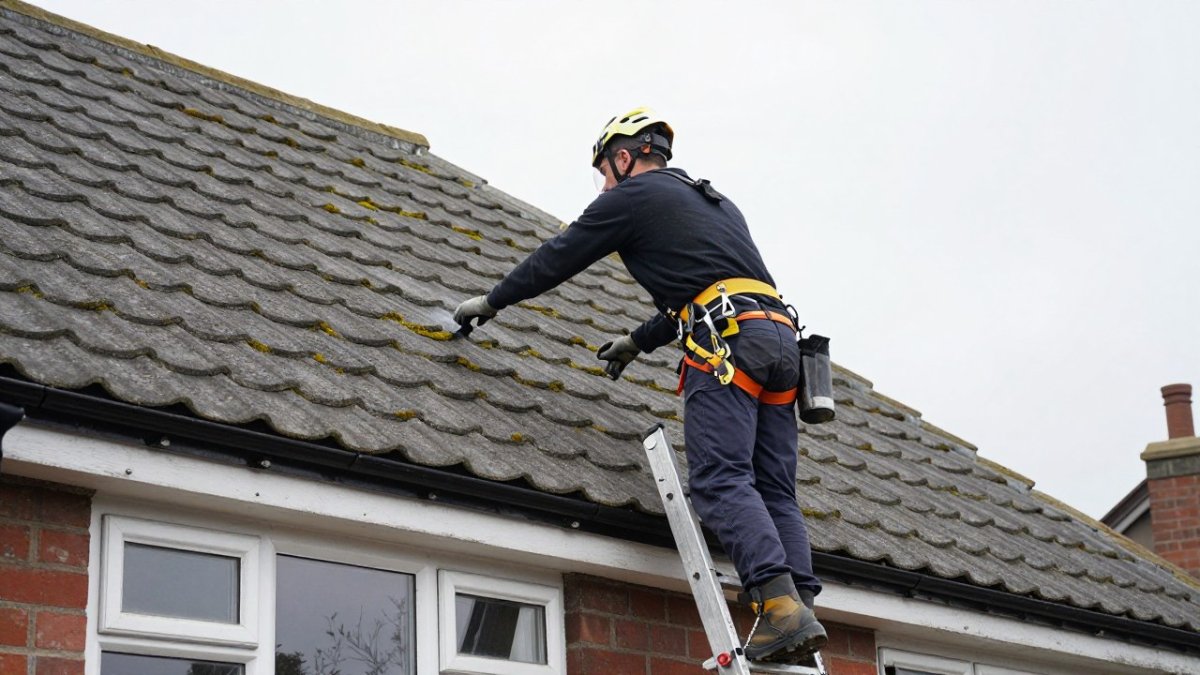
Buckinghamshire’s housing stock ranges from older slate-roofed cottages to post-war concrete tile semis, and each ages differently.
Missing, Cracked or Slipped Tiles and Slates
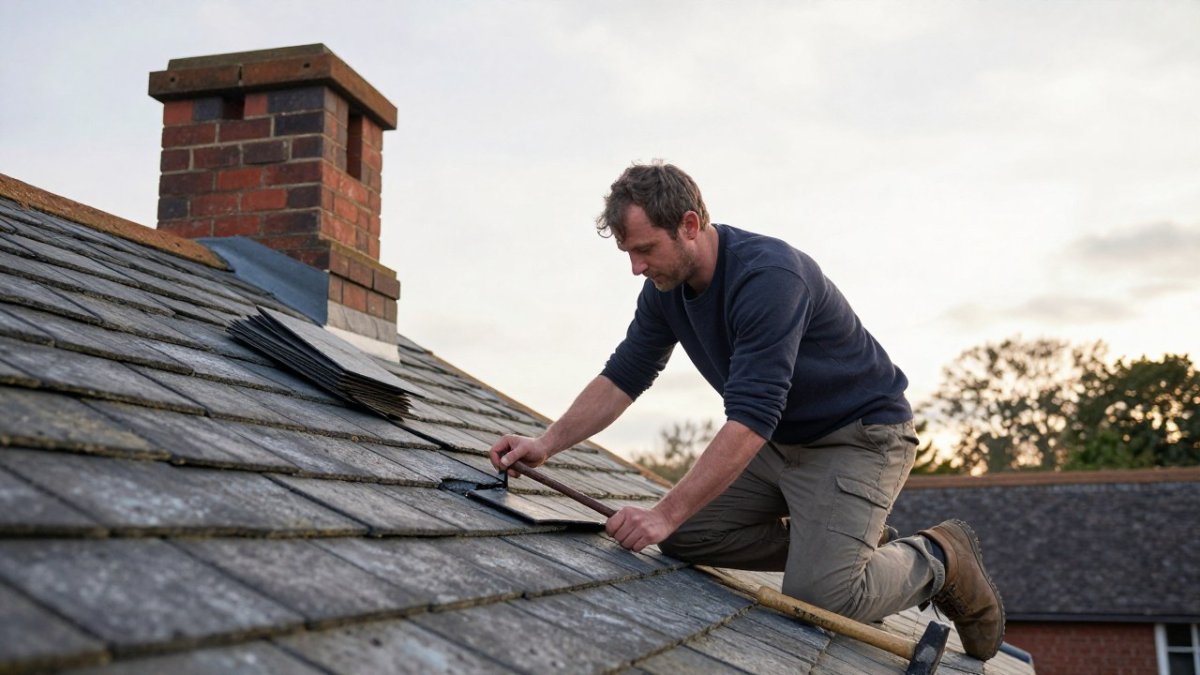
Missing, cracked or slipped tiles and slates are a common early signal that a roof covering is failing. Individual tiles can be replaced, but clusters of damage usually point to a tired roof.
Watch for tiles that have slid out of line, cracks running across the surface, or bald patches where the roof felt is exposed. On older properties, delaminated slate is common. A few isolated tiles after a storm is a repair job.
Persistent Leaks, Damp Patches and Water Stains Indoors
Persistent leaks, damp patches and water stains indoors mean water is already getting past the roof covering. A brown ring on a bedroom ceiling is rarely the first leak, just the first one you noticed.
Check the loft for damp insulation, water tracks on rafters and a musty smell. For practical guidance on tracking down the source, see our roof leak repair guide for Buckinghamshire.
Sagging Roofline, Dips and Daylight in the Loft
A sagging roofline, dips along the ridge or daylight visible from the loft point to structural problems, not cosmetic ones. These are the signs that move a roof from “repair soon” to “act now”.
Look along the ridge from street level. An undulating roofline often means failed purlins or rotten timbers beneath the covering. Daylight through the roof space means the underlay has perished. Structural damage like this needs a professional roofer’s assessment before the next storm season.
Moss, Mildew and Granule Loss on the Roof Covering
Heavy moss, mildew and granule loss can age a roof covering prematurely. Moss holds moisture against the tiles, and in frost it lifts and cracks them.
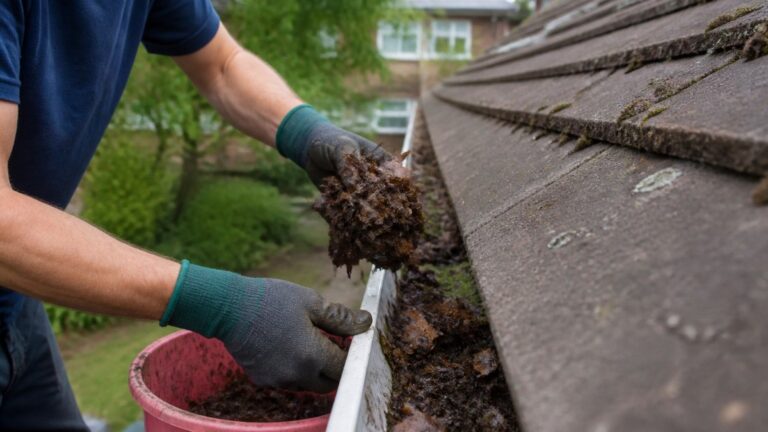
Granule loss on felt or asphalt coverings leaves bare patches and a gritty buildup in the gutters. Regular roof cleaning slows this down, but once the covering itself is thin and shedding granules, replacement is usually the better spend.
Roof Repair or Replacement: How to Decide
Roof repair can make sense when damage is localised and the covering has years left. Roof replacement may be the right call when problems are widespread, recurring or structural. Age is the deciding factor more often than damage, but age alone should never trigger a replacement.
Work through the three tests below in order. If a roof fails the first test, the later ones matter less.
Test 1: How far does the damage spread?
Count the affected area rather than the number of tiles. A single slope with a handful of slipped tiles after a storm is a repair.
On Buckinghamshire’s older slate-roofed cottages, delaminated slate often fails in patches that spread along the same course. On post-war concrete tile semis, the pattern is usually cracked and porous tiles across a whole elevation. Both are covering-wide problems dressed up as local ones.
Test 2: How often has it come back?
A leak that returns after two or more repairs is the strongest single replacement signal. Each patch buys time but does not address the root cause, and repeated callouts add up. Keep a simple log of dates, locations and what was done.
Watch out: a leak that moves position after each repair often means water is tracking along a rafter or underlay rather than entering at the patch, so the visible damp is not where the defect is.
Test 3: Is the structure or the underlay involved?
Sagging along the ridge, dips in the roofline, daylight in the loft or a musty, damp loft all point to failed timbers or perished underlay. These are not cosmetic and they are not reliably fixable by replacing tiles alone. They need a survey before the next storm season, and the answer is often a full replacement because the covering has to come off to reach the structure.
The decision framework
| Situation | Recommendation | Why |
|---|---|---|
| One or two damaged tiles, roof under 15 years old | Repair | Cheap, quick, covering still sound |
| Damage confined to one slope, underlay intact | Repair or partial re-cover | Localised fixings failure |
| Leak returns after two or more repairs | Replacement | Root cause is the covering itself |
| Sagging roofline or daylight in the loft | Urgent structural survey | Timbers or underlay may be affected |
| Moss across most of the roof, granules gone, covering thin | Replacement | Covering is at end of life |
| Storm damage on an old roof | Survey first | Repair may not be economical against remaining life |
| Roof past expected lifespan with two or more warning signs | Replacement | Combined evidence outweighs age alone |
Prioritising by urgency
Not every sign needs a call today. Treat sagging, daylight in the loft, active water ingress and loose ridge or verge tiles as urgent: keep people away from the area below, document it and arrange an inspection.
If you are weighing up both options, our guide to repairing versus replacing your roof walks through the trade-offs in more detail, and this comparison of emergency repair and full replacement covers costs, timelines and when each makes sense.
How Long Does a Roof Last UK? Age, Materials and Wear
How long a roof lasts in the UK depends on the material. Lifespans vary by covering type, climate and maintenance, and a roofer can advise on the expected remaining life of your specific roof.
Roof age matters most when it sits alongside other warning signs. A 40-year-old concrete tile roof with moss and a couple of slipped tiles may still have life in it.
What Roof Replacement Costs in Buckinghamshire
Roof replacement cost in Buckinghamshire depends on roof size, pitch, material and access. A three-bed semi needs a different budget from a large detached property or a commercial flat roof, and a steep pitch or a conservation-area property adds labour and scaffolding time.
Pricing depends on the property, so every roof is measured before quoting. The drivers below explain where the cost comes from and why two apparently similar roofs can quote very differently.
What drives the price
- Roof area and pitch. A larger footprint means more covering, more battens and more waste. Steep pitches need more scaffolding and slower, safer working.
- Covering material. Natural slate costs more in materials and labour than concrete tile, and it needs more skill to lay. Flat roofs use different systems again and often need attention sooner.
- Access and scaffolding. Tight urban plots, terraces and properties with limited parking need more scaffolding and longer hire periods. Buckinghamshire’s mix of market-town terraces and rural detached properties produces very different access costs.
- Strip-out and waste removal. Removing the old covering, disposing of it responsibly and dealing with any asbestos-containing materials on older roofs all add cost.
- Structural and insulation work. Replacing battens, repairing timbers or upgrading insulation to meet building regulations adds to the total but is often unavoidable once the covering is off.
What a written quote should itemise
Ask for a quote that separates labour, materials, scaffolding, waste removal and any structural or insulation work. Our article on how to budget for average residential roof repair costs explains what each line should cover.
Watch out: a quote that is dramatically cheaper than the others usually means scaffolding, waste removal or insulation has been left out, and those costs reappear later as variations.
Getting a Buckinghamshire-specific figure
Because pricing depends on the property, the most reliable route is a measured survey. For current pricing on full replacement, see the new roof installation page. Evershield Roofing offers free surveys and quotes so you know exactly what you are dealing with before committing, and finance from 0% APR is available to spread the cost.
Building Regulations for Roof Replacement UK
Building regulations for roof work in England and Wales can apply to the thermal elements of the roof, not just the covering (Buildings, structures and safety).
In practice, you should ask your contractor to confirm whether the work is a repair, a recover or a full replacement, and whether any insulation upgrades are needed under current requirements. Always ask for this in writing before work starts.
What to Do After Spotting a Warning Sign
After spotting a warning sign, your first step is to stop water getting further in and get the roof surveyed. Do not climb onto the roof yourself, especially after rain or frost.
Work through this checklist:
- Note where the sign is: which slope, which room below, when it appeared
- Photograph it from ground level if safe to do so
- Move valuables and furniture away from any damp patch
- Place a bucket under active drips and check the loft for spread
- Book a professional survey rather than a patch-up quote
- Ask for findings in writing, with photos of the problem areas
If water is coming in now, our emergency roof repair services in Buckinghamshire are available for urgent callouts. Evershield Roofing has 25 years in the industry, is fully insured, and offers free surveys and quotes so you know exactly what you are dealing with before committing.
Book Your Free Roof Survey with Evershield Roofing
The hardest part is knowing whether a sign is cosmetic or the start of something expensive. A free survey settles it.
Evershield Roofing offers residential and commercial services in Buckinghamshire, with emergency roof repair availability, finance from 0% APR, and expert guidance from first call to final inspection. Evershield Roofing also handles guttering and chimney repairs alongside roofing work, so you are not juggling separate trades.
If you have spotted any of the signs above, do not wait for the next storm to confirm it. Get started with Evershield Roofing and book your free roof survey today.
Frequently Asked Questions
How do I know if my roof needs repair or a full replacement?
Localised damage such as a few slipped tiles or one failed flashing can usually be repaired. A full roof replacement makes more sense when problems are widespread: multiple leaks, a sagging roofline, granule loss across the covering, or a roof near the end of its expected lifespan. A professional roof inspection separates isolated faults from general wear and tear, and gives you a clear repair-or-replace recommendation before you commit to either.
How long does a roof last in the UK?
Lifespan depends on the material. Lifespan varies with the covering type, climate and maintenance, and a roofer can advise on the expected remaining life of your roof. Coastal and exposed areas wear faster, and poor ventilation or blocked gutters shorten life further. If your roof is approaching these ages and showing several warning signs at once, replacement is usually the better long-term spend.
Do missing or cracked roof tiles mean I need a new roof?
Not necessarily. A handful of missing or cracked tiles after a storm is a repair job, and replacing them quickly prevents water ingress. The picture changes when tiles are failing across the whole roof, when slates are delaminating, or when the underlay beneath is torn. In those cases patching becomes a cycle of repeat call-outs, and a replacement roof covering is the more economical route.
Do I need building control approval to replace my roof in Buckinghamshire?
Whether building control approval is needed depends on the scope of the work, such as changes to the covering material, the structure or the insulation. Confirm the position with your local authority before work starts, and ask your roofer to set out what applies to your property.