What Causes Chimney Stack Collapse?
Chimney stack collapse can result from mortar decay, water damage, and structural movement. Learn the common causes and how to spot warning signs early.

Last Updated: October 26, 2026
Quick Summary
Chimney stack collapse occurs when brick, mortar, or structural components fail and crumble, typically developing over years through mortar deterioration, structural settlement, and freeze-thaw cycles. Water penetration, foundation shifts, and frost damage are the primary causes that compromise the stack’s integrity.
- Mortar deterioration is a key cause, with crumbling joints between bricks indicating the collapse process is already underway
- Structural movement and settlement cause diagonal cracks starting at the base and traveling upward through the brickwork
- Freeze-thaw cycles force water into cracks, causing spalling where the outer brick layer peels away in chunks
- Warning signs include tilted chimneys, missing bricks, loose bricks that move when touched, and damp patches on interior walls
Table of Contents
- Common Causes of Chimney Stack Collapse
- Signs of an Unsafe Chimney Stack
- Chimney Stack Water Damage and Leaks
- Chimney Stack Leaning Causes
- Chimney Stack Repair in Your Area
- Getting Your Chimney Inspected and Repaired
- Frequently Asked Questions
Common Causes of Chimney Stack Collapse
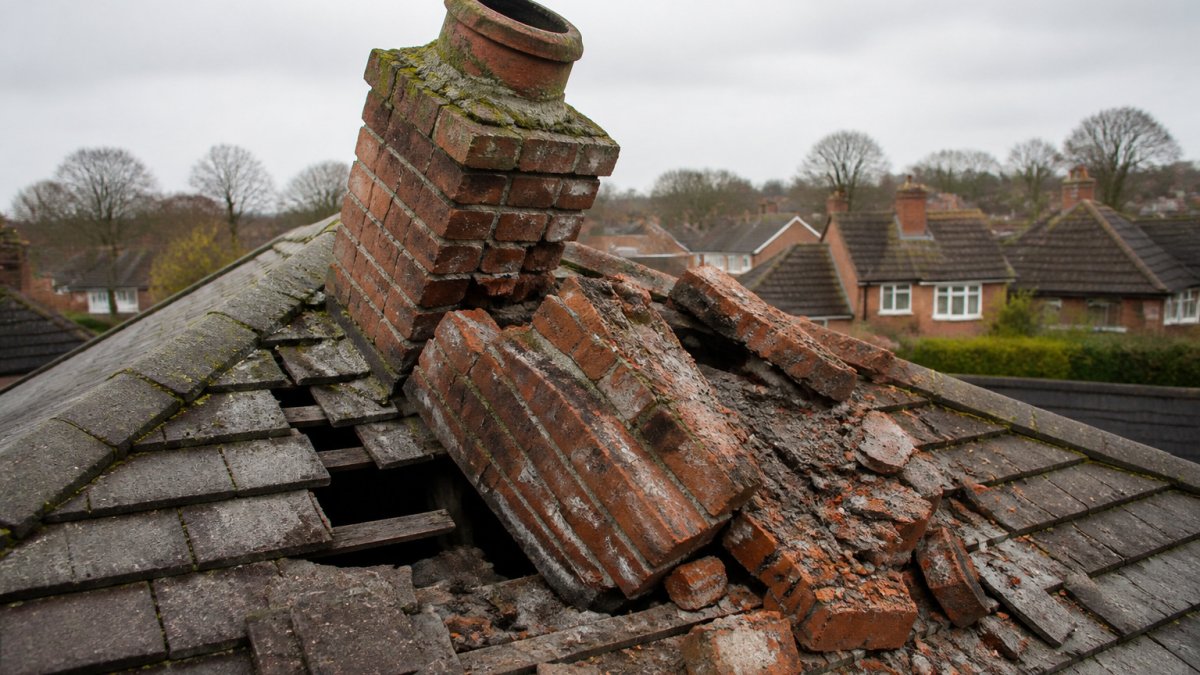
A chimney stack collapse happens when the brick, mortar, or structural components of your chimney fail and crumble. This is one of the most serious problems a roof can develop. When it happens, water pours into your home, the structural integrity of your roof is compromised, and repair costs climb fast.
Most collapses don’t happen overnight. They develop over years as small problems compound. Understanding what causes them means you can spot trouble early and prevent catastrophic failure.
Mortar Deterioration and Joint Failure
Mortar is the glue holding your brickwork together. Over time, it breaks down. Rain gets in, frost expands it, and the joints crumble.
The mortar loses its strength. Bricks start to shift. Eventually, sections of the stack lean or collapse entirely.
Watch out: If mortar is crumbling and falling out between bricks, the collapse process is already underway. This is not cosmetic damage. It needs urgent attention.
The fix involves removing failed mortar and repointing with fresh material. This stops water penetration and restores structural strength. If you wait too long, individual bricks fail and the entire stack becomes unstable.
Structural Movement and Settlement
Houses settle over time. Foundations shift slightly. Roof trusses move under load. Your chimney sits on top of all this movement.
If the foundation beneath your chimney shifts, the stack can’t follow. Stress builds at the base. Cracks appear. The weight of the brickwork above pulls the stack apart from the inside.
This is especially common in older properties. Your chimney feels every bit of that movement.
You’ll see diagonal cracks running through the brickwork. These cracks often start at the base and travel upward. They mean the stack is being pulled apart by forces beneath it.
Frost Damage and Freeze-Thaw Cycles
Water gets into tiny cracks in the brickwork. When temperatures drop below freezing, that water expands. The expansion pressure is enormous. It pushes the brick apart from the inside.
When temperatures rise, the ice melts and contracts. The brick is left with a slightly larger crack. Over several years, the cumulative damage is catastrophic.
You’ll see spalling, the outer layer of brick peeling away in chunks.
Chimney collapses develop over years through several key failure mechanisms.
| Cause | What Happens | Warning Signs |
|---|---|---|
| Mortar deterioration | Joints crumble, bricks shift, stack leans or collapses | Mortar crumbling and falling out between bricks |
| Structural movement and settlement | Foundation shifts, stress builds at base, stack pulled apart | Diagonal cracks starting at base and traveling upward |
| Frost damage and freeze-thaw cycles | Water expands when frozen, pushes brick apart from inside | Spalling, outer layer of brick peeling away in chunks |
Signs of an Unsafe Chimney Stack
Look for cracks in the mortar between bricks and vertical cracks running through the brickwork.
If your chimney is visibly tilted, don’t wait.
Spalling brick is where the outer surface flakes or chunks off.
Missing bricks or large gaps in the mortar are signs to look out for.
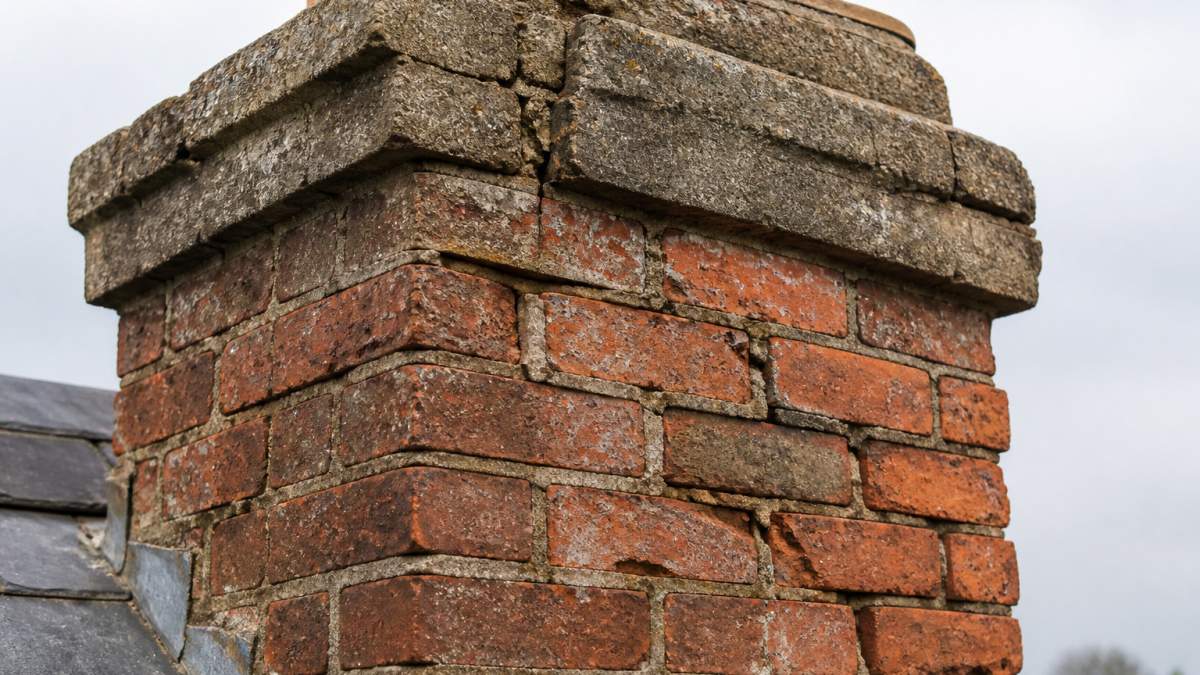
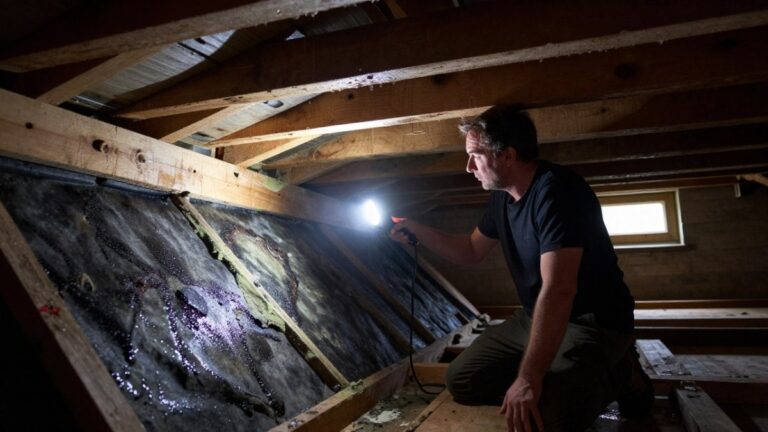
Damp patches on interior walls near the chimney may indicate water is getting through.
Loose bricks that move when touched are a sign to take seriously.
Get Your Free Roofing Quote Today! →
If you see any of these signs, get a professional inspection.
Chimney Stack Water Damage and Leaks
Water can get in through cracks, damaged mortar, or failed flashing.
Water can enter the roof structure, walls, and interior.
Inside your home, water damage may show as damp patches on ceilings and walls near the chimney.
The fix requires stopping the water source first. This might mean repointing mortar, replacing flashing, or rebuilding sections of the stack. If damage to your roof structure is extensive, you may need emergency roof leak repair.
Chimney Stack Leaning Causes
A leaning chimney stack may indicate a structural problem.
One possible cause is foundation settlement.
Structural damage to the brickwork itself may contribute to leaning.
Roof movement can also be a factor.
A leaning chimney can pose a safety concern.
If your chimney is leaning, contact a professional for an assessment.
Chimney Stack Repair in Your Area
A failing chimney stack may require professional attention.
Repointing involves removing failed mortar and replacing it with fresh material.
We offer specialist chimney repair services. We have over 25 years in the industry and provide free quotes. We’re available for emergency roof repair work.
Understanding the cost is important. Get a detailed breakdown of chimney repairs cost to understand what you’ll pay.
Getting Your Chimney Inspected and Repaired
A professional inspection can help identify chimney concerns.
If you suspect chimney problems, consider seeking professional advice.
Frequently Asked Questions
What are the most common causes of chimney stack collapse?
Potential factors include mortar deterioration, water ingress, structural movement, and freeze-thaw cycles.
What are the warning signs that a chimney stack is unsafe?
Look for visible cracks in mortar joints, missing or loose bricks, bowing or leaning of the stack, and damp patches on interior walls near the chimney.
Can rainwater damage cause a chimney stack to collapse?
Rainwater can enter through cracks in mortar and bricks.
Why do chimney stacks lean or become unstable?
Possible factors in a leaning chimney stack include foundation settlement, structural movement in the building, or mortar erosion.
Your chimney is critical to your home’s safety and structural integrity. Collapse is preventable with regular inspection and timely repair. If you’ve noticed signs of damage, cracks, leaning, damp patches, or spalling brick, contact us today. We’ll inspect your chimney, diagnose the problem, and provide a clear repair plan. Get your free roofing quote today and protect your home from chimney failure.