Emergency Roof Repair vs Scheduled Maintenance
Emergency roof repair vs scheduled maintenance: Compare emergency roof repair and scheduled maintenance. Understand costs, timing, and when each approach.

Table of Contents
- Emergency Roof Repair vs Scheduled Maintenance: Key Differences
- Signs of Roof Damage After Storm
- Cost of Emergency Roof Repair in Buckinghamshire
- Roof Maintenance Checklist UK: What to Monitor
- When Emergency Repair Is Your Only Option
- The Long-Term Case for Scheduled Maintenance
- Which Approach Suits Your Situation
Last Updated: August 17, 2026
Emergency Roof Repair vs Scheduled Maintenance: Key Differences
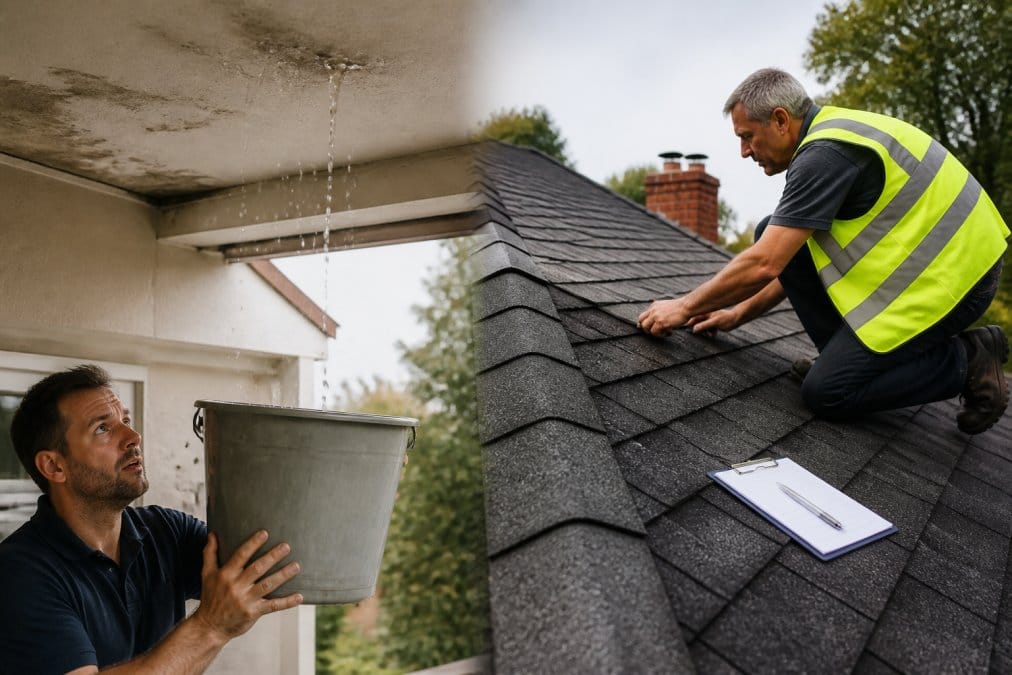
When your roof starts leaking at midnight or a storm tears off tiles, the choice between emergency roof repair vs scheduled maintenance becomes starkly obvious. Yet most property owners in the region don’t realise they’ve had this choice all along. At Evershield Roofing, we’ve spent over 25 years watching the same pattern repeat: homeowners ignore small warning signs, then face catastrophic bills when weather strikes. The difference between these two approaches isn’t just timing, it’s the difference between controlling your costs and having them control you.
Emergency repairs address immediate crises. Scheduled maintenance prevents those crises from happening in the first place. One approach is reactive; the other is strategic. Understanding when each makes sense, and what they actually cost in time, money, and stress, determines whether you’re managing your roof or your roof is managing you.
Signs of Roof Damage After Storm
Storm damage reveals itself in specific ways, and catching these signs early is where scheduled maintenance proves its worth. High winds tear tiles loose or crack them. Heavy rain finds every weak point in your flashing and valleys. Hail leaves impact marks that seem harmless until water begins seeping through six months later.
Look for missing or cracked tiles first. They’re the most obvious sign and the easiest to spot from ground level. Walk around your property after severe weather and scan the roof line. Missing sections leave dark patches where the underlay shows through. Cracked tiles may not be missing entirely, but they’ve lost their protective seal.
Gutters clogged with debris and sediment are another critical indicator. When gutters can’t drain properly, water backs up under your roof edge and penetrates the fascia and soffit. This damage spreads quickly and becomes expensive to repair. Debris accumulation also adds weight that gutters weren’t designed to handle, leading to sagging or separation from the roof.
Flashing around chimneys, vents, and roof penetrations deserves close attention. These junctions are where most leaks begin. Storm winds can lift flashing or loosen the sealant that keeps water out. If you notice water stains on your ceiling near these areas after rain, flashing damage is almost certainly the culprit.
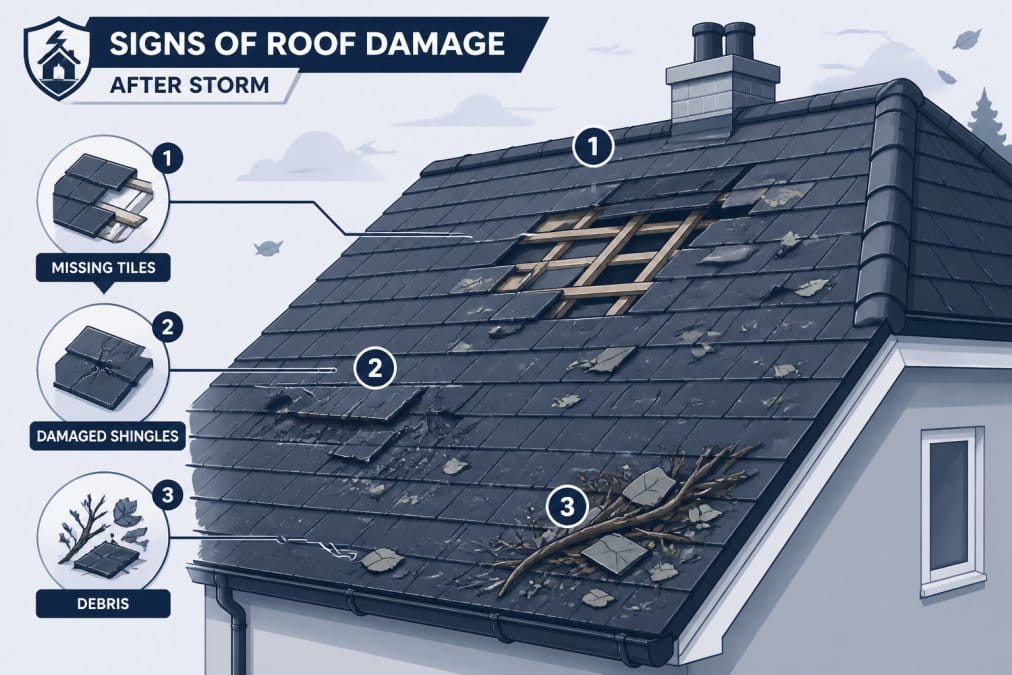
Sagging sections of your roof are a serious warning. They indicate that water has already penetrated the structure and damaged the underlying timber. This requires immediate professional assessment because the damage is no longer just to the tiles, it’s structural. Sagging is never a small repair.
Interior signs matter just as much. Water stains on ceilings or walls, especially after rainfall, mean water is finding its way through your roof. Damp patches in your loft or attic suggest the problem is already established. Don’t wait for these signs to worsen. They’re telling you that your roof’s protective barrier has failed.
Cost of Emergency Roof Repair in Buckinghamshire
Emergency repairs cost significantly more than scheduled maintenance, but the exact figure depends on what’s broken and how quickly you need it fixed. When you call a roofer at 2 a.m. because water is pouring through your ceiling, you’re paying for immediate availability, rapid response, and work that may happen in difficult conditions.
Emergency call-outs typically involve a temporary fix first, what’s known as a "make-safe" repair. This stops immediate water ingress and prevents further damage to your interior. It buys you time to arrange a permanent solution. Temporary fixes are essential when weather is still severe or when structural damage is apparent. Evershield Roofing provides these emergency interventions.
The cost variables are substantial. A small tile repair, a few broken tiles replaced, costs far less than structural damage requiring new timber or extensive underlay replacement. Storm damage affecting a large section of roof costs more than damage confined to one area. Whether your roof is pitched or flat changes the complexity and therefore the price. Accessibility matters too. A roof that’s difficult to reach safely requires more time and specialised equipment.
What separates emergency repairs from planned work is urgency premium. You’re paying for availability outside standard hours, for rapid mobilisation, and for work that may be done under suboptimal conditions. This is why prevention through scheduled maintenance makes financial sense. You control the timing, the conditions, and therefore the cost.
Roof Maintenance Checklist UK: What to Monitor
Effective scheduled maintenance follows a structured approach. You’re not guessing what to check, you’re following a systematic process that catches problems before they become emergencies.
Start with a visual roof inspection twice yearly, ideally in spring and autumn. Spring inspection catches winter damage. Autumn inspection prepares your roof for winter weather. Walk around your property with binoculars if climbing isn’t safe. Look for the same signs you’d notice after a storm: missing or cracked tiles, lifted flashing, debris in valleys.
Check your gutters and downpipes every quarter. Clear debris by hand or with a gutter scoop. Debris-clogged gutters are one of the most common causes of water damage. Blocked gutters also harbour moss and algae growth, which accelerates deterioration of both the gutter and the roof edge. This is preventable maintenance that takes an hour or two and costs nothing except your time.
Inspect flashing around chimneys, vents, and roof penetrations closely. Look for gaps in the sealant or visible gaps between the flashing and the surrounding roof. Flashing failures are silent, they don’t announce themselves until water has already entered the structure. Professional roofers like those at Evershield Roofing know where flashing typically fails and what to look for.
Monitor for moss and algae growth on your roof surface. Moss holds moisture against tiles and accelerates their breakdown. It’s also a sign that your roof isn’t drying properly after rain, which indicates drainage problems. Roof cleaning removes moss and algae, improving both appearance and longevity. Specialist roof cleaning prevents this organic growth from compromising your tiles.
Check your loft or attic space seasonally. Look for water stains, damp patches, or any sign of moisture. The interior tells you what the exterior hasn’t revealed yet. Condensation is normal in winter, but persistent damp or water stains indicate a breach in your roof’s weather seal.
Document everything. Photograph any areas of concern. Keep records of maintenance work completed. This history becomes invaluable if you need to make an insurance claim or sell your property. It demonstrates that you’ve maintained the roof properly.
When Emergency Repair Is Your Only Option
Sometimes emergency repair is genuinely your only choice. You can’t schedule maintenance for a roof that’s already failing catastrophically. When a storm has torn a large section away, when structural timbers are exposed, or when water is actively pouring through your ceiling, emergency intervention is not optional, it’s necessary.
Structural damage demands immediate attention. If your roof is sagging, if you see daylight through gaps in the structure, or if the damage is so extensive that temporary fixes won’t prevent further deterioration, you need emergency repair. Delaying structural work risks collapse, which endangers occupants and escalates costs exponentially.
Get Your Free Roofing Quote Today! →
Severe weather events create situations where dozens of properties need repairs simultaneously. Your roofer may have a waiting list. Emergency call-outs help you get to the front of that queue because the damage is active and spreading. In these situations, the premium you pay for emergency service is justified by the protection it provides.
Insurance claims often require emergency action. If your insurer has been notified and you need to prevent further damage to support your claim, emergency repair demonstrates due diligence. Insurers expect you to take reasonable steps to prevent additional loss. Emergency work, properly documented, supports your claim rather than undermining it.
However, many situations that feel like emergencies aren’t truly urgent. A small leak that started during last week’s rain but has now stopped is not an emergency, even though it feels urgent. It’s a maintenance issue that should be addressed soon, but it doesn’t require emergency call-out pricing. Understanding this distinction saves money.
Watch Out
Treating maintenance issues as emergencies costs substantially more. Before calling for emergency service, assess whether the situation is actively worsening right now or whether it’s a problem that needs attention within days or weeks. Emergency services are for active, spreading damage, not for problems that can wait until business hours.
Treating maintenance issues as emergencies costs substantially more. Before calling for emergency service, assess whether the situation is actively worsening right now or whether it’s a problem that needs attention within days or weeks. Emergency services are for active, spreading damage, not for problems that can wait until business hours.
The Long-Term Case for Scheduled Maintenance
Scheduled maintenance is the financially intelligent choice for most property owners. It costs less, delivers better outcomes, and gives you control over timing and budget.
When you maintain your roof systematically, you catch problems at the earliest stage. A small crack in a tile is a five-minute fix. That same crack, left unattended for two years, becomes a water ingress problem that damages the underlay and timber, turning a minor repair into a major one. Early intervention stops this escalation.
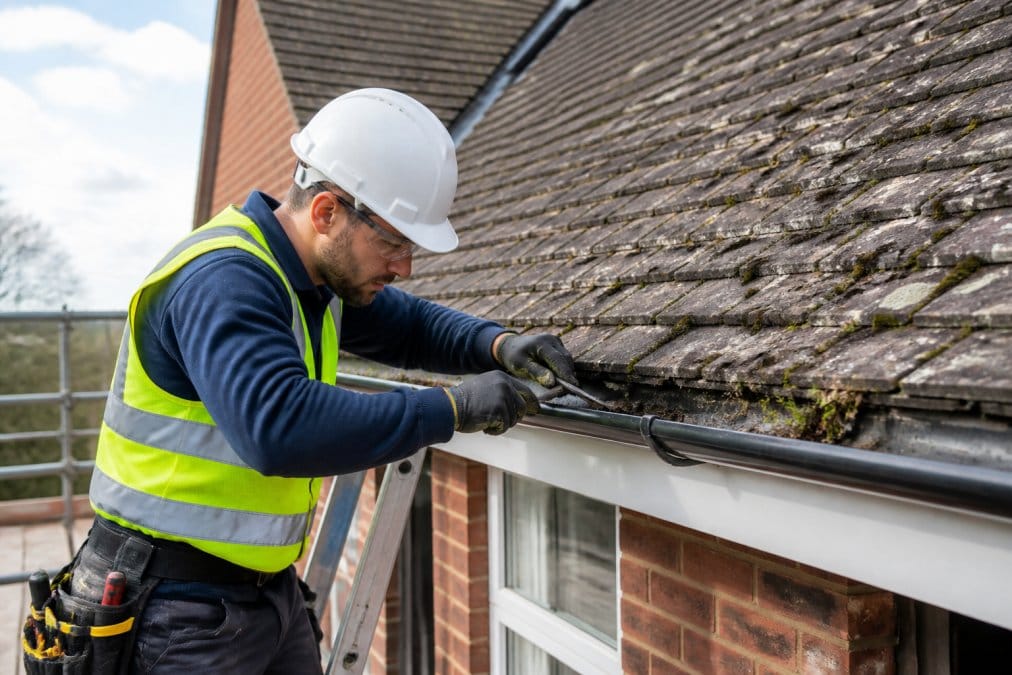
Scheduled maintenance extends your roof’s lifespan. A well-maintained roof lasts significantly longer than one left to deteriorate. Regular cleaning removes moss and algae. Flashing is resealed before it fails. Gutters stay clear so water drains properly. These actions add years to your roof’s life, deferring the cost of replacement.
Budget predictability matters more than many homeowners realise. When you schedule maintenance, you can plan and budget for it. You might spend a modest amount each year on inspections, cleaning, and minor repairs. Compare this to the alternative: ignoring maintenance until a crisis forces an emergency repair that you can’t afford and can’t delay. Emergency repairs arrive with no warning and no budget flexibility.
Insurance companies recognise the value of maintenance. Demonstrating that you’ve maintained your roof properly strengthens your position if you need to file a claim. Insurers are more likely to cover damage to a well-maintained roof than to one that’s been neglected. Regular maintenance records become evidence of responsible ownership.
Scheduled maintenance also improves your property’s value and appeal. A roof in good condition is a major selling point. Prospective buyers want to know the roof won’t need replacement in two years. Maintenance records prove the roof is sound. This translates to better offers and faster sales when the time comes.
Key Takeaway
Scheduled maintenance costs less than emergency repair, extends your roof’s lifespan, gives you budget control, strengthens insurance claims, and improves property value. It’s not an optional extra, it’s the foundation of responsible property ownership.
Scheduled maintenance costs less than emergency repair, extends your roof’s lifespan, gives you budget control, strengthens insurance claims, and improves property value. It’s not an optional extra, it’s the foundation of responsible property ownership.
Which Approach Suits Your Situation
Your circumstances determine which strategy makes sense. For most property owners, the answer is both: scheduled maintenance as your primary strategy, with emergency repair available when genuine crises occur.
If you own a property outright and plan to stay for years, scheduled maintenance is clearly the right choice. You’ll benefit from the extended roof life and cost savings. The investment compounds over time. Evershield Roofing’s approach to maintenance planning helps you build a long-term strategy that fits your property and budget.
If you’re renting out a property, maintenance becomes even more important. Tenant damage claims, insurance complications, and emergency repairs during tenancy create stress and expense. Proactive maintenance prevents most of these problems. It’s an investment that protects your asset.
If you’ve recently purchased a property and don’t know the roof’s condition, start with a professional survey. Evershield Roofing provides free surveys that identify any existing damage or maintenance needs. This baseline assessment guides your maintenance strategy going forward.
If your property is in an area prone to severe weather, high winds, heavy snow, frequent storms, maintenance becomes more critical. Weather-exposed roofs deteriorate faster and need more frequent attention. Regular inspections catch storm damage quickly. Maintenance prevents minor damage from becoming catastrophic.
If you’re on a tight budget, maintenance actually helps rather than hinders. Small, planned expenses are easier to manage than large, unexpected ones. You control the pace of maintenance work, spreading costs across the year. This is more manageable than facing a £3,000 emergency repair with no warning.
| Situation | Best Approach | Why |
|---|---|---|
| Owned property, long-term plans | Scheduled maintenance | Extends roof life, controls costs, improves property value |
| Rental property | Scheduled maintenance | Prevents tenant disputes, protects asset, reduces emergency calls |
| New property purchase | Start with survey, then maintenance | Establishes baseline, guides long-term strategy |
| Weather-exposed location | Maintenance + emergency readiness | Catches damage early, prevents escalation |
| Limited budget | Maintenance with planned scheduling | Spreads costs, prevents large surprises |
| Recent storm damage | Emergency repair, then maintenance | Addresses immediate crisis, prevents recurrence |
The choice between emergency roof repair vs scheduled maintenance isn’t really a choice at all for most property owners. Scheduled maintenance is the foundation. Emergency repair is the safety net. You build the foundation first, then hope you never need the safety net. At Evershield Roofing, we help property owners throughout the region establish maintenance routines that prevent emergencies. When genuine crises do occur, we’re available with rapid response and professional expertise. Our team has over 25 years of experience managing both planned maintenance and emergency situations. Get your free roofing survey today and discover what your roof actually needs. Contact Evershield Roofing to start your maintenance strategy or address an urgent repair.
Frequently Asked Questions
How often should I schedule roof maintenance in Buckinghamshire?
Most properties benefit from roof inspections at least once yearly, ideally in spring or autumn. After severe weather, inspect sooner. Regular maintenance catches small issues before they become costly emergencies. Gutter cleaning typically needs attention twice yearly to prevent water damage and blockages that compromise your roof structure.
Is scheduled roof maintenance cheaper than emergency repairs in the long run?
Yes. Scheduled maintenance identifies wear early, preventing small problems from escalating into major damage requiring urgent call-outs. Emergency repairs often cost significantly more due to rapid response fees, labour rates, and the risk of secondary damage from water ingress. Consistent preventative care extends your roof's lifespan and avoids the premium pricing of emergency work.
What should I do if I notice signs of roof damage after a storm?
Contact a qualified roofer immediately for a professional assessment. Document any visible damage with photos for insurance purposes. If there is active water ingress, temporary measures like tarping may prevent further interior damage. Avoid climbing onto the roof yourself. A surveyor can determine whether you need emergency repair or can schedule work safely within days.
Can temporary repairs from emergency roof work be permanent?
Temporary repairs like tarpaulin covers or patching prevent immediate water damage but are not permanent solutions. They buy time and protect your property while you arrange a proper repair or replacement. Most emergency work is designed as a short-term fix; follow-up permanent repairs should be scheduled as soon as practical to restore full protection.