6 Common Causes of Roof Leaks in Older Homes
6 common causes of roof leaks in older homes: Discover why older roofs leak and how to spot problems early. Learn 6 common causes and prevention steps for.

Table of Contents
- Why Older Roofs Leak: The Main Culprits
- 1. Deteriorating Roof Coverings and Worn Tiles
- 2. Damaged Flashing and Seal Failure
- 3. Sagging Roof Decking and Structural Movement
- 4. Blocked Gutters and Poor Water Drainage
- 5. Moss, Algae, and Organic Growth
- 6. Chimney and Vent Penetration Issues
- Signs of Roof Damage on Period Homes
Last Updated: August 19, 2026
Why Older Roofs Leak: The Main Culprits
Older homes charm us with their character and craftsmanship, but their roofs often tell a different story. The 6 common causes of roof leaks in older homes stem from decades of exposure to weather, material degradation, and structural settling. At Evershield Roofing, we’ve inspected hundreds of period properties across Buckinghamshire, and the patterns are consistent: most leaks aren’t sudden failures but the result of predictable deterioration that could have been caught earlier.
Understanding what causes these leaks matters because prevention is far cheaper than emergency repairs. A small leak ignored for months can cost thousands in ceiling repairs, mould remediation, and structural damage. The good news is that each cause has a clear solution, and many can be addressed before they become critical.
This guide walks you through the six most common culprits behind roof leaks in older homes, what to look for, and how to address them. Whether you’re dealing with water stains on your ceiling right now or planning preventative maintenance, knowing these causes will help you make informed decisions about your roof’s future.
1. Deteriorating Roof Coverings and Worn Tiles
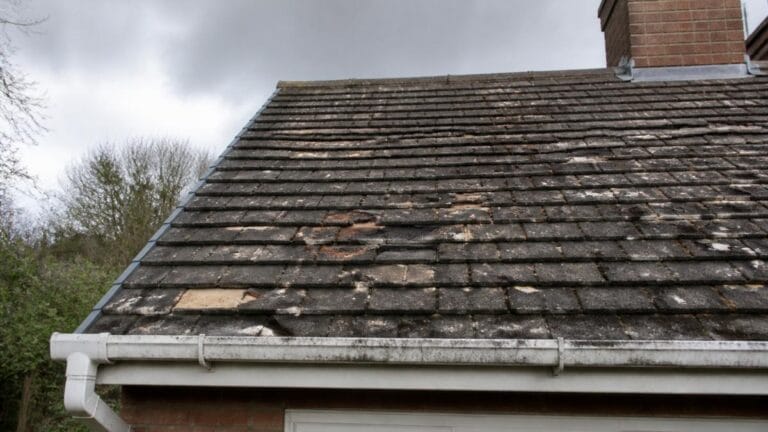
The most obvious cause of roof leaks in older homes is the roof covering itself. After 20, 30, or 40 years of exposure to rain, frost, and UV radiation, even the best tiles and slates begin to fail. Clay tiles crack and become porous. Slate tiles fracture along their grain. Concrete tiles fade and lose their protective coating.
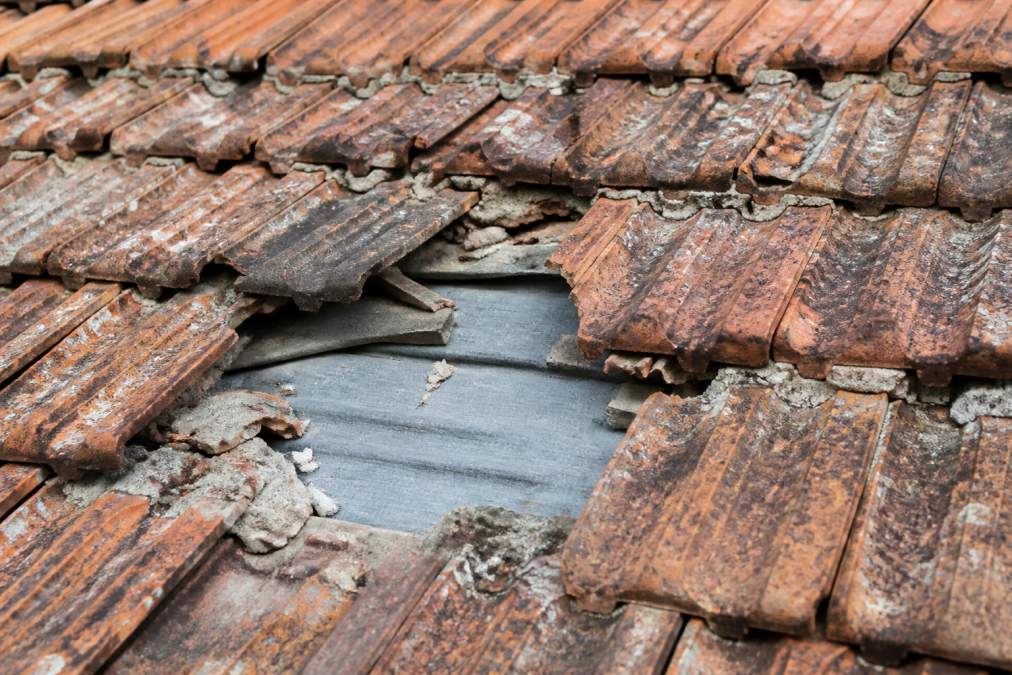
When tiles crack or go missing entirely, water penetrates directly into the roof structure beneath. The problem compounds because older homes often have single-layer underlayment or none at all. Modern roofs have breathable membranes that shed water even if a tile fails. Older roofs rely almost entirely on the integrity of the tile itself.
Watch Out
A single missing tile can allow water to penetrate 10-15 metres of roof structure before it shows up as a leak inside. By the time you see water staining on your ceiling, the damage behind the scenes is often extensive.
A single missing tile can allow water to penetrate 10-15 metres of roof structure before it shows up as a leak inside. By the time you see water staining on your ceiling, the damage behind the scenes is often extensive.
The solution depends on the roof’s overall condition. If you have isolated broken tiles and the rest of the roof is sound, targeted repairs make sense. If more than 25% of the roof shows signs of wear, missing mortar, widespread cracking, or tiles lifting at the edges, a full replacement is more cost-effective than patching. Evershield Roofing offers both repair and full roof replacement services, and a professional survey will reveal which approach suits your property.
2. Damaged Flashing and Seal Failure
Flashing is the thin metal (usually lead, zinc, or aluminium) installed where the roof meets vertical surfaces like chimneys, walls, and vent pipes. It’s designed to channel water away from these penetrations and back onto the roof. When flashing fails, water runs behind it and into the structure.
In older homes, flashing was often installed with lime mortar or simple overlaps without sealant. Over decades, this mortar cracks and shrinks. The flashing itself corrodes, especially if it’s original lead or uncoated steel. Even where flashing looks intact from outside, the seal underneath may have failed completely.
Common signs of flashing failure include water stains appearing on ceilings near chimneys or external walls, damp patches that don’t correspond to visible roof damage, and rust streaks running down the outside of the chimney. Sometimes you’ll see gaps between the flashing and the masonry, or the flashing will be visibly lifted at the edges.
Pro Tip
Check your flashing after heavy rain or snow melt. If water is pooling around the base of a chimney or vent pipe rather than running off, the flashing has likely failed. This is one of the easiest problems to spot early.
Check your flashing after heavy rain or snow melt. If water is pooling around the base of a chimney or vent pipe rather than running off, the flashing has likely failed. This is one of the easiest problems to spot early.
Fixing flashing requires removing the damaged section and installing new material with modern sealant. This is not a DIY job, improper installation creates new leak paths. Evershield Roofing specialises in flashing repairs and can often address this without requiring a full roof replacement, making it a relatively affordable fix if caught early.
3. Sagging Roof Decking and Structural Movement
Older homes settle and shift over time. Timber roof decking, the boards that sit beneath the tiles, absorbs moisture and can rot. As it weakens, the roof sags in the middle. This sagging creates valleys where water pools instead of running off.
Structural movement is particularly common in Victorian and Edwardian properties. Subsidence, timber decay, and the natural settling of old foundations all contribute. You might notice the roof line isn’t perfectly straight when viewed from a distance, or there are visible dips along the roofline.
When the roof decking sags, water no longer flows downhill to the gutters. Instead, it sits in low spots, increasing the time it has to penetrate through cracks and gaps. Even minor sagging, just 50mm over a 5-metre span, can trap water and cause leaks.
This is a structural issue that goes beyond simple roof repair. Sagging decking usually indicates that the underlying timber has weakened and may need replacement. In some cases, additional support beams or ties are needed. This is not a small job, but it’s critical: ignoring sagging roof decking can lead to structural failure.
Get a structural survey from a qualified surveyor or experienced roofer. Evershield Roofing can assess whether the decking needs replacement or if additional support can solve the problem. Either way, this requires professional intervention, it’s not something that can be patched or sealed. signs of water damage.
4. Blocked Gutters and Poor Water Drainage
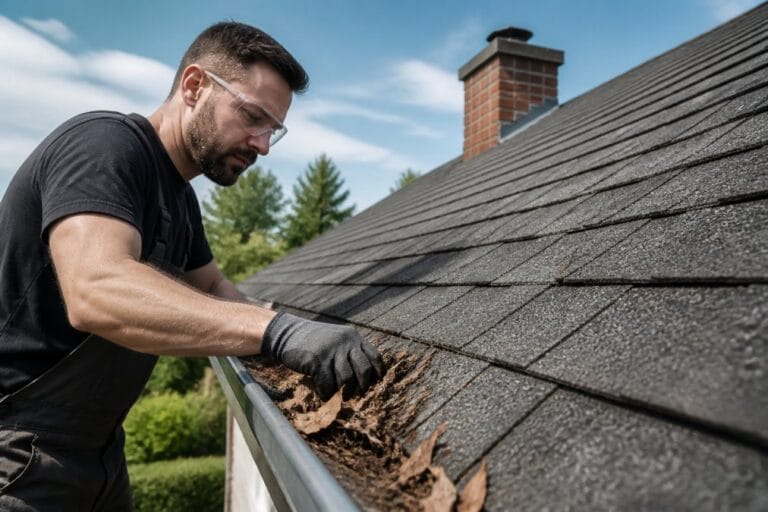
This might seem obvious, but blocked gutters are responsible for more roof leaks than many homeowners realise. Gutters clogged with leaves, moss, and debris prevent water from running off the roof. Instead, it backs up and sits on the roof surface, seeping through tiny gaps in tiles and flashing.
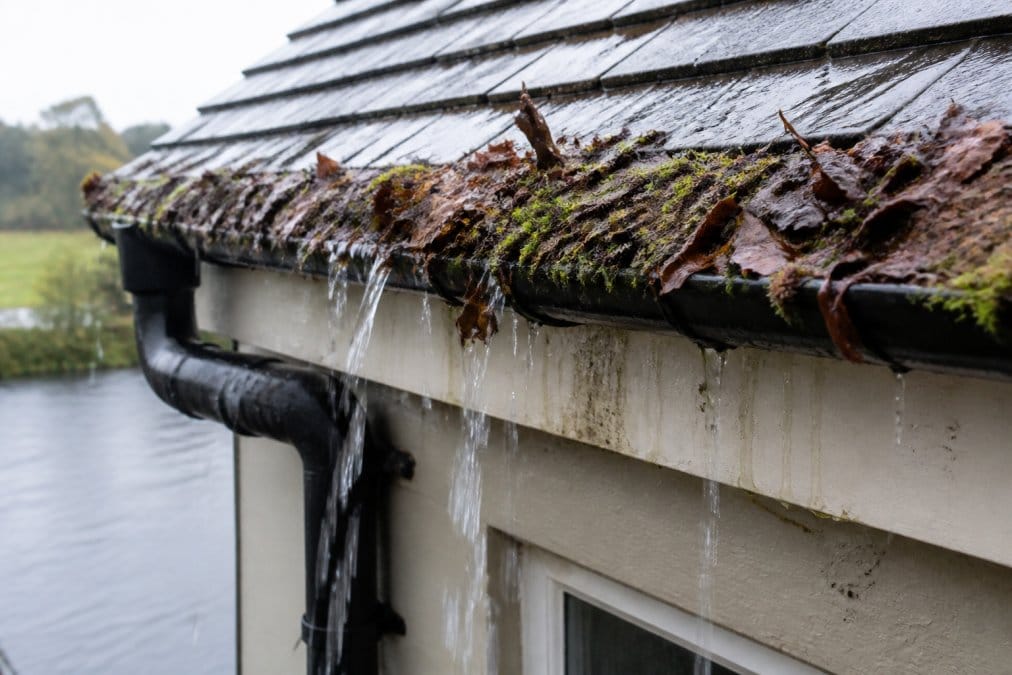
Older homes often have cast iron or steel gutters that rust and develop holes. Even where gutters are sound, they may be undersized for the roof area they serve, common in properties built before modern drainage standards. Downpipes might be blocked internally or discharge directly onto the ground rather than into a proper drainage system, allowing water to pool around the foundation and seep back up into the walls.
The fix is straightforward but requires regular maintenance. Gutters need clearing at least twice yearly, more often if your property is surrounded by trees. Modern gutter guards can reduce debris accumulation. If your gutters are rusted or damaged, replacement is necessary. Undersized gutters can be upgraded during a roof replacement project.
Key Takeaway
A [gutter cleaning and inspection](/local-gutter-cleaning/) costs far less than water damage repairs. Many roof leaks that appear to be tile or flashing failures are actually caused by gutters that simply need clearing.
A [gutter cleaning and inspection](/local-gutter-cleaning/) costs far less than water damage repairs. Many roof leaks that appear to be tile or flashing failures are actually caused by gutters that simply need clearing.
Evershield Roofing offers gutter cleaning and gutter replacement services. A blocked gutter is often the easiest problem to solve, and addressing it can prevent more serious damage developing.
5. Moss, Algae, and Organic Growth
Older roofs, particularly those in damp climates, accumulate moss and algae. While these organisms don’t directly create holes, they trap moisture against the tile surface. Over time, this moisture penetrates the tile material itself, especially on clay and concrete tiles. The tiles become softer and more porous, allowing water to soak through rather than running off.
Moss also lifts tile edges slightly as it grows underneath, breaking the seal between tiles and allowing water to run up into the gaps instead of down and off. In winter, when moss freezes, it expands and can crack tiles from the inside.
Get Your Free Roofing Quote Today! →
Organic growth is particularly problematic on north-facing roof slopes and in shaded areas where moisture lingers longer. Older homes with overhanging trees are especially vulnerable.
Cleaning the roof removes the moss and algae, but this is not a permanent solution. Moss returns within a few years unless preventative measures are taken. Some roofers apply biocide treatments that slow regrowth, though these require reapplication every 3-5 years.
The real solution is addressing the underlying conditions: improving ventilation to reduce moisture, trimming overhanging branches to increase sunlight, and ensuring gutters drain properly. If moss is severe, it’s a sign that moisture is lingering on your roof for extended periods, a red flag for other potential problems.
Evershield Roofing offers roof cleaning services that remove moss and algae safely. During cleaning, we inspect for other damage that may be hidden beneath the growth.
6. Chimney and Vent Penetration Issues
Chimneys and vent pipes create weak points in the roof. Water can leak around the flashing where these structures meet the roof, down the outside of the chimney itself, or through cracks in the chimney’s mortar joints.
In older homes, chimneys are often built directly on the roof structure without proper flashing underneath. The mortar holding the bricks together deteriorates over decades. Cracks appear, particularly around the base where the chimney meets the roof. Water runs into these cracks and into the roof space.
Vent pipes for bathrooms, kitchens, and boilers also create penetration points. If the flashing around these pipes is missing or failed, water runs down the outside of the pipe and into the roof.
Signs of chimney-related leaks include water stains on ceilings near the chimney, damp patches on external walls beside chimneys, and visible cracks in the mortar. Sometimes you’ll smell damp in the loft space near the chimney even when there’s no visible water.
The solution involves repointing the chimney (replacing failed mortar), installing or replacing flashing, and in some cases, installing a chimney cap to prevent water running down the outside of the stack.
Watch Out
A leaking chimney is not just a roof problem, water running into the chimney structure can damage the internal flue lining and create a fire hazard. This requires prompt professional attention.
A leaking chimney is not just a roof problem, water running into the chimney structure can damage the internal flue lining and create a fire hazard. This requires prompt professional attention.
Evershield Roofing specialises in chimney repairs, including repointing, flashing installation, and chimney cap fitting. These are often straightforward repairs that prevent much larger problems.
Signs of Roof Damage on Period Homes
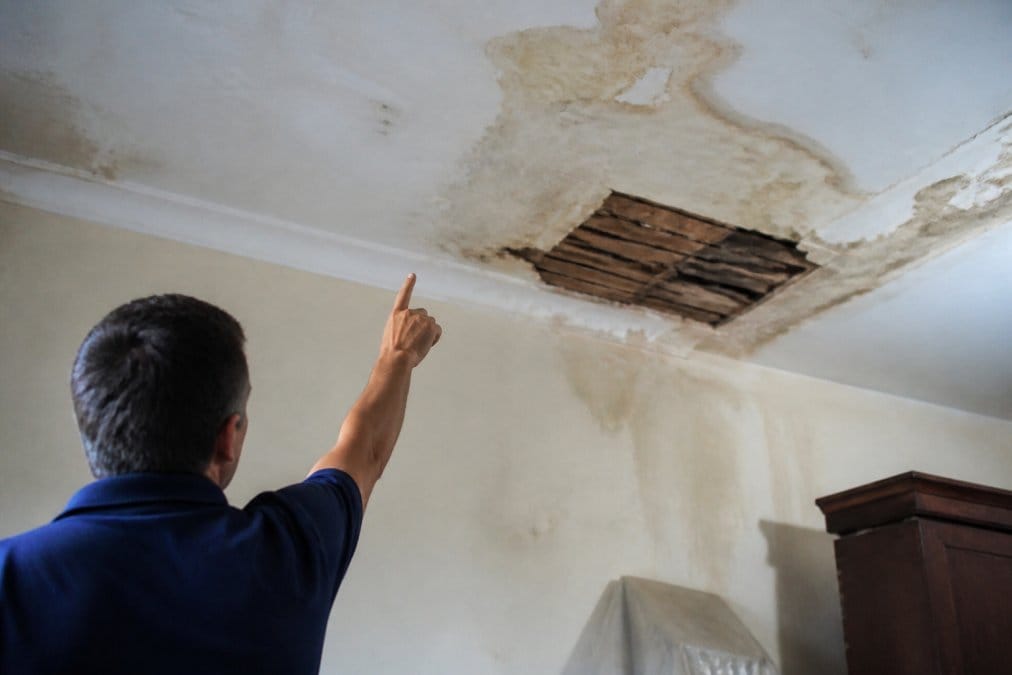
Knowing what to look for helps you catch problems early. Water stains on ceilings are the obvious sign, but they appear only after damage is already well underway. Look for these earlier warning signs:
Damp patches on external walls, particularly near the roofline. These often appear before interior water stains. Visible moss or algae growth on the roof. Tiles that are visibly cracked, missing, or lifting at the edges. Gaps between flashing and masonry or between tiles. Rust streaks running down chimneys or vent pipes. Sagging or uneven roofline when viewed from a distance. Gutters that are visibly rusted, dented, or overflowing even after clearing.
Interior signs include damp smells in the loft, water stains on rafters or joists, and soft or spongy timber in the roof space. These indicate that leaks have been present for some time.
The best approach is a professional roof survey. Evershield Roofing offers free surveys where we inspect the roof from above, check flashing and penetrations, assess gutter condition, and identify potential problems before they become emergencies. We provide a detailed report with photographs and recommendations.
Roof leaks in older homes are preventable with regular inspection and timely maintenance. The 6 common causes of roof leaks in older homes, deteriorating coverings, failed flashing, structural sagging, blocked gutters, organic growth, and chimney issues, all show warning signs well before they cause serious damage. Catching these early saves money and protects your property’s structure and interior.
At Evershield Roofing, we’ve spent over 25 years helping homeowners across Buckinghamshire address roof problems before they escalate. Whether you need a free survey, targeted repairs, or a full roof replacement, we’re here to guide you through the process with expert advice and transparent communication. Get your free roofing quote today and find out exactly what your roof needs.
Frequently Asked Questions
What are the signs of a failing roof on an older house?
Common signs include water stains on ceilings or walls, missing or cracked tiles, sagging roof sections, visible moss or algae growth, and daylight visible through the roof space. You may also notice granules from tiles in gutters or a musty smell in the loft. If you spot any of these, contact a qualified surveyor promptly to assess the damage before it worsens.
How often should an older roof be inspected in the UK?
Roofs over 20 years old should be inspected at least twice yearly, ideally in spring and autumn. After storms or high winds, inspect immediately for damage. Regular inspections catch problems early and prevent costly water damage. Many insurers require documented inspections for older properties. A professional survey costs far less than emergency repairs from undetected leaks.
Can a leaking roof cause structural damage to a period home?
Yes, unrepaired leaks cause serious structural problems in older homes. Water penetration rots timber beams, weakens masonry, and damages historic features. Period properties are particularly vulnerable because original materials degrade faster when wet. Prolonged leaks also create damp, which spreads to walls and foundations. Act quickly when you discover a leak to protect your home's structural integrity and preserve its character.
Are roof repairs covered by home insurance in the UK?
Most home insurance policies cover roof repairs from sudden damage like storms or fallen trees, but not gradual wear or neglect. If a leak results from poor maintenance or age-related deterioration, your insurer may refuse the claim. Always check your policy wording and report damage promptly. Some insurers offer specialist cover for older properties. Maintenance records help prove you've cared for your roof properly.