Flat Roof vs Tiled Roof Durability Comparison
Compare flat roof vs tiled roof durability. Learn lifespans, maintenance needs, and long-term costs to make the right choice for your home.

Table of Contents
- How Flat and Tiled Roofs Compare on Durability
- Flat Roof Lifespan UK: What to Expect
- Tiled Roof Lifespan UK: What to Expect
- Flat Roof Maintenance: Keeping Your Roof in Shape
- Flat Roof Repair or Replacement: Making the Call
- Long-Term Costs and Durability
- Frequently Asked Questions
Last Updated: October 6, 2026
How Flat and Tiled Roofs Compare on Durability
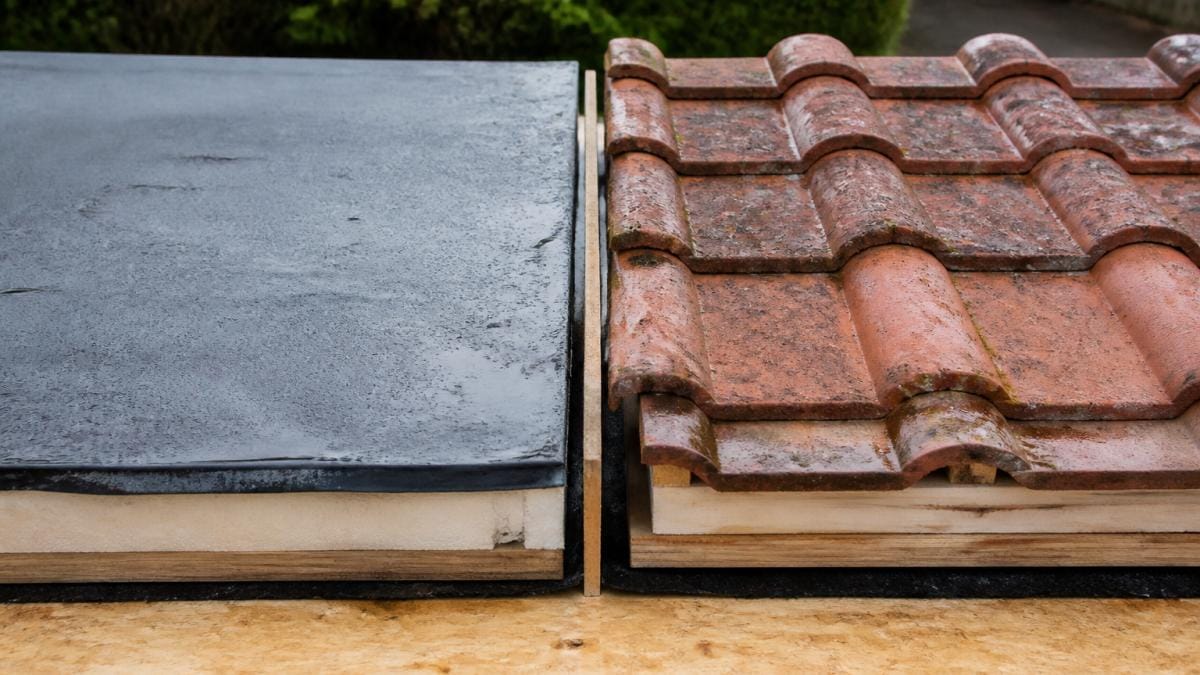
Choosing between a flat roof and a tiled roof usually comes down to one question: which one offers better roof durability? A flat roof vs tiled roof durability comparison is really a comparison of two different engineering philosophies. Tiled roofs shed water and rely on overlapping materials, while flat roofs seal water out with a continuous membrane. That single difference shapes everything about lifespan, maintenance, and cost.
At Evershield Roofing, we have spent 25 years repairing and replacing both types across Buckinghamshire, so we have seen how each one ages in real conditions. Below, we break down what durability actually means, how long each roof lasts, and how to decide which is right for your property.
Durability is the ability of a roof to resist weather, structural movement, and material decay over time without losing its waterproof seal.
What We Mean by Durability
Durability is not just about how many years a roof survives. It is a combination of three things:
- Water resistance: how well the roof keeps rain out, including during storms and standing water.
- Structural resilience: how it handles thermal movement, foot traffic, and storm loading.
- Maintenance demand: how often it needs inspection, cleaning, or repair to stay effective.
A tiled roof usually wins on structural resilience because individual tiles can fail without compromising the whole roof. A flat roof usually wins on simplicity, but only if the membrane is installed and maintained correctly.
Key Takeaway
A roof is only as durable as its weakest detail. On flat roofs that is usually the drainage or the seams; on tiled roofs it is the mortar, flashings, and underlay beneath the tiles.
A roof is only as durable as its weakest detail. On flat roofs that is usually the drainage or the seams; on tiled roofs it is the mortar, flashings, and underlay beneath the tiles.
Flat Roof Lifespan UK: What to Expect
A flat roof lifespan UK homeowners can realistically expect ranges from about 10 years for older felt systems to 20-25 years for modern rubber (EPDM) or GRP fibreglass membranes. The material matters far more than the pitch.
Older bitumen felt roofs, common on extensions and garages, often need attention well before the 15-year mark. They crack, blister, and lose flexibility as they age. Newer single-ply rubber and fibreglass systems perform better because they are seamless and tolerate movement.
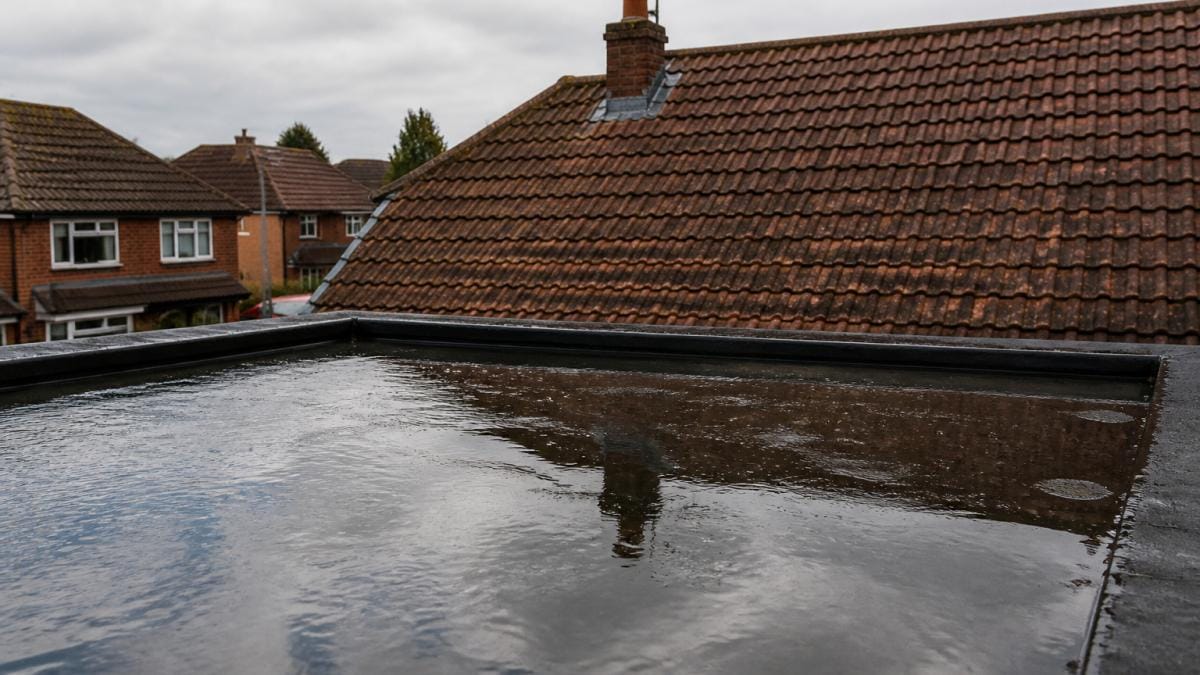
What shortens a flat roof’s life most is standing water. If water sits on the surface for days after rain, the membrane is under constant stress and will fail sooner. Poor falls, blocked outlets, and debris all contribute. According to NHS guidance on damp and mould in the home, persistent water ingress can also lead to damp and mould problems inside the property, so a failing flat roof is a health issue, not just a cosmetic one.
Watch Out
A flat roof that holds water after rain is not “just how flat roofs work.” Standing water is the single biggest cause of premature membrane failure, and it usually points to blocked outlets or insufficient fall.
A flat roof that holds water after rain is not “just how flat roofs work.” Standing water is the single biggest cause of premature membrane failure, and it usually points to blocked outlets or insufficient fall.
Tiled Roof Lifespan UK: What to Expect
A tiled roof lifespan UK property owners can expect is typically 50 to 60 years for the tiles themselves, with some clay and concrete tiles lasting even longer. The tiles are rarely the problem.
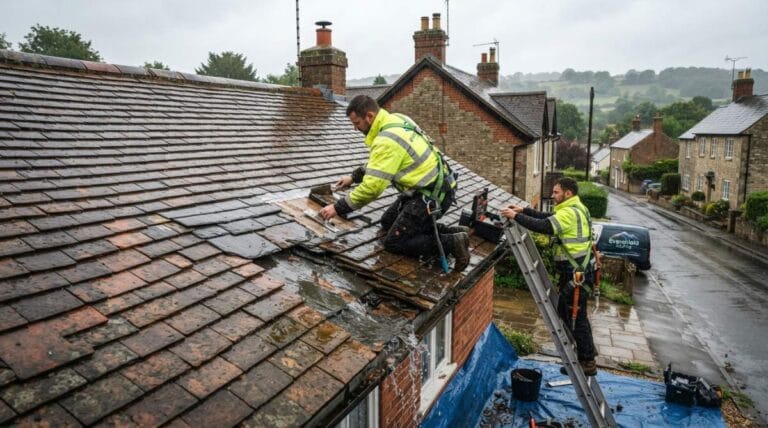
The components beneath and around the tiles age faster. Mortar bedding, ridge pointing, flashings, and the underlay all degrade decades before the tiles do. A tiled roof at 40 years old may look fine from the ground while the underlay beneath it has crumbled to dust.
That is the part most homeowners miss. Moss buildup makes it worse. Moss holds moisture against the tiles and mortar, accelerating decay and blocking gutters. Regular roof maintenance guidance from the Royal Institution of Chartered Surveyors recommends periodic inspection precisely because the visible tiles tell you very little about the state of the roof beneath.
Flat Roof Maintenance: Keeping Your Roof in Shape
Flat roof maintenance is more frequent than tiled roof maintenance, but each task is simpler. The trade-off is real: you inspect a flat roof two or three times a year, but you rarely need scaffolding to do it.
A practical maintenance routine looks like this:
Get Your Free Roofing Quote Today! →
| Task | How Often | Why It Matters |
|---|---|---|
| Clear outlets and drains | Every 3 months | Prevents standing water and ponding |
| Sweep away debris and leaves | Twice a year | Stops moss and algae buildup |
| Inspect seams and flashings | Annually | Catches splits before they leak |
| Check after storms | As needed | Identifies storm damage early |
For tiled roofs, the routine is lighter but the consequences of neglect are higher. Clear gutters, remove moss, and have the roof checked every few years. If you are unsure where to start, our gutter cleaning and soft washing service handles the routine work that keeps both roof types draining properly.
Pro Tip
Photograph your roof after every major storm. Comparing photos over time shows you small changes, like a lifted tile or a new blister on a membrane, long before they turn into leaks.
Photograph your roof after every major storm. Comparing photos over time shows you small changes, like a lifted tile or a new blister on a membrane, long before they turn into leaks.
Flat Roof Repair or Replacement: Making the Call
Deciding between flat roof repair or replacement comes down to age, extent of damage, and how many patches the roof already has. There is no single right answer, but there is a clear decision framework.
- Repair if the roof is under 10 years old, the damage is isolated, and the membrane is otherwise sound.
- Repair if a single seam, flashing, or outlet has failed and the rest of the roof drains correctly.
- Replace if the roof is past 15 years old and has had multiple repairs in recent years.
- Replace if water ponds across large areas, or if the deck beneath the membrane is soft or spongy.
- Replace if you are planning to sell and the survey has flagged the roof.
For tiled roofs, the same logic applies to sections rather than the whole roof. A few cracked tiles are a repair. Widespread mortar failure, a sagging roofline, or a failed underlay means the roof needs more than patching. Our roof repairs team can survey both types and give you a straight answer rather than a sales pitch.
Long-Term Costs and Durability
Long-term cost is where the durability comparison gets interesting. A tiled roof costs more upfront but spreads that cost over a much longer life. A flat roof costs less initially but will likely need replacing within the time a tiled roof needs only minor maintenance.
Think in terms of cost per year of service rather than headline price. A flat roof replaced twice over 40 years may cost more in total than a tiled roof installed once and maintained well. Add in the disruption, scaffolding, and interior repairs from leaks, and the gap widens.
That said, flat roofs remain the practical choice for extensions, garages, and many commercial buildings where a pitched roof is not feasible. For those, modern rubber and fibreglass systems give the best durability available. Our flat roofing service in Buckinghamshire uses these systems specifically because they handle the standing-water risk that older felt could not.
If budget is the barrier, finance is available from 0% APR, which spreads the cost of a replacement rather than forcing a cheap repair that fails in two years.
Frequently Asked Questions
Which lasts longer, a flat roof or a tiled roof?
Tiled roofs typically last longer than flat roofs. A well-maintained tiled roof can last 50 to 100 years, while a flat roof usually lasts 10 to 25 years depending on the material. However, flat roofs are improving, with some modern systems lasting up to 40 years. The key difference is that tiles resist weather better and are easier to repair individual sections. Flat roofs require more frequent maintenance to achieve their maximum lifespan.
How long do flat roofs last in the UK?
In the UK, flat roof lifespan varies by material. Traditional felt roofs last around 10 to 15 years, while modern EPDM rubber or GRP fibreglass systems can last 20 to 30 years, and some reach 40 years with proper maintenance. British weather, especially rain and UV exposure, affects longevity. Regular inspections and prompt repairs are essential to maximise lifespan. For a flat roof lifespan UK estimate, consider the material and maintenance schedule.
Are flat roofs more prone to leaks than tiled roofs?
Yes, flat roofs are generally more prone to leaks because water drains slowly and can pool. Tiled roofs shed water quickly due to their pitch. However, proper installation and regular flat roof maintenance can reduce leak risk. Flat roofs require sealed joints and good drainage, while tiled roofs rely on overlapping tiles and underlay. If you have a flat roof, schedule annual inspections to catch issues early.
Which roof type needs more maintenance?
Flat roofs need more maintenance than tiled roofs. They should be inspected twice a year and after severe weather to clear debris and check for pooling water. Tiled roofs need occasional checks for cracked or slipped tiles, but generally less frequent attention. Flat roof maintenance includes cleaning drains, removing moss, and repairing sealant. Tiled roofs can go several years without maintenance if installed correctly. Regular care extends the life of both.
A durable roof is not just about the material you choose. It is about correct installation, proper drainage, and maintenance that catches small problems before they become expensive ones. Whether you need emergency roof repairs or a full replacement, Evershield Roofing offers free surveys and quotes, fully insured work, and 25 years of experience across London and Buckinghamshire. Get your free roofing quote today and protect your home with a roof built to last.