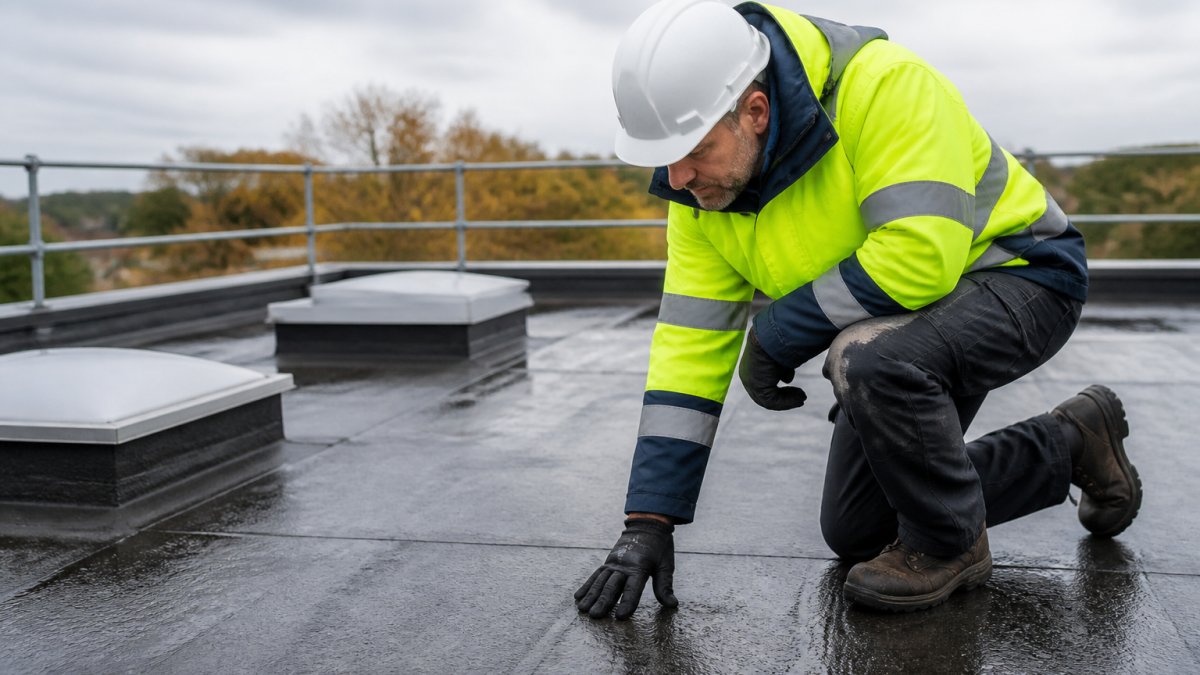
Preventative Roof Maintenance for Businesses: 2026 Guide
Preventative roof maintenance for businesses cuts repair bills and downtime. See inspection checklists, frequencies and contract advice in this 2026 guide.

Last Updated: October 23, 2026
Quick Summary
Preventative roof maintenance for businesses is the scheduled inspection, cleaning and repair of a commercial roof before defects become leaks. Most buildings need inspections at least twice a year, with quarterly visits for heavily treed or heavily used sites, plus checks after storms and before winter.
- Blocked outlets are the most common cause of commercial roof failures, and clearing them is the cheapest task on the list.
- A maintenance contract should state visit frequency, drainage clearance, minor repair limits and emergency response times.
- Reactive repairs carry three costs: the repair itself, internal damage and disruption to trading.
- Ask a contractor for the last two inspection reports from current clients before signing.
- Evershield Roofing offers free surveys and quotes and has spent 25 years in the industry.
Table of Contents
- Why Preventative Roof Maintenance Pays for Businesses
- What Preventative Roof Maintenance for Businesses Includes
- Your Commercial Roof Inspection Checklist
- Setting the Right Commercial Roof Inspection Frequency
- Roof Drainage Maintenance: Why Blocked Outlets Cause Most Claims
- What a Commercial Roof Maintenance Contract Should Cover
- The Cost Case for Preventative Maintenance Versus Reactive Repairs
- Choosing a Roofing Contractor for Ongoing Maintenance
- Frequently Asked Questions
Why Preventative Roof Maintenance Pays for Businesses
Preventative roof maintenance for businesses is the scheduled inspection, cleaning and repair of a commercial roof before defects become leaks. A planned programme costs a fraction of a reactive repair, and it keeps the building trading while the work happens. For a closer look at the trade-off, see emergency roof repair vs scheduled maintenance.
Commercial roofs fail quietly. Water sits in a blocked outlet for weeks, a flashing lifts by a few millimetres, and nothing shows inside until a ceiling tile sags. By then, the repair has grown from a small job into a claim.
At Evershield Roofing, we have spent 25 years in the industry, and the pattern is consistent: the buildings that avoid emergency call-outs are the ones on a maintenance schedule.
Below, we explain what a programme includes, how often to inspect, and what a contract should cover.
Key Takeaway
A maintenance programme is not a luxury line item. It is the cheapest form of roof repair available to a business.
A maintenance programme is not a luxury line item. It is the cheapest form of roof repair available to a business.
What Preventative Roof Maintenance for Businesses Includes
A commercial roof maintenance programme is a documented cycle of inspections, drainage clearance, minor repairs and reporting. The goal is to catch defects while they are still cheap to fix.
A typical programme covers:
- Scheduled inspections, usually twice a year plus a post-storm check
- Clearing outlets, gutters and gullies of debris
- Re-securing or replacing lifted flashings and fixings
- Repairing blisters, splits and ponding on flat roofs
- Photographic condition reports after every visit
- A prioritised list of works, split into urgent and planned
The difference between this and a one-off repair is the paper trail. A written record of condition over several years tells you whether a roof is deteriorating slowly or failing fast, which is what makes budget planning possible.
Your Commercial Roof Inspection Checklist
A commercial roof inspection checklist is a fixed list of items a surveyor works through on every visit so nothing is missed. Use the same checklist each time, and the reports become comparable year on year.
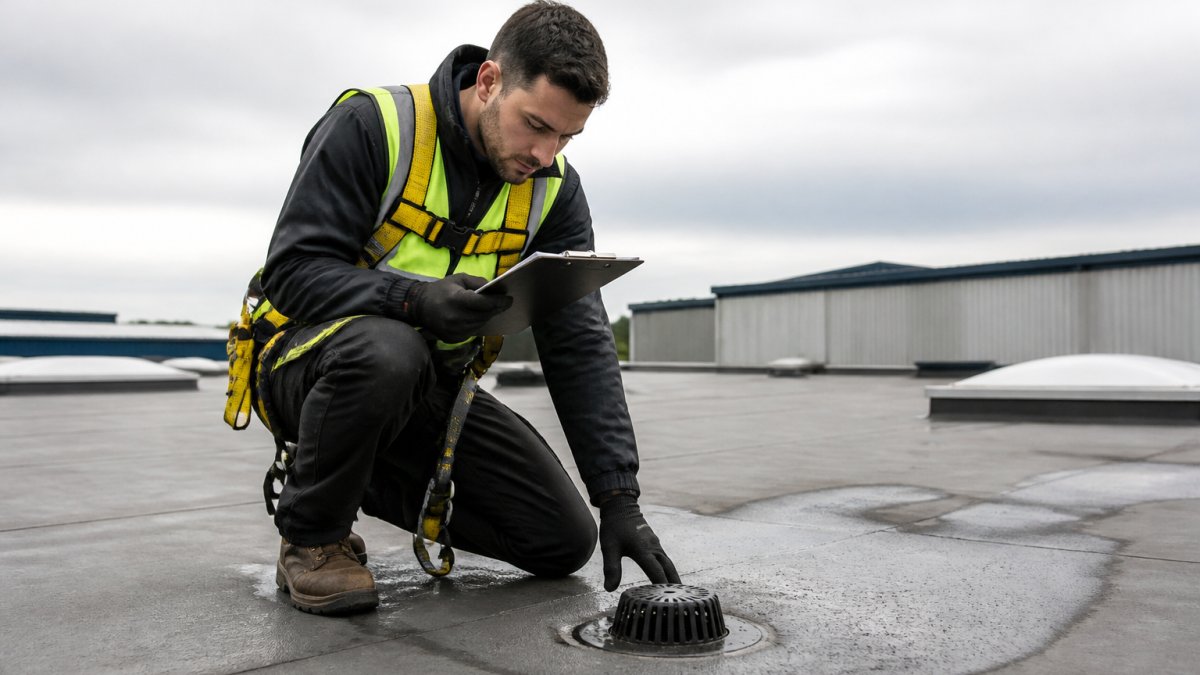
The core checklist:
- Membrane surface: splits, blisters, crazing, ponding
- All outlets, gullies and gutters clear and fixed
- Flashings, upstands and parapet edges secure
- Fixings and seams tight, no lifted laps
- Rooflights and seals intact
- Rainwater goods and downpipes flowing
- Roof-edge protection and safe access points sound
- Internal signs of water ingress recorded
What to Check Inside the Building
Interior checks catch what the roof surface hides. Look for damp patches on ceilings, water staining on joists, sagging plasterboard, and musty smells in storerooms. Photograph and date every finding. A stain that grows between visits is a stronger warning than any surface defect, and it is the evidence that justifies repair budget to a finance director.
Setting the Right Commercial Roof Inspection Frequency
Commercial roof inspection frequency should be at least twice a year for most buildings, with an extra check after storms or before winter. Heavily used or heavily treed sites need quarterly visits.
Frequency should follow risk, not habit:
- Twice yearly: most commercial and industrial roofs
- Quarterly: sites near trees, or with complex drainage
- After storms: any building in an exposed location
- Before winter: to clear drainage ahead of the wet season
The reason is simple. Debris builds up faster in autumn, and a blocked outlet in December causes more damage than the same blockage in June.
Roof Drainage Maintenance: Why Blocked Outlets Cause Most Claims
Roof drainage maintenance is the single highest-value task in any programme. Blocked outlets are the most common cause of commercial roof failures, and clearing them is the cheapest work on the list.
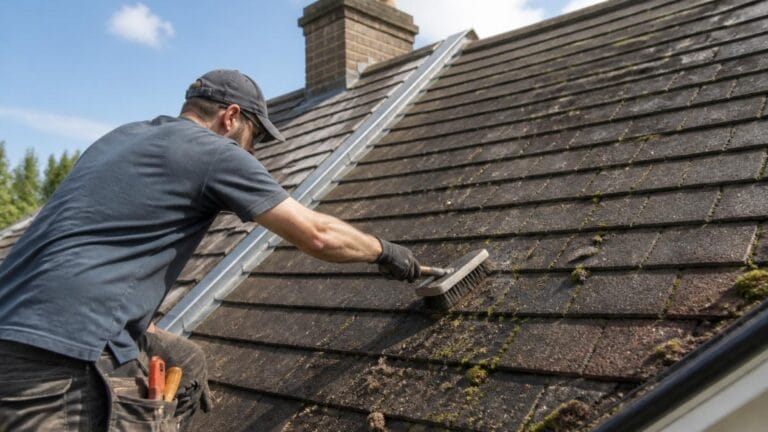
Flat roofs rely on outlets and gullies to shed water. When they block, water ponds, finds the weakest seam, and enters the building. Moss, leaves and grit do the blocking, and the fix is a physical clearance.
Two things matter here. First, clearance must be scheduled, not reactive. Second, gutters and outlets should be checked at the same visit, because a clear outlet feeding a blocked gutter still backs up. Our guide to why flat roof drainage is important explains the mechanics in more detail, and if you are weighing up whether to bring in a professional, read is professional gutter cleaning worth it.
Get Your Free Roofing Quote Today! →
Watch Out
Clearing an outlet without checking the gutter run below it is a false economy. The water simply backs up somewhere else.
Clearing an outlet without checking the gutter run below it is a false economy. The water simply backs up somewhere else.
What a Commercial Roof Maintenance Contract Should Cover
A commercial roof maintenance contract is a written agreement setting out visit frequency, the tasks included, response times and reporting. Get it in writing, and read the exclusions carefully.
Check that the contract covers:
- Number and timing of visits per year
- Drainage clearance included as standard
- Minor repairs included up to a stated value
- Emergency response time after a leak is reported
- Photographic reports after each visit
- Clear exclusions, such as full replacement or structural work
- Notice period and how the contract renews
The response time clause matters most. A contract that promises an inspection within five working days is not much use when water is coming through a ceiling, so ask directly whether emergency call-outs are covered.
The Cost Case for Preventative Maintenance Versus Reactive Repairs
Preventative maintenance costs less than reactive repair over the life of a roof, because small defects are fixed before they spread. The comparison is not close once you add disruption, internal damage and emergency labour.
A reactive repair carries three costs: the repair itself, the damage inside the building, and the disruption to trading. A planned visit carries one. For a business, the disruption is often the largest of the three.
We do not publish fixed prices, because a quote depends on roof type, access and condition. To benchmark the figures you are quoted, see this roofing quotes Buckinghamshire price comparison guide. What we will say is that a survey and quote cost you nothing, and a planned programme is easier to budget than an emergency invoice.
| Approach | Upfront Cost | Risk Profile | Best For |
|---|---|---|---|
| Scheduled maintenance | Predictable, budgeted | Low, defects caught early | Most commercial buildings |
| Reactive repair | Unpredictable | High, damage compounds | Rare, isolated issues only |
| Emergency call-out | Highest, premium rates | Highest, trading disrupted | Storm damage, active leaks |
Choosing a Roofing Contractor for Ongoing Maintenance
Choosing a roofing contractor for ongoing maintenance comes down to three things: proven commercial experience, clear reporting, and a phone that gets answered. A maintenance relationship lasts years, so pick accordingly.
Ask every contractor:
- Can you show recent commercial work and references?
- Are you fully insured, and can I see the certificate?
- What is your emergency response time?
- Will I get a written report after each visit?
- Who do I call, and will they pick up?
A common mistake is choosing on price alone. The cheapest quote often excludes drainage clearance or emergency cover, which are the two things you actually need. Our guide to how to choose reliable local roofers sets out the vetting questions in full.
At Evershield Roofing, we are fully insured, we offer free surveys and quotes, and there is always an expert at the other end of the phone. We handle roof repairs, flat roofs, guttering and chimney repairs across Buckinghamshire, and we take on emergency work when a leak will not wait.
Pro Tip
Ask for the last two inspection reports from a contractor’s current clients. A contractor who reports properly will have them to hand.
Ask for the last two inspection reports from a contractor’s current clients. A contractor who reports properly will have them to hand.
Frequently Asked Questions
How often should a commercial roof be inspected?
Most commercial roofs benefit from at least two inspections a year, typically in spring and autumn, plus a check after any severe storm. Buildings with flat roofs, heavy tree cover or older coverings may need quarterly visits. The right commercial roof inspection frequency depends on the roof type, its age and what surrounds the building, so ask a contractor to set a schedule based on your site rather than a generic rule.
What does preventative roof maintenance for businesses include?
A planned programme usually covers scheduled inspections, clearing debris from the roof surface, checking and clearing outlets, gutters and downpipes, tightening or replacing fixings, resealing joints and flashings, and repairing small defects before they spread. It should also include a written report with photographs after each visit, so facility managers can track condition over time and budget for larger work such as refurbishment rather than being surprised by it.
What are the signs that a commercial roof needs maintenance?
Watch for water staining on ceiling tiles, damp patches on upper walls, ponding that stays on a flat roof more than 48 hours after rain, cracked or blistered membrane, loose or lifted flashings, blocked outlets with vegetation growing in them, and daylight showing through the roof deck. Any of these warrants a survey. Small signs caught early usually mean a repair rather than a replacement, which is the whole point of a maintenance programme.
Can regular roof maintenance extend a commercial roof’s lifespan?
Yes. Clearing drainage, resealing joints and repairing minor defects stops water getting into the structure, which is what shortens a roof’s life. A maintained roof typically stays serviceable for longer than one left alone, and the difference often runs into years. It also protects the warranty on many membrane systems, since manufacturers commonly require periodic inspection and cleaning as a condition of cover.
Should a business have a commercial roof maintenance contract?
A contract makes sense for most commercial premises because it fixes the inspection schedule, sets out what is covered and gives you a named contact when something goes wrong. Look for clear response times, a written report after each visit, defined exclusions, and confirmation that the contractor is insured. Ask what happens if a leak appears between visits, and get the answer in writing before signing.
How much does commercial roof maintenance cost in the UK?
Costs vary with roof size, access requirements and how much work is needed, so there is no single figure. A simple annual inspection on a small unit costs far less than a full programme on a large flat roof with multiple outlets. Evershield Roofing offers free surveys and quotes, so you can get a figure based on your actual building rather than an estimate. Finance options are available if larger remedial work is needed.
A roof that fails in January costs more than a roof maintained in October. If your building has no maintenance programme, the first step is a survey, not a repair. Evershield Roofing offers free surveys and quotes, fully insured commercial work, and 25 years of experience across London and Buckinghamshire, with emergency roof repair available when it matters. Get started with Evershield Roofing and put your roof on a schedule before the next storm sets it.