How to Choose the Best Weather for Installing GRP Roofing
GRP roofing needs specific temperatures, dry decks and a clear forecast. Learn the weather conditions to plan around before installing your roof.

Quick Summary
The best weather for installing GRP roofing is dry, mild and calm, with air and roof surface temperatures inside the product’s data-sheet range. Never laminate in rain, frost or dew, and make sure no rain is forecast before the laminate has cured.
- Check the surface temperature, not just the air temperature, against the data sheet limits.
- Cold slows the resin and can leave a roof soft underneath, so allow extra cure time on cold mornings.
- Heat shortens working time, so mix smaller batches and keep material shaded.
- Confirm the deck is completely dry, since resin will not bond properly to a damp or frosted substrate.
- Use a go/no-go checklist each morning and keep monitoring the weather throughout the job.
Table of Contents
Why Weather Decides Whether a GRP Roof Performs
Evershield Roofing has spent over 25 years on roofs across Buckinghamshire, and weather is one of the biggest factors in whether a GRP (glass reinforced polyester) roof performs as it should. Get the conditions right and the resin cures hard, bonds well and sheds water for decades. Get them wrong and you can end up with soft spots, poor adhesion and leaks that appear within a season.
That is why this guide focuses on the best weather conditions for installing GRP roofing, and how to tell when a day is genuinely safe to start. GRP is a laminated system: resin, fibreglass matting and a topcoat, all of which react to temperature, moisture and daylight. Each stage has its own limits.
Failures on GRP roofs are often not caused by bad materials but by working outside the window the product was designed for. Below, we explain the temperature limits, the rain and frost rules, the curing timeline, and a simple go/no-go checklist you can use on the day.
GRP Roofing Temperature Requirements: Air and Surface Limits
Temperature is the first thing to check. Manufacturers’ data sheets usually give a minimum and maximum for both the air and the roof surface, and the surface temperature is often the more important figure because it controls how the resin behaves at the point of contact.
Working below the recommended minimum slows the reaction, while working above the maximum shortens the time you have to lay the material. Both extremes raise the risk of defects. Always check the product’s technical data sheet before you start, because limits vary between resin systems.
Cold Weather and Resin Curing
Cold is the more dangerous condition for curing. As temperatures drop, the catalysed resin reacts more slowly, and it may stay tacky or fail to harden fully. A roof that looks finished can still be soft underneath.
- Check the surface temperature, not only the air temperature
- Avoid laying resin on a surface that is cold or damp to the touch
- Allow extra cure time on cold mornings before foot traffic or the topcoat
Hot Weather and Shortened Working Time
Heat does the opposite. The resin kicks off faster, so your working time (often called pot life) shrinks. Mix smaller batches, keep material shaded, and avoid laying in direct midday sun on a dark roof surface, where the deck can run much hotter than the air.
Installing GRP Roofing in Rain, Frost and Dew
Water is the enemy of a clean GRP bond. Rain on fresh resin can wash out the surface, trap moisture and cause pinholes or poor adhesion. You should never laminate in rain, and you should not start while the forecast shows a shower likely before the resin has set.
Frost and dew are easier to miss. A roof can look dry while the deck is still carrying moisture, and resin will not bond properly to a damp or frosted substrate. Wait until the deck is fully dry and the surface is above the dew point, which you can estimate using air temperature and humidity.
- Confirm the deck is dry, not just the surface
- Avoid early-morning starts while frost or dew is still forming
- Protect materials from damp air and keep resin sealed until use
GRP Resin Curing Time and the Rain-Free Window
Curing time is the period from laying until the laminate is hard enough to be exposed to rain or foot traffic. It depends on temperature, catalyst ratio and layer thickness, so treat any fixed figure as a starting point only and confirm it against the product data sheet.
The rain-free window is the stretch of time you need, after laying, with no rain forecast. If the forecast shows rain before the laminate has cured, do not start, or make sure you can fully protect the work with covers and it is safe to pause. A reliable plan builds in a margin, rather than relying on a best-case curing time. Proper site preparation and the use of temporary structures from Able Scaffolding Bath provide the necessary defense against unexpected moisture infiltration during roof work.
Checking the Weather Forecast and Measuring Roof Surface Conditions
Before you start, check a detailed local forecast for the full installation window, not just the day ahead. Look at air temperature, humidity, wind, rain probability and overnight lows.
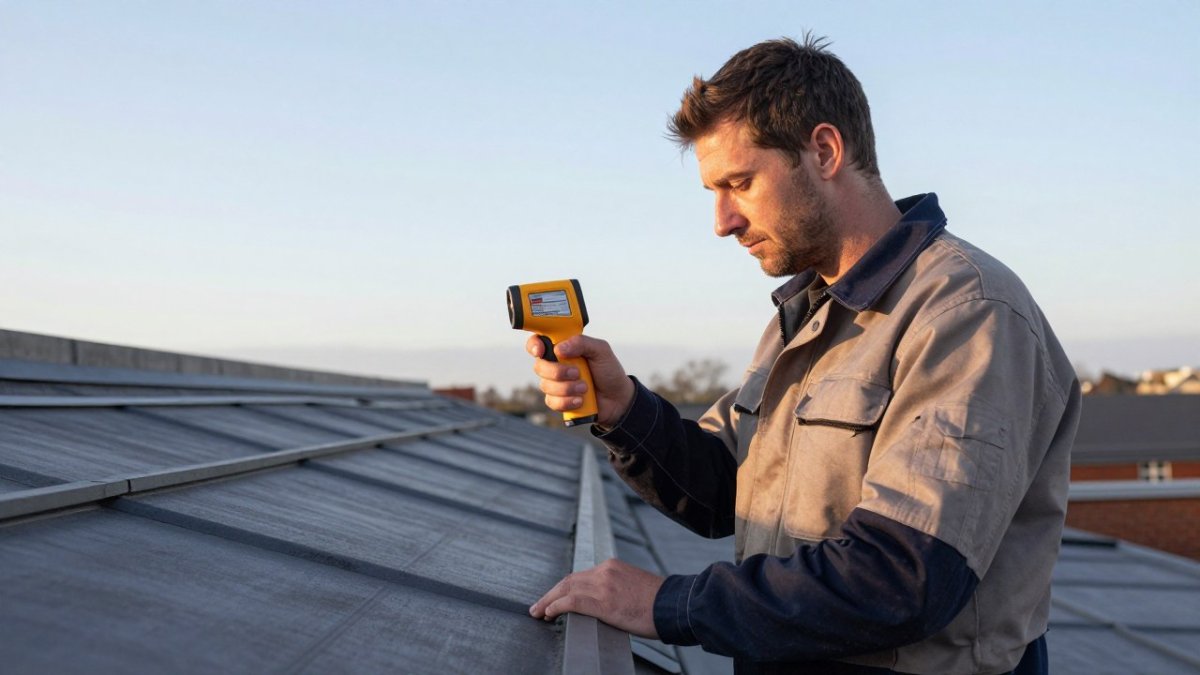
Then measure the roof itself. A simple infrared thermometer will give you the surface temperature in seconds. Check the deck for moisture with a visual inspection and by touch, and check it again in shaded corners where water tends to linger.
A roofer in a work jacket uses a handheld infrared thermometer on a flat roof deck in the early morning, with a clear sky overhead.
- Forecast: rain, humidity, wind and overnight lows
- Surface: temperature, moisture and dryness
- Timing: enough dry, mild hours to cure before exposure
A Go/No-Go Checklist for Your GRP Installation Day
Use this checklist each morning before you mix any resin. If any item is a “no”, hold off.
- Air and surface temperatures are within the data-sheet range
- The deck is completely dry, with no frost or dew
- No rain is forecast before the laminate has cured
- Wind is low enough to avoid resin drift and debris
- Materials are stored dry and at a suitable temperature
- Covers and protection are on hand in case conditions change
- A named person is responsible for monitoring weather during the whole job
Weather monitoring should not stop once work begins. Check conditions at regular intervals, and stop laying if the forecast or the deck changes.
Booking Your GRP Roof With Evershield Roofing
Choosing the right day is only part of a good GRP roof. You also need an experienced team who knows how to read the conditions and plan around them. At Evershield Roofing, we offer free surveys and quotes, and we will explain the process before work starts.
We provide roof repairs, new roof installations and flat roofs across Buckinghamshire, and we are fully insured. Finance is available from 0% APR, so you can plan the work without a large upfront cost.
Get Your Free Roofing Quote Today!
Last Updated: November 12, 2026
Frequently Asked Questions
What is the best temperature for installing a GRP roof?
Most GRP resin systems are designed to be laid when the air and roof surface are within a defined temperature band, and the manufacturer’s product data sheet sets the exact limits for the resin and catalyst you are using. Working within that band keeps the working time predictable and the cure reliable. Cold surfaces slow the cure and can leave a tacky finish, while hot surfaces shorten the working time and can cause the resin to kick off before it is properly spread. Check the surface temperature with a thermometer rather than relying on the air reading alone, and ask your roofer to confirm the product’s limits before work starts.
Can GRP roofing be installed in the rain?
No. Rain or standing water on the deck, the laminate or the freshly applied topcoat will compromise adhesion and can trap moisture under the finish, which can lead to water ingress later. Work should stop when rain starts and should not resume until the deck is fully dry and the forecast shows a dry period long enough for the resin to cure. Protecting the work area with sheeting and keeping materials under cover helps avoid having to restart a section after a sudden shower.
How long does GRP resin take to cure?
Cure time depends on the resin system, the catalyst ratio, the film thickness and the temperature. Under suitable conditions, the surface may be walkable within hours, but full cure can take considerably longer, so the manufacturer’s data sheet is the reference to follow. Rain or heavy dew during this period can disrupt the surface, so plan for a dry window that covers the stated cure time for each coat, not just the time it takes to apply the material.
How dry does a roof deck need to be before GRP installation?
The deck should be completely dry, with no standing water, no damp patches and no visible condensation. Timber decks and substrates should be checked with a moisture meter where possible, and any areas that hold water should be dried and assessed before laminating begins. Surface condensation can form overnight even when the day looks dry, so check the roof early in the morning and only start once the surface has warmed and dried out.