How to Verify Roofing Contractor Credentials in the UK 2026
Learn how to verify roofing contractor credentials in the in the UK with a 7-point checklist covering insurance, accreditations and contracts.

Last Updated: November 25, 2026
Quick Summary
To learn how to verify roofing contractor credentials in the in the UK, check the contractor’s trade body register entry, their public liability insurance certificate, and their Companies House record. Confirm the name on each record matches your written quote, and check the VAT number with HMRC’s online checker.
- Search the NFRC member register by company name or membership number and confirm the status is active.
- Check Companies House for ‘Active’ status, director names, incorporation date and filing history.
- Request the public liability certificate by email and confirm roofing work is included in the description of business.
- Check a VAT number using HMRC’s online VAT checker and match the registered name and address to the quote.
- Never pay the full amount upfront; use staged payments tied to progress instead.
Need a roofer you can actually verify?Evershield Roofing offers free surveys and quotes across London and Buckinghamshire, fully insured.
Table of Contents
- How do I verify roofing contractor credentials in the UK?
- Step-by-step: using online verification databases
- Roofing qualifications and accreditations UK homeowners should confirm
- Roofing contractor insurance UK: what to check and why it matters
- Questions to ask a roofing contractor before hiring
- What to check in a roofing quote and contract
- Red flags and scams: spotting misleading credentials
- Book your free roof survey with Evershield Roofing
- Frequently Asked Questions
How do I verify roofing contractor credentials in the UK?
This guide explains how to verify roofing contractor credentials in the in the UK by checking three things: the contractor’s registration with a recognised trade body, their public liability insurance, and their VAT or Companies House record. A genuine roofer will hand over this proof without hesitation.
The check matters more than most homeowners realise. Roofing work is high-risk, and a contractor without proper cover can leave you paying for damage twice.
Here is the short answer, then the detail:
- Trade body membership: check the official register, not just the logo on a website.
- Insurance: ask for the certificate, not just a verbal promise.
- Company record: confirm the business exists at Companies House.
- Qualifications: ask which roofing qualifications and accreditations UK schemes the firm holds.
Below, we explain how to run each check. We also flag the red flags that separate a real tradesperson from a convincing fake.
But first, here is what most guides get wrong. They tell you to “trust a badge.” Badges are easy to copy.
Step-by-step: using online verification databases
Start with the official registers, because they take minutes and catch the biggest problems first. A contractor who cannot be found on any register deserves a second look.
Work through these steps in order:
- Search the trade body register. If the roofer claims National Federation of Roofing Contractors (NFRC) membership, use the member search on the NFRC website and search by company name or membership number. Confirm the status reads as active and that the registered trading name matches the name on your quote. If they claim membership of a competent person scheme, search that scheme’s own register rather than relying on a logo.
- Check Companies House. Search the company name or company number at Companies House register. Confirm the company status is ‘Active’, note the registered office address, and check the director names and the date of incorporation. A firm that claims 25 years of trading but was incorporated 18 months ago is a question worth asking. Also check the filing history for overdue accounts or a proposal to strike off.
- Ask for the insurance certificate. Request the public liability certificate by email and check the policyholder name matches the company, the cover limit is stated, the expiry date covers the whole project, and roofing work is included in the description of business. If employer’s liability applies because the firm employs staff, ask for that certificate too.
- Confirm the VAT number. If the roofer is VAT registered, check the number using HMRC’s online VAT checker. The registered business name and address returned by HMRC should match the quote. A VAT number that belongs to a different company is a serious red flag.
- Match the details. The name on the trade register, the Companies House record, the insurance certificate and the written quote should all point to the same legal entity. Where a trading name differs from the registered company name, ask for the link in writing.
A common mistake is checking one source and stopping. Cross-check at least two, and keep screenshots or PDFs of each check with your quote documents.
Work through these checks in order and keep a record of each one.
| Step | What to do | What to confirm |
|---|---|---|
| Trade body register | Search the NFRC member search by name or number | Status active and trading name matches quote |
| Companies House | Search company name or number | Status ‘Active’, directors, incorporation date, filing history |
| Insurance certificate | Request public liability certificate by email | Policyholder matches company, cover limit, expiry, roofing included |
| VAT number | Check the number using HMRC’s online VAT checker | Registered name and address match the quote |
| Match the details | Compare all records with the written quote | All point to the same legal entity |
Roofing qualifications and accreditations UK homeowners should confirm
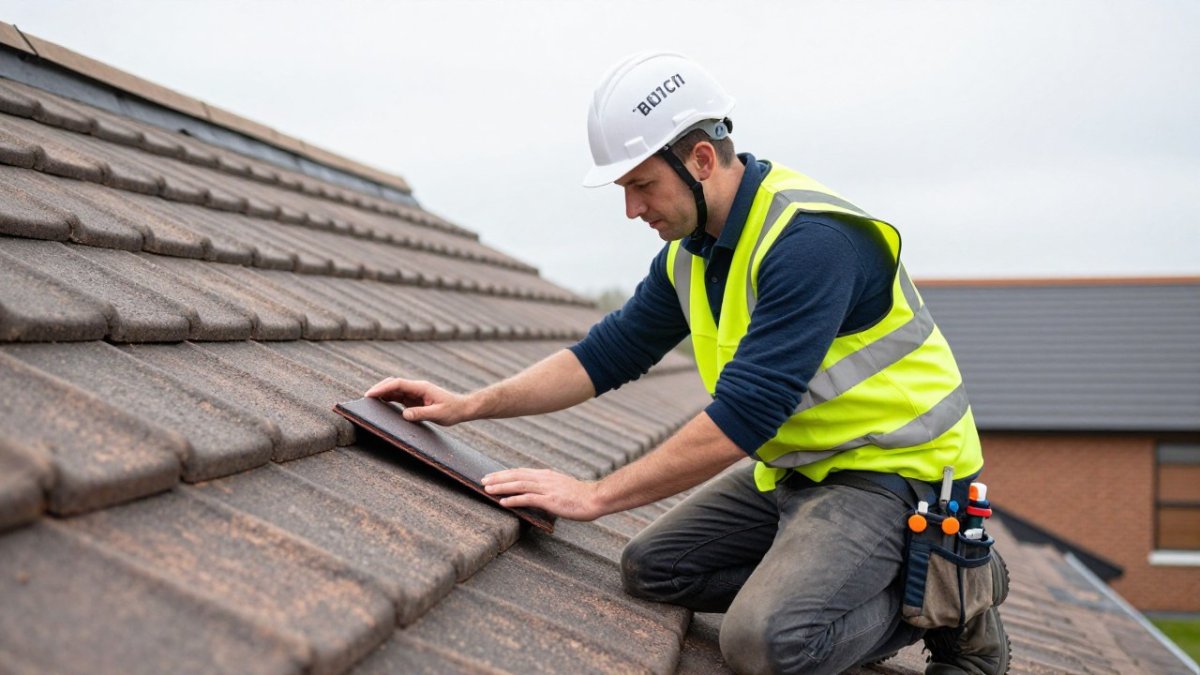
The main UK roofing accreditations to confirm are trade body membership, competent person scheme registration, manufacturer-approved installer status, and individual trade cards.
What each one actually means, and how to check it:
- Trade body membership. The National Federation of Roofing Contractors (NFRC) is the main roofing trade body in the UK. Members agree to a code of practice and can be searched on the NFRC member register. Ask for the membership number and confirm the entry is active. Membership is a signal of process, not a guarantee of workmanship.
- Competent person schemes. Schemes such as those operating under the Competent Person Scheme model allow registered installers to self-certify certain work as compliant with Building Regulations (Competent person schemes). For roofing, this most often relates to replacement windows and doors in roof openings, or to specific insulation and energy-efficiency work rather than to every roof repair. Check the scheme’s own register and confirm the scope of work the firm is certified for, a firm certified for one work type is not automatically certified for another.
- Manufacturer-approved installer status. Many flat-roof membrane and slate or tile systems have approved-installer schemes. These usually require training on that specific system and can carry an extended material warranty when the installer is approved. Ask which system the firm is approved for and request the approval reference; the manufacturer can confirm it.
- Individual trade cards. CSCS cards and roofing-specific skill cards prove an individual worker’s training and identity. Ask for the card number and check it on the issuing scheme’s card-check service. A card proves the person, not the firm, so check both.
Ask for the membership number, the scheme registration number, or the card number, then check it yourself. A genuine firm will be pleased you asked.
Roofing contractor insurance UK: what to check and why it matters
Public liability insurance is an important document to check before any roofing work starts in the UK.
Ask for the certificate and read these details:
- Policy holder name: it must match the company you are hiring.
- Cover limit: check it is high enough for the job.
- Expiry date: the policy must be valid for the whole project.
- Work covered: confirm roofing is included, not just general building.
If storm damage is involved, your claim may depend on proper documentation. Our guide on how to file a storm damage roof insurance claim walks through the evidence insurers usually ask for.
Watch out: a contractor who says “we’re fully insured” but cannot produce a certificate within a day is a risk. Certificates are easy to email. There is no good reason to delay.
Questions to ask a roofing contractor before hiring
The right questions separate a professional from a chancer. Ask them before you sign anything, and listen to how the answers come back.
Put these to every roofer you shortlist:
- Can you give me your registration number and insurance certificate?
- How long have you been trading, and can you show recent local references?
- Who will actually be on site, and are they employed or subcontracted?
- What is your guarantee, in writing, and how long does it last?
- How do you handle snagging after the job is finished?
For a deeper walkthrough of vetting a firm, see our guide on how to choose a roofing contractor in Buckinghamshire.
A good roofer answers these without flinching. Vague answers about guarantees or insurance are your cue to walk away.
What to check in a roofing quote and contract
Knowing how to verify roofing contractor credentials in the in the UK starts with a proper roofing quote that is itemised, dated and tied to a named business.
Check these points before you sign:
- Company details: full trading name, address and company number.
- Scope of work: what is being removed, replaced and made good.
- Materials: the type and grade of tiles, membrane or fixings.
- Timescale: start date, duration and what happens in bad weather.
- Payment terms: avoid large upfront cash payments.
Warranty wording is where many homeowners get caught out. Our article on what to look for in a roofing warranty lists seven checks that catch the weak spots in a guarantee.
Never pay the full amount upfront. A staged payment tied to progress protects you and shows the contractor is confident in the work.
Red flags and scams: spotting misleading credentials
Fake credentials are more common than most homeowners expect. The tell is usually not the badge itself but the refusal to let you check it.
Look out for these warning signs:
- A logo on a website with no membership number anywhere.
- Pressure to decide today, often with a “discount” that expires.
- Cash-only requests or demands for a large deposit upfront.
- A van with no company name, or a name that changes between visits.
- No fixed address, just a mobile number.
Scammers often target storm-damaged homes, when homeowners are stressed and quick to say yes. Slow down. Run the register checks above. A real contractor will still be there tomorrow.
Book your free roof survey with Evershield Roofing
Checking credentials takes an hour. Choosing the right roofer for your home takes a little longer, but it is the decision that protects your roof for years.
At Evershield Roofing, we offer free surveys and quotes. We are fully insured, and we have 25 years of experience.
If you need a roofer near you who will show their credentials without being asked, book a free roof survey with Evershield Roofing and get a clear, no-pressure quote.
Ready to check your roofer properly? Get started with Evershield Roofing and book a free survey with a team that shows its paperwork upfront.
Frequently Asked Questions
How do I check if a roofing contractor is qualified in the UK?
Ask for their accreditation number and verify it directly with the issuing body, such as the NFRC or a CompetentRover scheme. Check the contractor’s public liability insurance certificate and confirm the policy is current. Look up the company on Companies House to confirm its registration status. Request references from recent local jobs and inspect completed work where possible. A qualified roofer will readily provide these details and welcome your checks, so treat any reluctance as a warning sign.
What credentials should a UK roofing contractor have?
A reliable roofing contractor should hold relevant NVQ qualifications in roofing occupations, membership of a trade body such as the NFRC, and a current public liability insurance policy with adequate cover. They should also be able to show a waste carrier licence if removing old materials, and confirm that any gas or electrical work is done by registered engineers. Check for local authority approved trader schemes where available.
How can I verify a roofer’s insurance?
Ask for a copy of the certificate of insurance and check the policyholder name matches the company you are hiring. Phone the insurer on the number shown on the certificate to confirm the policy is active and covers roofing work. Do not accept a verbal assurance or a screenshot that could be outdated. If the contractor uses subcontractors, ask for evidence that they are also covered. This protects you from liability if a worker is injured on your property.
What are the warning signs of an unreliable roofer?
Be cautious if a roofer demands full payment upfront, offers a price that seems too good to be true, or pressures you to decide immediately. Other red flags include no fixed address, refusal to provide written quotes or insurance details, and unsolicited doorstep visits after storms. Check that the company appears on Companies House and that their accreditation number is valid. A trustworthy contractor will never rush you or avoid paperwork.