When to Remove an Unused Chimney Stack in the UK
When to remove an unused chimney stack? Learn when removal makes sense in the UK, how the process works, and when you need planning permission first.

Quick Summary
You should consider when to remove an unused chimney stack once it is unstable, leaking, or costing more to maintain than it is worth. If the masonry is sound and the flue might be needed again, capping or repair is often the better route. Waiting too long usually leads to a larger bill later.
- Remove urgently if masonry is falling, leaning, or cracked enough to show daylight.
- Plan work within months if damp is spreading or mortar and bricks are crumbling.
- Removing alongside a roof replacement is usually cheaper because scaffolding is shared.
- Capping keeps rain and debris out of a sound stack but does not fix decaying brickwork.
- Check conservation area or listed building rules, and party wall procedures for shared stacks, before booking.
Is your unused stack costing you?Evershield Roofing surveys and quotes chimney stacks, with finance available from 0% APR.
Table of Contents
- When Should You Remove an Unused Chimney Stack?
- Unused Chimney Stack Problems to Look For
- Signs the Stack Is Unstable, Leaking or Deteriorating
- Remove or Cap Chimney Stack: Comparing Your Options
- Chimney Stack Removal Planning Permission and Building Regulations
- Chimney Stack Removal Cost UK: Price Factors and What to Expect
- Booking Your Chimney Stack Survey and Next Steps
- Frequently Asked Questions
When Should You Remove an Unused Chimney Stack?
Last Updated: November 24, 2026
Knowing when to remove an unused chimney stack is worth considering once the flue no longer serves a purpose and the stack is causing problems. Most homeowners decide to act when water starts getting in, the brickwork begins to fail, or a roof repair forces the question.
The short answer is that you should remove a stack when it is unstable, leaking, or costing more to maintain than it is worth. If it still serves a working flue, capping or repair is often the better route. Many people wait longer than they should, and the result is a larger bill later.
A practical decision timeline
Rather than waiting for a crisis, work through these triggers in order to decide when to remove an unused chimney stack. They separate work that is urgent from work that is merely sensible.
Act now (urgent hazard):
- Masonry has fallen, or bricks or pots are visibly loose and could drop onto a roof, path or neighbour’s land.
- The stack leans noticeably out of line with the roof ridge, or there is a visible bulge in the brickwork.
- Cracks are wide enough to see daylight through, or a crack has appeared suddenly after storm damage.
- Water is pouring in during rain and has reached ceilings, joists or electrics.
In these cases, keep people and vehicles clear below and arrange a survey immediately. A roofer may need to make the stack safe before any decision about removal is taken.
Plan within the next few months (active deterioration):
- Damp patches are spreading on the chimney breast or the ceiling below, even if water only appears in heavy rain.
- Mortar joints are crumbling and bricks are spalling (flaking or pitted), so the stack is shedding material with each freeze-thaw cycle.
- The flashing at the roof junction has failed more than once, or has been patched repeatedly.
- You have had two or more repair bills for the same stack in as many years, and the cost is approaching the price of removal.
Optional, but worth doing alongside other work (sound but unused):
- The flue is unused, the stack is structurally sound, and you are already having the roof replaced or re-covered. Scaffolding is the biggest shared cost, so removal at the same time is usually cheaper than a standalone job.
- You are converting a loft or reconfiguring the roof, and the stack is in the way of the new structure.
- You want to reclaim roof space or improve the appearance of the property, and the stack has no heritage or neighbour-shared function.
The ‘when’ test in one line
Remove when the stack is unsafe, when water is getting past it, or when the cost of keeping it is climbing towards the cost of taking it down. Cap or repair when the masonry is sound and the flue might be needed again. If you are unsure which side of the line you are on, a survey is cheaper than either wrong decision.
Watch out: Never leave a leaning or cracked stack in place simply because it looks fine from the ground. Damage often sits high up, where it is hard to see, and a stack that fails in a storm can drop masonry onto a neighbour’s roof or garden.
Local considerations in London and Buckinghamshire
The timing question is not only about condition. If your property is in a conservation area or is listed, check with the local council before booking removal, as consent may be required even for work that would otherwise be permitted development.
Unused Chimney Stack Problems to Look For
An unused stack can cause trouble even when nothing is burning inside it. Without a fire or regular airflow, moisture has nowhere to go. Rain soaks into the masonry, and condensation builds up in the cold flue.
Common problems include:
- Damp patches on the chimney breast or ceiling below
- Water ingress around the flashing where the stack meets the roof
- Condensation running down internal walls
- Loose or missing chimney pots that let rain enter the flue
- Vegetation growth such as moss or small plants in the mortar joints
A common mistake is assuming an unused stack is harmless. Damp that starts in the stack can travel into roof timbers and plaster. Catching it early keeps repairs smaller.
Signs the Stack Is Unstable, Leaking or Deteriorating
Look for these warning signs before deciding what to do next:
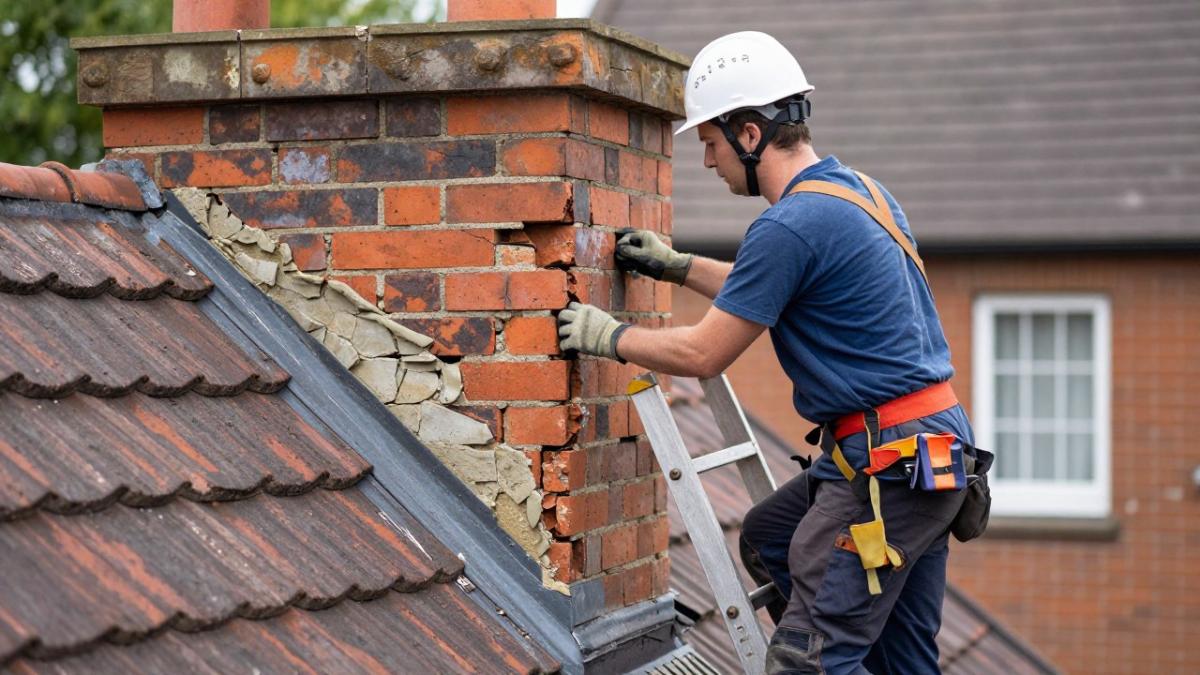
- Cracks running through the brickwork or along mortar joints
- Crumbling or missing mortar between bricks
- Bricks that look flaky, pitted, or spalled
- A stack that leans or appears out of line with the roof
- Stains on the roof tiles or inside the loft near the stack
- Loose render or flashing around the base
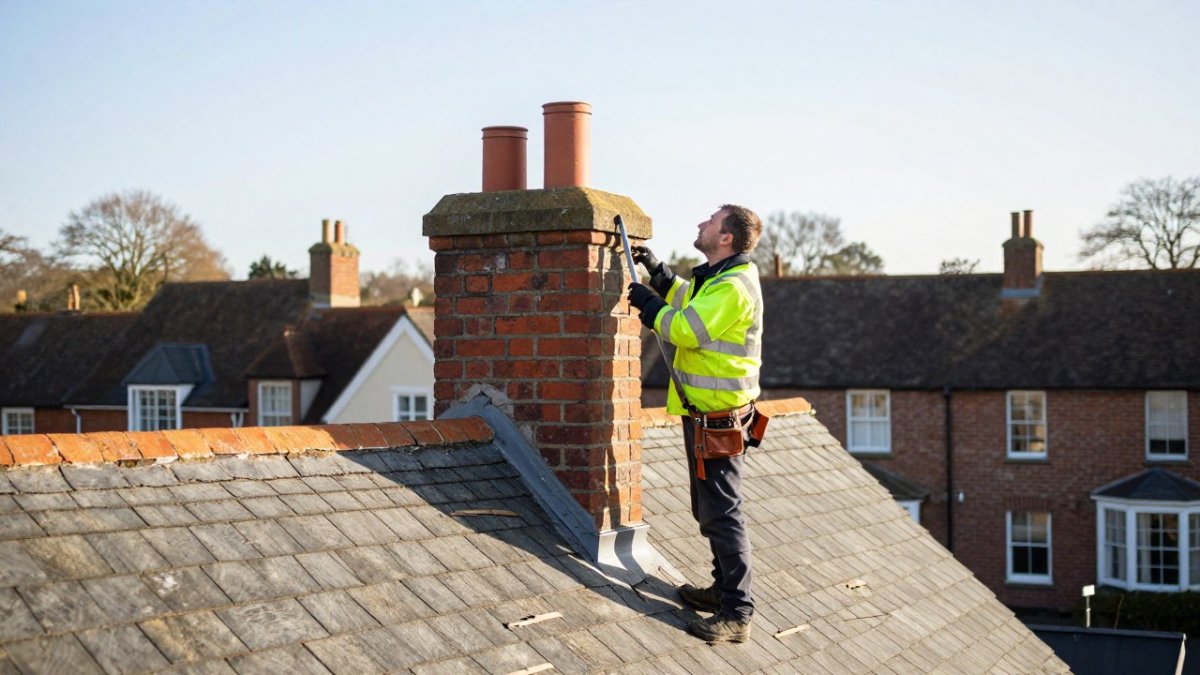
A roofer in a hard hat inspecting cracked brickwork and crumbling mortar on a chimney stack from a ladder on a pitched tiled roof is a good way to see what a professional checks. Any sign of movement or falling masonry should be treated as urgent. Keep people and vehicles clear of the area below until a qualified person has assessed it.
Remove or Cap Chimney Stack: Comparing Your Options
Removal is not the only choice. Here is how the main options compare:
| Option | Best When | Typical Downside |
|---|---|---|
| Full removal | Stack is unstable or beyond repair | Highest upfront cost, roof making good needed |
| Removal above roof level | Stack is unsafe but the breast is sound | Breast may still need attention |
| Capping | Flue is unused but the stack is sound | Does not fix underlying masonry decay |
| Repair and maintain | Stack is solid and you may need the flue later | Ongoing upkeep costs |
Capping is a sensible middle option when the stack is structurally sound. To compare these options against a full roof project, see roof repair vs roof replacement costs. It keeps rain and debris out of the flue and can be cheaper than full removal. It does not solve crumbling brickwork, so inspect the stack first.
Chimney Stack Removal Planning Permission and Building Regulations
Many chimney stack removals do not need planning permission, but the rules depend on your property, its location and whether the stack is shared. The sequence below is the one most practitioners follow before work starts. The same property-specific planning permission rules can also shape decisions about extending a home, where the proposed work and its setting determine what approval is needed.
Step 1: Check permitted development and local restrictions
Removing a chimney is often permitted development, but that is not automatic (The Town and Country Planning (General Permitted Development) (England) Order 2015). In England, permitted development rights can be withdrawn in conservation areas, and listed buildings need listed building consent for alterations that affect character. Check with the local planning authority before assuming the work is covered.
Step 2: Establish whether building regulations apply
Building regulations may apply where removal affects the structure, ventilation, or fire safety. Removing a stack above roof level usually leaves the chimney breast below, and that breast may rely on the stack for lateral support or may need to be restrained or removed in turn.
Ventilation matters too. If a flue is sealed and the chimney breast is retained, the flue needs to be capped with ventilation to prevent condensation and damp. Building control will expect this to be addressed.
Step 3: Deal with party walls and neighbours
If the stack is shared with a neighbour, the Party Wall etc. Act 1996 may apply. Removing or altering a shared chimney can fall within party-wall procedures, which means serving notice and following the correct timetable. Agree any work in writing before starting, and confirm access arrangements for scaffolding and for the removal of rubble. Shared stacks are common in London terraces and in older Buckinghamshire town centre properties, and a neighbour’s objection or a delay in serving notice can push the start date back by weeks.
Step 4: Confirm the contractor’s scope and consents
Before work begins, confirm in writing who is responsible for obtaining any consent, who will notify building control, and what happens if the council requires changes. A roofer should be able to tell you which consents are likely to be needed for your property and whether they will handle the applications or expect you to.
Gov.uk explains when building regulations approval is needed GOV.UK guidance on building regulations.
Watch out: Do not let work start on a shared or listed-building stack on the assumption that consent will follow. Removing first and asking later can lead to enforcement action and, for listed buildings, a requirement to reinstate at your own cost.
Chimney Stack Removal Cost UK: Price Factors and What to Expect
Pricing depends on the stack’s height, access, the amount of masonry to remove, scaffolding needs, and the condition of the roof around it. Work at height and rubble disposal also add to the total. To understand broader roof replacement pricing in your area, see our Roof Replacement Cost Buckinghamshire guide. Evershield Roofing provides free surveys and quotes. For current prices, see the pricing information on the Evershield Roofing website or request a quote directly.
Booking Your Chimney Stack Survey and Next Steps
Start with a survey before deciding anything. Once you are ready to book, you can compare roofing quotes in Buckinghamshire from vetted local roofers.
When you are ready, request a free survey and quote from Evershield Roofing to discuss your options. If the stack needs more than removal, our team can also advise on repointing and chimney repair work.
Evershield Roofing has over 25 years in the industry and is fully insured, so you can book a survey with confidence. Get your free roofing quote today and find out whether your unused stack should come down, be capped, or be repaired.
Frequently Asked Questions
Is it better to remove an unused chimney stack or cap it?
It depends on the stack’s condition and the house. Capping seals the top of the flue and keeps out rain and birds, and it is usually cheaper and quicker. Removal above roof level suits a stack that is leaning, spalling or structurally weak, or where the roof needs work anyway. Removal also lets you re-roof the area cleanly and removes future maintenance. A surveyor or roofer can inspect the stack and advise which option suits your property.
Can an unused chimney stack cause damp?
Yes. An unused stack without a cap or with a damaged cap lets rainwater run down the flue and into the chimney breast, which can cause damp patches, staining and condensation on internal walls. Cracked masonry and failed flashing around the stack also allow water ingress into the roof space. Keeping the stack watertight, through capping or removal, prevents this. If you already see damp near a chimney breast, get it inspected before the problem spreads.
Do you need planning permission to remove a chimney stack in the UK?
In most cases, removing a chimney stack on a standard house does not need planning permission, as it is usually permitted development. However, if the property is a listed building or sits in a conservation area, you will likely need listed building consent or permission first. Building regulations approval may also be needed where structural changes affect the roof or chimney breast. Check with your local council before starting, and confirm the requirements for your specific property.
How much does it cost to remove a chimney stack in the UK?
The cost of removing a chimney stack depends on its height, the number of storeys, access, scaffolding needs, the amount of masonry to remove, and any roof repairs required. Costs vary widely between properties, so the only reliable way to know your figure is to get a survey and a written quote. Evershield Roofing offers free surveys and quotes, and you can find current pricing details on our website or request a quote directly.