How Long Does a Slate Roof Last in the UK?
A slate roof in the UK can last 75 to 150 years with good upkeep. Slate roofs often last 75 to 150 years when maintained well.

Quick Summary
A slate roof typically lasts between 75 and over 100 years, and often longer when it is well maintained. Its lifespan depends on the slate quality, how the roof was installed and how well it has been looked after. Battens, fixings and underlay wear out sooner than the slates themselves.
- Natural slate roofs commonly last 75 to 100+ years, compared with 40 to 60 years for concrete tiles.
- Installation quality often matters more than the slate itself, since fixings, battens and lapping affect longevity.
- Slipped, cracked or missing slates, damp ceilings and corroded fixings are key signs of failure to watch for.
- Isolated broken slates can usually be replaced individually, while widespread failure may call for re-slating.
- Never walk on a slate roof yourself; leave roof-level inspection to a qualified roofer with proper access equipment.
Is your slate roof nearing the end of its life?Evershield Roofing offers free surveys, fully insured work and finance from 0% APR.
Table of Contents
- How Long Does a Slate Roof Last?
- What Affects the Lifespan of a Slate Roof
- Natural vs Synthetic Slate Roofing
- Signs of Slate Roof Failure to Watch For
- Slate Roof Maintenance and Inspection Intervals
- Slate Roof Replacement Cost in the UK
- Booking a Slate Roof Survey With Evershield Roofing
- Frequently Asked Questions
How Long Does a Slate Roof Last?
A slate roof typically lasts between 75 and over 100 years, and in many cases considerably longer when it is well maintained. Historic England guidance on traditional roofing materials Slate is one of the most durable roofing materials used on British homes, which is why so many roofs from the Victorian and Edwardian periods are still in service today. The exact figure depends on the quality of the slate, how the roof was installed and how well it has been looked after over the decades.
It helps to separate two things that often get confused. The lifespan of the slate tiles themselves can be very long, but the roof as a whole is a system. The timber battens, roof nails, underlay and flashings all wear out at different rates, and a roof can need attention long before the slates themselves are finished. In practice, a slate roof that looks sound from the ground may still need re-fixing or partial replacement within its life.
What Affects the Lifespan of a Slate Roof
Several factors decide whether a slate roof reaches the upper end of its expected life or falls short of it. Weather exposure, the condition of the supporting structure and the standard of the original workmanship all play a part. Maintenance is the one most within a homeowner’s control.
Slate Quality and Origin
Not all natural slate performs the same. Slate quarried from different regions varies in density, grain and how it splits, and lower-grade material is more likely to delaminate or develop cracks as it weathers. Welsh and Cumbrian slates have a long reputation for durability, though the quality of any individual slate depends on the quarry and the grading. When assessing an existing roof, the age and origin of the slates are worth noting, since they influence how it will age.
Installation, Battens and Fixings
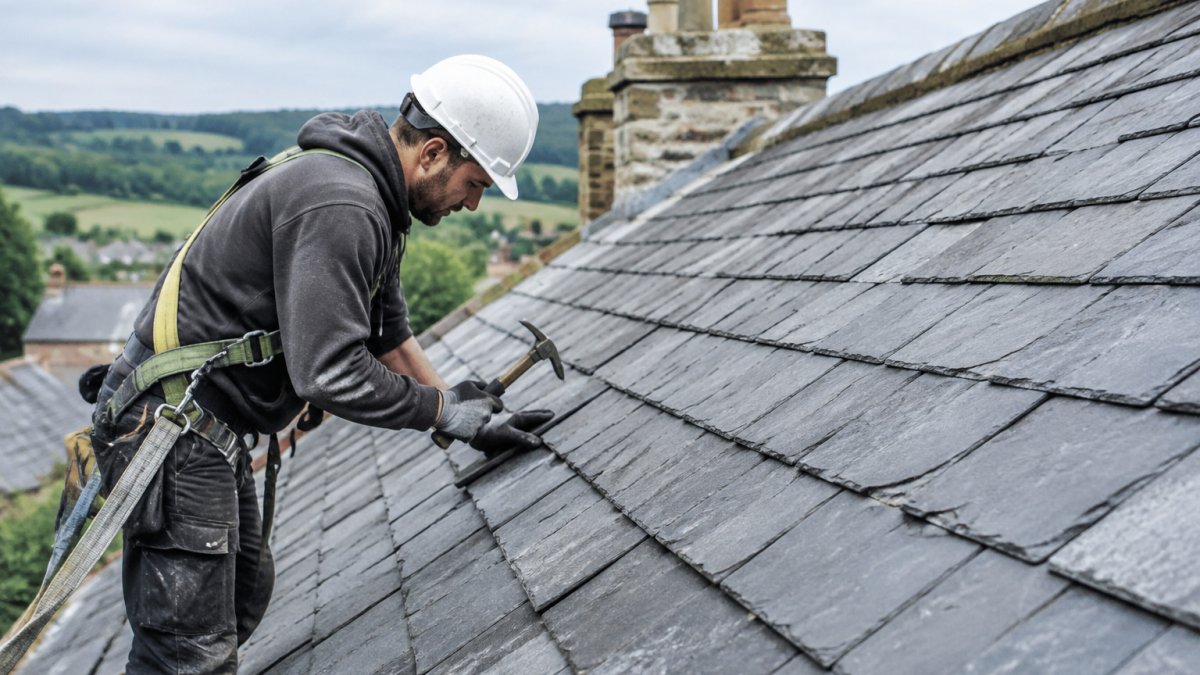
Installation quality often matters more than the slate itself. Slates need to be fixed securely with suitable nails, laid to the correct head and side lap, and supported by sound battens and underlay. Corroded fixings, rotten battens or poorly lapped slates allow water in and cause slates to slip or break. This is why professional installation is worth paying for: a well-fitted roof will outlast a poorly fitted one made from identical materials. Where a roof has already been damaged or has deteriorated, professional roof repairs may help address failing fixings and battens before small faults spread.
Natural vs Synthetic Slate Roofing
Natural slate is quarried stone, while synthetic slate is usually made from concrete, polymer or recycled rubber. Natural slate typically offers the longest service life and suits historic buildings and conservation areas, while many synthetic alternatives are lighter and cheaper but have shorter track records. The table below summarises the main differences.
| Roofing material | Typical service life | Weight | Relative cost | Best suited to |
|---|---|---|---|---|
| Natural slate | 75 to 100+ years | Heavy | High | Period and listed properties |
| Concrete tiles | 40 to 60 years | Heavy | Medium | General residential use |
| Clay tiles | 50 to 100 years | Heavy | Medium to high | Traditional and rural homes |
| Synthetic slate | 30 to 50 years | Light | Medium | Lighter structures, modern builds |
Service life figures are indicative and depend on quality, installation and maintenance.
Signs of Slate Roof Failure to Watch For
Slate usually fails gradually, so spotting early warning signs makes repairs far cheaper. Look for slipped, cracked or missing slates, moss or algae growth that holds moisture against the surface, and damp patches or staining on ceilings and walls below. Sagging ridges, lifted nail heads and gutters full of broken slate fragments also point to a roof that needs attention.
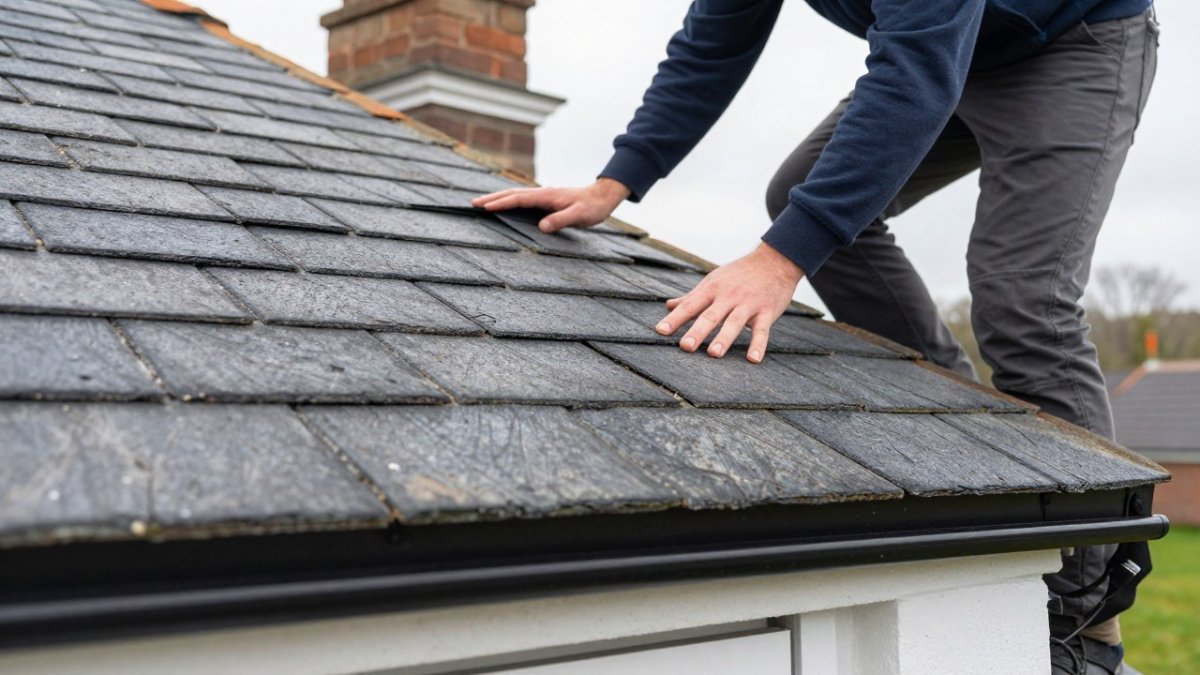
Watch for these specific problems:
- Slates that have slipped out of position or sit unevenly
- Cracked or delaminated slates, particularly after freeze-thaw weather
- Missing slates that expose the underlay or battens
- Damp or dark staining in the loft or on upstairs ceilings
- Corroded or lifted fixings visible from the loft space
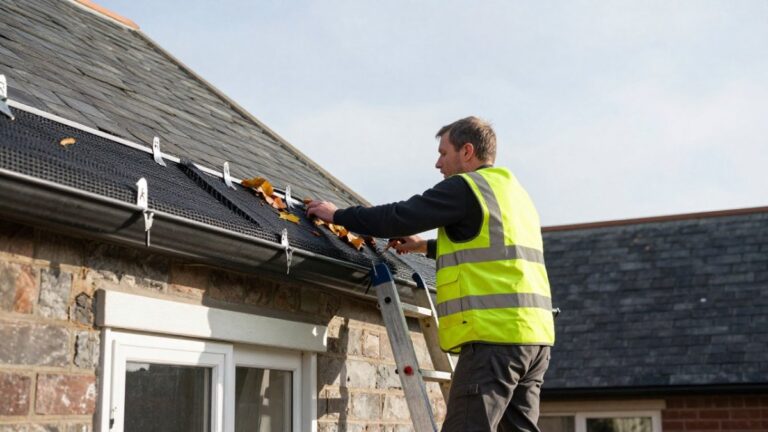
A few isolated broken slates can often be replaced individually. Widespread failure, or failure of the battens and underlay beneath, usually calls for re-slating a section or the whole roof. Gutters filled with slate debris and leaf litter can also hide problems, so keeping them clear through regular gutter cleaning and soft washing helps you spot damage sooner.
Slate Roof Maintenance and Inspection Intervals
Regular inspection is the single most effective way to extend a slate roof’s life, but the right interval depends on the roof’s age, exposure, and local conditions. As a starting point, a professional inspection is generally advisable at regular intervals, with more frequent checks for older or exposed roofs. After any severe storm, a follow-up check is wise even if no damage is visible from the ground. Regular checks can also reveal moss that holds moisture against the slates, making timely professional roof moss removal part of keeping the roof in sound condition.
For homeowners in London and Buckinghamshire, local building stock and weather patterns shape maintenance needs. London’s older terraces and converted Victorian properties often have original slate roofs that are now well over a century old, and the capital’s relatively sheltered but polluted environment can accelerate moss growth and fixings corrosion. In Buckinghamshire, the mix of rural and market-town properties means exposure varies widely: roofs on higher ground or near open countryside face stronger wind-driven rain, while those in sheltered valleys may dry out more slowly, encouraging moss and algae. A local roofer familiar with these conditions can tailor an inspection schedule to your property.
A simple annual routine you can carry out safely from the ground includes:
- Checking gutters and downpipes for blockages, especially after autumn leaf fall, and clearing them at least twice a year.
- Looking for slipped, cracked, or missing slates, particularly after freeze-thaw weather.
- Noting any moss or algae growth, which holds moisture against the slate and can worsen frost damage.
- Inspecting flashings around chimneys, valleys, and abutments for lifted lead or cracked mortar.
- Watching for damp patches or staining on ceilings and walls below, which may indicate a breach in the roof covering.
Watch out: never walk on a slate roof yourself. Slates are brittle and can crack underfoot, and a fall from height is a serious risk. Leave any roof-level inspection to a qualified roofer with the right access equipment.
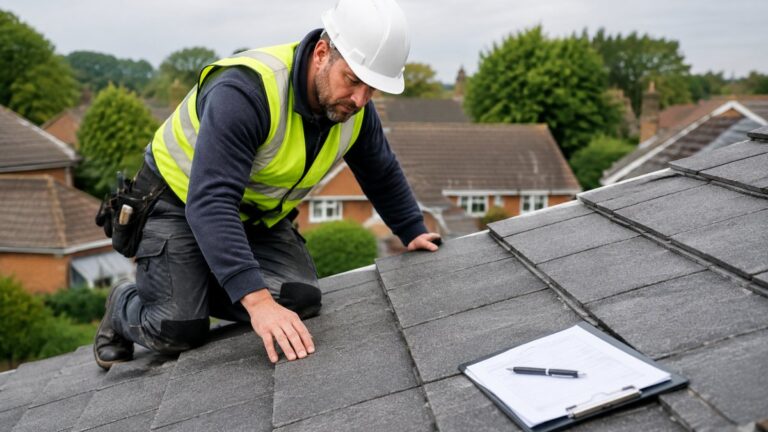
A professional inspection should go further, checking the condition of battens and fixings from within the loft where accessible, assessing the underlay, and confirming that ventilation is adequate. Keeping a simple record of each inspection and any repairs makes it easier to spot patterns and plan ahead. If you are unsure how often your roof should be checked, a qualified roofer can recommend an interval based on the roof’s age, exposure, and current condition. Read our guide on how often to inspect your roof in London for local guidance on timing. Where moss and algae are a recurring issue, professional roof cleaning can remove growth that would otherwise hold moisture against the slates.
Slate Roof Replacement Cost in the UK
Replacement cost varies widely with the size and pitch of the roof, the type and quantity of slate, access, and whether the work involves listed-building or conservation consent. Because prices depend on these factors, the most reliable way to understand your likely cost is to arrange a survey, after which a written quote can be given for your specific property. Evershield Roofing’s current pricing guidance is available on our website.
That said, it helps to understand the cost drivers and how they compare over the life of the roof. Natural slate is generally one of the more expensive roofing materials upfront, but its long service life can make the cost per year competitive over time. Synthetic slate is generally a lower upfront cost than natural slate, but it has a shorter track record.
When deciding between repair and replacement, a practical framework is:
- Isolated damage: A few slipped or cracked slates can usually be replaced individually at modest cost. This is common after storms and is worth doing promptly to prevent water ingress.
- Widespread slate failure: If a significant proportion of slates are delaminating, cracked, or missing, or if slates are failing across multiple elevations, partial or full re-slating may be more economical than repeated repairs.
- Failure of the roof system: If battens are rotten, fixings are corroded, or the underlay has perished, re-slating is usually necessary even if many slates themselves appear sound. This is the point where the lifespan of the slate and the lifespan of the roof system diverge.
- Age and heritage status: For older or listed properties, repair and like-for-like replacement are often preferred, and consent requirements may affect both approach and cost.
A survey will usually establish whether repair or replacement offers better value over the long term. For London and Buckinghamshire homeowners, access can be a significant cost factor: scaffolding on a terraced London street or a period property in a Buckinghamshire conservation area may add to the project cost compared with a detached house with easy access. It is worth asking for a breakdown of costs that separates labour, materials, access, and any consent-related work. Where a full roof is no longer viable, a new roof installation may be the better route.
Partial repairs, such as re-slating a section or replacing damaged flashings, cost considerably less than a full replacement. Keeping records of repairs and their costs helps you judge when the balance tips toward replacement.
Booking a Slate Roof Survey With Evershield Roofing
If your slate roof is showing signs of wear, or you simply want to know how much life it has left, an inspection is the sensible next step. book a free roof survey with Evershield Roofing to get a clear picture of its condition and your options. Our team has over 25 years of experience in the industry and is fully insured. We also offer free surveys and quotes, finance available from 0% APR, and emergency roof repair.
Frequently Asked Questions
How many years does a natural slate roof last?
A well-installed natural slate roof of good quality can last for a very long time, often many decades. Lifespan depends on the quality and origin of the slate, the fixings and battens used, the roof structure beneath, and how regularly the roof is inspected and maintained. Slate that has been laid correctly and kept clear of debris and failing flashings often outlasts the rest of the roof system, which is why the supporting timbers and fixings usually determine when major work is needed.
What are the signs that a slate roof needs replacing?
Common signs include multiple cracked, broken or slipped slates, nails that have corroded or lifted, sagging areas in the roof line, damp patches or staining inside the loft, and water ingress around chimneys and valleys. If damage is confined to a few slates, repair or re-slating a section is often enough. Widespread failure, decayed battens or structural timber problems usually point towards partial or full replacement, and a survey will confirm which applies.
Is slate the most durable roofing material in the UK?
Natural slate is widely regarded as a durable roofing material used on British homes. Its long service life depends on using good-quality stone and professional installation. Synthetic slate can be lighter and less costly, but its lifespan is generally shorter and varies more between products, so it is worth checking the manufacturer’s guarantee alongside the expected service life.
Does the quality of slate affect its lifespan?
Yes. Slate quality varies with the geological origin of the stone, and poorer-quality slate can delaminate, flake or lose its surface over time. Well-sourced natural slate with consistent thickness and low water absorption tends to perform better over many decades. Quality also matters at installation, because correct fixings, underlay and lap distances help the slates stay secure and shed water effectively.