Benefits of EPDM Rubber Roofing for Buckinghamshire Homes
EPDM rubber roofing lasts for decades with little upkeep, so see how it compares on cost, lifespan and suitability for your Buckinghamshire home.

Quick Summary
EPDM rubber roofing is a flexible synthetic membrane well suited to flat and low-pitched roofs on garages, extensions and bay windows in Buckinghamshire. It is lightweight, copes with temperature changes and creates a seamless waterproof surface when seams are properly sealed. Its performance depends on good drainage and quality installation.
- EPDM is a synthetic rubber membrane usually supplied in large black sheets.
- It suits garages, extensions, bay windows, dormers and small commercial roofs with little or no fall.
- Its flexibility lets it move with the building rather than cracking as temperatures change.
- Blocked outlets and standing water are among the most damaging problems for an EPDM roof.
- Check the surface at least twice a year and after major storms for debris and failing seams.
Is your flat roof due a survey?Evershield Roofing offers free surveys, quotes and finance from 0% APR.
Table of Contents
- What EPDM Rubber Roofing Is and Why It Suits Flat Roofs
- EPDM Roofing Lifespan in the UK and How Long It Really Lasts
- How Buckinghamshire Weather Affects an EPDM Roof
- EPDM vs Felt Roofing: Which Performs Better
- Installed Costs, Whole-Life Value and Financing Options
- EPDM Roof Maintenance and Keeping Drainage Working
- Booking Your EPDM Roof Survey With Evershield Roofing
- Frequently Asked Questions
What EPDM Rubber Roofing Is and Why It Suits Flat Roofs
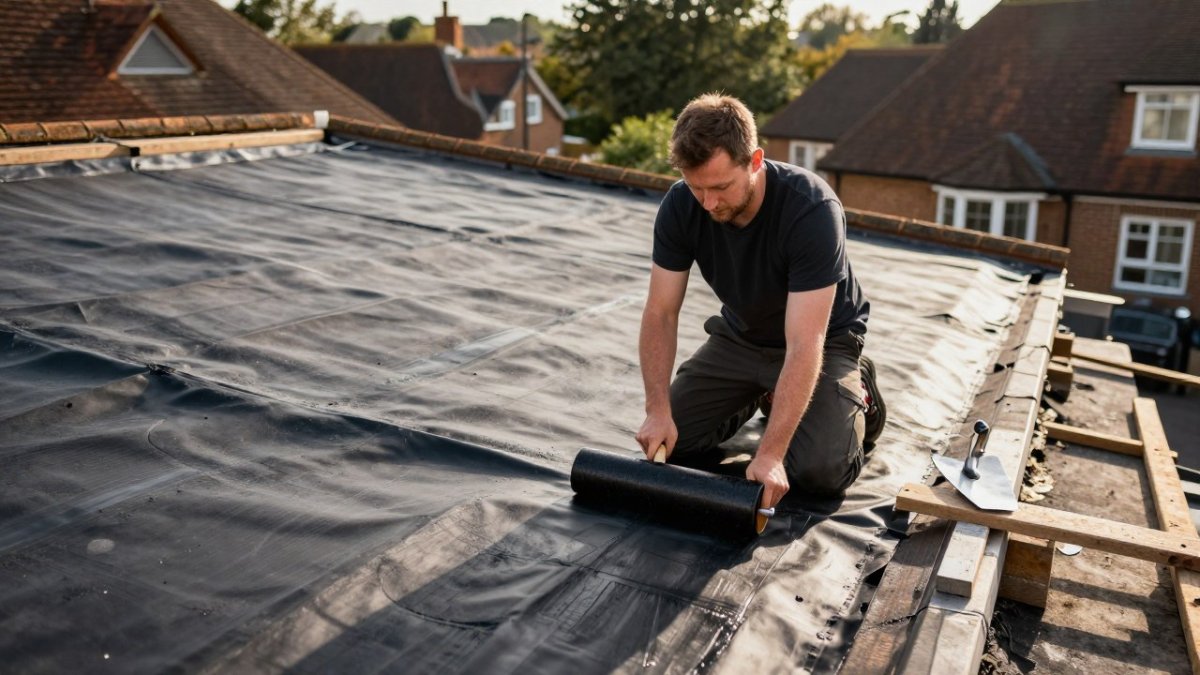
EPDM (ethylene propylene diene monomer) is a synthetic rubber membrane, and EPDM rubber roofing is usually supplied in large black sheets that are bonded or fixed across a flat or low-pitched roof. It is one of the most widely used flat roofing systems in the UK, and it is especially well suited to garages, extensions, bay windows, dormers and small commercial roofs, where the roof has little or no fall. Its flexibility means it moves with the building as temperatures change, rather than cracking the way rigid materials can.
For homeowners in Buckinghamshire, the appeal is straightforward. The membrane is lightweight, can be installed in fewer days than many alternatives, and creates a seamless, waterproof surface when seams are properly sealed. Most of the risk with any flat roof comes from water sitting on the surface, and EPDM is designed to shed it when the roof is correctly falled and drained.
Be aware that the performance of any EPDM roof depends heavily on the quality of the substrate, the detailing around upstands and outlets, and the installation itself. A well-fitted membrane on a poorly drained deck will still fail early.
EPDM Roofing Lifespan in the UK and How Long It Really Lasts
Manufacturers and installers commonly describe EPDM as having a long service life, and it is often quoted in decades rather than years. The realistic figure, however, depends on the product grade, the thickness, how the roof is maintained and how much UV and foot traffic it receives.
A common mistake is assuming a membrane will last indefinitely because it has no moving parts. The main ageing factors are UV exposure at exposed edges, ponding water, punctures from debris or dropped tools, and failed seams or flashings. Early failures commonly trace back to these causes rather than to the membrane itself wearing out.
If you want the membrane to reach its full potential, schedule periodic inspections and keep the surface clear of debris.
How Buckinghamshire Weather Affects an EPDM Roof
Buckinghamshire sees a mix of conditions that matter for a flat roof: wet winters, occasional heavy downpours, frequent freeze-thaw periods in colder months, and summer heat that can make the membrane hot to the touch. EPDM handles this range well because it stays flexible across a wide temperature band and resists weathering, but the weak points are still the details.
Heavy rain is the main concern. If the outlet or gutter becomes blocked with leaves or moss, water will pond, and standing water accelerates wear and can stress seams. Sustained UV at unprotected edges can also degrade the membrane over time, which is why edge trims and correct upstands matter more than the sheet itself.
In practice, a roof that drains quickly after a storm is usually a roof that will last longer. Keeping outlets clear is one of the cheapest things you can do to protect the system.
EPDM vs Felt Roofing: Which Performs Better
Felt remains the older and cheaper option for many flat roofs, and it still has a place on very small or low-traffic structures. Traditional bitumen felt, however, tends to need more frequent repairs and recoating than EPDM, and it is more prone to blistering and splitting as it ages. EPDM generally performs better over the long term because it is a single, flexible membrane with fewer joints, and it copes better with movement and temperature swings.
The comparison that matters most, though, is not felt versus EPDM in the abstract, it is how well either system is installed. For a direct side-by-side of EPDM and GRP roofing, see which suits your home. Most early failures on both systems trace back to the same causes: a substrate that was not prepared or fixed securely, inadequate falls, poorly formed upstands and outlets, and seams or flashings that were rushed. A well-installed felt roof can outperform a badly installed EPDM roof, and vice versa. The quality of installation often matters as much as the choice of membrane.
For a Buckinghamshire property, the practical questions are these. Does the roof have enough fall to drain freely, or will water pond? Is the deck sound, or does it need repair before any membrane goes down? Are the upstands high enough and properly terminated? Are the outlets clear and correctly sized? On a period property, the roof may have settled or been altered over the years, and those details need to be resolved before the membrane is fitted. On a modern extension, the deck is usually more predictable, but access and detailing around rooflights still drive the quality of the finished job.
There are also compliance considerations that apply to the complete roof build-up rather than to the membrane alone. If the roof is part of a habitable space, thermal insulation requirements under the Building Regulations will apply, and the roof may need to meet fire performance requirements depending on its proximity to boundaries and the building’s use. The membrane’s own fire performance is only one part of that picture; the insulation, deck and surface finish all contribute.
For most homeowners planning a flat roof that needs to last, EPDM is the stronger choice, but only when it is fitted by an experienced installer who prepares the substrate, forms the details properly and leaves the roof draining freely. Felt may still suit a short-term or budget-limited job, but the total cost of repairs over time should be weighed against the upfront saving.
Watch out: a common installation error is fitting a new membrane over a deck that was not repaired or properly fixed, which simply transfers the problem to the new roof and can void the warranty.
The article’s comparison of the two systems comes down to a few practical differences:
| Factor | EPDM | Traditional felt |
|---|---|---|
| Membrane type | Single flexible membrane with fewer joints | Bitumen felt |
| Repairs and recoating | Generally less frequent | Needs more frequent repair and recoating |
| Ageing | Better long-term performance | Prone to blistering and splitting as it ages |
| Best for | Stronger choice for a roof that must last | May suit short-term or budget-limited jobs |
Installed Costs, Whole-Life Value and Financing Options
Pricing for an EPDM flat roof depends on the size and shape of the roof, the height and access, the condition of the existing deck, and the number of details such as outlets, upstands, rooflights and parapets. For current prices or a quote, visit the Evershield Roofing pricing page, or ask for a site-specific quote that itemises preparation, membrane, trims, drainage and warranty. If you want to know how you could finance a roof replacement, ask about the options when you request your quote.
As a general guide, the cost of an EPDM roof is typically driven by the area of membrane required (including laps and waste), the amount of substrate repair or replacement needed, the complexity of detailing around edges and penetrations, and safe access. When you compare quotes, ask each installer to break the price down by these categories so you can see whether you are comparing like with like.
Whole-life value matters more than the headline price. A traditional bitumen felt roof may cost less upfront, but it typically needs more frequent repair and recoating, and its service life is shorter than a well-installed EPDM membrane. Across ten or fifteen years, the cheaper system can cost more once repairs, access costs and disruption are added. When comparing quotes, ask what the quoted lifespan is based on, what maintenance is included, and what the warranty actually covers, a long warranty on paper is of little use if it excludes the details that most often fail.
Financing can make a difference if a full replacement is a stretch. Evershield Roofing offers finance from 0% APR, so you can ask about spreading the cost when you request your quote. The key is to compare the total amount payable over the term, not just the monthly figure, and to check whether early repayment is permitted without penalty.
Watch out: a quote that is dramatically cheaper than the others may mean something has been left out, such as substrate preparation, new trims, or proper detailing around outlets.
EPDM Roof Maintenance and Keeping Drainage Working
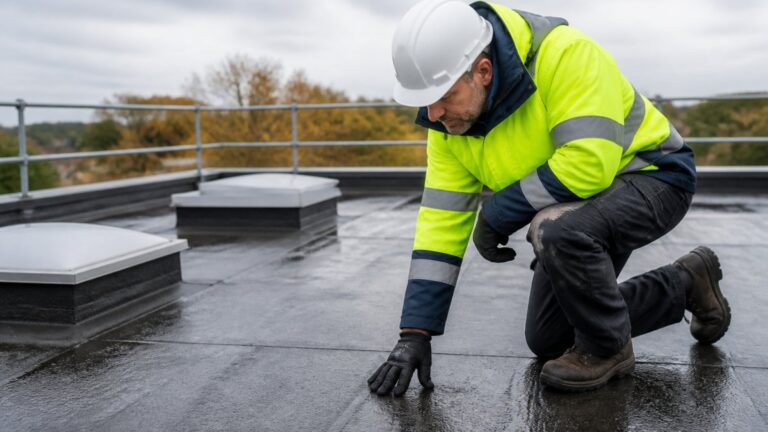
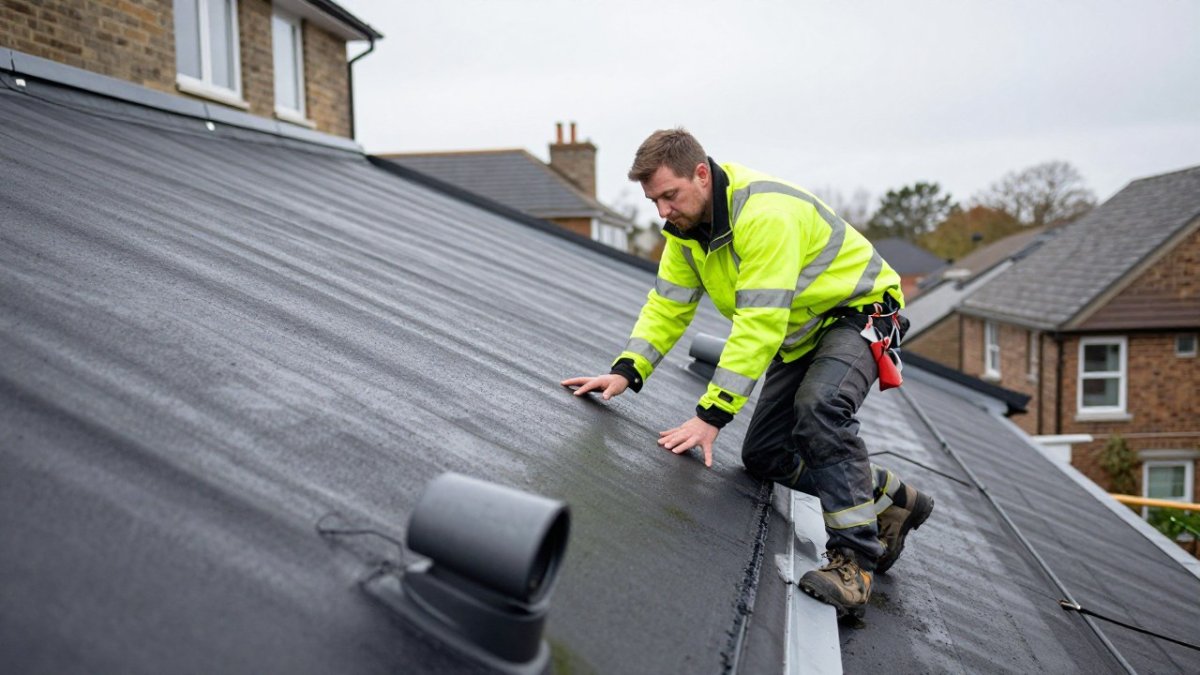
Good maintenance is simple but consistent. Check the surface at least twice a year, and after major storms, for debris, standing water, lifted edges, punctures and failing seams. Guidance on how often to have a roof inspected properly in London is also available. Clear outlets, gutters and hoppers so water can leave the roof freely. Why flat roof drainage matters and what can go wrong is covered in more detail.
Watch out: one of the most damaging problems is a blocked outlet left unattended for months. Water builds up, the membrane is stressed, and what started as a cheap cleaning job becomes a repair.
Regular roof cleaning helps prevent moss and organic build-up, which can hold water against the surface.
Booking Your EPDM Roof Survey With Evershield Roofing
If you are considering an EPDM roof, or your current flat roof is showing signs of wear, the most useful next step is a proper survey. At Evershield Roofing, we offer free surveys and quotes, we are fully insured, and we have 25 years of experience. We can advise on whether EPDM is the right choice for your roof, explain the options, and talk through finance if you need it.
Get your free roofing quote today from Evershield Roofing and find out exactly what your roof needs.
Frequently Asked Questions
What are the main benefits of EPDM rubber roofing?
EPDM rubber roofing is a single-ply synthetic rubber membrane that is waterproof, resistant to UV light and temperature swings, and light enough for most flat roofs without major structural work. Because it is laid in large sheets with seams bonded or taped, there are fewer joints than on many built-up systems, which reduces the points where water can enter. It is also comparatively low maintenance, needing periodic checks rather than frequent resurfacing. Evershield Roofing can assess whether EPDM suits your specific roof, so get in touch for a free survey and quote.
How long does an EPDM flat roof last in the UK?
A well-installed EPDM flat roof commonly has a service life measured in decades, and lifespans depend on the product, substrate and how the roof is maintained. Actual lifespan depends on installation quality, drainage, the condition of the deck and how well the roof is kept clear of debris. Regular inspection helps identify wear at seams and flashings early. Evershield Roofing can advise on realistic expectations for your property.
Does EPDM roofing need much maintenance in Buckinghamshire?
EPDM is considered low maintenance, but it is not no maintenance. Clearing leaves and moss, keeping outlets and gutters free-flowing, and checking seams, edges and penetrations once or twice a year will help the roof perform for its full life. Standing water should be investigated rather than ignored, because prolonged ponding can accelerate wear. A professional inspection after severe storms is a sensible precaution. Evershield Roofing offers roof cleaning and repair services if your roof needs attention.
Is EPDM roofing suitable for garages and extensions?
EPDM is widely used on garages, extensions, dormers and other low-pitched flat roofs because it is lightweight, flexible and can be installed in a relatively short time. Suitability depends on the structure, the fall of the roof and how the edges and drainage are detailed. Before committing, have the substrate and falls checked so that water drains properly. Evershield Roofing can survey your garage or extension and explain whether EPDM is the right choice.