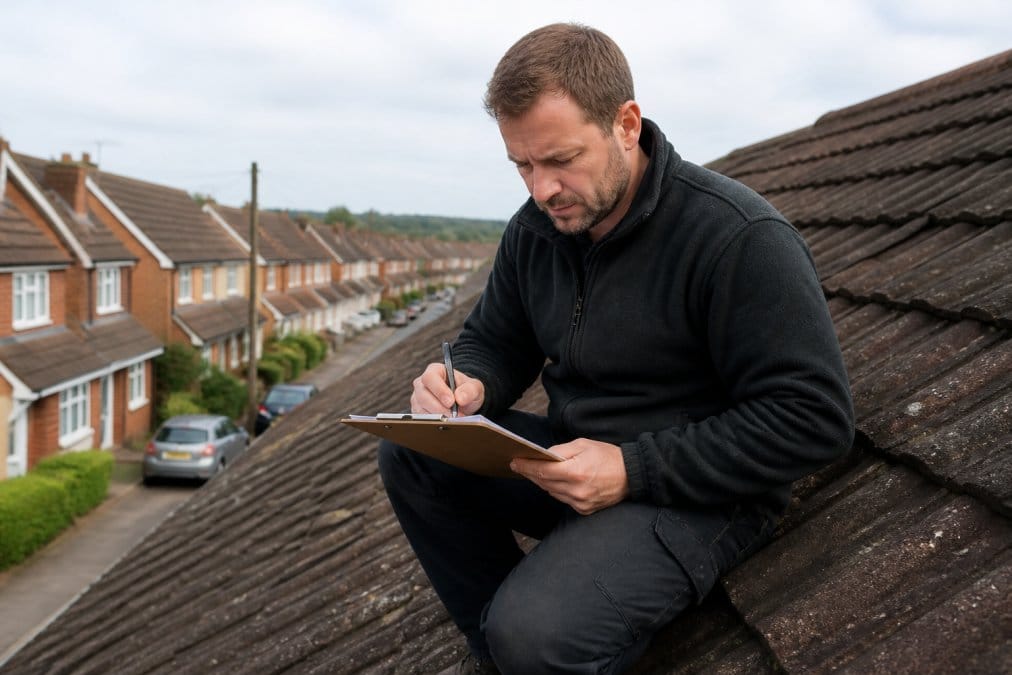
Are Local Roofing Company Ratings Reliable?
Roofing company ratings reliable: Learn how reliable local roofing company ratings actually are. Discover what to check, red flags to spot, and how to.

Table of Contents
- What Makes Roofing Company Ratings Unreliable
- How to Spot Fake Roofing Reviews
- Questions to Ask a Roofing Contractor Before Hiring
- How to Verify Roofing Company Credentials UK
- Platforms Where Roofing Ratings Appear
- What Reliable Roofing Company Ratings Actually Tell You
- Conclusion
Last Updated: August 22, 2026
What Makes Roofing Company Ratings Unreliable
Online ratings have become the default way homeowners evaluate contractors, but assessing whether local roofing company ratings are reliable indicators is far more complicated than a five-star average suggests. At Evershield Roofing, we’ve worked with homeowners who’ve discovered that ratings tell only part of the story.
The fundamental problem is that ratings platforms lack meaningful verification. A contractor could complete ten jobs flawlessly yet receive low ratings from one unhappy customer who disputes the invoice ([EXTERNAL_LINK: guidance on online customer reviews | gov.uk]). Conversely, a mediocre operator might maintain a 4.8-star average simply by managing online perception better than actual roof work.
Several structural issues undermine reliability. First, review platforms rarely verify that reviewers actually hired the contractor. Second, ratings skew toward extreme experiences, customers with minor issues rarely post, while those with major problems feel compelled to share frustration, creating a distorted picture (peer-reviewed research). Third, a company with fifty reviews carries more statistical weight than one with five, though the smaller company might deliver better work. Finally, review platforms have financial incentives affecting which ratings appear prominently; some boost visibility for contractors paying for premium listings.
Watch Out
Many homeowners assume a 4.7-star rating means a contractor is reliable. In reality, roofing company ratings can be heavily influenced by a contractor’s skill at responding to complaints online rather than preventing them. Ratings alone should never be your only decision factor.
Many homeowners assume a 4.7-star rating means a contractor is reliable. In reality, roofing company ratings can be heavily influenced by a contractor’s skill at responding to complaints online rather than preventing them. Ratings alone should never be your only decision factor.
How to Spot Fake Roofing Reviews
Identifying fake reviews requires knowing what authentic customer feedback looks like. Genuine reviews contain specific details about work performed, timeline, and outcome.
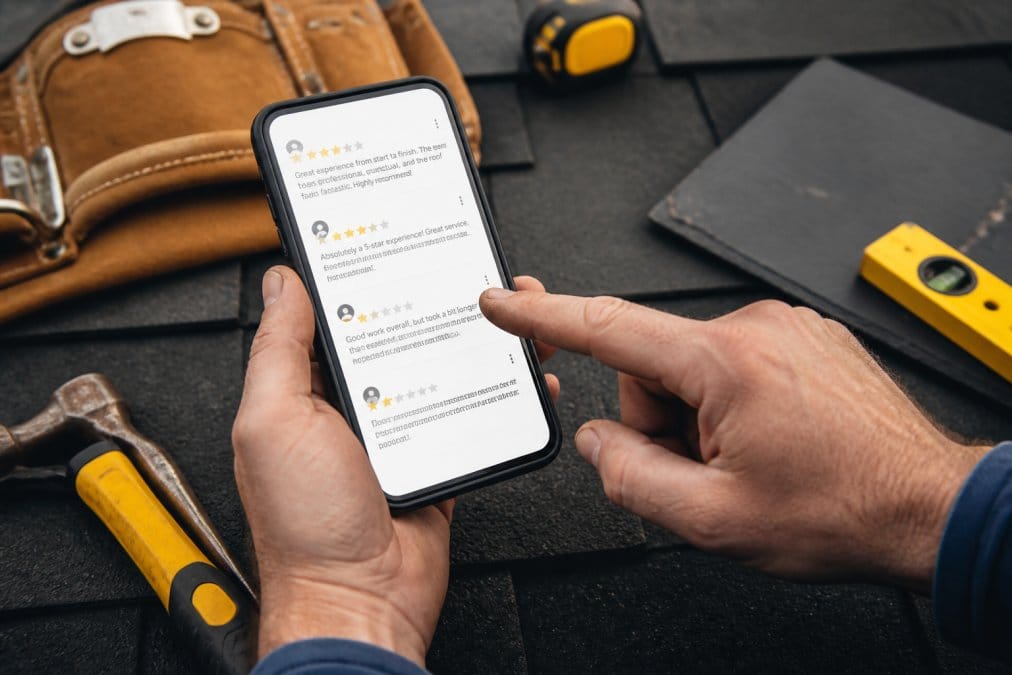
Fake reviews follow predictable patterns. They’re often extremely brief, "Great work!" or "Highly recommend", without detail about what was actually done. Authentic reviews describe specific services: "Fixed the leak above the master bedroom," "Replaced guttering on the south side," "Cleaned moss from the flat roof." Generic praise is a red flag.
Watch for clustering. If a contractor suddenly receives ten five-star reviews within a week, that’s suspicious. Legitimate growth produces gradual review accumulation over months. Sudden spikes suggest coordinated posting.
Fake reviews often use identical phrasing or structure. Real customers write differently, mention unexpected details, and sometimes include minor criticisms even when overall satisfied. Language that reads like marketing copy probably is.
Check reviewer profiles. Accounts created days before leaving a review, with no other review history, are suspicious. Legitimate reviewers typically have a history across multiple businesses.
If a contractor responds to every review within minutes, they’re likely monitoring artificially. Authentic businesses respond thoughtfully but not obsessively.
Key Takeaway
Roofing company ratings become more reliable when you cross-reference multiple platforms. A contractor with consistent four-star reviews across Google, Trustpilot, and local directories is more credible than one with five stars on a single platform.
Roofing company ratings become more reliable when you cross-reference multiple platforms. A contractor with consistent four-star reviews across Google, Trustpilot, and local directories is more credible than one with five stars on a single platform.
Questions to Ask a Roofing Contractor Before Hiring
Move beyond ratings and ask questions that reveal actual competence and reliability.
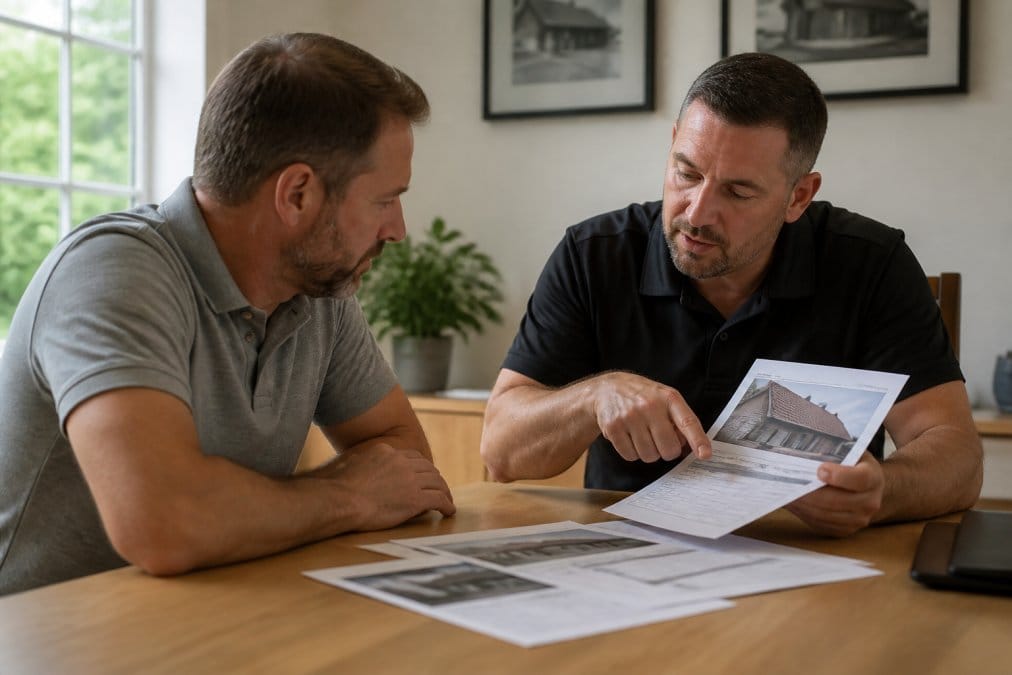
Start with experience on your specific roof type. "How many roofs like mine have you replaced in the last three years?" Ask for photos of completed work, actual jobs they’ve performed, not stock images. Request references from customers in your area who had similar work done within the last eighteen months.
Ask about their inspection process. "Walk me through exactly how you’ll inspect my roof and what you’re looking for." A thorough contractor describes a systematic approach: checking from inside the loft, examining flashing details, testing for water penetration, assessing structural integrity.
Clarify their warranty in writing. "What happens if a leak develops six months after you finish?" Ask whether they warranty workmanship, materials, or both, and what becomes a paid service call.
Request a detailed written quote itemising materials, labour, and timeline. Vague quotes tell you nothing about what’s included. A proper quote specifies roofing material type and grade, underlayment details, flashing specifications, removal and disposal of old materials, and preparatory work.
Ask about insurance and industry registration. "Can you provide proof of public liability insurance and professional indemnity?" Verify they hold appropriate qualifications for your roof type.
Finally, ask about communication. "How often will you update me on progress, and who do I contact if something comes up?" A contractor who commits to specific communication intervals is more likely to remain accessible throughout the project.
How to Verify Roofing Company Credentials UK
Checking credentials requires knowing which bodies regulate roofing work and which certifications matter.
For residential roofing, relevant certifications come from the National Federation of Roofing Contractors (NFRC), the Confederation of Roofing Contractors (CRC), or the Guild of Master Craftsmen. These organisations maintain membership standards requiring demonstrated competence. finding reliable contractors.
Ask whether the contractor holds relevant NVQs (National Vocational Qualifications) in roofing. These demonstrate formal training in specific disciplines, pitched roofing, flat roofing, leadwork, etc.
Public liability insurance is non-negotiable. Request a copy of their current certificate and verify coverage is adequate for residential work. Most professional roofers carry minimum £6 million coverage ([EXTERNAL_LINK: Financial Conduct Authority | fca.org.uk]).
Building Regulations compliance matters for significant roof work. Ask whether the contractor will obtain Building Regulations approval. For new installations or structural changes, you need documentation that work meets current Building Regulations.
For flat roofing, ask about EPDM or rubber roofing certifications. Manufacturers often require installation by certified contractors to honour warranties.
Get Your Free Roofing Quote Today! →
Check Companies House records if the contractor operates as a limited company. This confirms they’re a registered business with financial accountability.
Pro Tip
Ask the contractor to provide at least three references from customers in your area who had similar work completed within the last two years. Contact these references directly, not through the contractor. Ask whether they’d hire the same contractor again and whether any issues emerged after completion.
Ask the contractor to provide at least three references from customers in your area who had similar work completed within the last two years. Contact these references directly, not through the contractor. Ask whether they’d hire the same contractor again and whether any issues emerged after completion.
Platforms Where Roofing Ratings Appear
Understanding where ratings live helps you know which platforms deserve attention.
Google Business Profile is most influential for local searches. Google requires some verification of business ownership, making it harder to post fake reviews, though manipulation remains possible.
Trustpilot has stricter verification processes than many competitors. They flag reviews from unverified purchasers and attempts to identify suspicious patterns.
Checkatrade focuses on trades and home services, verifying that reviewers actually hired the contractor. If a roofing contractor appears on Checkatrade with consistent ratings, that’s more meaningful than ratings on unverified platforms.
Local directories and community Facebook groups carry weight in specific areas. Recommendations from neighbours reflect genuine experience because reviewers have local reputation at stake.
Industry-specific platforms like NFRC or CRC websites may list member contractors with feedback from verified customers. These have higher barriers to entry and stricter standards.
TrustATrader and MyBuilder are UK-focused platforms attempting verification of both contractors and reviewers.
The key insight: no single platform tells the complete story. A contractor with strong ratings across multiple independent platforms is more credible than one with excellent ratings on a single site.
What Reliable Roofing Company Ratings Actually Tell You
When you strip away the noise, what do roofing company ratings genuinely indicate? They provide one data point about customer satisfaction, best interpreted alongside other evidence.
Ratings reflect recent customer sentiment, not necessarily long-term quality. A contractor with a 4.2-star average from 120 reviews completed over five years has a more reliable track record than one with 4.8 stars from twelve reviews in the last month.
Patterns matter more than individual ratings. If a contractor has 80 four-to-five-star reviews and 15 one-to-two-star reviews, you see the pattern: most customers are satisfied, but some experienced serious problems. Look at the distribution, not just the star count.
Response patterns reveal character. A contractor who responds professionally to negative reviews demonstrates accountability. One who ignores criticism or responds defensively suggests they won’t handle problems well during your project.
Specific feedback about responsiveness, timeline adherence, and cleanliness tells you about operational standards. Multiple reviews mentioning "arrived on time" and "cleaned up thoroughly" is actionable information.
What ratings don’t tell you: whether the contractor will prioritise your specific needs, handle unexpected complications well, honour warranties years later, or remain in business when you need follow-up work. These factors require direct conversation and verification.
Best For
Treat ratings as one input among many. Use them to identify contractors worth investigating further, not as the final decision factor. Combine ratings with direct questions, credential verification, and reference checks.
Treat ratings as one input among many. Use them to identify contractors worth investigating further, not as the final decision factor. Combine ratings with direct questions, credential verification, and reference checks.
When facing roof damage or planning a replacement, hiring based purely on ratings feels objective and convenient. But local roofing company ratings are reliable indicators only when you understand their limitations and supplement them with direct verification.
At Evershield Roofing, we’ve spent over 25 years building our reputation through consistent work quality, not managing online perception. We welcome your questions, provide detailed quotes with no hidden costs, and remain available when you need us. Get your free roofing quote today and speak directly with someone who can answer your specific concerns about roof repairs, replacements, or emergency work.
Frequently Asked Questions
How can I tell if a roofing company's reviews are fake?
Look for patterns: multiple reviews posted on the same day, generic praise without specific details about the work, or language that sounds identical across different reviews. Fake reviews often lack mention of actual services (roof repairs, gutter work, chimney repairs). Check the reviewer's profile, do they have other reviews? Real customers usually have a review history. Legitimate roofing company ratings include specifics: 'Fixed my leaking flat roof in two days' rather than 'Great service.' Verify reviews across multiple platforms; fake reviews typically concentrate on one site.
Are platforms like Checkatrade and Trustatrader reliable for finding roofers?
These platforms do provide some vetting, traders must meet standards and customers can leave verified feedback. However, ratings alone don't guarantee quality. Use them as a starting point, not the final decision. Check how long a company has been listed, whether they respond to negative reviews professionally, and if their portfolio shows completed work. Cross-reference their credentials independently. A roofing company with 25 years of industry experience and full insurance offers more security than ratings alone.
What should I ask a roofing contractor before hiring them?
Ask about their insurance coverage, how long they've been trading, references from recent jobs in your area, and whether they're a member of a trade body. Request a detailed written quote that breaks down materials and labour. Ask about their warranty or guarantee on completed work, this protects you if issues arise after completion. Inquire about their process for emergency repairs or urgent work. A responsive contractor who answers your questions clearly and provides proof of credentials is more reliable than ratings alone.
How do I verify a roofing company's credentials in the UK?
Check if they hold relevant qualifications and memberships with trade organisations. Ask for proof of public liability insurance and employer's liability insurance if they employ staff. Request references from recent clients and follow up with them. Look for their trading history, companies with 25+ years in the industry have established track records. Verify they're registered with HMRC for tax purposes. Ask about their approach to roof repairs, new installations, or specialist work like flat roofs. Genuine credentials include insurance certificates, references, and responsive communication when you call with questions.