How to Identify Storm Damage on Your Roof
Learn how to identify storm damage on your roof with our step-by-step guide. Spot signs of damage safely and document for insurance claims.

Table of Contents
- Why Storm Damage Inspection Matters
- Safety First: Before You Inspect Your Roof
- Signs of Wind Damage to Roof Tiles
- How to Check Your Roof for Leaks from Inside
- Other Common Types of Storm Damage
- How to Document Storm Damage for Insurance Claims
- When to Call a Professional Roofer
- Conclusion
Why Storm Damage Inspection Matters
A single storm can compromise your roof’s integrity in ways that aren’t immediately obvious. Wind, hail, and heavy rain don’t just cause visible damage, they create weak points that lead to leaks, structural problems, and costly repairs months later. The sooner you identify storm damage on your roof, the faster you can prevent water infiltration, mould growth, and deterioration of your home’s interior.
At Evershield Roofing, we’ve seen countless homeowners in Buckinghamshire discover storm damage only after water starts appearing on their ceilings. By then, the damage has often spread beyond the roof itself. Early inspection is the difference between a straightforward repair and an expensive replacement.
Storm damage doesn’t always announce itself loudly. A cracked tile, displaced flashing, or loose sealant might seem minor, but these are entry points for water. The British climate, with its frequent wind and rain, puts roofs under constant stress. Understanding what to look for gives you the power to act before small problems become major ones.
Key Takeaway
Storm damage inspection matters because early detection prevents water infiltration, mould, and structural damage that can cost thousands more to repair if left unchecked.
Storm damage inspection matters because early detection prevents water infiltration, mould, and structural damage that can cost thousands more to repair if left unchecked.
Safety First: Before You Inspect Your Roof
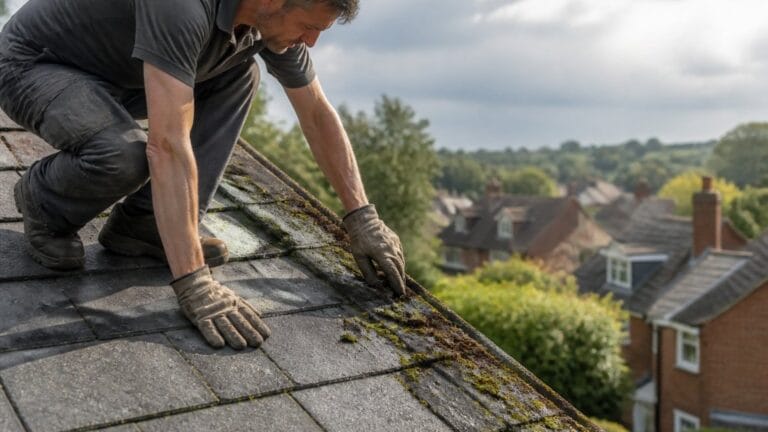
Never climb onto your roof without proper precautions. Roof surfaces are slippery, especially after rain or when covered with moss or algae. Falls from height are one of the most common causes of serious domestic injuries, and the risk increases significantly on wet or damaged surfaces.
If you have a pitched roof with a steep slope, consider calling a professional instead. Evershield Roofing’s team can safely access areas that pose genuine risk to untrained homeowners. If you do decide to inspect from the ground or from a ladder, follow these safety rules:
- Use a sturdy, level ladder placed on firm ground
- Have someone hold the ladder or stay nearby
- Wear non-slip footwear with good grip
- Avoid inspecting during or immediately after heavy rain
- Never work alone
- Use binoculars to examine areas you can’t safely reach
- Don’t lean too far, reposition the ladder instead
For flat roofs or low-pitched roofs accessible from a ladder, the risk is lower, but care is still essential. If you’re uncomfortable at any point, step down and contact a professional. A roof inspection isn’t worth a fall.
Watch Out
Working at height without proper precautions causes serious injuries. If your roof is steep, has limited access, or you feel unsafe at any point, call a professional roofer instead of risking a fall.
Working at height without proper precautions causes serious injuries. If your roof is steep, has limited access, or you feel unsafe at any point, call a professional roofer instead of risking a fall.
Signs of Wind Damage to Roof Tiles
Visible tile damage and displacement
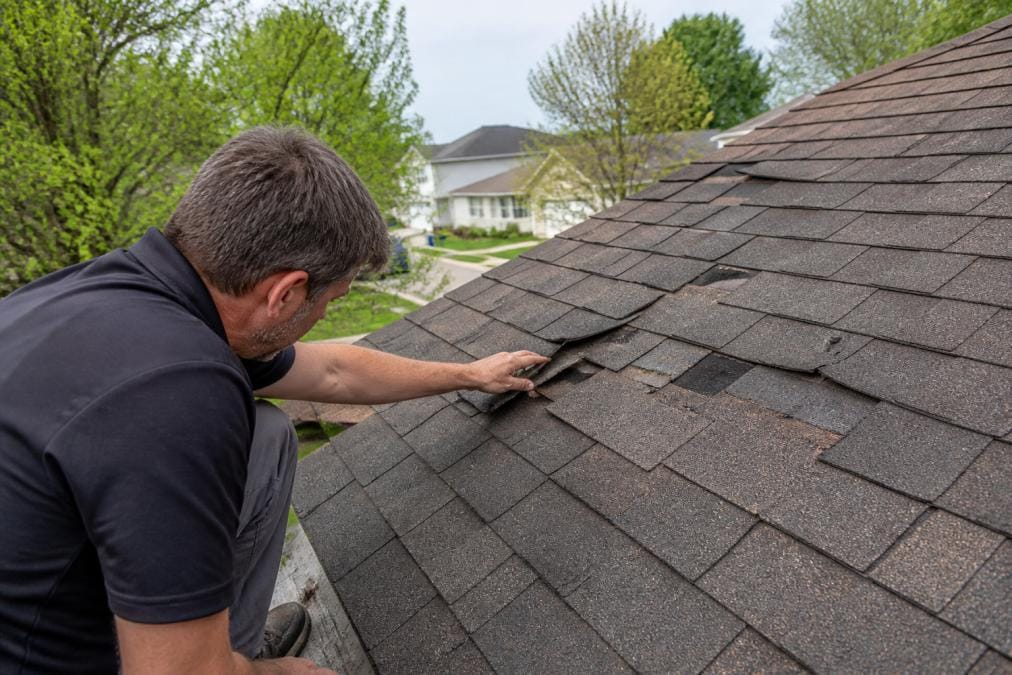
Wind damage on your roof often starts with the tiles themselves. Look for tiles that are cracked, broken, or missing entirely. Wind lifts and displaces tiles, especially on ridges and edges where the wind force is strongest. If you notice tiles sitting at odd angles or gaps where tiles should be, that’s a clear sign of wind damage.
Cracked tiles might not be obvious from the ground. Use binoculars to scan the roof surface systematically, working from one section to another. Pay special attention to the south-facing and west-facing slopes, which typically take the most wind exposure in the UK.
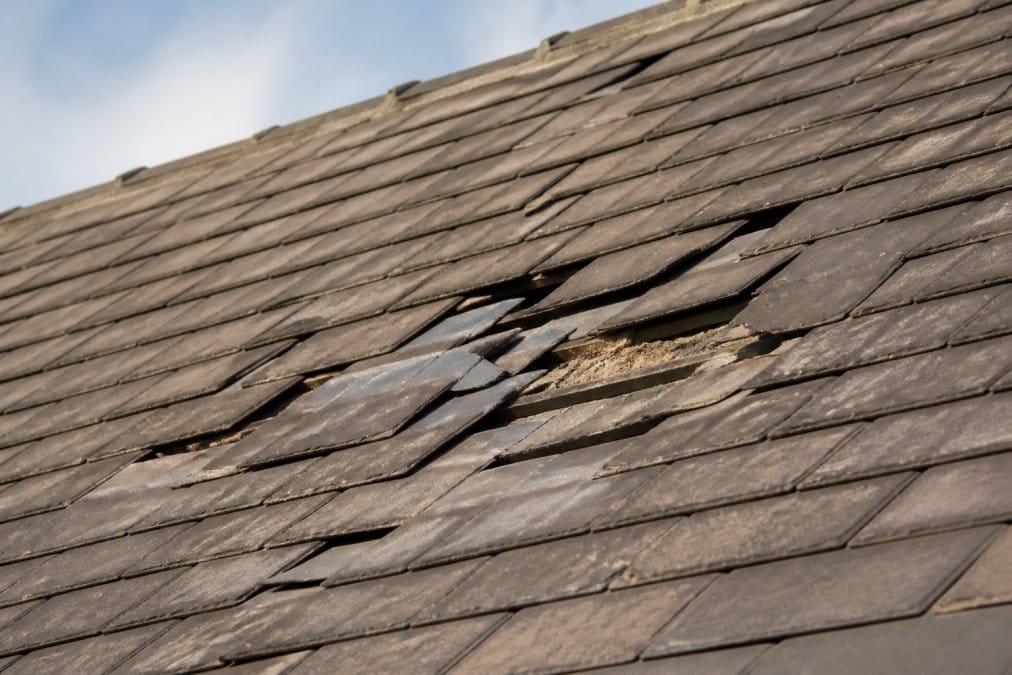
Displaced tiles create gaps that allow water to penetrate beneath the tile layer. Even a single missing tile can allow significant water ingress during heavy rain. The tiles underneath provide a secondary barrier, but they’re designed to work with the layer above them. When that protection is gone, water finds its way in.
Look also for tiles that have shifted but not fallen off. These are still compromised and should be addressed quickly. Tiles that have slipped out of their proper alignment no longer overlap correctly with adjacent tiles, creating weak points.
Damaged flashing and sealant
Flashing, the metal strips that seal joints around chimneys, vents, and where the roof meets walls, is particularly vulnerable to wind damage. Wind can lift flashing edges, tear seams, or dislodge it entirely. Damaged flashing is one of the most common causes of roof leaks after storms.
Inspect the sealant around flashing carefully. Wind can crack or separate sealant from the metal, allowing water to seep underneath. If the sealant looks cracked, peeling, or missing in places, the flashing is no longer properly sealed.
Check the valleys where two roof slopes meet. These areas concentrate water flow, and damaged flashing here leads to serious leaks. Wind can shift valley flashing, creating gaps where water runs straight into the gap instead of down the roof surface.
How to Check Your Roof for Leaks from Inside
Inspect loft spaces and ceilings
The interior of your home often shows storm damage before the roof itself becomes obviously compromised. Start in your loft space on a clear day. Look for light coming through gaps or cracks in the roof structure. Even small beams of light indicate potential entry points for water.
Check the underside of roof timbers for water stains, discolouration, or damp patches. These marks might be fresh from the recent storm or older damage that’s been there for some time. Either way, they point to where water is entering your roof.
Look for wet insulation. If the insulation batts or rolls are damp or soggy, water is definitely getting in. This is a serious issue because wet insulation loses its thermal properties and can promote mould growth.
Inspect the roof membrane or felt layer underneath the tiles. In older properties, you might see traditional felt. In newer builds, it could be modern breathable membrane. Look for tears, holes, or areas where the membrane has separated from the timber structure.
Look for water stains and damp patches
Water stains on ceilings and walls are the most obvious signs of a roof leak. These appear as discoloured patches, often with a brown or yellowish tint. Fresh water stains look darker and might still feel damp. Older stains are lighter and may have dried out.
Don’t assume a stain is old just because it looks dry. Water can travel along roof timbers or through wall cavities, appearing on ceilings far from the actual damage point. A stain on a ceiling might indicate damage several metres away on the roof itself.
Check corners and edges of rooms, where water tends to accumulate as it runs down walls. Look in cupboards and under eaves, where leaks often go unnoticed because the space isn’t regularly used.
Feel for damp on walls and around window frames. Storm damage can compromise the seal around windows, allowing water to penetrate. Damp patches that appear after heavy rain suggest active leaks.
Other Common Types of Storm Damage
Guttering and downpipe damage
Gutters and downpipes take the full force of storm winds and heavy rainfall. Storm damage here is extremely common and often overlooked until problems develop. High winds can loosen gutter fixings, dent gutters, or tear seams apart. Heavy debris, branches, leaves, and other material, can damage gutters or block them entirely. hiring insured contractors.
Blocked or damaged gutters can’t drain water properly, causing it to overflow and run down the walls instead of being channelled away from your property. This leads to damp in external walls and can eventually penetrate into your home.
Get Your Free Roofing Quote Today! →
Inspect gutters for sagging sections, gaps between sections, or visible damage. Look for water stains on the walls below gutters, which indicate overflow. Check downpipes for dents, cracks, or separation from the wall.
Evershield Roofing provides gutter cleaning and repairs, which are essential after storms to ensure water drains properly and prevent secondary damage to your property.
Chimney and ridge tile issues
Chimneys and ridge tiles sit at the highest point of your roof, making them particularly exposed to wind. Storm winds can crack or displace ridge tiles, loosen chimney flashing, or even shift the chimney itself.
Look for missing or cracked ridge tiles along the peak of your roof. These tiles seal the joint where two roof slopes meet, when they’re damaged, water runs directly into that junction. Damaged chimney flashing is a common source of leaks around chimneys.
Check that the chimney isn’t leaning or showing visible cracks in the mortar. Severe wind damage can shift chimneys, creating gaps around the flashing and allowing water penetration.
How to Document Storm Damage for Insurance Claims
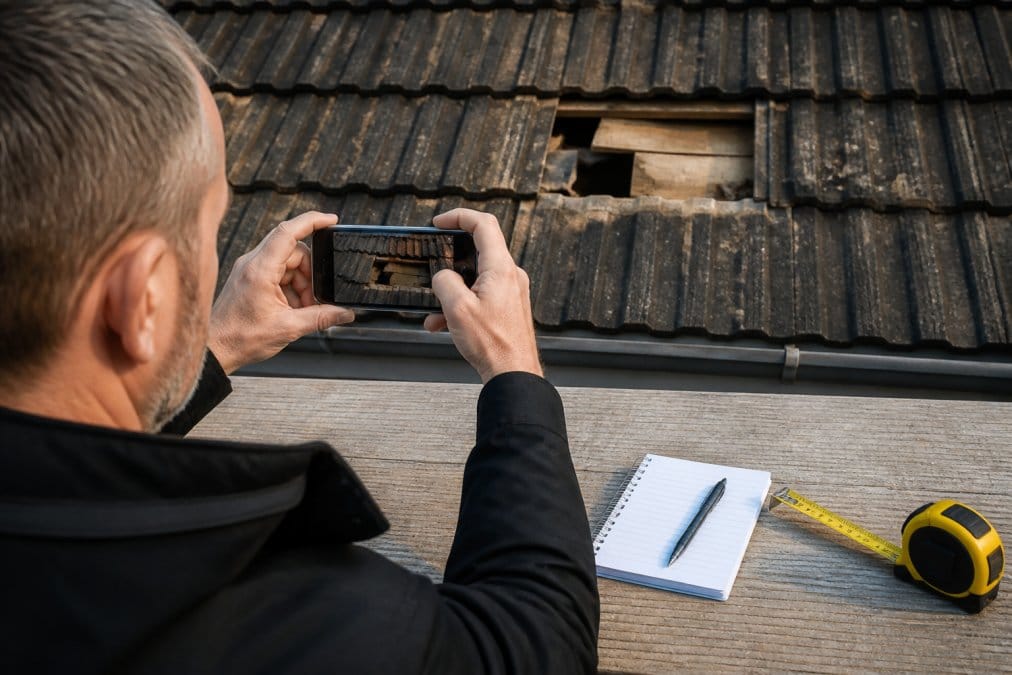
Proper documentation is essential if you plan to claim on your insurance. Insurers need clear evidence of the damage and when it occurred. Start photographing immediately after the storm, while damage is obvious and fresh.
Take photos from multiple angles, wide shots showing the overall damage and close-ups showing specific problem areas. Photograph cracked tiles, displaced flashing, missing sections, and any visible water damage. Include photos from inside your home showing water stains and damp patches.
Write down the date and time of the storm, and describe the weather conditions, wind speed if you know it, heavy rain, hail, or other factors. Note which parts of your roof were affected and in what order you discovered the damage.
Keep receipts for any emergency repairs you make to prevent further damage. Insurance typically covers reasonable steps to prevent additional harm, so documenting these expenses is important.
Create a detailed written record listing each area of damage with descriptions and measurements where relevant. This supports your insurance claim and helps professional roofers understand the full extent of the work needed.
Contact your insurer as soon as possible after identifying storm damage. Many policies require notification within a specific timeframe. Ask your insurer whether they require their own surveyor to inspect the damage before you proceed with repairs.
Pro Tip
Photograph damage immediately after the storm, from multiple angles and distances. Include close-ups of specific damage and wide shots showing overall impact. This documentation strengthens insurance claims and helps roofers assess repair scope.
Photograph damage immediately after the storm, from multiple angles and distances. Include close-ups of specific damage and wide shots showing overall impact. This documentation strengthens insurance claims and helps roofers assess repair scope.
When to Call a Professional Roofer
Some roof damage you can assess from the ground or a ladder, but professional inspection is essential in several situations. If you’ve identified significant damage, multiple missing tiles, displaced flashing, or visible interior water damage, contact a professional roofer immediately. The longer you wait, the more water can penetrate and cause secondary damage.
Call a professional if you discover damage you can’t safely access. Steep roofs, high peaks, or complex roof designs require specialist equipment and training. Evershield Roofing’s team has the equipment and experience to safely inspect and repair all roof types.
If you’re uncertain whether damage is serious, professional assessment removes the guesswork. A qualified roofer can identify problems you might miss and recommend the most cost-effective repair approach. Early professional intervention often costs less than waiting for damage to worsen.
After major storms, professional roofers are in high demand. Contact Evershield Roofing promptly if you suspect significant damage. The team can arrange a free survey to assess the damage and provide a detailed repair quote. With over 25 years of experience in roofing, Evershield Roofing understands storm damage patterns and can identify issues that might not be immediately obvious.
Emergency roof repairs are available if water is actively entering your home. Temporary fixes can prevent further damage while you arrange permanent repairs.
Best For
Professional inspection is essential if: your roof is steep or difficult to access safely, you’ve found significant damage, water is actively leaking into your home, or you’re uncertain whether damage requires repair.
Professional inspection is essential if: your roof is steep or difficult to access safely, you’ve found significant damage, water is actively leaking into your home, or you’re uncertain whether damage requires repair.
Storm damage on your roof demands quick action. Water infiltration leads to expensive structural damage, mould growth, and deterioration that spreads far beyond the initial entry point. By learning to identify the key signs, displaced tiles, damaged flashing, interior water stains, and gutter problems, you can catch problems early and prevent them from worsening.
If you’ve identified storm damage on your roof or suspect your property has been affected, contact Evershield Roofing for a professional assessment. The team provides free surveys and detailed repair quotes, with emergency repair availability when water is actively entering your home. With 25 years of industry experience and a commitment to using quality materials, Evershield Roofing delivers the expert guidance and reliable repairs your roof needs. Get Your Free Roofing Quote Today and protect your home from further storm damage.
Frequently Asked Questions
What are the most common signs of roof storm damage?
The most visible signs include missing or cracked roof tiles, bent or damaged flashing, loose guttering, and displaced ridge tiles. Inside your home, look for water stains on ceilings, damp patches in lofts, and discolouration on internal walls. Storm damage can also affect chimney flashings and sealant around vents. If you notice any of these after severe weather, it's worth arranging a professional inspection to assess the full extent of the damage.
Should I go onto my roof to check for storm damage myself?
Only if you're confident and have proper safety equipment. Roofs are slippery, especially after rain or in windy conditions, and falls cause serious injuries. A safer approach is to inspect from ground level with binoculars, check your loft space from inside, and look for water damage indoors. For a thorough assessment, contact a qualified roofer who has the correct harnesses, ladders, and insurance. Most professionals offer free surveys, so professional inspection is often the best choice.
How do I document roof damage for insurance claims?
Take clear photographs from multiple angles, including wide shots of the overall roof and close-ups of specific damage. Photograph water stains and damp patches inside your home as well. Note the date and time of the storm, and keep records of any temporary repairs you make. Write down a description of the damage and the weather conditions. Store all documentation safely, and contact your insurer promptly. Many insurers have specific requirements for claims, so check your policy details or ask your broker for guidance on what evidence they need.
How quickly should I repair storm damage to my roof?
Address damage as soon as possible, especially if there are active leaks. Delaying repairs allows water to penetrate deeper into your roof structure, causing rot, mould, and structural damage that becomes much more expensive to fix. If you can't arrange permanent repairs immediately, temporary measures like tarping affected areas can help prevent further water ingress. Contact a roofer for an emergency repair appointment, most reputable firms offer rapid response for storm damage to prevent additional property damage.